Langflow
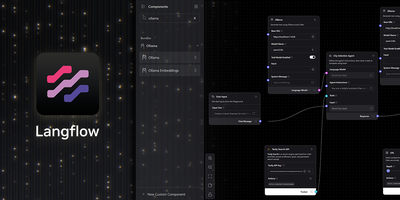
Langflow turns LLM application development into a visual canvas where every node maps to a real LangChain primitive (chains, agents, retrievers, memory, vector stores, and tools) that teams wire together without writing integration boilerplate. The platform supports 15+ LLM provider components including OpenAI, Anthropic, Google Gemini, Mistral, Groq, Cohere, Azure OpenAI, HuggingFace, and Ollama for fully local inference, with LiteLLM proxying to over 100 additional providers through a single OpenAI-compatible endpoint. Vector database integrations cover Pinecone, Weaviate, Chroma, Qdrant, Astra DB, OpenSearch, FAISS, and Milvus, while built-in Knowledge Bases introduced in version 1.8 allow RAG pipelines without any external vector service. Multi-agent orchestration enables agent-to-agent communication with conversation management, persistent Memory Bases for cross-session context retrieval, and step-by-step reasoning visibility in the interactive Playground. Every flow automatically becomes a callable REST API endpoint via the /run route and an MCP server exposable to Claude Desktop, Cursor, or any MCP-compatible client. Every component is a real Python class that developers can customize, extend, or replace, while Extension Bundles package third-party integrations as independent pip packages for modular installation. Tool integrations include web search, Slack, Gmail, Google Drive, GitHub, and custom REST API calls. Docker deployment with PostgreSQL persistence runs on port 7860. Backed by 153,000+ stars and DataStax. Running on a dedicated VPS on RepoCloud with guaranteed CPU, RAM, and SSD, full root SSH access, and a browser serial console. MIT licensed.
Open Kritt
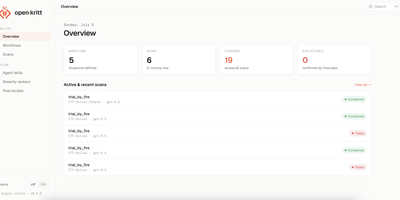
Big repositories, small questions: Open Kritt is a self-hosted platform that splits vulnerability research into focused tasks for AI agents and returns ranked, de-duplicated findings. Build a workflow as a tree of prompt steps, where each step declares the structured output it must produce and the next level launches one fresh agent per result. Scan remote or local repositories along with their dependencies, using Codex, Claude Code, or Grok Build as the harness. Every workflow ends in one fixed finding schema covering file, line, vulnerability type, trigger flow, and a malicious input example. Post-scripts then validate each finding, build a proof of concept, or write the report. Markdown severity rankers tell the model how to prioritize for your bounty program, and repeated findings collapse automatically. Model access comes from a Codex login or OpenAI, Anthropic, DeepSeek, OpenRouter, or xAI keys, with an Active switch to choose which accounts take new work. A dashboard tracks blueprints, scans, and findings, a headless command-line tool imports workflows and launches scans on servers without a browser, and finished scans export as one ZIP with a share-safe manifest. Built-in workflows, including an entry-point-driven hunt, give you a starting point. Running on a dedicated VPS on RepoCloud with guaranteed CPU, RAM, and SSD, full root SSH access, and a browser serial console. AGPL-3.0 licensed.
Fail2Ban Report
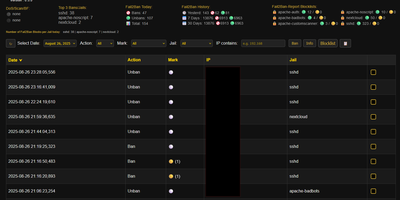
Fail2Ban quietly bans thousands of bots on a typical VPS and just as quietly keeps the whole story buried in a log file nobody reads, and Fail2Ban Report digs that story out into a dashboard you will actually open. Shell scripts convert each day of fail2ban.log into JSON, and the web interface lays every ban and unban on a searchable, filterable timeline you can slice by jail, server, or time window. Aggregated statistics for today, yesterday, seven days, and thirty days show which jails absorb the most attacks, while markers flag repeat offenders and escalating ban counts so persistent scanners stand out from one-time noise. Blocklists live per jail and per server as plain JSON, and ban or unban actions execute through UFW, giving you permanent bans that survive independently of jail restarts. Bulk actions handle whole ranges at once, with a pending state until the next sync applies them. Multiple servers feed one console through a pull-based HTTPS endpoint, so a fleet of small machines reports to a single pane without exposing SSH. Optional AbuseIPDB and IP-Info lookups add reputation and region context to any address. Running on a dedicated VPS on RepoCloud with guaranteed CPU, RAM, and SSD, full root SSH access, and a browser serial console. GPL-3.0 licensed.
Imp
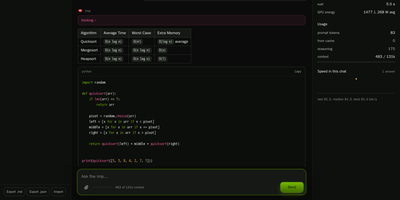
Imp runs large AI chat models privately on one NVIDIA RTX 50 or RTX PRO graphics card, exposing them through OpenAI and Anthropic compatible APIs plus a built-in browser chat. Start it with a single Docker command, point it at a model, and the chat opens in your browser with saved conversations and a live readout of generation speed. Coding agents such as Claude Code and Codex connect by changing one base URL, so your editor talks to the model on your own hardware instead of a rented cloud endpoint. Tool calls, structured JSON output, streaming responses, and reasoning models all work over the wire, and requests can be protected with an API key, per-IP rate limits, and concurrency caps. Load GGUF files you already have or NVFP4 and FP8 SafeTensors checkpoints straight from Hugging Face with no conversion step before the first answer. When a model is bigger than the card, mixture-of-experts weights stay in system RAM while the busiest experts are cached on the GPU, so a 123.6 GiB model still answers from a 32 GB card. Supported models can also read images alongside text, and tokenize, health, and model listing endpoints make the server easy to wire into scripts and monitors. Running on a dedicated VPS on RepoCloud with guaranteed CPU, RAM, and SSD, full root SSH access, and a browser serial console. MIT licensed.

Cited
Buyers now ask an AI assistant before they ever visit your website, and Cited tells you whether your brand made it into the answer. Verify your domain with a DNS record, choose the buyer-like prompts worth watching, and Cited checks them on schedule across ChatGPT, Claude, Gemini, Perplexity, Google AI Mode, and Google AI Overviews. Every meaningful appearance becomes a durable evidence note in your citation inbox: open one to see the exact prompt, the response snapshot, where your domain appeared, and the first-seen history. It distinguishes a true source citation from a brand mention without a link, an explicit recommendation, and the uncomfortable one, a missed opportunity where a competitor got cited and you did not. Competitor tracking runs continuously, so you see rivals earning answers in your category while there is still time to respond. Notes can be annotated, organized through new, seen, saved, and resolved states, and exported for reporting. Email alerts flag meaningful new events and a weekly digest summarizes what changed, so checking becomes a habit instead of another dashboard to babysit. Workspace roles and local credentials keep a small marketing team organized on your own PostgreSQL database. Running on a dedicated VPS on RepoCloud with guaranteed CPU, RAM, and SSD, full root SSH access, and a browser serial console. AGPL-3.0 licensed.
Cronstable
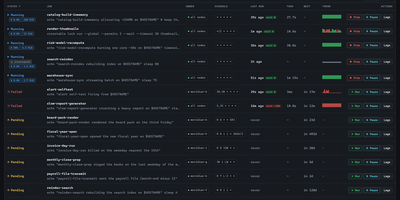
Cronstable gives scheduled jobs what cron never had: retries when they fail, alerts when retries run out, a saved history of every run, and a dashboard to watch it all. Bring your existing crontab or define jobs in YAML, down to business-day schedules, hashed fleet spreading, and per-job time zones, then let failures retry with backoff while alerts head to email, Slack-compatible webhooks, Sentry, or an encrypted push to your phone. Every run is remembered, so history, live logs, and incident timelines answer what happened last Tuesday instead of shrugging. When jobs grow dependencies, they become durable workflows: task graphs with data sharing, dynamic fan-out, sensors, shared resource pools, and approval gates a human taps before the next step runs, with failed tasks replayed selectively instead of starting over. One machine or a whole fleet looks the same from the web dashboard, the terminal, or iOS, and a schedule linter quietly warns you about the job that can never run and the one daylight saving will skip. Running on a dedicated VPS on RepoCloud with guaranteed CPU, RAM, and SSD, full root SSH access, and a browser serial console. MIT licensed.
Kodus AI
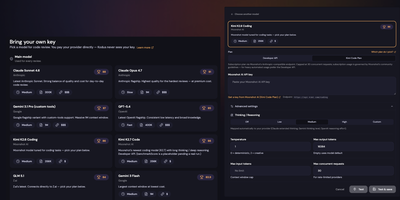
Kodus AI automates pull request code review with inline AI comments across GitHub, GitLab, Bitbucket, and Azure DevOps, supporting any LLM provider at cost with zero token markup. The multi-service TypeScript architecture deploys via Docker Compose, running an API server, background worker, webhooks service, and React dashboard backed by PostgreSQL with pgvector, MongoDB, and RabbitMQ. Integration covers both cloud platforms and their enterprise flavors (GitHub Enterprise Server, GitLab Self-Managed, Bitbucket Data Center) using standard OAuth flows and webhook signing to keep the review loop entirely inside your network. The platform is model-agnostic with Bring Your Own Key support for Claude, GPT, Gemini, Llama, and any OpenAI-compatible endpoint including locally-hosted models. Custom review rules combine your team's coding standards with requirements pulled from Jira, Linear, and Notion, automatically checking every PR against documented specifications. The CLI enables local reviews against working trees, staged diffs, branches, or specific commits, integrating into CI/CD pipelines as pre-merge gates. Source code is never stored and never used for model training, with all data encrypted in transit and at rest. 1,270+ stars and 129+ releases since March 2025. Running on a dedicated VPS on RepoCloud with guaranteed CPU, RAM, and SSD, full root SSH access, and a browser serial console. AGPL-3.0 licensed.

Family Ledger
Family Ledger gathers every account a household owns into one private picture of net worth, using ten minutes of data entry per month. Bank cards, brokerage accounts, funds, property, loans, crypto, precious metals, and insurance sit together, grouped by family member, with CNY, USD, and HKD support. Each month the app lists the balances to fill in, so two partners can finish the job at different times from a phone or desktop. The dashboard separates what you earned from what your money earned, and it reports true annualized return with XIRR and TWR, plus a net-worth line adjusted for inflation. An asset lens slices holdings by risk, platform, industry, currency, and region through sunburst charts and pivot tables, and fund look-through shows the real stock, bond, and industry exposure behind each fund. Upload a brokerage screenshot and a vision model reads every holding for you to confirm. AI checkups score allocation, risk, liquidity, and returns, then suggest rebalancing steps. Goals for retirement, education, and emergency reserves come with optimistic, neutral, and pessimistic forecasts. Running on a dedicated VPS on RepoCloud with guaranteed CPU, RAM, and SSD, full root SSH access, and a browser serial console. AGPL-3.0 licensed.
AsoBeast
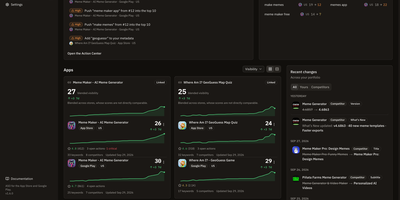
AsoBeast keeps score of your app in the App Store and Google Play, so you always know which keywords you rank for, which ones moved, and what to fix next. Paste a store URL and tracking starts on import: rankings are checked daily in your home storefront and any other market you add, and every keyword is scored for popularity, difficulty, and opportunity so you can tell a winnable term from a vanity one. The dashboard leads with your keywords in the top 10, this week's movement, and an Action Center that turns the data into specific moves, like defending a keyword where two new rivals just entered the top 10, with the reason and the fix spelled out beside each item. Competitor listings are diffed over time, so a rival's new title, subtitle, version, or release notes show up as a before-and-after entry instead of a surprise. Metadata snapshots keep the raw store payload, localization and keyword field analysis shows wasted words, reviews feed the audit score, and the same data is exposed to your AI tools through the built-in MCP server. Registration closes itself once your owner account exists, and store requests run from your own server. Running on a dedicated VPS on RepoCloud with guaranteed CPU, RAM, and SSD, full root SSH access, and a browser serial console. AGPL-3.0 licensed.
SerpBear
Unlimited domains, unlimited keywords, daily Google position checks with stored history and trend charts: SerpBear is an open-source search engine rank tracker. Retrieval works through your choice of third-party SERP APIs - ScrapingAnt, ScrapingRobot, SerpApi, SearchApi, HasData - or your own proxy IP pool, and a flexible scrape-strategy system (Basic, Custom, or Smart, set globally or per domain) works around Google's removal of the 100-results-per-page parameter by choosing how many pages to check per keyword. Google Search Console integration adds real visit counts, impressions, and click-through rates per tracked keyword and surfaces top-performing pages and countries; Google Ads integration supplies monthly search volumes and auto-generates keyword ideas from your site's content. Email notifications report position changes daily, weekly, or monthly, a built-in REST API feeds dashboards and reporting tools, and data exports to CSV. Built with Next.js on SQLite, deployed via Docker, installable as a PWA on mobile - with no per-keyword or monthly SaaS fees.
Whisper Money
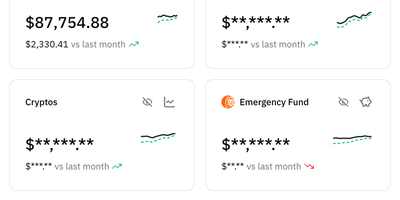
Ditch the spreadsheet for good: Whisper Money is a privacy-first personal finance app you host yourself to see exactly where your money goes, without your data being sold or profiled for ads. Connect multiple bank accounts in one place, fill them by hand or CSV import, and watch transactions categorize themselves automatically. Automation rules handle the repetitive sorting: rent, subscriptions, and transfers land in the right buckets every time. Brokers and exchanges including Indexa Capital, Coinbase, Binance, Bitpanda, Wise, and Interactive Brokers connect with your own API keys, so investments sit beside everyday spending. Optional open banking through EnableBanking can pull a year of movements and keep them current, and it stays switched off until you configure it. AI features suggest categories and rules and summarize your stats reports, and you choose the provider: Gemini by default, or OpenAI, Anthropic, Groq, DeepSeek, Mistral, any OpenAI-compatible endpoint, or a local Ollama server so nothing leaves your infrastructure. Spending pattern insights turn raw transactions into an honest picture of your habits, month after month. Running on a dedicated VPS on RepoCloud with guaranteed CPU, RAM, and SSD, full root SSH access, and a browser serial console. CC BY-NC 4.0 licensed.
NextClaw
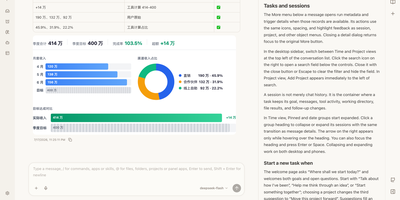
NextClaw is an AI workspace where a request for a report, a chart, or a small tool becomes organized research, files, and steps, with the result shown beside the conversation. Pick the engine for each task from Native, Claude Code, Codex, Hermes, or OpenCode, and the agent keeps its memory, skills, and workspace. A right-hand browser opens code, Markdown, HTML, Word, Excel, and PowerPoint files without losing the task that produced them. Connect providers like OpenRouter, OpenAI, Anthropic, Gemini, DeepSeek, or any OpenAI-compatible endpoint, and message the same agents from Telegram, Discord, Slack, WhatsApp, Feishu, or email. Scheduled tasks start from templates like a daily AI news brief or a competitor change tracker, and finished reports land in an AI Inbox you can read later or continue as a chat. A skill market installs new abilities, MCP servers extend tools, and Panel Apps keep the small pages an agent builds for you. Dedicated agents get their own role, home directory, and memory. Running on a dedicated VPS on RepoCloud with guaranteed CPU, RAM, and SSD, full root SSH access, and a browser serial console. MIT licensed.

DumbPad
With a deliberately minimalist design philosophy and zero database dependencies, DumbPad delivers a self-hosted notepad that stores notes as plain text files with real-time auto-saving every 10 seconds and keyboard-shortcut manual saves. The Node.js Express backend serves a vanilla JavaScript frontend that supports multiple named notepads with direct URL linking and shareable links for instant access to specific notes. The split-view editor displays markdown source on the left and rendered preview on the right with a draggable resize handle, while the full preview mode renders complete markdown with GitHub-style alert blocks for Note, Tip, Important, Warning, and Caution callouts, extended table formatting, fenced code blocks with syntax highlighting via highlight.js covering approximately 180 programming languages, collapsible details sections, and checklist support. Fuzzy search matches across both filenames and file contents for fast navigation across large collections. Optional PIN protection secures access with configurable 4 to 10 digit codes, constant-time comparison to prevent timing attacks, brute force lockout after 5 failed attempts with 15-minute cooldown, and IP-based tracking. The Docker container runs as non-root UID 1000 by default with multi-architecture support, CORS origin restrictions for reverse proxy deployments, and persistent data volumes. Notes can be downloaded as text or markdown files, printed with auto-expanded collapsible sections, and imported by placing text files directly into the data directory. On RepoCloud, deploy DumbPad on a dedicated VPS with Docker, root SSH access, and complete control over your note-taking infrastructure, all under the GPL-3.0 license.
bewCloud
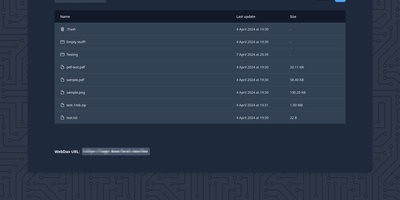
A personal cloud does not need the weight of a small enterprise suite, and bewCloud proves it by keeping files, photos, notes, contacts, and calendars in one compact service a single person can run for a whole household. The Files app stores uploads in a plain folder tree on disk, offers public sharing links, optional whole-folder downloads as zip archives, and a WebDAV endpoint that desktop tools can mount. Photos turns that same storage into a browsable gallery, while Notes keeps quick text within reach of every login. Contacts and Calendar speak CardDAV and CalDAV through a bundled Radicale server, so the calendar and address book on a phone or laptop stay in sync without another account anywhere. News collects feeds to read in the browser, and Expenses tracks spending in a small ledger beside everything else. The header shows only the apps you enable, in the order you choose, and companion desktop and mobile apps connect to the same server for people who prefer native sync. Accounts can be protected with multi-factor authentication using TOTP, passkeys, or email codes, and optional single sign-on lets a household sign in through an existing identity provider. Running on a dedicated VPS on RepoCloud with guaranteed CPU, RAM, and SSD, full root SSH access, and a browser serial console. AGPL-3.0 licensed.
ShopNex
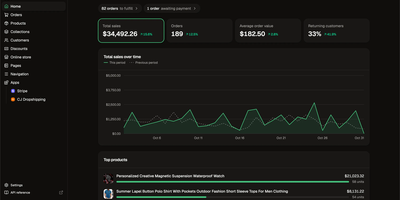
ShopNex is a self-hosted ecommerce platform that gives merchants a browser admin, themeable storefront, hosted checkout, and app integrations without paying a platform subscription or per-sale software fee. You manage products with options, variants, SKUs, stock per variant, collections, product images, and clean URLs, then sell through a bundled Astro storefront using Liquid themes or a custom frontend connected to the typed Storefront SDK. The hosted checkout collects shipping rates, manual payment methods, discount codes, and Stripe Checkout payments, while order records keep payment and fulfillment status, shipping lines, transactions, and price snapshots separate for clean operations. Customer accounts and guest orders are matched by email, staff access is invite-only with owner, admin, and staff roles, and discounts, shipping, taxes, and store settings are controlled from the admin. Integrations receive signed Standard Webhooks with retries and admin redelivery, scoped API tokens grant only the resources an app needs, and OAuth apps clean up tokens and webhooks when uninstalled. You can run one shop by default or switch to multi-shop by domain without migrating data, and every admin and storefront procedure is also exposed as REST under /api/v1 with a live OpenAPI document. Running on a dedicated VPS on RepoCloud with guaranteed CPU, RAM, and SSD, full root SSH access, and a browser serial console. MIT licensed.
Dashy
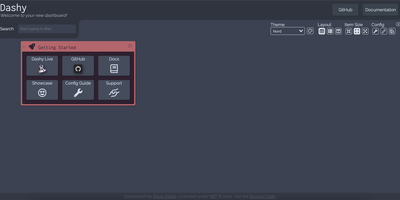
Every service you run, behind one polished start page: Dashy is the most customizable homelab dashboard, built as a Vue.js homepage. Configuration lives in a single YAML file, but you never have to hand-edit it: an integrated UI editor with real-time validation writes changes back to disk, so both config-as-code and point-and-click camps are served. Status indicators put a live health dot next to every app - HTTP checks or pings on custom intervals, with response time and status details on hover - giving you an at-a-glance uptime overview before anything breaks. Over 50 built-in widgets pull dynamic content from the services you already run: Pi-hole and AdGuard block stats, Proxmox lists, Nextcloud status, Netdata CPU/memory history, Prometheus data, plus weather, RSS, crypto prices, and generic iframe/API-response widgets for anything with an endpoint. Instant fuzzy search launches any app as you type, with customizable hotkeys and web-search fallthrough. Theming is deep: dozens of built-in themes, a UI color palette editor, and custom CSS over CSS variables. Alternate views include a fast-loading minimal startpage and a workspace view that embeds apps side-by-side without leaving the dashboard. Icons resolve from Font Awesome, homelab icon packs, emojis, or auto-fetched favicons. Built-in authentication, multi-page support, cloud backup/sync, and multi-language round out an MIT project with a massive community.

Yarrtube
Follow the channels you actually chose, and let their newest uploads land on your own disk instead of in an algorithmic feed. Yarrtube tracks public YouTube playlists and whole channels, checks them on a schedule, and downloads fresh videos automatically the moment they appear. The built-in web player lets you watch the collected library from a desktop or a phone browser without ads interrupting. Downloads are organized into media-server friendly folders, so the same collection shows up inside Plex, Jellyfin, or Kodi next to your films and shows. For Plex homes, an optional scan trigger refreshes the library right after a download finishes, so new episodes surface without manual rescans. You control download quality per source and can cap how many videos each channel keeps, which protects limited disk space from runaway back catalogs. Grouping sources into categories and smart playlists keeps a growing archive browsable instead of turning into one long dump. Everything runs from one Docker container with two persistent mounts, one for its small database and one for the video files. A free YouTube Data API v3 key powers the new-upload checks, so setup takes minutes. Running on a dedicated VPS on RepoCloud with guaranteed CPU, RAM, and SSD, full root SSH access, and a browser serial console. MIT licensed.
BookLore
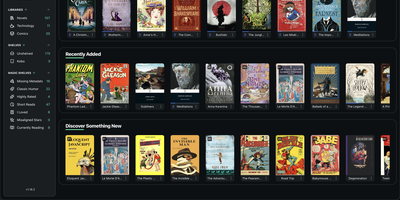
BookLore centralizes personal electronic book, audiobook, and comic collections into an organized private media server equipped with automated metadata scrapers and e-reader synchronization. Users can drop EPUB, PDF, CBZ, and MOBI files into a watched BookDrop directory to trigger automated format parsing, background cover retrieval, and staged queue imports. Integrated metadata scrapers query Google Books, Open Library, Goodreads, and Amazon to automatically fill synopsis summaries, author records, publishing dates, and review scores. Dynamic Magic Shelves categorize volumes through custom rule-based filters, author collections, and full-text search indexes across your complete literature catalog. The browser-based reader renders documents with adjustable typography, night modes, audio playback controls, text annotations, and persistent bookmarking. Hardware e-readers and mobile devices connect through native Kobo Store emulation APIs, bidirectional KOReader progress synchronization, and OPDS catalog feeds. Multi-tenant permissions provide each household member with private reading statistics, personalized shelves, email book delivery, and direct send-to-Kindle dispatch. Running on a dedicated VPS on RepoCloud with guaranteed CPU, RAM, and SSD, full root SSH access, and a browser serial console. GNU AGPLv3 licensed.