Lemma
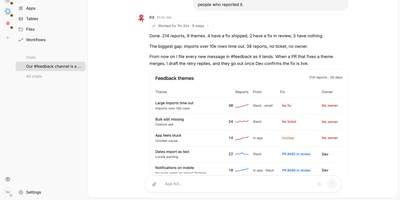
Every job gets its own AI teammate in Lemma, shared with your whole team and busy building the pages, tables, workflows, and apps the work needs. Each teammate lives in its own space, so the briefs it writes, the records it keeps, and the screens it builds stay where your people can open them instead of vanishing up a chat thread. Agents run when asked and also on a schedule, a table change, or an incoming webhook, with every run recorded step by step. Before anything consequential, like sending an email or issuing a refund, the run pauses and asks the person who owns the decision. Workflows hand work between agents, plain code, decisions, loops, and named people, and a run can wait days for an approval. Teammates keep memory as Markdown notes that anyone can open and correct. People reach them from Slack, Microsoft Teams, WhatsApp, Telegram, or email, and one permission model covers roles, rows, and approvals everywhere. Bring a Claude Code or Codex subscription, a hosted model, or any OpenAI or Anthropic compatible key. Running on a dedicated VPS on RepoCloud with guaranteed CPU, RAM, and SSD, full root SSH access, and a browser serial console. AGPL-3.0 licensed.
Stalwart
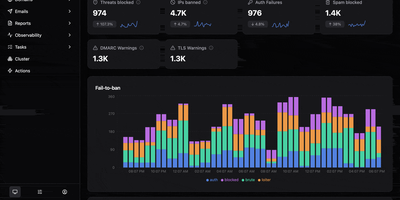
With 14,000 GitHub stars and 81 releases since March 2023, Stalwart is the most protocol-complete open-source mail server available — delivering JMAP, IMAP4rev2, IMAP4rev1, POP3, SMTP, CalDAV, CardDAV, and WebDAV from a single Rust binary that compiles to a memory-safe, zero-garbage-collection executable with predictable latency under load. The SMTP server implements DMARC, DKIMv2, DKIMv1, SPF, and ARC for complete message authentication with automatic DKIM key rotation, while transport security enforces DANE, MTA-STS, and SMTP TLS reporting to prevent downgrade attacks. Built-in spam filtering with statistical classifiers, DNS blocklists, and collaborative reputation databases eliminates the need for external Rspamd or SpamAssassin deployments. Encryption at rest protects stored messages with S/MIME or OpenPGP, and automatic TLS certificate provisioning via ACME supports TLS-ALPN-01, DNS-01, and HTTP-01 challenges without manual certificate management. The ManageSieve server enables server-side email filtering rules, while full-text search indexes message bodies and attachments for instant retrieval. Pluggable storage backends support RocksDB for embedded deployments, PostgreSQL, MySQL, and S3-compatible object storage for distributed architectures. LDAP and SQL-based authentication integrate with existing directory services, and the web administration panel manages domains, accounts, quotas, and DKIM keys. Security audited with memory safety guaranteed by Rust's ownership model. Running on a dedicated VPS on RepoCloud with guaranteed CPU, RAM, and SSD, full root SSH access, and a browser serial console. AGPL-3.0 licensed.
AIHelms
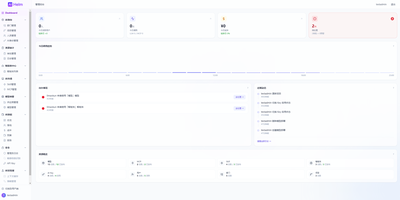
Every employee gets one AI key, and every dollar of model spending gets a name next to it. AIHelms is an admin console and user portal that sits in front of your model providers, so a team can use Claude, DeepSeek, GPT, and local models through one entry point, with IT keeping control. Administrators onboard providers, publish models, and balance traffic across several deployments of the same model, with both OpenAI and Anthropic request formats accepted. Each AI identity carries a model allow-list, quota, rate limits, and an expiry date. Budgets can be set per person, department, project, or model, with soft alerts and hard cut-offs. Internal settlement prices sit beside real provider costs, so departments can be billed with or without a markup. Dashboards show adoption, daily calls, token use, and top users, and weekly or monthly efficiency reports drill down by department. A built-in marketplace registers, approves, and distributes MCP servers and agent Skills, and an AI policy scan flags risky Skills before anyone installs them. Audit logs record every administrator action. Employees see their key, endpoint, models, and monthly spend in the portal. Running on a dedicated VPS on RepoCloud with guaranteed CPU, RAM, and SSD, full root SSH access, and a browser serial console. GPL-3.0 licensed.
Bloom
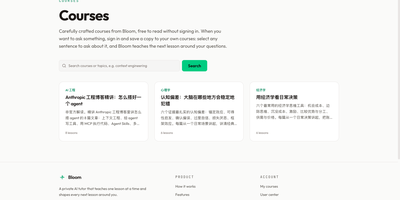
Bloom hires you a private tutor for any subject, then teaches one lesson at a time and rewrites the next lesson around what you actually understood. You begin with a topic, an uploaded PDF, text, or Markdown source, or a set of project files, and Bloom drafts a syllabus of concrete mastery items at simple, standard, or deep expansion. Each lesson arrives focused and readable, with a chapter sidebar for quick jumps and a collapsible syllabus tracking what is already mastered. Reading is active work: highlight any passage and a question thread opens beside it, streaming an answer that stays attached to that sentence for later follow-ups. Reflection questions close every lesson, and your answers, annotations, and highlighted gaps become the raw material for the next lesson, which opens by reviewing the previous answers. Source mode keeps page numbers and sections so lessons can cite where an idea came from, and project files render each document as its own page for highlight questions without generated lessons. Finished courses produce an evaluation and a summary, followed by three recommended next topics drawn from your learning history. A personal center shows a study calendar, daily activity, and streaks across your courses. Running on a dedicated VPS on RepoCloud with guaranteed CPU, RAM, and SSD, full root SSH access, and a browser serial console. MIT licensed.
Deadair
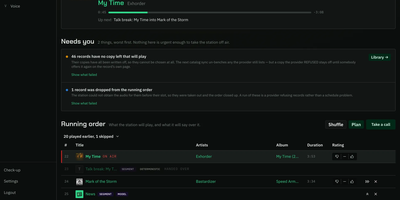
Somewhere in your house, a presenter is introducing the next record, and that presenter is a language model running on your own server. Deadair builds you a real radio station rather than another playlist: it picks records from your Navidrome, Jellyfin, Emby, or Plex library, or from Spotify, YouTube Music, Pandora, and Apple Music, writes what the host says between songs, speaks it in that host's own voice, and broadcasts the result as one shared live stream over Icecast, with no skip button and the same show for every listener. From the console you steer it in plain sentences: tell it "rap like Snoop Dogg" and the next hours programme themselves to that brief, or ask why the record on air was chosen and get an answer. The forward lineup runs several hours deep, visible and editable, and nothing reaches air until its audio is already on the machine, so the stream never stutters waiting on a download. Words and voice are separate choices, swapped live in Settings: break-writing can run on a hosted model while a local Kokoro or Chatterbox voice reads it, and a station with no model at all still talks. Twenty-seven bundled plugins cover music sources, metadata, news, weather, and speech, and third-party plugins install from the console. Running on a dedicated VPS on RepoCloud with guaranteed CPU, RAM, and SSD, full root SSH access, and a browser serial console. MIT licensed.
DumbBudget
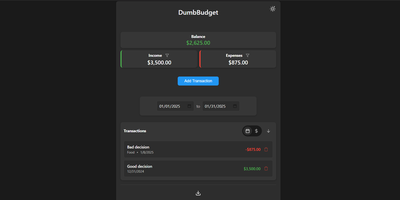
"Stupid simple software" is the entire philosophy at DumbWare.io, and DumbBudget delivers it: no over-engineering, no complexity, no accounts, no bank connections - just a clean, modern ledger for money in and money out. Log income and expenses, assign categories, and watch real-time balance calculations update as you type. Finding transactions is quick: filter by type, narrow by date range, sort by date or amount. When tax season or spreadsheet analysis calls, everything exports to CSV. Access control matches the philosophy - a single PIN (set via one environment variable) gates the app, backed by real security engineering: rate limiting on PIN attempts, temporary lockout after failures, secure session handling, and no sensitive data in browser storage. Multi-currency support covers the ISO codes, and a SITE_TITLE variable names each instance - deliberately useful, because running separate instances per account or family member is the intended pattern for multi-user needs. The responsive UI ships light and dark themes and installs as a PWA on phones, where expense logging actually happens. Configuration is five environment variables; data persists in one folder. If Actual Budget and Firefly III feel like accounting software, this is the notepad that gets used. GPL-licensed.
DumbAssets
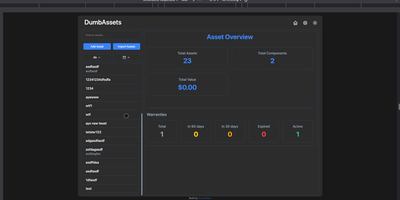
DumbAssets delivers a deliberately simple physical asset tracker that does exactly one thing well — keeping tabs on everything you own, from server racks down to individual HDDs, with hierarchical component nesting that mirrors real-world organization. The Node.js backend stores all data in JSON files within a single /data directory, making backups trivial with one folder copy while the PWA-enabled frontend provides responsive access from any device with light and dark theme persistence. Assets track model numbers, serial numbers, purchase dates, warranty expiration dates, and custom descriptions while sub-components nest infinitely — attach a Dell R730 to your server rack, then attach individual drives, CPUs, and NICs to that server with separate warranty and maintenance schedules for each. The Apprise notification engine fires configurable alerts for warranty expirations and maintenance events with direct links back to the specific asset in the web interface. Photo uploads attach visual records to any asset, receipt storage keeps purchase documentation alongside the item it covers, and a flexible tagging system enables cross-cutting organization beyond the hierarchy. PIN authentication with brute-force protection secures the interface, while search covers names, models, serials, and descriptions with sorting by warranty status, tags, components, or alphabetical order. Deploy with a single Docker command mapping port 3000 and one data volume. Running on a dedicated VPS on RepoCloud with guaranteed CPU, RAM, and SSD, full root SSH access, and a browser serial console. GPL v3 licensed.
Tamari
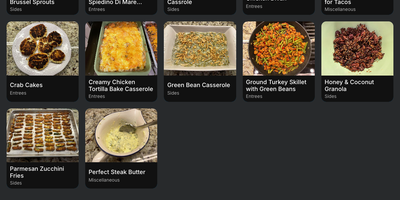
Recipes scattered across bookmarks, screenshots, and open browser tabs become one searchable cookbook with Tamari, which adds meal planning, per-store shopping lists, and one-click imports from a built-in library of over 400,000 recipes. Save each dish with its photo, ingredients, instructions, servings, time estimates, and nutrition information, then find it again through search, categories, or your favorites list. The Explore collection gathers more than 400,000 recipes from 300 cooking websites, and any of them moves into your personal cookbook with a single click. Pick a recipe and its full ingredient list lands on a shopping list at once, organized per store so a supermarket run and a farmers market run stay separate. Check items off as you shop, or scan a barcode to add something the moment you notice it running out at home. The meal planner assigns recipes to specific dates up to 30 days ahead, turning the weekly what-is-for-dinner debate into a settled schedule. Adjust how your cookbook displays, with large photos to show dishes off or compact photos to fit more on screen, sorting by title or date added, and light or dark themes for late-night cooking sessions. Share recipes with family members, reset a forgotten password by email, and manage everything programmatically through the REST API from scripts or other tools. Running on a dedicated VPS on RepoCloud with guaranteed CPU, RAM, and SSD, full root SSH access, and a browser serial console. GPL-3.0 licensed.
PdfDing
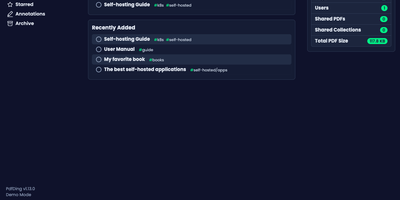
PdfDing turns a scattered folder of PDFs into a proper library you can read, annotate, sign, and share from any browser. The viewer remembers exactly where you stopped in every document, so a manual opened on your desktop resumes mid-page on your phone, and progress bars in the library show how far you have read at a glance. Workspaces and collections group related documents, multi-level tags classify them, and starring, archiving, and bulk actions keep even a large archive tidy. Inside the viewer you can add text, highlights, and freehand drawings, then review and export your highlights and comments from dedicated sections and attach Markdown notes to a document. A signature you create once is stored on your server and waits for you on every device, ready to drop onto contracts and forms. Sharing a collection or a single PDF takes a link or a QR code, with optional access control over who can open it and for how long. Accounts are protected by OIDC single sign-on and two-factor authentication with TOTP or WebAuthn, and dark mode, an inverted color mode, and multiple layouts keep long reading sessions comfortable. Running on a dedicated VPS on RepoCloud with guaranteed CPU, RAM, and SSD, full root SSH access, and a browser serial console. AGPL-3.0 licensed.
Ollaya
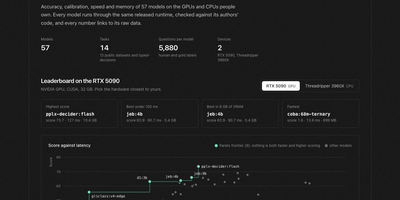
Ollaya serves decision models that answer typed questions about a message, ticket, or document with calibrated probabilities, through a self-hosted API shaped like the hosted service it can replace. Send a state, which can be an email, a support ticket, or any JSON, plus typed choice, score, and yes or no questions, and the model answers in one forward pass in milliseconds without generating text. Pull models by name the way Ollama users already know, with run, list, ps, show, copy, and remove commands managing the local store. Downloads verify every layer against its sha256 digest, resume when interrupted, and share blobs between models so storage stays lean. Existing TypeSafe code keeps working by changing one environment variable, because the /v1/systemone and /v1/decisions endpoints are wire-identical and the official SDK sends its key the same way. The native /api adds routing information and timings, model loading and unloading, and streamed pull progress for your own tooling. Put it to work triaging inboxes, routing requests to the right model or team, screening prompts for injection and jailbreak attempts, or replacing per-token LLM classification calls with a local answer. Agents reach the same engine through the bundled MCP server, and LiteLLM, LangChain, DSPy, LlamaIndex, n8n, and Dify connect through their existing integrations. Running on a dedicated VPS on RepoCloud with guaranteed CPU, RAM, and SSD, full root SSH access, and a browser serial console. Apache-2.0 licensed.

TLDR Radio
Every morning, TLDR Radio converts the day's TLDR newsletters into chapterized podcast episodes you listen to instead of read, generated entirely on your own server. Pick a date at the Broadcast Desk, hit Broadcast, and a few minutes later chapterized episodes wait in your browser, one per newsletter with each story as its own track. All fourteen TLDR newsletters can sit on the Desk for manual runs, join the overnight build, or both, and the overnight selection shows an estimated listening time measured from your own episodes. Scheduled builds retry until the day's issue appears and can send an ntfy notification when the audio is ready. The player groups your library by day, shows each chapter with its section heading, source summary, and link to the original, and offers 15-second skips, playback speed up to 2.5x, auto-advance, resume, and keyboard shortcuts. Sponsor segments become their own clearly marked chapters in a different voice, announced out loud so an ad is never mistaken for news, and easy to skip. Sixty-eight voices can be auditioned in Settings, and every episode downloads as a single tagged MP3 with album, title, and author set for podcast and audiobook apps. Running on a dedicated VPS on RepoCloud with guaranteed CPU, RAM, and SSD, full root SSH access, and a browser serial console. MIT licensed.
brain.md
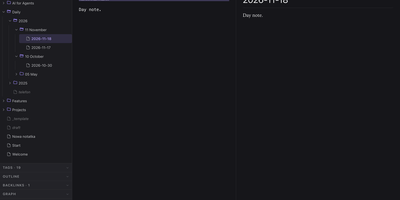
Your notes stay a folder of plain markdown files, and your AI agents get a safe, permissioned way to read, search, and write them. Open an existing Obsidian vault and wikilinks, embeds, callouts, math, mermaid diagrams, tasks, frontmatter, and aliases all work, in a live editor with a scroll-synced preview, a command palette, a quick switcher, and a task list across the whole vault. A graph view maps notes and links, with hover highlights, folder and tag filters, and a local graph beside the current note. Semantic search, switched on in Settings, indexes notes on every save with a bundled local embedder, or with Ollama, LM Studio, OpenAI, or any compatible endpoint, and a Related panel surfaces similar notes and suggests tags. An MCP server with 18 tools and two resources lets Claude Code, Cursor, and other agents search, read, and write notes, with read and write rights set per folder and a write refused when another agent changed the note first. Saves are committed to git with the person or agent named, so History shows diffs and restores any version. An optional password protects the web app and the MCP endpoint, with Google, GitHub, Keycloak, or Authentik sign-in as another door, and hidden-note rules keep scratch files out of the tree and search. Running on a dedicated VPS on RepoCloud with guaranteed CPU, RAM, and SSD, full root SSH access, and a browser serial console. AGPL-3.0-or-later licensed.

Openfront
Why rent your own shop from a platform that takes a cut and sets the rules? Openfront runs the whole store, storefront and back office together, on a server you own. Customers get a fast, mobile-responsive store where they can browse the catalog, open product pages with variants, fill a cart, check out, create an account, and follow their orders. You get the dashboard behind it: products and variants, orders and fulfillment, customers, payments through Stripe and PayPal, shipping integrations, and the everyday work of running a store without ten browser tabs. Stock is tracked across multiple locations with movements and backorders, so a warehouse and a shop floor stop disagreeing about what exists. Gift cards run their full life from creation to redemption, returns and refunds follow a proper claims workflow instead of an email thread, and discounts can be simple codes or automated campaigns. Selling abroad is built in, with multiple currencies and regional pricing, while analytics and reporting show what is actually selling. When clicking through menus is slower than saying it, the built-in AI assistant can add products, change prices, and configure regions from a chat, working inside your own logged-in permissions so it can only do what your role allows. Running on a dedicated VPS on RepoCloud with guaranteed CPU, RAM, and SSD, full root SSH access, and a browser serial console. MIT licensed.
OpenTodo
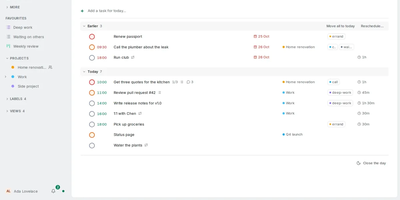
Plan the day in the morning, capture tasks in your own words as they appear, and let every device settle on the same list by evening: that rhythm is what OpenTodo is built around. The Today view opens with a briefing, a daily limit, and morning, afternoon, and evening sections, with time blocking and meetings counted against the day's real capacity. Quick add understands natural language in six languages, a pasted list becomes tasks in one step, and the command bar, inbox processing, email-to-task, and dictation keep capture fast. Projects organize work with sections, boards whose cards carry notes, timelines, sub-projects, and areas, while recurring tasks and sequential projects handle routines and ordered work. Lists can be shared with the people you live and work with, invited by link once the owner account exists. Every device keeps a full copy and works offline; changes are stamped per field and merge cleanly through your server when you reconnect, with history and undo preserving earlier values. CalDAV and calendar feeds connect your calendars, GitHub and GitLab issues flow in, and webhooks plus ntfy, Pushover, and Gotify send notifications out. Scheduled backups go to a folder, S3-compatible storage, or WebDAV, and the whole server is one container around one SQLite file. Running on a dedicated VPS on RepoCloud with guaranteed CPU, RAM, and SSD, full root SSH access, and a browser serial console. AGPL-3.0 licensed.
NexoPOS
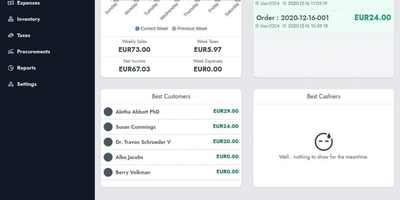
NexoPOS is a point-of-sale platform that runs a whole shop from the browser, covering the till, the stockroom, the customer book, and the day-end numbers in one place. Cashiers ring up sales on a touch-friendly register screen, take cash or card payments, print receipts, and process refunds without leaving the same view. Every sale draws down inventory automatically, and procurement flows record what arrived, from which supplier, and at what cost. Low-stock warnings and a full stock history help owners reorder before shelves go empty. Products carry categories, units, and tax rules, and barcode plus scale barcode support keeps weighed goods moving at the checkout. Regulars earn rewards, join customer groups, and redeem coupons at the till. Managers open and close registers, assign roles and permissions to staff, and review an activity trail for every sensitive action. Reports break down sales, costs, and stock value per period, giving a small shop the numbers usually reserved for chain headquarters. Owners extend the core with installable modules for restaurants, multiple stores, rentals, and bookings, added from inside the dashboard instead of by editing code. The same installation serves a single boutique today and a growing chain tomorrow, since registers, stores, and staff all live in one database. Running on a dedicated VPS on RepoCloud with guaranteed CPU, RAM, and SSD, full root SSH access, and a browser serial console. GPL-3.0 licensed.
Lakasir
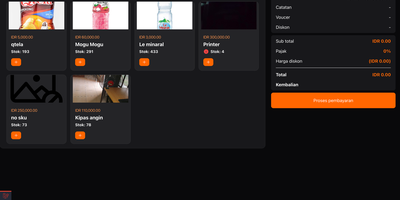
A corner shop, a small cafe, or a minimarket can run its till on Lakasir, a point-of-sale system that keeps sales, stock, and the money owed in one tidy web panel. Cashiers process sales from the cashier menu, apply a discount to a single item or to the whole bill, and print receipts on a USB thermal printer straight from the browser. Products can carry a different price for each basic unit, so a carton, a pack, and a single piece of the same goods all ring up correctly. Purchasing records orders to suppliers, and barcode scanning speeds up receiving, stock counts, and checkout alike. Stock opname sessions walk the shelves with a scanner and reconcile counted quantities against the system, exposing shrinkage before it grows. Receivables track what customers owe the shop and what the shop owes others, with due amounts visible instead of buried in a notebook. Vouchers can be created, handed out, and tracked through redemption, and payment methods are defined by the owner rather than hard-coded. The real-time dashboard watches sales and performance as the day unfolds, and simple accounting rolls income, expenses, and profit into the same picture. Roles and permissions decide who may open the register, edit prices, or see the books. A companion mobile application puts the shop data in a pocket for checks away from the counter. Running on a dedicated VPS on RepoCloud with guaranteed CPU, RAM, and SSD, full root SSH access, and a browser serial console. GPL-3.0 licensed.
EmDash
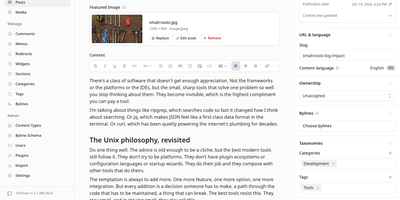
EmDash rebuilds the WordPress publishing experience as an open-source CMS, with drafts, revisions, scheduled posts, a media library, menus, widgets, and plugins that run in sandboxes and can only do what they declare. Writers get a rich-text editor with featured images, slugs, bylines, categories, and tags, plus signed preview links for unpublished work and a calendar of everything published or scheduled. Site builders define their own content types in a visual schema builder, choosing required and searchable fields, URL patterns, comments, SEO metadata, and edit locking so two people never overwrite each other. Uploads are drag and drop, with folders and filename search in the media library. Menus, sidebar widgets, reusable sections, and redirects with a 404 log shape the public site. Access is passkey-first, with OAuth and magic-link fallbacks, four roles from Contributor to Administrator, comment moderation, and personal API tokens. Coming from WordPress? Point the importer at a migration key, a site URL, or an exported XML file and it carries over posts, pages, media, and taxonomies. Plugins add hooks, settings, admin pages, dashboard widgets, custom blocks, and API routes after declaring capabilities such as content:read or email:send, while a built-in MCP server and CLI let AI assistants manage content directly. Blog, marketing, and portfolio templates give new sites a head start. Running on a dedicated VPS on RepoCloud with guaranteed CPU, RAM, and SSD, full root SSH access, and a browser serial console. MIT licensed.
llama-swap
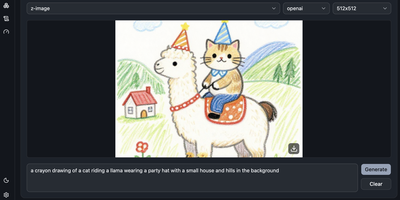
llama-swap puts one OpenAI-compatible and Anthropic-compatible endpoint in front of all your local models and loads whichever one each request names, unloading the one it replaces. Define models in a single YAML file, and chat, embedding, speech, transcription, and image requests reach the right backend automatically. The web UI includes a playground for chatting with any model, token metrics for every request, a request inspector that shows raw payloads and responses, buttons to load and unload models by hand, and a live log stream for the proxy and each upstream process. Profiles switch model routing at runtime, a swap matrix keeps selected models loaded together, and a time-to-live setting frees memory after idle periods. API keys restrict who can call the endpoints, and filters strip or force request parameters. Docker and Podman commands start and stop containers per model, and a Prometheus endpoint exposes system and GPU metrics. Running on a dedicated VPS on RepoCloud with guaranteed CPU, RAM, and SSD, full root SSH access, and a browser serial console. MIT licensed.