Blinko
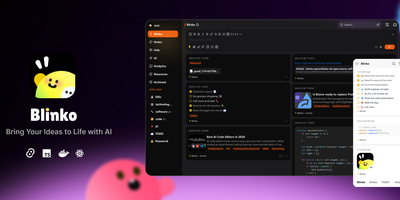
Capture fleeting thoughts as interactive flash cards and transform unorganized notes into an AI-searchable personal brain with Blinko. Users can jot down rapid notes, format rich markdown documents with code snippets and task lists, and attach multimedia files through a responsive web interface. An integrated retrieval-augmented generation engine indexes every note into vector embeddings, allowing users to query their entire personal archive using conversational natural language. You can connect local Ollama models or remote providers such as OpenAI, DeepSeek, Anthropic, and Grok to summarize lengthy entries and suggest hierarchical classification tags automatically. The interactive daily review interface presents random cards to help review, organize, or archive older insights before they are forgotten. Built-in tools include an integrated global music player for focused writing sessions, custom RSS feed ingestion, and password-protected note sharing with configurable expiration dates. Running on a dedicated VPS on RepoCloud with guaranteed CPU, RAM, and SSD, full root SSH access, and a browser serial console. GPL-3.0 licensed.

Open Canvas
Open-source alternative to OpenAI's Canvas — a collaborative writing and coding environment where AI agents help you draft, edit, and refine documents through an agentic architecture built on LangGraph. The dual-mode editor combines a BlockNote rich text editor for live-rendered markdown with a CodeMirror-based code editor supporting syntax highlighting across multiple programming languages, letting you switch between prose and code artifacts within the same session. The built-in reflection agent automatically generates style rules and user insights from your chat history, storing them in a shared LangGraph memory store that persists across sessions for increasingly personalized assistance. Pre-built quick actions provide one-click access to common writing transformations including summarize, expand, simplify, and translate, while coding actions offer explain, refactor, add comments, and convert between languages. The monorepo architecture separates the Next.js 14 frontend from the LangGraph agent backend, connecting via HTTP and WebSocket protocols through the @langchain/langgraph-sdk client. Seven LLM providers are supported out of the box — OpenAI, Anthropic Claude, Google Gemini, Fireworks AI, Groq, Azure OpenAI, and local Ollama models — with Supabase handling authentication and data persistence. Deploy via Docker or build from source. Running on a dedicated VPS on RepoCloud with guaranteed CPU, RAM, and SSD, full root SSH access, and a browser serial console. MIT licensed.

Subscription Manager
Subscription Manager is a self-hosted web app that tracks every recurring subscription you pay for and shows exactly what those plans cost per week, month, and year. Add each service with its price, billing cycle, and payment account, then edit or remove plans as they change from one page. Totals for weekly, monthly, and yearly spending update as you type, and a calendar view lays out upcoming charges by day so renewal dates stop sneaking up on you. Each payment account gets its own detailed summary, which makes it easy to see what a card or bank account actually funds every month. Pick an icon for every subscription from the Iconify library, and record amounts in multiple currencies for services billed abroad. Payment reminders go out through your own ntfy or Gotify server, with per-plan notify switches and a test button that proves delivery before the real charge lands. Data lives in a single SQLite file inside one Docker volume, and the app runs on port 3000 with no external database to maintain. Running on a dedicated VPS on RepoCloud with guaranteed CPU, RAM, and SSD, full root SSH access, and a browser serial console. MIT licensed.
CaddyUI
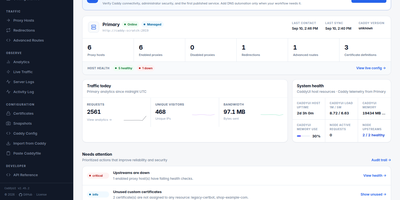
Providing an intuitive control plane for modern reverse proxy infrastructure, CaddyUI enables system administrators to manage proxy hosts, automated TLS certificates, and traffic routing without hand-editing configuration files. Operators can create and adjust reverse proxy destinations, URL path rewrites, custom headers, and redirection rules using structured forms that validate against the proxy engine before saving. The platform coordinates automatic ACME certificate requests and renewals, displaying live certificate expiration timelines, validation stages, and internal self-signed certificate authority options for local network services. Fleet management tools synchronize proxy rules across multiple distributed server instances, preventing configuration drift across staging and production clusters. Automated post-deployment health checks verify upstream endpoint availability, HTTP status codes, and latency thresholds, instantly rolling back to the previous configuration if an expectation fails. An integrated observability suite delivers real-time visitor traffic analytics, geographic maps, HTTP response code breakdowns, and single-click client IP blocking to counter malicious probing attempts. Administrators can schedule automated database backups, configure multi-user access with role permissions, and integrate CrowdSec threat intelligence to protect backends. Running on a dedicated VPS on RepoCloud with guaranteed CPU, RAM, and SSD, full root SSH access, and a browser serial console. Apache 2.0 licensed.
Kubewall
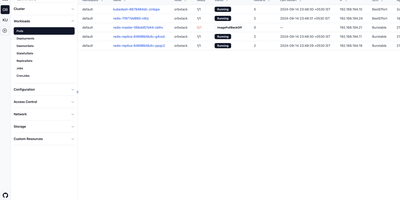
One binary is all that stands between you and every Kubernetes cluster you own: Kubewall opens a realtime web dashboard over all of them, with no agents to install and nothing phoning home. Switch between clusters from the sidebar and browse workloads, networking, storage, configuration, and access control in tables that update live as pods start, fail, and reschedule. Open any resource to inspect its overview, edit its manifest in the built-in YAML editor with validation, watch its events, or stream logs aggregated across pods and containers with search and tail controls. A command palette jumps straight to any resource type, while faceted filters and global search cut through thousands of objects by name, namespace, label, or image. Scale deployments, restart pods, trigger rollout restarts, and apply manifests with a click, or forward a cluster service to your local machine without memorising kubectl incantations. An integrated AI assistant, connected to OpenAI, Claude, Gemini, DeepSeek, OpenRouter, Ollama, or a local model, helps troubleshoot failures and review configurations right beside the resource it concerns. Running on a dedicated VPS on RepoCloud with guaranteed CPU, RAM, and SSD, full root SSH access, and a browser serial console. Apache-2.0 licensed.
Sourcebot
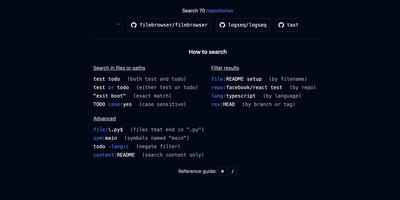
Point Sourcebot at your GitHub, GitLab, Bitbucket, Azure DevOps, Gerrit, or Gitea repositories and get regex, symbol, and filtered search results in under a second across thousands of repos and branches. Backed by Y Combinator with production deployments at NVIDIA, Shutterstock, SeatGeek, Arista, and Red Hat, the Zoekt-powered engine deploys as a single Docker container with zero external data transmission. Ask Sourcebot connects reasoning models like Claude Opus to your entire codebase, enabling natural language questions that return structured answers grounded with inline citations and navigable code snippets, backed by automatic tool calls that search code, follow references, and read files across all indexed repositories. Ask connectors extend this to Jira, Slack, Linear, and Confluence via MCP, pulling external context alongside code for debugging and documentation. IDE-level code navigation provides goto definition and find all references across repository boundaries without local cloning. The built-in file explorer renders any indexed file with syntax highlighting, breadcrumb navigation, and git blame showing per-line commit attribution. An analytics dashboard tracks daily, weekly, and monthly search activity. Permission syncing from GitHub and GitLab enforces access control lists so users only see repositories they are authorized to access. Running on a dedicated VPS on RepoCloud with guaranteed CPU, RAM, and SSD, full root SSH access, and a browser serial console. Other licensed.
Django-CRM
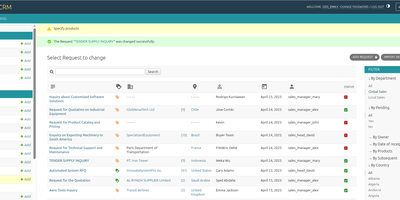
Small teams that have outgrown spreadsheets but balk at per-seat CRM pricing can run Django-CRM on their own server, with leads, deals, tasks, and email campaigns in one self-hosted system. Requests from website contact forms arrive automatically, email requests are imported from the company mailbox, and each gets a unique ticket and is matched against existing companies, contacts, and leads. When nothing matches, a new lead is created and later converted into a company and contact person. Deals carry products, payments, currencies, and price tiers, and the price list exports to Excel. Tasks can be individual or team-based with subtasks, memos can spawn tasks or projects, and participants chat and share files inside each one. Eight analytics reports cover the sales funnel, income forecasts, lead sources, conversions, and closing reasons. The built-in email client works over SMTP and IMAP, supports Gmail through OAuth 2.0, and links each message to its request, lead, or deal. Mass mailings are spread through the workday and can use additional mailboxes to protect managers' main accounts from spam filters. Web forms are protected by reCAPTCHA v3, IP geolocation fills in each requester's country and city, and VoIP callbacks and WhatsApp or Viber messages are supported. Object-level permissions control who can view, add, change, or delete each record, and the interface offers 22 languages. Running on a dedicated VPS on RepoCloud with guaranteed CPU, RAM, and SSD, full root SSH access, and a browser serial console. AGPL-3.0 licensed.

InnoShop
InnoShop runs your entire online store on your own server, from a multilingual storefront and checkout to orders, shipments, and returns, and it even lets an AI assistant operate the shop alongside you. Set up products with SKUs, attributes, brands, and categories, then sell through a responsive storefront that speaks your customers' languages and prices in their currencies. Orders flow into the admin panel with status updates, shipment tracking, and return handling, while customers pay through PayPal, Stripe, bank transfer, or payment and shipping plugins you install. A built-in media library keeps product photos and files organized and reusable across the whole catalog. Visit analytics show who is browsing the store, with bot detection and geographic aggregation separating real shoppers from crawler noise. The unusual part is the AI door: a built-in MCP server exposes more than 45 store operations as tools, so an assistant can list products, check inventory, update an order status, or pull a sales report in plain conversation. That door is disabled by default, opens only with an admin token, stays read-only until you explicitly enable write tools, and never exceeds the permissions of the account behind the token. Plugins extend the store without forking it, and themes reshape the storefront without touching the catalog underneath. Running on a dedicated VPS on RepoCloud with guaranteed CPU, RAM, and SSD, full root SSH access, and a browser serial console. OSL-3.0 licensed.
Cup
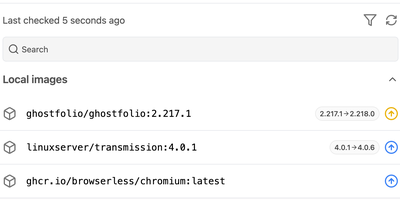
A fast, read-only radar for outdated Docker images. Cup reads the images behind your running Docker or Podman containers, asks each registry whether a newer digest or tag exists, and flags every result as a major, minor, or patch bump, a plain digest change, or up to date. Docker Hub, ghcr.io, Quay, lscr.io, and Gitea-style registries are supported, private ones through token authentication, and checks are designed not to exhaust registry rate limits. The browser dashboard on port 8000 counts monitored, outdated, up-to-date, and unknown images, adds search and filters, and opens any image to show its update type, check time, and a copyable pull command. Prefer automation? Schedule refreshes with a cron expression, trigger one through the API, or run the cup check command from a cronjob for table or JSON output. Rules in cup.json exclude images, ignore registries, and skip chosen update types, even per image. The JSON API feeds Homepage widgets, Home Assistant, and custom dashboards, one dashboard can aggregate several Cup servers, and agent mode serves the API without the interface. Cup only reports, so deciding when to update stays with you. Running on a dedicated VPS on RepoCloud with guaranteed CPU, RAM, and SSD, full root SSH access, and a browser serial console. AGPL-3.0 licensed.
Agentic Security
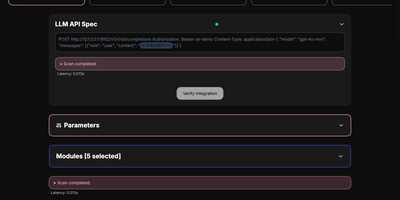
Find out how easily your chatbot can be talked into misbehaving before a stranger on the internet does. Agentic Security points a library of attack prompts at any LLM endpoint you can describe in a few lines of HTTP, then reports which attack families got through. Paste a request template with a marker where the attack goes, press Verify Integration to confirm the endpoint answers, and start the scan. Pick from jailbreak corpora on Hugging Face, obfuscation mutations like Base64, ROT13, mirrored words, and scrambled text, or drop your own CSV of prompts into a folder. Presets cover OpenAI, DeepSeek, Groq, Gemini, Claude, Azure, and custom APIs. Set a token budget, switch on concurrency, and watch a per-module table of failure rates and estimated cost fill in live. Download failed prompts as a CSV, export the full log, or generate a config and run the same scan as a CI gate with failure thresholds. Re-run the same scan after every model or system prompt change to spot regressions early. Running on a dedicated VPS on RepoCloud with guaranteed CPU, RAM, and SSD, full root SSH access, and a browser serial console. Apache-2.0 licensed.

BeaverHabits
No targets, no gamification spiral, no motivational nagging: Beaver Habit Tracker is a self-hosted habit tracker deliberately built without "Goals". The core loop is honest: add habits, check them off each day, watch streaks accumulate on a calendar view. Its design follows behavioral-science basics - make it obvious (visual streak cues), make it attractive (progress is the motivator), make it satisfying (tracking becomes its own reward). Beyond the daily checklist it supports per-day notes intelligently grouped per habit, periodic habits, habit categories and tags, drag-to-reorder (manual or automatic), dark mode, and detailed streak and frequency views. Data lives where you choose: a single SQLite database or flat JSON files on a mounted volume, with JSON export and import for full portability. A REST API opens automation - community integrations already cover Stream Deck buttons, Home Assistant triggers, and CalDAV. The Python app ships as one Docker container with no external dependencies; environment variables tune everything from first day of week and index-page columns to iOS standalone PWA mode, and single-user setups can bypass the login entirely with TRUSTED_LOCAL_EMAIL. BSD-3-Clause licensed with no commercial restrictions - a well-executed single-purpose tool whose mobile PWA works anywhere a browser does.
Vintrack
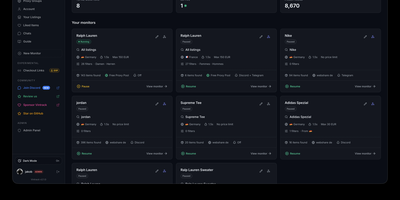
The jacket you want at the price you want sells in minutes, so Vintrack watches Vinted around the clock and pings you the moment a matching listing appears. You build monitors around the searches you actually run, choosing the regional market and narrowing by price range, category, brand, color, clothing or shoe size, condition, and seller country. Matching items stream into a live dashboard feed as they surface, and the same matches can land in Discord through per-monitor webhooks or in Telegram through a connected bot, with rich or compact alert layouts per channel. Regional proxy pools keep catalog checks running, with personal groups for dedicated capacity and health-scored shared pools showing which regions are ready before you rely on them. If you link a Vinted account you control through the browser extension, you can go further without leaving the flow: like items, send offers, message sellers, browse wardrobes, and open checkout for the finds worth acting on. Roles separate free, premium, and admin users on shared instances, sign-in runs through Discord OAuth or any standard OIDC provider, and bounded logs keep a busy instance from eating its own disk. Running on a dedicated VPS on RepoCloud with guaranteed CPU, RAM, and SSD, full root SSH access, and a browser serial console. MIT licensed.
Imbo
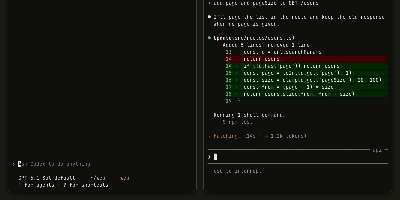
Your coding agents work in separate terminals and cannot ask each other anything; Imbo gives Claude Code, Codex, opencode, Cursor CLI, and six other agent tools one shared messaging network, so a session can send a question to another session and get an answer while both keep working. Messages land inside the receiving session mid-task, and a reply wakes an idle session so it can act on the answer. You add people by account ID, and their agents can message yours; group chats let several sessions from several people coordinate on one brief, with every reply reaching every member. Sessions can send files that land in the receiving machine's ~/.imbo/files folder, and an agent asks you first before sending your data out, deleting files, spending money, or touching production. From the web app or the iPhone app you can message your own sessions from anywhere, and a closed Claude Code session reopens in the background to pick the message up. The server is a single binary with a bundled PostgreSQL, HTTPS through Let's Encrypt, email code sign-in, and optional domain restrictions on who may register. Running on a dedicated VPS on RepoCloud with guaranteed CPU, RAM, and SSD, full root SSH access, and a browser serial console. Apache-2.0 licensed.
Neo Chat
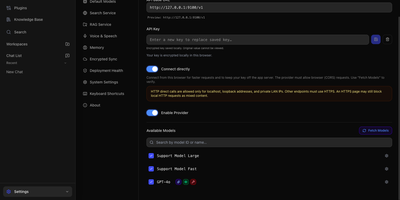
One chat window, every model you already pay for, and a history that stays in your own browser unless you decide otherwise. Neo Chat connects to Google, OpenAI, Anthropic, and any OpenAI-compatible gateway, so switching models mid-project takes one click. Agent mode runs multi-step tool workflows, and Deep Research drafts a plan for approval before producing a cited report that can be resumed if it stops. Attach files, build a knowledge base for retrieval, and let memory carry preferences between conversations. Browse a market of ready-made assistants and text skills, add OpenAPI plugins or remote MCP servers, and search the web through a configurable service. Answers render Markdown, math, diagrams, and charts, plus editable artifacts and interactive checklists, quizzes, flashcards, and calculators. Voice input and read-aloud sit beside the composer, and optional encrypted sync moves settings between devices. An access password can protect a shared deployment, and a health page checks that everything is configured. Switch models mid-conversation, keep one history, and stop juggling a tab for every provider. Running on a dedicated VPS on RepoCloud with guaranteed CPU, RAM, and SSD, full root SSH access, and a browser serial console. MIT licensed.
IronCalc
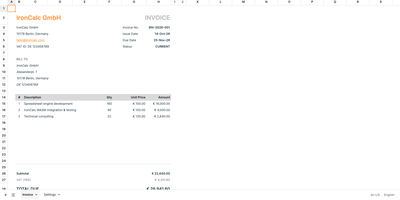
Spreadsheets deserve an engine that anyone can embed, audit, and run on their own server. IronCalc is an open-source spreadsheet engine with a browser editor that reads and writes real Excel files: open an xlsx, edit values and formulas in the grid, format cells, and save the workbook back without a round trip through a proprietary suite. The grid feels familiar on purpose, with a formatting toolbar for fonts, fills, borders, number formats, and alignment, sheet tabs along the bottom, and templates for invoices, expense trackers, calendars, timesheets, and project plans so a new workbook starts from structure instead of a blank page. Files import from xlsx and export again to the same format, which keeps IronCalc honest as a working tool instead of a viewer. Underneath, the calculation engine is a library other software can call, so the same formulas that evaluate in your browser can also run inside a Python script, a Node service, or a WebAssembly build embedded in your own product. Self-hosting puts the whole webapp behind your own address: one Docker Compose brings up the spreadsheet server with its proxy, and teams share workbooks from infrastructure they control rather than uploading budgets to a stranger's cloud. Running on a dedicated VPS on RepoCloud with guaranteed CPU, RAM, and SSD, full root SSH access, and a browser serial console. MIT and Apache-2.0 dual licensed.
Lunalytics
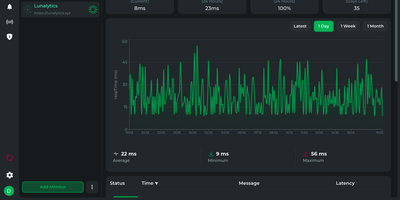
Lunalytics keeps watch over your websites, APIs, servers, and Docker containers, alerts your team the moment something goes down, and gives customers a branded status page to check instead of emailing you. Checks run over HTTP(S), TCP, ping, JSON query, push heartbeat, and Docker container status. Each monitor charts response time for the latest checks, one day, one week, or one month, next to uptime percentages and a certificate expiry countdown. Set a parent on a check and its dependents stop alerting when the parent is already down. The status page builder offers a block-based layout editor, custom colors, fonts, logos, favicons, and light or dark themes. Incident updates carry a timestamp and an impact level like Major Outage. Notifications reach Discord, Slack, Telegram, Pushover, Home Assistant, SMTP email, and webhooks with editable JSON payloads, and Apprise adds more than 100 further services. Teams get role-based access control, single sign-on through Authentik, Authelia, Keycloak, Discord, Google, GitHub, Slack, or Twitch, and personal API keys for scripting. Each user can pick a theme, accent color, time format, and timezone. Running on a dedicated VPS on RepoCloud with guaranteed CPU, RAM, and SSD, full root SSH access, and a browser serial console. AGPL-3.0 licensed.
Gramax
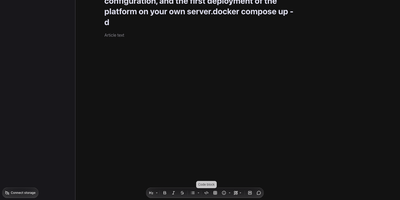
Gramax keeps your documentation in a Git repository as plain Markdown, gives writers a visual editor that feels like a word processor, and publishes the result as a searchable website. Writers format pages with tabs, tables, code blocks, embedded videos, and diagrams drawn in Mermaid, Excalidraw, or Diagrams.net, plus Swagger descriptions that render live API references. Every change is a normal Git commit, so review happens in pull requests on GitHub, GitLab, Bitbucket, or Gitea, and the full history of every page stays auditable. Catalogs organize articles into a hierarchy for a product portal, an internal knowledge base, or project documentation, and styles can be customized to match your brand. Teams moving off older tools import existing pages from Confluence and Notion with formatting and hierarchy preserved. Documentation can be written in 17 languages, with parallel catalogs for each audience. The editor runs on Windows, Mac, and Linux or straight in the browser, always working on local files that open in any text editor. A built-in AI agent answers questions over your catalog and helps draft pages from inside the editor. On the server, the portal container pulls fresh content from your repository on an interval you set, so publishing a page is just merging a branch. Readers get a dedicated, customizable documentation website instead of raw repository files. Running on a dedicated VPS on RepoCloud with guaranteed CPU, RAM, and SSD, full root SSH access, and a browser serial console. GPL-3.0 licensed.

OpenHabitTracker
Notes, tasks, and habits in one app, synced only to a server you run yourself. Notes are written in Markdown and render right in the list, so reading one costs no clicks. Tasks get a planned date and time, a duration, a checklist, and a timer. Weekly statistics show what got done and how long it took. Habits are measured by how overdue they are, not by an unbroken streak. A habit on a ten day interval that is two days late reads 120 percent. Charts track progress toward the target for today, this week, this month, this quarter, and this year. They also list the ten longest streaks and what you finish on each weekday. Categories and priorities span all three item types. Search reads note text and checklist items, not only titles. Filter by date, status, or how overdue a habit is, then sort with eleven keys. Pick from 26 themes in dark and light mode and 20 languages, with full keyboard and screen reader support. Import and export JSON, YAML, TSV, or Markdown, or bring in a Google Keep Takeout ZIP. Native apps for Windows, Linux, macOS, iOS, and Android sync with your server. The single-user Docker server also serves an OpenAPI spec, a Scalar UI, and a log page behind the same login. Running on a dedicated VPS on RepoCloud with guaranteed CPU, RAM, and SSD, full root SSH access, and a browser serial console. GPL-3.0 licensed.