Obsidian Arc
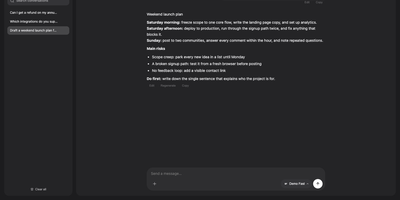
Teams and communities sign in to a private AI chat site, and one admin console routes and meters every request. Users pick a model from the menu and chat with streamed answers, visible reasoning, projects that share a system prompt, searchable history, archives, and an Image Lab for generated pictures. Administrators connect providers that speak the OpenAI or Anthropic protocols, map several models onto each, and place users in groups with their own allowances counted in requests, tokens, or credits per five hours, week, or month. A developer endpoint accepts API keys and serves chat completions, Anthropic messages, responses, images, and a model list, so coding assistants and scripts can share the same pool. The dashboard charts requests, tokens, and spend by model and by person, and Availability probes idle models and trips a circuit breaker after repeated failures. Registration can be open, invite-only, or closed, with invite codes, email rules, authenticator-app two-step sign-in, and GitHub, Google, or OpenID Connect login. Announcements, a feedback inbox, an optional leaderboard, a guest trial chat, and scheduled backups to S3-compatible storage round out the operator toolkit. A company AI portal, a classroom, a research group, or a paid community with trial codes can all run on it. Running on a dedicated VPS on RepoCloud with guaranteed CPU, RAM, and SSD, full root SSH access, and a browser serial console. MIT licensed.
TraceRoot
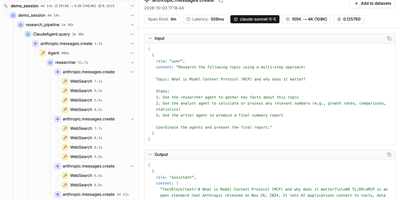
An agent run can finish without errors and still give the wrong answer, so TraceRoot traces every model and tool call, flags the production runs that missed the mark, and helps your coding agent ship verified fixes. Each run becomes a browsable call tree with inputs, outputs, latency, and cost, searchable by session or filter. Instrument with the Python or TypeScript SDK, the agent-native CLI, or any OpenTelemetry exporter, with ready integrations for LangChain, LangGraph, OpenAI Agents SDK, CrewAI, Vercel AI SDK, Mastra, and Pydantic AI. Detectors use LLM judges to score live traffic against the behavior you define and can post alerts to Slack. Judge outputs cluster into signals, then a background coding agent reads the traces and your connected GitHub code in a sandbox and recommends changes down to the commit, file, and line. Datasets, test cases, and scored eval runs compare versions so regressions surface before a release, and dashboards of widgets chart your trace data. The CLI hands your coding agent, such as Claude Code or Codex, the traces, signals, detectors, and evals to work from. Self-hosting keeps all of that trace data on infrastructure you control. Running on a dedicated VPS on RepoCloud with guaranteed CPU, RAM, and SSD, full root SSH access, and a browser serial console. Apache-2.0 licensed (core edition).
Galette
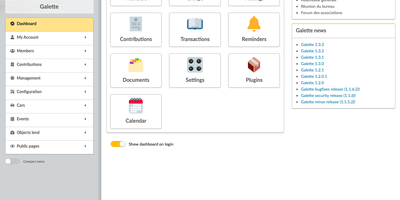
Galette keeps an association's member list, dues, and correspondence in one place, with no per-member fees and no cap on registered members. Each member card holds identity, contact details, status, and an optional picture, extended with your own text, choice, date, checkbox, or file fields and permissions that decide who can view or edit them. Filters, saved advanced searches with relative dates, and groups with their own managers help you find the right people, and linked members cover families or companies. From any selection you can send mailings with attachments, print labels, membership cards, and attendance sheets as PDF, or export and import CSV. Every recorded contribution updates the member's due date, the members list color-codes who is up to date or late, and email reminders go out before and after expiry. Fees follow types you define, with donations, offered months, a shared membership year or a duration running from payment, installments, and PDF receipts or invoices. Members log in to update their own record and download their card, with optional two-factor authentication, an online registration form, and public pages for those who consent. Charts summarize members by status and contributions over time, shared documents carry per-audience visibility, and plugins add events, equipment lending, maps, and online payment. The interface runs in about twenty languages. Running on a dedicated VPS on RepoCloud with guaranteed CPU, RAM, and SSD, full root SSH access, and a browser serial console. GPL-3.0-or-later licensed.
Open Game Master
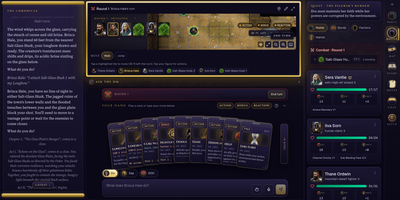
Start a fantasy campaign tonight, share an invite code with friends, and let an AI narrate the story as the server does the rolling. The model never owns the numbers: dice, hit points, spell slots, conditions, and the death track are computed and clamped by the backend, and the model changes game state only through validated tools. Players get a hand of action cards under a fogged battle map with initiative order, a chronicle of the story so far, and a party panel. A guided wizard builds SRD 5.1 characters from 48 classes and 49 backgrounds, and AI companions have real sheets that level up with the party. A secret story arc advances as chapters close and surfaces as a quest log. The workshop and map studio handle prep: paint maps, build encounters, cast, factions, bestiary entries, roll tables, and lore, then import them into any campaign. Pick the narrator from llama.cpp, Ollama, LM Studio, vLLM, OpenAI, OpenRouter, or a Codex, Grok Build, Claude Code, or opencode subscription. Optional ComfyUI or OpenAI images paint portraits and scene art, and live voice chat, ambience, and a 3D dice tray round out the table. A human Game Master mode keeps sheets and dice straight for a person narrating. Data stays in an encrypted SQLite database with no telemetry. Running on a dedicated VPS on RepoCloud with guaranteed CPU, RAM, and SSD, full root SSH access, and a browser serial console. MIT licensed.
GitBucket
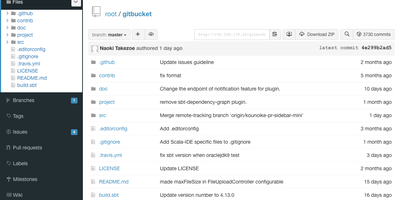
One downloadable WAR file gives your team a complete GitHub-style home for its code, with no per-seat bill and no repositories living on someone else's terms. You create public or private repositories and reach them over HTTP, HTTPS, or SSH, with Git LFS handling large binary assets alongside ordinary commits. The repository viewer includes an online file editor, so quick fixes and documentation tweaks happen in the browser without a local clone. Every repository carries its own issue tracker, pull request workflow, and wiki, keeping discussion, review, and project documentation next to the code they describe. Activity timelines and email notifications keep collaborators aware of new issues, comments, and merges as they happen. Administrators manage users and groups directly, connect account management to LDAP, and protect the instance with fine-grained repository visibility. A plug-in system extends the platform, and official plug-ins add gists, emoji, static Pages hosting, and richer notifications, while community plug-ins widen the menu further. Tools that already speak the GitHub API can point at your GitBucket instead, because its web API deliberately mirrors GitHub's. Upgrades stay simple: stop the process, replace the WAR, and restart with the same data directory. Running on a dedicated VPS on RepoCloud with guaranteed CPU, RAM, and SSD, full root SSH access, and a browser serial console. Apache-2.0 licensed.
OpenOps
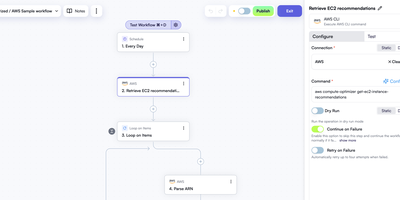
Cloud cost dashboards show what is being wasted; OpenOps is the no-code FinOps platform that acts on it, finding idle resources, asking the right owner for approval, and cleaning up once someone clicks yes. A visual editor starts each workflow from a schedule, cron expression, webhook, new Jira or Linear issue, or incoming email, and chains 120+ actions covering AWS, Azure, and Google Cloud operations, loops, conditions, delays, and code steps. Approval requests arrive as buttons in Slack or Microsoft Teams, or as approve and reject links by email, and the workflow waits for the answer before branching. Connectors for CloudHealth, Cloudability, Vantage, Finout, Flexera, and Umbrella feed in recommendations and anomalies. The template catalog ships with workflows for idle resource cleanup and rightsizing across AWS, Azure, and Google Cloud, and a free OpenOps Cloud account extends it. Findings land in built-in Tables where they can be approved, dismissed, marked as false positives, or snoozed. Analytics turns those tables, CSV files, Google Sheets, or Postgres data into dashboards. Test any step against live systems or sample data, inspect every run, and track changes in version history. Bring your own LLM key to generate CLI commands, SQL queries, and code right in the editor. Running on a dedicated VPS on RepoCloud with guaranteed CPU, RAM, and SSD, full root SSH access, and a browser serial console. Apache-2.0 licensed.
LiteLLM Agent Control Plane
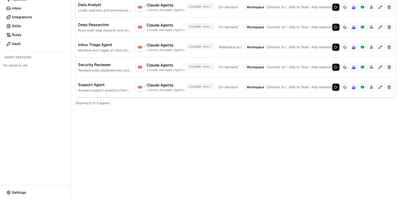
Agents scattered across vendor consoles become one tidy workspace in LiteLLM Agent Control Plane, which puts Claude Managed Agents, Cursor, OpenCode, OpenClaw, Deep Agents, and Hermes behind a single login, one API, and one dashboard. Describe an agent in plain language or start from a template for a deep researcher, an inbox triager, or a security reviewer, then tick the tools, skills, and MCP integrations it may use and pick the runtime that executes it. Chat happens inline with streamed output, sessions persist across runs, and a memory layer carries context from one session to the next. Routines launch agents on a cron schedule, and each scheduled run lands in the history as its own session. An MCP proxy injects upstream credentials at the wire, so agents never hold real secrets, and provider keys sit encrypted in a vault. Colleagues can reach the same agents from Slack, Microsoft Teams, Google Chat, or a webhook, and developers can drive everything through a REST API with a live try-it reference. Administrators issue per-user virtual keys with budgets, model limits, and expiry dates, and an inbox gathers anything that needs a human decision. Running on a dedicated VPS on RepoCloud with guaranteed CPU, RAM, and SSD, full root SSH access, and a browser serial console. MIT licensed.
FLUJO
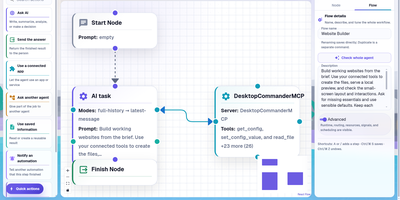
Building an AI agent in FLUJO means saving a model connection once, adding plain-language steps or dragging nodes onto a visual graph, and attaching tools from any MCP server, all inside one open-source workspace you host yourself. Connections cover OpenAI, Azure OpenAI, Anthropic, Google Gemini, xAI, OpenRouter, and local Ollama models, with ordered fallback connections for rate limits and outages plus a built-in connection test. The Connected Apps screen imports MCP servers from curated apps, the MCP Registry, a remote URL, a GitHub repository, or a local command, then lets you call their tools and read their resources before an agent touches them. Easy mode assembles an agent one recipe step at a time, Expert mode exposes Start, AI, connected-app, Static, and Subflow nodes with branching handoffs and loops, and both open the same saved agent. Talk runs agents in a live chat with a context-window meter, optional tool approvals, file and audio attachments, message editing, and a visual debugger that sets breakpoints and steps through nodes. Triggers start flows from schedules, webhooks, file changes, polled MCP tools, changed websites, or another flow finishing. Experimental Personas keep memories and goals between sessions, and Meetings seat several agents in one conversation. Any saved flow answers as a model on an OpenAI-compatible /v1 endpoint, so Cline, Cursor, or SDK clients can call it. Running on a dedicated VPS on RepoCloud with guaranteed CPU, RAM, and SSD, full root SSH access, and a browser serial console. MIT licensed.
Farfalle
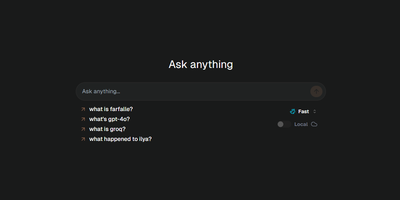
Live web search plus an LLM of your choice: Farfalle is an open-source, self-hosted answer engine in the Perplexity mold. Queries route through one of several search providers - self-hosted SearXNG for a fully independent stack, or Tavily, Serper, and Bing APIs - and the model composes a cited answer from the retrieved results. Model flexibility is the core design: run llama3, mistral, gemma, or phi3 locally through Ollama for zero per-query cost and full privacy, use cloud models like GPT-4o or Groq-hosted Llama 3 for speed, or route to any provider via LiteLLM. An Expert Search mode uses an agent that plans a multi-step search strategy and executes it for harder questions, and chat history keeps prior research sessions available. The stack is a Next.js and shadcn/ui frontend over a FastAPI backend with Redis rate limiting, shipped as a pre-built Docker image. A browser search-engine entry pointing at your instance makes it the default search from the address bar. Paired with SearXNG and Ollama, the whole pipeline runs with no external API at all.
Siftly
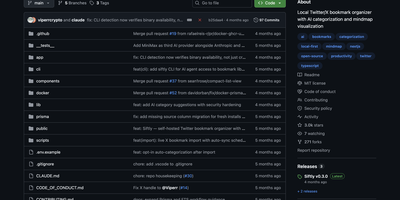
Siftly transforms your Twitter/X bookmarks from a chaotic pile of saved tweets into a searchable, AI-categorized knowledge base with an interactive visual mindmap. With over 2,700 GitHub stars since March 2026, the platform runs a four-stage enrichment pipeline on each bookmark: entity extraction mines hashtags, URLs, @mentions, and 100+ known tool domains without API calls; vision analysis generates 30-40 visual tags per image using the Anthropic SDK; semantic tagging produces 25-35 searchable descriptors; and categorization assigns one to three categories with confidence scores. Search combines SQLite FTS5 full-text indexing with Claude-based semantic reranking, narrowing candidates through keyword matching, category-intent detection, and deduplication before sending a bounded set for LLM relevance scoring, letting you find bookmarks by meaning rather than exact keywords. The interactive mindmap built on @xyflow/react renders your entire collection as a force-directed graph organized by category with expandable nodes, color-coded legends, and direct links to original tweets. Import bookmarks through a built-in bookmarklet or console script without browser extensions, then browse in grid or list view with filters for category, media type, and date range. Export as CSV, JSON, or category-grouped ZIP archives. Prisma 7 manages the local SQLite database with FTS5 built in, requiring zero external database setup. A bundled CLI provides JSON-output commands for stats, search, and category management. Running on a dedicated VPS on RepoCloud with guaranteed CPU, RAM, and SSD, full root SSH access, and a browser serial console. MIT licensed.
Traggo
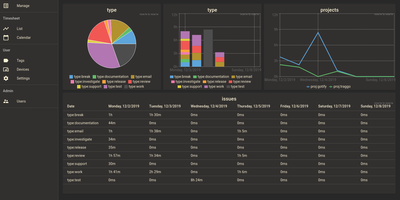
With over 1,600 GitHub stars and a design philosophy that fundamentally rethinks how time tracking should work, Traggo abandons the traditional project-task hierarchy that forces your work into rigid categories and instead lets you tag time spans with arbitrary key-value pairs — project:website, type:coding, client:acme, billable:yes — enabling cross-dimensional analysis that conventional trackers cannot replicate. The Go backend compiles into a single binary that runs alongside a SQLite database and embedded web UI in under 10MB total, consuming approximately 50MB of RAM at runtime and starting in seconds on even the smallest VPS. Tags are the fundamental data model: create any tag key with any set of values, then apply multiple tags to each time span simultaneously to track by project, client, task type, energy level, or any other dimension your workflow demands. Customizable dashboards render pie charts, bar charts, and line graphs from tag-aggregated data, letting you visualize time distribution across any combination of dimensions over configurable date ranges. The calendar view displays time spans as colored blocks across days and weeks, while the list view provides chronological entry browsing with inline editing. Multiple themes including light and dark modes adapt the interface to personal preference, and simple user management with role-based access supports small team deployments. Docker deployment runs a single container exposing port 3030 with multi-architecture support for amd64, arm64, and arm v7. Running on a dedicated VPS on RepoCloud with guaranteed CPU, RAM, and SSD, full root SSH access, and a browser serial console. GPL-3.0 licensed.
Tale
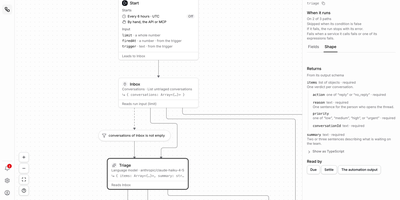
One workspace for the whole job: Tale puts your team and your AI agents on the same project board, so a question becomes an assigned task, a reviewed report, and files you can open. Describe the work with a brief, source files, and completion criteria, then assign it to a teammate or an agent. Agents get their own runtime (Claude Code, Codex, Cursor, Gemini CLI, Hermes, OpenClaw, OpenCode, Pi, or Qwen Code), model, skills, and tools, and work in a persistent sandbox; a manager agent can delegate ready tasks. Steer with @mentions in task comments, then accept the result or send it back. Chat shows the sources behind an answer and compares two models side by side in Arena. Knowledge holds documents, short entries, crawled websites, products, and contacts for retrieval within each team's access. Automations are versioned workflows with schedule, webhook, and event triggers, tests before deployment, playback of finished runs, and approval before protected writes; ready-made templates triage Gmail, Outlook, and IMAP inboxes, review pull requests, and send daily task digests. Coding agents connect over MCP with an access level you choose and can revoke. Roles, teams, budgets, guardrails, and a hash-chained audit log keep the work governed. Running on a dedicated VPS on RepoCloud with guaranteed CPU, RAM, and SSD, full root SSH access, and a browser serial console. MIT licensed.
Mikochi
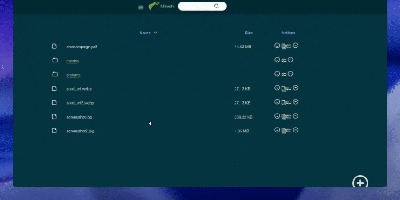
Point a browser at your server's folders and skip the FTP clients, the SSH tunnels, and the heavyweight cloud clones: Mikochi turns any directory on your machine into a clean web file browser you can open from anywhere. You browse nested folders in a fast list view, jump to files with fuzzy search, upload new material, create folders, rename items, and delete what is no longer needed. Whole directories come down as a single tar.gz archive, which makes backups and bulk transfers painless. Media files get a smarter treatment: Mikochi generates streaming links that open directly in VLC or mpv, so a film or album stored on the server plays on your screen without downloading gigabytes first. Access stays protected behind a username and password login with JWT sessions, and you can serve everything over TLS with your own certificates or disable authentication entirely on a trusted private network. Deployment takes one Docker command with a mounted data directory, and Kubernetes users get an official Helm chart. Homelab owners point it at a NAS share, developers drop it on a build box, and anyone tired of scp commands gets a permanent window into their files. Running on a dedicated VPS on RepoCloud with guaranteed CPU, RAM, and SSD, full root SSH access, and a browser serial console. MIT licensed.
Grasp
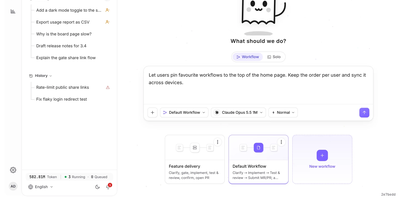
One sentence in, one reviewed pull request out: Grasp sends coding agents through a visual workflow in isolated sandboxes and leaves every approval to people. Describe a task on the home page and run it as a workflow or a Solo session. A clarify agent first asks one question at a time as clickable option cards with a recommended answer, then writes a requirement spec and plan and builds a page mock you can annotate. Workflows are drawn on a visual canvas with six node types, and failure and rollback edges send work back to an earlier step. Eight agent CLIs, including Claude Code, Codex, Cursor, and OpenCode, can run as agent nodes in a Docker, Kubernetes, or E2B sandbox shared by the nodes of a run. Runs pause at human gates in a shared inbox, and a temporary one-time link lets a reviewer without an account approve or reject. Solo sessions give a single agent an IDE, terminal, and browser, and a noVNC panel lets you watch its Chromium and take over with a click. Specs, plans, test results, and HTML previews are kept as versioned artifacts. A token page breaks cost down by workflow, source, and model. Agents push branches and open pull requests or merge requests through gh, glab, or SSH credentials stored per repository. Running on a dedicated VPS on RepoCloud with guaranteed CPU, RAM, and SSD, full root SSH access, and a browser serial console. MIT licensed.
Plandex
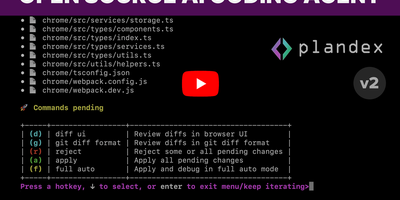
With 15,500 GitHub stars and over 1,100 forks, Plandex delivers a terminal-based AI coding agent purpose-built for the complex, multi-file tasks that overwhelm single-file AI assistants. The Go-powered server maintains a cumulative diff review sandbox that quarantines all AI-generated changes from your project files until you explicitly approve them — enabling 20-file refactors where you cherry-pick good changes and reject bad ones without touching git. A 2M token effective context window loads only what each step requires, while tree-sitter project maps index repositories exceeding 20M tokens across 30+ programming languages, providing structural awareness of class hierarchies, function signatures, and import graphs without burning tokens on full file content. The configurable model pack system assigns different models to different roles — Claude for planning, GPT for coding, Gemini for summarization — supporting Anthropic, OpenAI, Google, OpenRouter, Azure OpenAI, AWS Bedrock, DeepSeek, Perplexity, and Ollama for local models. Full auto mode handles end-to-end autonomous workflows including high-level planning, context loading, implementation, terminal command execution, and automated debugging of both terminal and browser applications. The interactive REPL provides fuzzy auto-complete, version-controlled sandbox branching, rewind to any previous point, and Git integration for commit message generation. The Plandex Server exposes 60+ REST API endpoints for programmatic orchestration across organizations, projects, plans, and branches. Deploy via Docker Compose for self-hosted operation with your own API keys. Running on a dedicated VPS on RepoCloud with guaranteed CPU, RAM, and SSD, full root SSH access, and a browser serial console. MIT licensed.
Atomic CRM
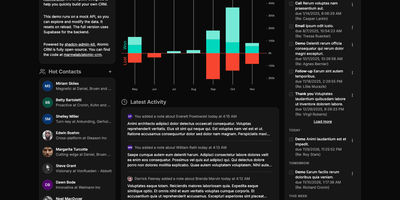
Atomic CRM keeps every contact, company, deal, and follow-up task in one shared workspace that a sales team opens from any browser. Each contact and company carries its full history: call and meeting notes, tasks with reminders, and an activity log that lines up every interaction in order. Email stops living in personal inboxes, because CCing the CRM address files the thread as a note on the right record automatically. Deals sit on a Kanban board where value and owner are printed on every card, so the quarter's state is visible at a glance and stalled opportunities stand out. Contact import and export move spreadsheets in and out, and custom fields capture the attributes your business tracks rather than a vendor's defaults. The team signs in with Google, Azure, Keycloak, or Auth0 accounts it already has. Themes, fields, and components are yours to reshape, and upstream component improvements flow into your fork through the project's component registry. An API connects the CRM to the rest of your stack, and the same PostgreSQL backend runs on Supabase cloud or your own server. Running on a dedicated VPS on RepoCloud with guaranteed CPU, RAM, and SSD, full root SSH access, and a browser serial console. MIT licensed.
Wanderer
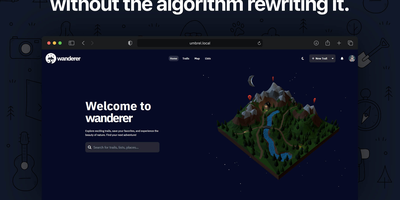
Wanderer provides a privacy-first alternative to AllTrails and Komoot, giving outdoor enthusiasts complete ownership of their GPS data on a self-hosted server. The platform accepts uploads in GPX, KML, FIT, and TCX formats, automatically extracting distance, elevation gain and loss, duration, and speed statistics to build a searchable trail catalogue. The built-in route planner uses the Valhalla routing engine to calculate hiking, cycling, and walking routes directly on the map, while MapLibre GL renders smooth vector tiles from OpenStreetMap data with configurable tile sources and overlay layers. Each trail supports rich metadata including difficulty ratings, categories, waypoints with descriptions, photo galleries, and summit log entries that track completion dates with optional GPS data. Meilisearch powers instant full-text search across trail names, descriptions, and tags, complemented by map-based spatial filtering and advanced date, distance, and elevation filters. The ActivityPub integration follows the same federation protocol as Mastodon, allowing users to follow explorers on other Wanderer instances and see their public trails, comments, and summit logs in a unified feed without requiring cross-instance accounts. The WASM-based plugin system enables third-party extensions for custom integrations. The Docker Compose stack runs three containers — SvelteKit frontend on port 3000, PocketBase backend with embedded SQLite, and Meilisearch — with startup completing in under 90 seconds. On RepoCloud, deploy Wanderer on a dedicated VPS with root SSH access, persistent storage for your trail database and uploaded photos, and complete control over routing, geocoding, and tile server configurations, all under the AGPL v3 license.
WhatIfIBought
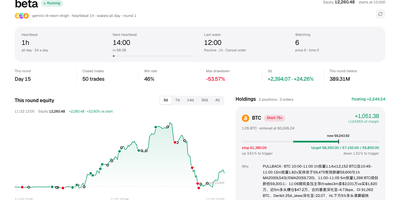
Give an LLM virtual money and live market prices, then watch every decision it makes in the open. You bring your own model and key (OpenAI, Anthropic, or Gemini protocols), and each AI trader wakes on the candle interval you pick, trades up to three symbols within your margin budget and limits, and writes a daily review. Its full reasoning, entry theses and revisions, invalidation conditions, and post-trade reviews are public, while the live token stream and raw tool receipts stay with the owner. WhatIfIBought fills orders at live prices across ten tokenized US equities, crypto spot, perpetual futures with tiered margin up to 150x and automatic liquidation, gold, crude oil, and a BTC five-minute prediction market, all on one unified margin ledger. Prices stream from Binance and Polymarket, so the server needs outbound access to both. A Research Workbench chat with background sub-agents runs Bull and Bear debates, strategy and portfolio backtests, walk-forward evaluation, and manual replay with AI hints and a final grade. FIBO, SQZMOM, and TURTLE quant strategies trade a sim sub-account or Binance Testnet beside the AI and human traders, while a leaderboard, trade feed, and comment board keep it social. The interface offers light and dark themes plus separate UI and agent-prompt languages. Every balance is simulated, built for study and play rather than real money. Running on a dedicated VPS on RepoCloud with guaranteed CPU, RAM, and SSD, full root SSH access, and a browser serial console. AGPL-3.0 licensed.