Olares
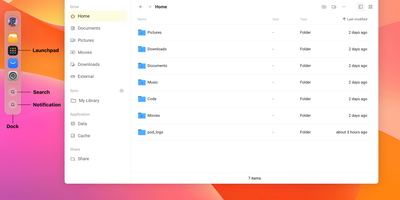
Your own hardware should be the cloud your AI lives in. Olares is an open-source personal cloud operating system that turns one machine, or a small cluster of them, into a private AI platform: run local large language models, keep always-on agents working on your files, and open a browser-based desktop of apps from any device. The built-in Lares assistant takes instructions in plain language and delegates research, file management, and routine automation to agents. The Model Console downloads and serves open models from a local catalog, with GPUs pooled across nodes and split by time or memory for AI, media, and gaming workloads. A one-click market installs self-hosted applications beside the system apps: Files browsing local folders, synced data, cloud storage, and SMB or NFS shares; Vault managing secrets; Dashboard watching the machine; and Control Hub administering it all. Networking stays private by design, with a built-in VPN, reverse proxy, and public, private, or internal entrances giving each app an HTTPS address without exposing individual ports. Backups protect the whole system, the desktop works from phone or browser anywhere, and your apps, storage, and accelerators behave like one coherent computer rather than a pile of containers. Running on a dedicated VPS on RepoCloud with guaranteed CPU, RAM, and SSD, full root SSH access, and a browser serial console. AGPL-3.0 licensed.
Black Candy
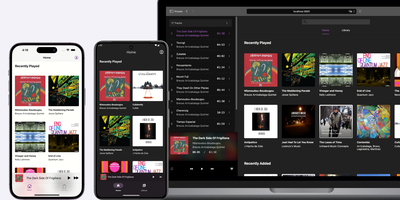
With 4,300+ GitHub stars and native mobile apps on three platforms, Black Candy transforms any VPS into a private Spotify-style streaming service for your personal music collection. The Ruby on Rails 7 backend with Hotwire Turbo and Stimulus delivers a responsive single-page-feeling web player supporting album browsing, artist views, playlists, favorites, and queue management without full page reloads. Point it at a media directory containing MP3, FLAC, OGG, AAC, or WAV files and Black Candy indexes metadata, fetches album artwork from Discogs API, and begins streaming immediately with on-the-fly transcoding that adapts bitrate to client bandwidth. Multi-user support gives each account independent playlists, favorites, and listening history while sharing the same music library — ideal for families or shared households. Native iOS, Android, and F-Droid apps maintained as separate repositories provide offline caching, background playback, and server discovery for mobile listening. The admin panel manages user accounts, configures media paths, and sets Discogs API tokens for automatic cover art retrieval. Deployment requires one Docker command — `docker run -p 80:80 ghcr.io/blackcandy-org/blackcandy:latest` — with persistent storage volumes for the SQLite database and media directory. For larger deployments, switch to PostgreSQL via environment variables with dedicated database URLs for ActionCable, SolidQueue, and SolidCache. Running on a dedicated VPS on RepoCloud with guaranteed CPU, RAM, and SSD, full root SSH access, and a browser serial console. MIT licensed.
EveryOS
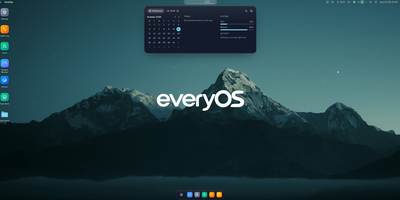
EveryOS gives the Linux server you already own a desktop it never had: open a browser and your machine greets you with windows you can move, snap, and stack, a dock, virtual desktops, widgets, and a launcher, all remembering exactly how you left them. Your files live in a private home with the usual folders, previews, a text editor, and a trash you can restore from, and plugging in a USB disk makes it appear on the desktop ready to mount. An app store installs self-hosted applications from catalogs and follows each deployment, later offering updates that keep your settings, rollbacks when one goes wrong, and backups of app data. The same workspace watches the machine itself: CPU, memory, disk, and network at a glance, systemd services and logs, available package updates, and a Docker view for containers and Compose projects. A real terminal opens in the browser under your own Linux account, Home Assistant arrives as a panel and desktop widgets with its tokens kept on the server, and an AI assistants app can find or install a local model server such as Ollama and chat with it privately. Running on a dedicated VPS on RepoCloud with guaranteed CPU, RAM, and SSD, full root SSH access, and a browser serial console. MIT licensed.
ArozOS
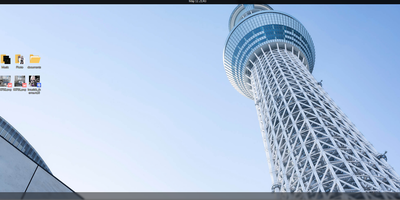
ArozOS turns a small server or single-board computer into a private cloud desktop you open in any browser, with windows, a start menu, and a taskbar instead of a pile of separate admin panels. You sign in at your server address and land on a desktop with a file manager for uploading, downloading, dragging, sharing, and tracking copy progress, plus built-in apps for music, photos, video, notes, recording, timers, a web editor, and a code studio, and you can add more from an index of third-party web applications. Behind the desktop, storage pools combine local disks and remote WebDAV, SMB, and SFTP mounts into one virtual file system with per-group permissions, isolated or shared folders, disk quotas, SMART status, and space analysis, and built-in WebDAV, SFTP, FTP, and legacy directory servers expose those files to other devices on your network. Accounts can sign in through OAuth or LDAP, IP allow and block lists and exponential login delays guard the front door, and system settings cover networking, port forwarding, performance monitoring, appearance, and updates. The system runs on as little as 512 MB of memory, installs from a script or precompiled binary, serves a mobile interface and installable progressive web app for phones and touch screens, and accepts Go and Python modules through a sub-service reverse proxy for teams extending it. Running on a dedicated VPS on RepoCloud with guaranteed CPU, RAM, and SSD, full root SSH access, and a browser serial console. GPL-3.0 licensed.
bewCloud
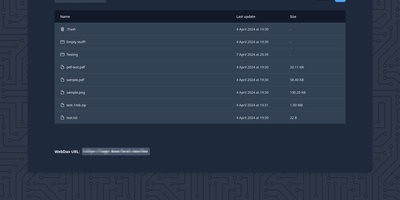
A personal cloud does not need the weight of a small enterprise suite, and bewCloud proves it by keeping files, photos, notes, contacts, and calendars in one compact service a single person can run for a whole household. The Files app stores uploads in a plain folder tree on disk, offers public sharing links, optional whole-folder downloads as zip archives, and a WebDAV endpoint that desktop tools can mount. Photos turns that same storage into a browsable gallery, while Notes keeps quick text within reach of every login. Contacts and Calendar speak CardDAV and CalDAV through a bundled Radicale server, so the calendar and address book on a phone or laptop stay in sync without another account anywhere. News collects feeds to read in the browser, and Expenses tracks spending in a small ledger beside everything else. The header shows only the apps you enable, in the order you choose, and companion desktop and mobile apps connect to the same server for people who prefer native sync. Accounts can be protected with multi-factor authentication using TOTP, passkeys, or email codes, and optional single sign-on lets a household sign in through an existing identity provider. Running on a dedicated VPS on RepoCloud with guaranteed CPU, RAM, and SSD, full root SSH access, and a browser serial console. AGPL-3.0 licensed.
AgentVerse OS
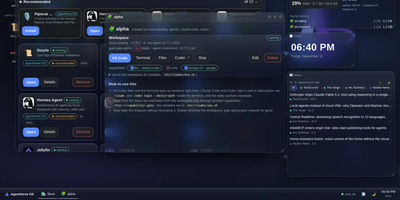
AgentVerse OS turns a single Ubuntu server into a personal cloud with a real desktop in the browser, built for a developer and their AI agents. You work in a windowed desktop with a taskbar, start menu, and widgets for system monitoring, clock, news, weather, and projects, and the same desktop opens from a laptop, tablet, or phone while everything stays on the server. Each project gets an isolated Incus container with Docker inside, its own network and gate, plus VS Code, a terminal, files, and git in the browser. The Agents app runs Claude Code, Codex, Gemini CLI, pi, and Antigravity inside the workspace, with permission prompts you approve from any device, scheduled routines, model menus, conversation search and export, and a ledger of what each session spent. When you close your laptop the agents keep working, and you pick the conversation up later exactly where it stopped. A built-in store merges the Runtipi, Coolify, and Umbrel catalogs into about 945 installable apps with guided setup, credentials shown in the app card, snapshots, and rollback. Projects request capabilities such as storage.s3, llm, or notify instead of hardcoding addresses, scheduled ZFS snapshots feed a restic backup repository, and access arrives only through your Tailscale network with real certificates. Running on a dedicated VPS on RepoCloud with guaranteed CPU, RAM, and SSD, full root SSH access, and a browser serial console. Apache-2.0 licensed.
Cozy Cloud
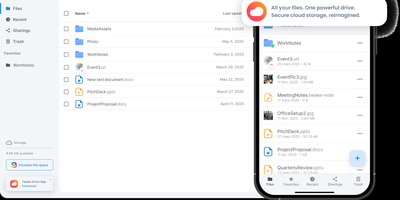
With over 1,200 GitHub stars, 12,000+ commits, and more than a decade of active development distributed under the AGPL-3.0 license, Cozy Cloud operates as a comprehensive personal data hub that goes far beyond file storage by connecting your documents, contacts, calendars, banking transactions, energy bills, and productivity tools into a single self-hosted platform where no third party profiles you. The cozy-stack Go binary handles file storage, CouchDB document management, job scheduling, app serving, and the REST API in a single process consuming approximately 150MB of RAM idle. Sandboxed konnectors import data from 50+ external services — banks, utility providers, telecom operators, cloud drives — running as isolated jobs via nsjail to prevent untrusted code from accessing other user data. The built-in app store serves web applications in subdomain-isolated environments with Content Security Policy headers, each app communicating exclusively through the documented REST API. Real-time synchronization via PouchDB replication and WebSocket keeps files, contacts, and documents consistent across desktop clients, mobile apps for iOS and Android with automatic photo backup, and the web interface. Security features include automatic Let's Encrypt TLS certificates, Argon2id password hashing, optional TOTP two-factor authentication, and GDPR-compliant data export via the CLI. Each user receives their own isolated instance with independent storage, database, and application configuration. Running on a dedicated VPS on RepoCloud with guaranteed CPU, RAM, and SSD, full root SSH access, and a browser serial console. AGPL-3.0 licensed.
Jmal Cloud
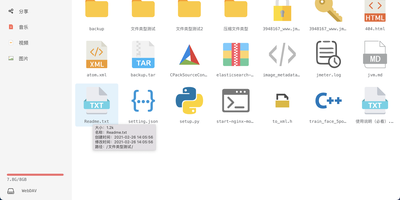
Jmal Cloud is a self-hosted private cloud drive that keeps your files on your own server, with online previews, resumable uploads, full-text search, and WebDAV access. The web manager previews photos, videos, Office documents, PDFs, EPUB books, and even CAD DWG drawings in the browser, then puts recently modified files, favorites, shared folders, and a trash bin a click away. Huge uploads resume from the exact chunk that stopped, while full-text search drills into text, PDFs, and Office documents when filenames fail you. Connect Alibaba Cloud OSS, Tencent Cloud COS, or MinIO as storage backends and browse every bucket through the same folders. Wire in a self-hosted OnlyOffice Document Server and draw.io to edit Word, Excel, and PowerPoint files and sketch flowcharts or mind maps without leaving the drive. Mount the library as a local network drive over WebDAV, share folders through links for upload and download, and push scheduled backups with the Rust jmalcloud CLI. Packages and Docker images cover Ubuntu, Debian, CentOS, Fedora, and Arch on x86_64 and ARM64, and the interface speaks English, Chinese, and Japanese. Running on a dedicated VPS on RepoCloud with guaranteed CPU, RAM, and SSD, full root SSH access, and a browser serial console. MIT licensed.
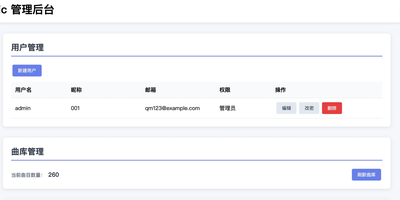
QM Music
Rip a CD once, drop the files into a folder, and QM Music turns that folder into your household streaming service: phones, desktops and web players all browse the same library of MP3, FLAC, AAC and WAV files, organised by album, artist and genre from their ID3 tags and cover art. Because the server speaks the Subsonic API, Feishin, StreamMusic, Amperfy, Substreamer and Music Assistant sign in with an address and a login, no app-store rental required. Point a phone on hotel Wi-Fi at your home collection and it plays. At home, playback can pull pristine FLAC; on mobile data the transcoder serves an MP3 or AAC stream sized for the train ride. Keep a family happy in the background: each person gets an account with individual permissions, favourites that sync between devices in real time, private playlists and lyrics following the current track. Finding something new to hear takes recommendations from listening history, similar artists and similar songs, and two years of play history sit behind the statistics. Scheduled scans collect fresh rips automatically, refresh happens on demand when a disc lands, and the catalogue idles around 150 MB of memory on the server. Running on a dedicated VPS on RepoCloud with guaranteed CPU, RAM, and SSD, full root SSH access, and a browser serial console. Apache-2.0 licensed.