Locust
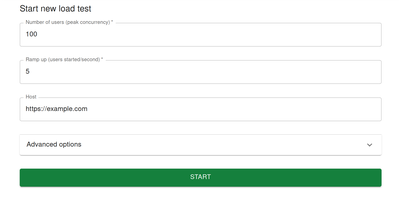
Locust is a load-testing tool that turns plain Python scripts into swarms of simulated users, so you can find out exactly how much traffic your service survives before it falls over. You model real behavior with ordinary Python: classes describe user types, tasks carry weights, and waits plus conditional logic mimic how people actually browse, log in, and check out. The web interface starts the swarm, charts requests per second, response times, and failures as they happen, and lets you raise or lower the load mid-run the moment a bottleneck appears. One machine is rarely the limit: a master process coordinates worker processes across as many machines as you can give it, and every worker runs thousands of greenlet users without thread overhead. HTTP is the home turf, but custom clients let the same scripts load-test WebSockets, gRPC, databases, message queues, or any protocol you can call from Python. Custom load shapes bend the user curve into steps, waves, or double peaks that mirror launches and flash sales instead of a flat ramp. Results export as CSV data and standalone HTML reports for the team, stats can stream into TimescaleDB and Grafana during long runs, and headless mode drops the whole test into CI pipelines. Running on a dedicated VPS on RepoCloud with guaranteed CPU, RAM, and SSD, full root SSH access, and a browser serial console. MIT licensed.
Bencher
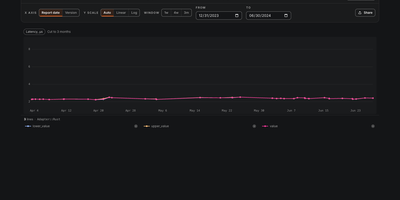
Bencher keeps a continuous record of your benchmark results and flags performance regressions in its web console before they merge into your main branch. Keep the benchmarks you already have: the bencher CLI runs your harness, collects its output through adapters for tools including Criterion, Iai, pytest-benchmark, Go benchmarks, and hyperfine, and ships the numbers to your server. Run the same command on your laptop and in CI, so a pull request compares against a baseline built by the same measurement pipeline instead of a fresh guess. The console plots every benchmark across branches, testbeds, and measures, turning months of runs into lines you can read at a glance. Set thresholds on any measure and Bencher applies statistical tests to separate a genuine slowdown from ordinary machine noise. When a result crosses a threshold, an alert fires and the CI run can fail, so the regression conversation happens on the pull request rather than in production. History stays queryable through the API and console, so you can pin down when a specific function got slower and which change did it. Self-host the Console and API servers with Docker next to the code they measure, and keep every result on machines you control. Running on a dedicated VPS on RepoCloud with guaranteed CPU, RAM, and SSD, full root SSH access, and a browser serial console. Apache-2.0 or MIT licensed.
Supercheck
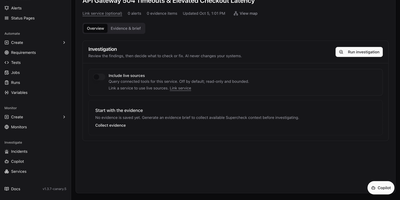
Browser tests, load tests, uptime checks, public status pages, and an AI incident investigator all live in one self-hosted dashboard called Supercheck. Write browser, API, database, custom, and k6 performance tests in a built-in code editor, or record a flow with the Chrome and Edge Recorder extension and save it as a Playwright script. Group tests into scheduled jobs, trigger them from CI with trigger keys, and review run logs, screenshots, traces, and reports. Five monitor types cover HTTP endpoints, website SSL expiry, ping, TCP and UDP ports, and scheduled synthetic browser journeys, with administrator-defined check locations and alerts to email, Slack, Discord, Telegram, Microsoft Teams, or webhooks. Status pages publish component health with 90-day uptime, incidents, scheduled maintenance, badges, and subscriber notifications under a subdomain or custom domain. When something breaks, the incident workspace collects evidence, drafts an evidence brief, and runs a read-only AI investigation across connectors such as GitHub, Prometheus, Grafana, and Kubernetes, while Copilot answers questions about that evidence. Requirements link expectations to tests and show coverage, and AI can extract them from a PRD. Organizations, projects, six roles, API keys, and audit trails keep teams in their lanes, and the CLI pulls, diffs, and deploys resources as code. Running on a dedicated VPS on RepoCloud with guaranteed CPU, RAM, and SSD, full root SSH access, and a browser serial console. AGPL-3.0 licensed.