Postiz
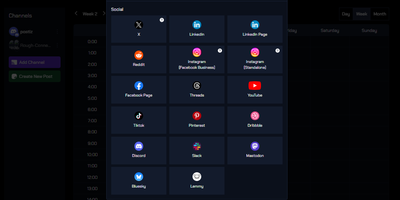
Powering over $145K monthly recurring revenue as a one-person company and holding 34,000+ GitHub stars, Postiz has emerged as the most widely adopted open-source alternative to Buffer, Hootsuite, and Hypefury — combining social media scheduling with AI-driven content creation and agentic automation in a single self-hosted platform. The Next.js 14 frontend with React 18 and Tailwind CSS delivers a visual calendar and Canva-like design editor, while the NestJS backend orchestrates publishing across 30+ social networks including X, LinkedIn, Instagram, TikTok, YouTube, Reddit, Pinterest, Threads, Dribbble, Discord, Bluesky, Mastodon, and Facebook. Temporal handles durable workflow execution for reliable scheduled posting, retry logic, and background job processing. The built-in AI assistant generates post ideas, captions, hashtags, images, and short videos from natural language prompts — all within a single chat interface. An agentic layer exposes a CLI and MCP server that allow AI agents like OpenClaw, Claude, and ChatGPT to autonomously plan, draft, and schedule posts programmatically. Team collaboration includes role-based permissions, approval workflows, multi-workspace management for agencies, and commenting on scheduled content. A full REST API with a NodeJS SDK, N8N custom nodes, and Make.com integration enables automation pipelines. Analytics track engagement, reach, and growth across all connected accounts from a unified dashboard. The self-hosted stack deploys via Docker Compose with PostgreSQL, Redis, and Temporal pre-wired — no feature limitations compared to the cloud version. Running on a dedicated VPS on RepoCloud with guaranteed CPU, RAM, and SSD, full root SSH access, and a browser serial console. AGPL-3.0 licensed.
BookLore
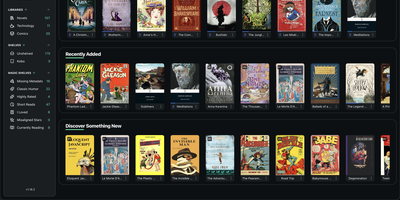
BookLore centralizes personal electronic book, audiobook, and comic collections into an organized private media server equipped with automated metadata scrapers and e-reader synchronization. Users can drop EPUB, PDF, CBZ, and MOBI files into a watched BookDrop directory to trigger automated format parsing, background cover retrieval, and staged queue imports. Integrated metadata scrapers query Google Books, Open Library, Goodreads, and Amazon to automatically fill synopsis summaries, author records, publishing dates, and review scores. Dynamic Magic Shelves categorize volumes through custom rule-based filters, author collections, and full-text search indexes across your complete literature catalog. The browser-based reader renders documents with adjustable typography, night modes, audio playback controls, text annotations, and persistent bookmarking. Hardware e-readers and mobile devices connect through native Kobo Store emulation APIs, bidirectional KOReader progress synchronization, and OPDS catalog feeds. Multi-tenant permissions provide each household member with private reading statistics, personalized shelves, email book delivery, and direct send-to-Kindle dispatch. Running on a dedicated VPS on RepoCloud with guaranteed CPU, RAM, and SSD, full root SSH access, and a browser serial console. GNU AGPLv3 licensed.
LibrePhotos
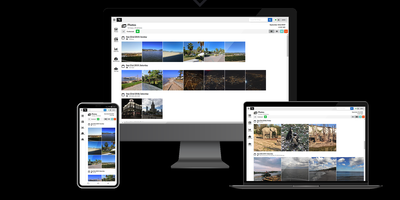
With over 8,000 GitHub stars and continuous development since 2020, LibrePhotos delivers the core intelligence of Google Photos — face recognition, object detection, semantic search, and automatic album generation — entirely on your own hardware without sending a single photo to a third-party server. The Django 5 backend processes uploaded media through a machine learning pipeline that runs face detection via the face_recognition library, clusters identified faces using scikit-learn and HDBSCAN, generates image captions through BLIP and Moondream 2, and classifies scenes using Places365 or Google's SigLIP 2 vision-language model with zero-shot classification against 900+ real-world tags. Semantic search lets you find photos by natural language queries like "sunset at the beach" without manual tagging, while metadata search filters by person, camera, lens, file type, and filesystem path. The React 18 frontend built with Vite presents a timeline view, fullscreen lightbox with slideshow mode, photo detail sidebar showing location and people, and a folder navigation view with breadcrumb paths. RAW files from any camera are converted via ImageMagick, videos processed through FFmpeg, and Live Photos paired with their RAW+JPEG counterparts as unified entries. Public album sharing via link provides fine-grained privacy controls, and duplicate detection uses perceptual hashing to identify near-identical images. Deployment runs as a single unified Docker container or via Docker Compose with Kubernetes manifests also available. Running on a dedicated VPS on RepoCloud with guaranteed CPU, RAM, and SSD, full root SSH access, and a browser serial console. MIT licensed.

Halcyon Video
Friday night, 1994: you are standing in the Action aisle deciding what the weekend looks like, except the shelves are stocked with your own library and the store lives in your browser. Halcyon Video rebuilds that ritual in 3D around your Jellyfin, Plex, or Emby server, turning libraries into aisles and genres into signed sections you can walk. Pick a case off the shelf and it comes up in your hand at true rental proportions; flip it over for the synopsis, cast, runtime, ratings, and a technical table read from the actual file. Seasons arrive as box sets, popular titles sit deeper on the shelf, and the clerk behind the counter searches by title, director, or genre and recommends from your catalog and watch history. Carry an armful to the checkout and she bags them in plastic that folds around the cases, receipt and all. A RomM connection opens a games department with platform-correct cartons and clamshells, while Jellyseerr requests appear as discovery cases you can order in-store. Drive it from the couch with a TV remote, gamepad, keyboard, or phone, or let attract mode tour the floor past the ceiling CRTs. Running on a dedicated VPS on RepoCloud with guaranteed CPU, RAM, and SSD, full root SSH access, and a browser serial console. GPL-3.0 licensed.
Tagr
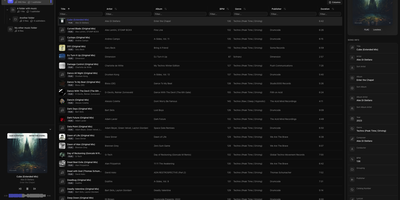
When a music library is full of wrong tags, missing covers, and blank ratings, Tagr lets you fix the whole collection from any browser, on desktop or phone. Three roles divide the work on your own server. Admins mount a music folder, press scan, and get a searchable table of every track, with sortable and filterable columns, more than 40 editable fields, and room for custom tags. Taggers make the changes: edit fields inline, swap album art, and match one song or a whole selection against MusicBrainz, ticking which fields to overwrite. Mistakes are cheap, because every edit is stored in a persistent change history with a revert action, viewable per song or per folder. Rule-based smart playlists, such as every track with an empty comment, show what still needs attention. Listeners browse and play without edit rights, using the waveform player, a Recently played view, and optional ListenBrainz scrobbling that each person connects to their own account. Supported formats include MP3, FLAC, WAV, AAC, OGG, M4A, M4B, WMA, AIFF, and Opus, with changes written straight back into the files. Swipe-friendly panels, an installable PWA, and five interface languages make the phone a comfortable place to work. Running on a dedicated VPS on RepoCloud with guaranteed CPU, RAM, and SSD, full root SSH access, and a browser serial console. AGPL-3.0 licensed.

Photofield
Instead of paging through albums, Photofield lays a whole photo library out on one zoomable canvas, where thousands of thumbnails sharpen into full-resolution pictures as you zoom. Collections come straight from directories named in a configuration file. One setting turns every subfolder into its own collection. Pick a layout per collection: album grouped by date, timeline with month markers, wall, map, highlights with dates and place names, or flex. Sort oldest first, newest first, or shuffled hourly, daily, weekly, or monthly. Tiles load progressively, and an info drawer shows the date, file name, and dimensions. A right-click menu opens or copies an image, copies its link, or finds similar images. Originals are never modified, so a read-only mount is safe. Indexing runs at up to 10,000 files per second on a fast SSD with a warm cache. JPEG, PNG, AVIF, HEIC, DNG, GIF, MP4, and MOV files are recognized. Place names resolve from an embedded database, with no external lookups. The optional photofield-ai companion adds search by words like beach sunset or cat eyes, plus a Faces layout of detected faces. Alpha tagging lets you label photos. Running on a dedicated VPS on RepoCloud with guaranteed CPU, RAM, and SSD, full root SSH access, and a browser serial console. MIT licensed.
LightPost
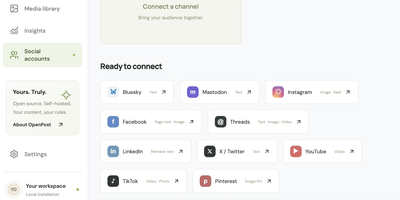
Write a post once in LightPost and it goes out to Bluesky, Mastodon, X, Instagram, Threads, Discord, LinkedIn, Telegram, and Facebook Pages on your schedule, with YouTube video uploads handled in the same workspace, from a dashboard running on your own server. The composer fans one message out to every connected account, including several accounts on the same platform, and each destination can receive text, images, or both within that network's limits. Drafts can be saved, edited, and duplicated, and scheduled times follow your browser's timezone so a week of announcements can be queued in one sitting. Images come in from public JPEG links or a saved library, with alt text and a preview before anything ships. Every delivery is tracked per account with links to the published posts, and when one network fails you retry just that destination instead of blasting the successful ones twice. The queue persists across restarts and overdue posts resume on their own, so an overnight reboot never eats a scheduled campaign. Built-in setup guides walk you through eligibility, credentials, and permissions for each platform, account connections can be verified or reconnected from the same panel, and your credentials stay encrypted on your disk with optional password protection and exportable post history. Running on a dedicated VPS on RepoCloud with guaranteed CPU, RAM, and SSD, full root SSH access, and a browser serial console. MIT licensed.
Zenphoto
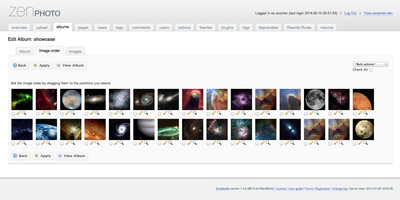
For photographers, illustrators, and filmmakers, the portfolio is the business: Zenphoto is a self-hosted gallery CMS that turns folders of images, video, and audio into a polished media website you fully control. Upload through the admin panel or drop files and folders in by FTP, and albums appear from the file system itself, complete with automatically sized derivatives, watermarks, and EXIF and IPTC metadata read straight from your camera files. Visitors search the whole archive with boolean expressions, browse slideshows, leave comments, and rate work, and dynamic albums rebuild themselves from saved searches so a "best of this year" collection never needs manual upkeep. The integrated Zenpage plugin adds a blog with nested categories and custom pages with their own menus, so the gallery, the news, and the about pages live in one site instead of three tools. Multiple photographers or clients get separate accounts with per-user rights, and individual albums or pages can sit behind passwords for client proofs. Sites can run in several languages at once, each on its own subdomain, with the admin backend translated as well. Fifty-plus themes change the look without touching the media library, and the plugin system adds anything from statistics to new media handling. Running on a dedicated VPS on RepoCloud with guaranteed CPU, RAM, and SSD, full root SSH access, and a browser serial console. GPL-2.0 licensed.
PictShare
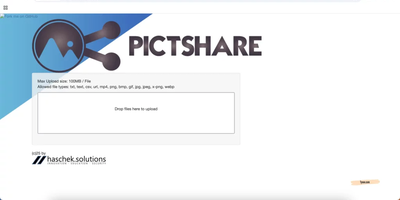
Every screenshot, GIF, short video, audio clip, and block of text you share can live at a clean link on your own server, with the URL itself acting as the editing tool. Upload an image once and ask for any size, crop, or filter by changing the address, with WebP conversion handled automatically for browsers that support it and GIFs convertible to MP4 for quieter sharing. Photos arrive stripped of EXIF data, so phone pictures stop broadcasting GPS coordinates and camera models to everyone you share with. Uploading the same file twice costs no extra space, and delete codes at individual or global level keep takedown control with you rather than a platform. Several uploads combine into an immutable album with a single gallery link, a "My Uploads" tab in the browser tracks what you sent for later copying, deleting, or bundling, and playful extras generate identicons and placeholder images straight from URL patterns. Text bins, Markdown rendering, a URL shortener, and an upload API for scripts round out a tool that replaces the screenshot-upload step of a dozen workflows. External storage, optionally encrypted, takes over when the local disk outgrows the habit. Running on a dedicated VPS on RepoCloud with guaranteed CPU, RAM, and SSD, full root SSH access, and a browser serial console. AGPL-3.0 licensed.
Castopod
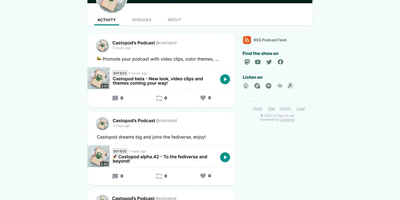
Every podcast you publish through Castopod automatically becomes a Fediverse social account that Mastodon, Pleroma, and Pixelfed users can follow, boost, and comment on from their own timelines. This ActivityPub integration transforms podcast distribution from a one-way broadcast into a two-way conversation where listeners interact with episodes through the social platforms they already use. Beyond federation, the platform manages the complete lifecycle: upload an episode, and auto-generated RSS feeds distribute it to Apple Podcasts, Spotify, Deezer, Podcast Addict, and every compatible directory. IABv2-compliant analytics measure downloads, geographic distribution, and listening apps while maintaining GDPR, CCPA, and LGPD compliance through anonymized data collection. Podcasting 2.0 namespace support unlocks chapters with images, SRT/VTT transcripts, location tags, and person credits that modern podcast apps surface to listeners. Video episodes publish alongside audio, and auto-generated clips feed social media sharing workflows. Monetization tools span Value4Value micropayments, premium subscriptions, funding links, and cookieless advertising. Multi-user roles operate per-podcast: contributors, editors, and admins each work within defined permission boundaries. The PHP application runs behind nginx with MariaDB and Redis on a RepoCloud VPS with dedicated CPU, RAM, and SSD. AGPL-3.0 licensed.
Trailarr
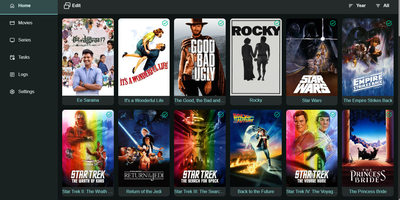
Trailarr fills the gaps in your media library by finding, downloading, and organizing trailers for the movies and shows you already own, so browsing your collection feels like browsing a cinema lobby instead of a folder of silent posters. Connect multiple Radarr, Sonarr, and Plex instances and it watches what arrives, fetches matching trailers automatically, and saves them right next to your media using Plex naming conventions that also suit Emby and Jellyfin. Existing trailers are detected before anything downloads, so duplicates never pile up, and Plex Pass trailers that already meet your minimum resolution are left untouched. Custom profiles put you in charge of quality, format, and processing, including how long to wait between downloads and whether conversion happens at all. From the web interface you can search and filter the whole library, open any title to check its trailer status, swap in a different YouTube trailer ID, or trim unwanted seconds from the start or end of a clip. Path mappings translate between the paths your downloaders report and the paths your server actually uses, a classic source of broken media setups. Hardware acceleration through VAAPI on Intel and AMD keeps conversion light, Discord notifications flag important events, and an event history shows what happened and when. Running on a dedicated VPS on RepoCloud with guaranteed CPU, RAM, and SSD, full root SSH access, and a browser serial console. GPL-3.0 licensed.
Magnetissimo
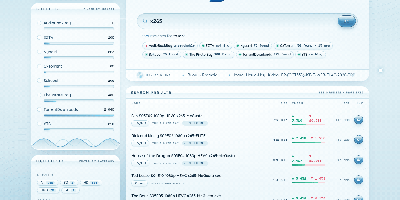
Magnetissimo is a self-hosted torrent indexer that searches eight public sources at once and remembers everything they return, so the release you hunted for across half a dozen sites last week is already waiting in your own index when you look for it again. A search answers from the local database immediately and asks YTS, Nyaa, Sukebei, TorrentDownloads, AudioBookBay, The Pirate Bay, EZTV, and OxTorrent in parallel; every answer is filed into the index as it lands and streams into the results page with size, seeders, leechers, and age attached. The query language goes further than any single source: exact quoted text, exclusions, alternatives, wildcards, and filters for file size, seeder count, and age, with matching that copes with dotted scene release names and titles without spaces. An optional DHT crawler walks the peer-to-peer network in the background at a rate you choose, discovering torrents and their file lists around the clock and showing arrivals live on its own page. Media automation connects natively: the Torznab endpoint feeds Sonarr, Radarr, Lidarr, Prowlarr, and book managers with standard categories, and a JSON API serves the latest and best-matching torrents to scripts. Everything lives in one SQLite database inside a single container, search and paging work without JavaScript, and upgrades are a pull and a restart. Running on a dedicated VPS on RepoCloud with guaranteed CPU, RAM, and SSD, full root SSH access, and a browser serial console. MIT licensed.
Sulu
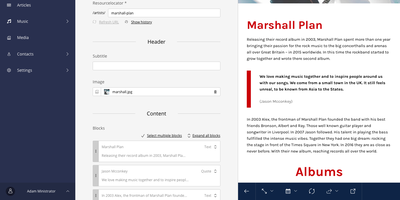
Running several multilingual websites does not mean juggling several admins: Sulu is a content management system that hosts them all in one, with a live preview beside every form. Webspaces are separate websites, each with its own page tree, languages, domains, and permissions. Pages are built from templates of fields and reorderable blocks, grouped under Content, SEO, Excerpt, and Settings tabs. Unsure how a page will look in search? The SEO tab previews it, counts characters in the meta title and description, and offers keywords, a canonical URL, and no-index and no-follow switches. Changing a page address automatically redirects the old one. Files stay organized in nestable media collections with grid and list views, and images are resized automatically to the formats a design asks for. Snippets hold content shared across pages, and smart content assembles dynamic lists of pages, contacts, or organizations. Landing pages get their own custom URLs, and target groups can show different content at the same address to different visitors. Editors who should not see everything get roles with view, add, edit, and delete rights per webspace. An activity log lists changes, and the trash restores deleted items. Contacts and organizations live in the same interface, and developers can add their own admin sections with lists, forms, and preview. Running on a dedicated VPS on RepoCloud with guaranteed CPU, RAM, and SSD, full root SSH access, and a browser serial console. MIT licensed.
Airstation
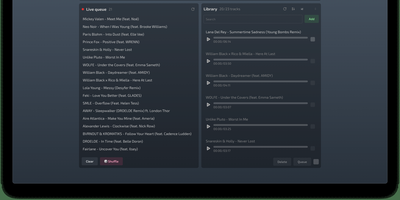
Airstation turns your music folder into a radio station where every listener hears the same second of the same song at the same time. From the studio panel you upload tracks once, and they stay in a permanent library you can search and sort by date added, name, or duration. Build the broadcast queue by dragging tracks into order, reshuffle it whenever the mood changes, let it cycle endlessly, shuffle it randomly, or pause the station entirely when the day is done. Playlists group tracks for recurring shows, and the playback history shows listeners what has already aired. Anyone with the link opens the player page and is listening within seconds, no account and no app install, while a live counter tells you how many people are tuned in right now. The player page itself can be retitled to match your station's name. Friends get a shared listening moment instead of another playlist link, communities get a station that plays their own rotation around the clock, and collectors get to hear their library the way radio always felt: live, shared, and slightly out of your control once it starts. Running on a dedicated VPS on RepoCloud with guaranteed CPU, RAM, and SSD, full root SSH access, and a browser serial console. MIT licensed.

Blombooru
Tens of thousands of saved images become useless the moment you cannot find the one you want, and Blombooru turns that private pile into a searchable, tag-organized library on your own server. Its Danbooru-style tagging uses familiar categories like artist, character, and copyright, with tag-based search and negative exclusion to slice a huge collection down to exactly the post you remembered. A dedicated tag gallery lets you browse and manage the vocabulary itself, and CSV imports bring existing tag lists in through the admin panel. Albums organize media with nested sub-albums and manual sorting, while parent-child relationships and a TF-IDF similarity engine surface variations, multi-page comics, and near-duplicates. Getting media in is flexible: upload files, compressed archives, filesystem scans, or paste a Danbooru or Gelbooru post URL and let it fetch media, tags, rating, and source automatically. AI-generated images keep their SwarmUI, ComfyUI, A1111, or NovelAI metadata viewable, optional WDv3 or PixAI auto-taggers suggest tags with one click, and tag implications and aliases keep everything consistent. Secure mode, share links, thumbnail blurring, scoped API keys, and custom themes from the admin panel finish the picture. Running on a dedicated VPS on RepoCloud with guaranteed CPU, RAM, and SSD, full root SSH access, and a browser serial console. MIT licensed.

Telegram Archive
Telegram Desktop's export is a file you make once by hand; Telegram Archive is a self-hosted backup that keeps saving your chats on a schedule and in real time, then lets you read them in a viewer that looks like Telegram. After one login with the code Telegram sends you, it stores messages, photos, videos, voice notes, stickers, documents, and link previews, saving each file once even when several chats share it. A live listener captures new messages, edits, and reactions as they happen, and a daily full pass fills any gaps. Every edit keeps its earlier text as a version, and with deletion tracking switched on, deleted messages stay in the archive marked as deleted. The viewer offers folders, forum topics, archived chats, pinned messages, polls, shared media, and search across every chat, plus a What changed feed of deletions, edits, and transcripts. Voice notes can be transcribed into searchable text by a server you run or rent. Family or colleagues get logins limited to chosen chats, or a share link that opens a single chat. One archive holds several accounts, a Telegram Desktop export can be imported for older history, and twelve themes suit phones and desktops. Running on a dedicated VPS on RepoCloud with guaranteed CPU, RAM, and SSD, full root SSH access, and a browser serial console. GPL-3.0-or-later licensed.
TongFlow
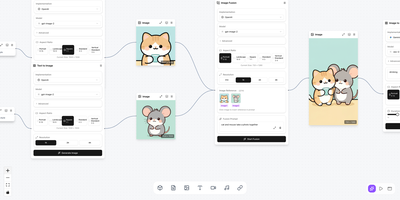
Text, images, audio, video, 3D models, documents, and links share one canvas in TongFlow, where a campaign brief can become copy options, key visuals, and a short clip without leaving the page. Every step is one of three actions: add material, transform it, or combine several pieces, and each result stays on the canvas as a node you can branch from. Over 60 capability slots cover image generation and editing, video generation, music, speech synthesis and recognition, noise reduction, speaker separation, matting, image-to-3D, and shot splitting. A capability is separate from the model that runs it, so swapping OpenAI, Gemini, DeepSeek, OpenRouter, or a Modal-hosted open model leaves the surrounding steps untouched. The plugin manager installs official plugins in place, and credentials live in a Settings dialog. Agents get the same tools through a local MCP server and a Claude Code plugin, producing workflow files that people can open, edit, and run again, and each run is kept in a history with its inputs, outputs, and timing. App Mode turns a finished workflow into a simple form that colleagues can fill in, even from a phone browser. Spend-heavy steps wait for a person's approval. Running on a dedicated VPS on RepoCloud with guaranteed CPU, RAM, and SSD, full root SSH access, and a browser serial console. AGPL-3.0 licensed.
Bindery
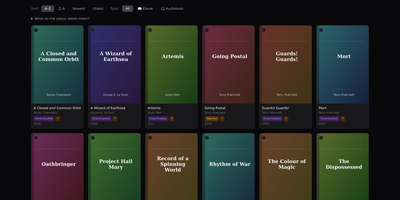
Stop wrestling with dead scrapers and scattered reading folders by orchestrating your digital library through Bindery, an automated ebook and audiobook management platform that tracks favorite authors, monitors release schedules, coordinates indexer searches, and organizes media collections. Users can configure monitoring profiles to automatically track author bibliographies across OpenLibrary, Google Books, and Hardcover without fear of dead endpoints breaking their library. Dual-format tracking allows each book entry to hold separate digital ebook and multi-part audiobook files in distinct directory roots. The integrated search engine evaluates Newznab and Torznab indexers in parallel, scoring releases by edition tags, audio bitrate, narrator names, and release year to grab the highest quality versions. Download jobs pass seamlessly to background clients like SABnzbd, NZBGet, Transmission, or Deluge, moving completed files into custom library folder structures with hardlinks. An interactive release calendar highlights upcoming publications, while the manual metadata editor locks custom titles, genres, and series ordering against upstream refreshes. Readers can browse curated collections directly through the built-in OPDS feed on mobile reading apps or export organized media straight into Calibre and Audiobookshelf. Running on a dedicated VPS on RepoCloud with guaranteed CPU, RAM, and SSD, full root SSH access, and a browser serial console. MIT licensed.