QMReader
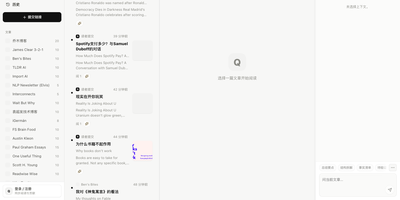
QMReader is a self-hosted reading workbench that treats RSS as raw material for knowledge you keep, not a pile of unread badges waiting to be cleared. Subscribe to RSSHub routes, direct feeds, sitemaps, Hacker News, Product Hunt, GitHub Trending, and Hugging Face Papers, and new items land in the article list immediately while translation and rewriting finish in the background. English headlines gain Chinese translations automatically, and full articles can be read as the original, a Chinese translation, or a plain-language rewrite, all kept side by side on the same page. Highlight passages, attach your own commentary, and open an AI conversation scoped to the article in front of you instead of starting from a blank chat box. Work you produce becomes a public reading asset with a stable link: translations, rewrites, comments, and dialogues collect on contributor pages and flow out through asset catalogs and RSS feeds for the next reader. Split background workers keep fast feed fetching separate from slower AI processing, and search, unread, popular, favorites, and history views keep a heavy reading habit navigable. Running on a dedicated VPS on RepoCloud with guaranteed CPU, RAM, and SSD, full root SSH access, and a browser serial console. MIT licensed.
mkcertWeb
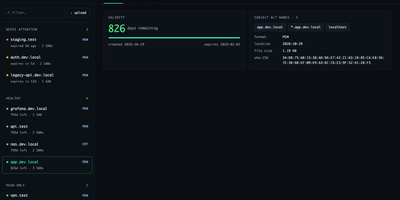
Your internal services deserve certificates your browsers actually trust, without a spreadsheet tracking when each one expires. mkcertWeb wraps the mkcert tool in a web interface where you generate certificates for any mix of hostnames, wildcards, and IP addresses, then download them as PEM, CRT, or PKCS#12 bundles for servers and client authentication. The certificate list groups everything by state, needs attention, healthy, read-only, or archived, showing days remaining, subject alternative names, and SHA-256 fingerprints at a glance. You can upload existing certificate and key files for viewing, attach a free-text note to each certificate, and archive or restore entries without ever overwriting a certificate of the same name. The root CA page offers downloads and install instructions for macOS, Linux, and Windows, and can generate a fresh CA for a new deployment. Devices enroll through the built-in SCEP server using one-time challenge passwords and templates, with an optional enterprise CA signing manual enrollments. A scheduled monitor checks expiry daily and sends alerts through SMTP email, ntfy, or an HTTP webhook, with test buttons for every channel. Settings save from the browser with secret masking, sign-in supports passwords or OpenID Connect single sign-on, and light and dark themes work down to phone width. Running on a dedicated VPS on RepoCloud with guaranteed CPU, RAM, and SSD, full root SSH access, and a browser serial console. GPL-3.0 licensed.
ClearFlask
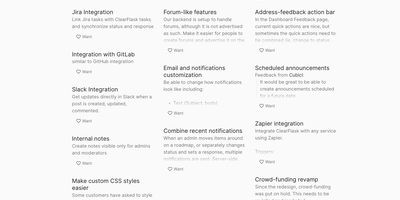
Instead of digging requests out of email and chat threads, ClearFlask collects them on a branded portal where customers vote, comment, and follow each idea from submission to release. The portal can be a simple feedback form or an open board where customers browse, vote on, and discuss each other's ideas. Visitors identify themselves through single sign-on from your own app, OAuth providers you configure, email with an optional domain whitelist, browser push notifications, or as guests. In the dashboard, the Feedback page turns a request into a task, sends a reply, merges duplicates, or shelves it for later. The Roadmap page is a drag-and-drop Kanban board with editable columns, and moving a card notifies the people following that idea. Each content category has its own statuses, transitions, and tag groups, so an idea board, a knowledge base, a blog, and a Q&A section can behave differently. Announcements double as a changelog that visitors can subscribe to. Votes can be simple upvotes, up and down votes, or weighted emoji, and threaded comments keep every discussion organized. Posts import from CSV, project data can be exported for outside analysis, a documented API and webhooks connect other tools, and the interface ships in over twenty languages. Running on a dedicated VPS on RepoCloud with guaranteed CPU, RAM, and SSD, full root SSH access, and a browser serial console. Apache-2.0 licensed.
Subarr
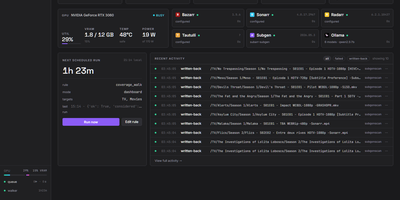
Subarr is the coordination, measurement, and quality layer for Whisper subtitle generation, sitting between Bazarr, Sonarr, Radarr, and subgen to decide what gets transcribed, in what order, and whether the result is any good. Its Coverage walk scans your whole library and scores every subtitle gap with a reason: no track, embedded-only, Bazarr-wanted, audio mislabeled, or low quality. Queue a file, a folder, or an entire series from the Library tab and watch it move through probing, transcribing, and write-back on the dashboard. The Review queue plays you the actual dialogue, picked out by voice-activity detection, so you can verify a subtitle really matches the audio language before it lands. It flags files whose default audio track is not the original language and swaps tracks in place, heading off the double-translation trap. A provider leaderboard records which subtitle sources actually deliver for your library, and the Tuning Lab lets you tune Whisper recipes against your own media. Rules and scheduled walks keep the work flowing, with Tautulli now-playing signals boosting whatever you are about to watch. Finished subtitles are written next to your media, and your Plex or Jellyfin library refreshes the moment one lands. Running on a dedicated VPS on RepoCloud with guaranteed CPU, RAM, and SSD, full root SSH access, and a browser serial console. MIT licensed.
AtroPIM
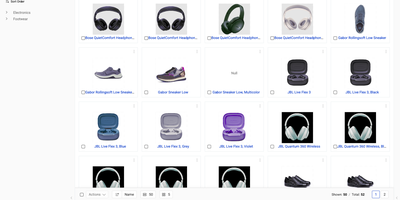
Manufacturers and distributors can model messy product data exactly as it is in AtroPIM, an open-source product information management system configured through its interface instead of code. Configurable attributes come in twenty-plus data types and are grouped by classifications that give each product class a consistent field set, with automatic unit conversion and per-language values. Variants nest across several levels and inherit values from their parents until overridden; multiple category trees and bidirectional associations such as upsell, cross-sell, and accessories organize the catalog per market. Channel-specific values let one record feed several shops, marketplaces, and catalogs, and product listings gather curated collections for a given purpose. A digital asset library with folders and thumbnail types keeps images and documents attached to the products they describe. Import and export feeds exchange data through files or HTTP requests on a schedule, background workers run the jobs, and dashboard widgets surface failed runs. Roles and teams control who edits what, action history records every change, product statuses such as Draft, Reviewed, and Ready track readiness, and configurable actions run from buttons or on a schedule. Every entity, including custom ones, gets its own REST API for shops, ERP systems, and partner portals. Running on a dedicated VPS on RepoCloud with guaranteed CPU, RAM, and SSD, full root SSH access, and a browser serial console. GPL-3.0 licensed.
NUT WebGUI
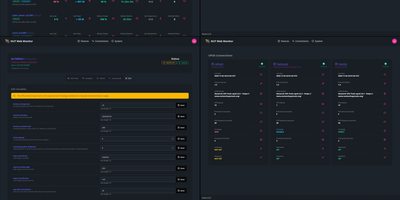
When the power blinks at 3 a.m., NUT WebGUI is the page that tells you whether the UPS in the closet is coasting or dying, without a serial cable in sight. Point it at one or several Network UPS Tools servers and it polls charge, load, input voltage, and estimated runtime, refreshing critical status every couple of seconds while background variables update on a calmer thirty-second cadence. The dashboard renders device cards, gauges, sparklines, and a topology view of how units chain together, and it stays readable on a phone when you are standing in front of a humming rack. Authorized users can issue instant commands, set variables, or trigger a forced shutdown from the browser, while everyone else gets a strictly read-only view. A JSON API under /api serves device lists, variables, and instant commands to your own scripts, health and readiness probes fit container orchestrators, and OpenMetrics output feeds Prometheus without extra exporters. The whole thing is a single small binary that runs happily on a Raspberry Pi, an old ARM board, or a RISC-V box, reads one TOML file, and supports multi-user sign-in with scoped API keys when you share it with a team. Running on a dedicated VPS on RepoCloud with guaranteed CPU, RAM, and SSD, full root SSH access, and a browser serial console. Apache-2.0 licensed.
Nerla
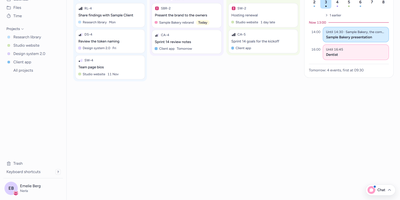
Your team's tasks, calendar, chat, video calls, documents, whiteboards, files, and time sheets all live in Nerla, a workspace with an AI teammate and a pink cat mascot. Home shows tasks from all projects as a board or list beside today's events. Ctrl K jumps to any task, project, file, or teammate. Projects bring their own members, board, chat, and files; tasks carry a status, priority, assignee, due date, and a short number like WEB-12. The calendar handles repeating events, guests, out-of-office days, and working hours, and a team view lines up everyone's week. Chats cover direct messages, groups, and one per project, and any can start a video call with screen sharing and a lobby for outside guests. Papers and whiteboards are edited live by several people and sit in the same folders as files, which can be shared by outside link. The AI teammate acts only as you, answers wherever you mention it, and asks before changing what others see, at a caution level the admin sets. Ollama, OpenRouter, or any model that speaks the OpenAI chat API with tool calling can power it, and outside agents like Claude Desktop connect over MCP. Nothing phones home. A setup script installs the stack and HTTPS, then prints the code that makes your first account the admin. Others join by invite link. Running on a dedicated VPS on RepoCloud with guaranteed CPU, RAM, and SSD, full root SSH access, and a browser serial console. MIT licensed.
Taiga
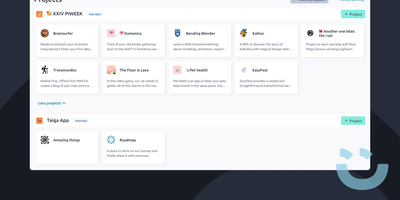
Winner of the 2015 Most Valued Agile Tool award and cited as a top project management platform by Opensource.com with over 2,100 GitHub stars on the Docker deployment repository alone, Taiga has served an estimated 20 million users worldwide with over 2 million Docker pulls since its creation in 2014 by Kaleidos. The platform delivers a complete agile project management experience through Scrum boards with backlog prioritization, sprint planning, story point estimation configurable per role, burndown charts at both project and sprint levels, and velocity tracking with a project doom-line indicator. Kanban boards offer customizable workflow columns with swimlanes, WIP limits, zoom controls, and the ability to switch between Scrum and Kanban at any point without losing data. The issue tracker supports custom types, priorities, and severities with the ability to promote issues directly to user stories. Team collaboration features include threaded comments, file attachments, email notifications, mentions, a built-in wiki for project documentation, and a team performance dashboard with the Iocane health metric for tracking team sustainability. The platform integrates with GitHub, GitLab, and Bitbucket for version control linking, provides importers for migrating from Trello and Jira, and exposes a REST API for custom integrations. Available in over 20 languages with custom fields, tags, roles, and permissions. Running on a dedicated VPS on RepoCloud with guaranteed CPU, RAM, and SSD, full root SSH access, and a browser serial console. MPL-2.0 licensed.
Overclick
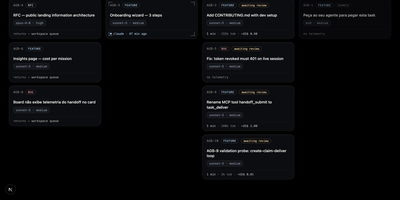
OverClick is the task board where your AI agents clock in: you write the assignments, they claim the work, and you stamp what actually got done. A card here is a contract, not a ticket: what should happen, why it matters, and a plain-language test script that says how to confirm it, all written before anyone starts. You tell your agent to grab the next task, and it claims the card over MCP, declares the CLI and model it really runs on, receives a self-contained briefing with the mission context and branch convention, and the card slides into progress. When it finishes, the handoff lands with a summary, evidence, branch and pull request links, and measured telemetry, the tokens per model and minutes the run actually took, read from the session transcript rather than guessed. Every card keeps three roles straight, who asked, who executed, and who reviews, and only a human can mark it validated; reopening with a comment puts your note in front of the agent's next claim. Big decisions can start as RFC cards whose approval spawns the execution cards, and insights roll up what each project, mission, and model consumed. Running on a dedicated VPS on RepoCloud with guaranteed CPU, RAM, and SSD, full root SSH access, and a browser serial console. MIT licensed.
Wildbox
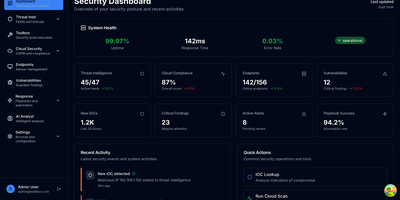
Enterprise security stacks assume an enterprise budget; Wildbox assumes a server you already own. It runs your whole security operation as a set of cooperating services behind a single HTTPS gateway: threat intelligence collectors pull indicators from seven public feeds on a schedule, starting with abuse.ch's Feodo Tracker, and every indicator is searchable in one place. Fifty-two security tools sit behind one API, covering DNS, TLS, email security, headers, and port analysis. The cloud posture service runs 22 configuration checks against your live AWS accounts and keeps each scan's report, while the vulnerability service inventories your assets, prioritizes findings by risk, and tracks them through remediation with SLA checks and alert rules. When something needs doing, YAML playbooks execute response workflows as background jobs, and the agents service writes Claude-generated threat-enrichment reports for suspicious indicators when you give it an API key. An osquery-based sensor streams endpoint telemetry from your hosts into the platform, kept separate per team. Users, teams, roles, and scoped API keys live in the identity service, and the backends accept nothing that did not arrive through the gateway, so your security data never leaves hardware you control. Optional Compose profiles add n8n automation and Prometheus monitoring. Running on a dedicated VPS on RepoCloud with guaranteed CPU, RAM, and SSD, full root SSH access, and a browser serial console. MIT licensed.
nextDash
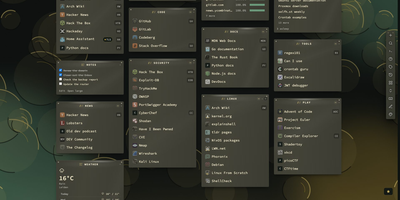
A bookmark bar that also knows if your homelab is on fire is the pitch behind nextDash. Links live on pages and categories with tags, notes, an inbox for unsorted finds, and one search panel for bookmarks, commands, and containers. Mark any link as Monitor and the server checks it every few minutes, keeping 30 days of uptime, certificate and domain expiry dates, and drift warnings, with alerts to ntfy, Slack, Discord, Telegram, Gotify, Apprise, or a phone push. A Containers view lists every Docker container with logs, start, stop, and update with automatic rollback, each matched to its bookmark. Dashboard widgets cover weather, feeds, CPU, memory, disks, Unraid, Jellyfin, Plex, Sonarr, Radarr, qBittorrent, and Home Assistant. A theme studio offers 390 themes and 267 backdrops in six languages, and an optional assistant answers in plain words when you switch it on. Imports arrive from every browser, Pocket, Raindrop, and linkding, and automatic backups with a 30-day trash protect the collection. The weekly digest sums up broken links, expiring certificates, and pending container updates. Running on a dedicated VPS on RepoCloud with guaranteed CPU, RAM, and SSD, full root SSH access, and a browser serial console. MIT licensed.
Composr
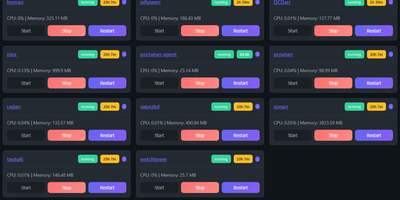
Managing multi-server container fleets often deteriorates into fragmented SSH sessions, mismatched compose files, and conflicting port allocations. Composr consolidates multiple Docker host daemons into a unified web dashboard that controls running containers, stack definitions, and system metrics from a single interface. Operators can connect remote Docker daemons through encrypted TCP sockets, inspect container health, and stream live execution logs with sub-second responsiveness. A built-in project creation wizard guides administrators through drafting new Compose topologies across local directories or remote server nodes. In-browser CodeMirror editors deliver live syntax highlighting for YAML files, configuration dotfiles, and reverse proxy definitions without detaching containers from disk. The platform tracks service properties directly, letting you toggle Compose profiles, relocate services between YAML manifests with pre-flight risk checks, and detect target port collisions before redeployment. Integrated backup managers bundle container metadata, compose files, and environment definitions into downloadable archive packages for automated disaster recovery. System operators can open interactive browser terminals into any active container, execute batch maintenance tasks, and configure scheduled image update checks. Running on a dedicated VPS on RepoCloud with guaranteed CPU, RAM, and SSD, full root SSH access, and a browser serial console. MIT licensed.
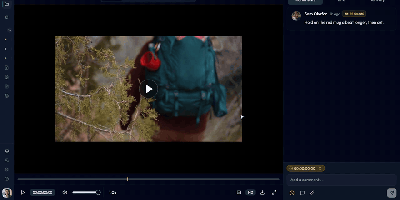
Reloops
Reloops is a self-hosted creative asset workspace where teams keep every video, design, PDF, audio file, and live website in one library and collect feedback on the files themselves instead of in scattered email threads. Reviewers click anywhere on an image to pin a note to that exact spot, and on video the comments attach to the precise frame, so "fix this bit" always points at the bit in question. Every upload becomes a new version on the same asset, older cuts stay available for side-by-side comparison, and approvals are recorded on the file so nobody ships the wrong export by accident. Clients never need an account: send them a share link or a branded collection and they can watch, comment, and sign off as guests. The library searches the way people remember work, because each asset carries generated descriptions, tags, and metadata filters, so "the approved homepage with the blue button" actually finds something. Day to day, assignments and review queues keep feedback moving, while scoped API keys let agents such as Claude, OpenClaw, Zapier, and n8n upload new versions, post comments, update statuses, and manage share links inside the same workspace. Running on a dedicated VPS on RepoCloud with guaranteed CPU, RAM, and SSD, full root SSH access, and a browser serial console. AGPL-3.0 licensed.
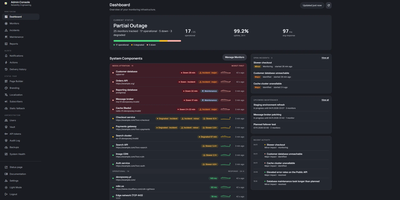
Better Status Page
Better Status Page watches your services around the clock and turns outages into calm, branded status updates for your users instead of a flood of support tickets. Its monitors probe HTTPS endpoints with authentication flows and TLS expiry warnings, ping and TCP ports, DNS records, Docker containers, mail servers over SMTP, IMAP, and POP3, and databases from PostgreSQL and MySQL to Redis, MongoDB, SQL Server, and Oracle. A slower-than-usual alert fires when a monitor's p95 response time climbs against its own last seven days, and passive webhook heartbeats catch jobs that simply stop checking in. Alerts reach the team through email, Slack, Discord, Microsoft Teams, Telegram, ntfy, Pushover, webhooks, and Twilio SMS or voice calls, with failure thresholds, quiet hours, rate caps, and grouping keeping the noise down. Incidents carry severity levels, public updates, linked monitors, and recurring maintenance windows, and subscribers follow along by email, webhook, RSS or Atom feed, or a JSON status API. A drag-and-drop builder restyles the public page with your branding, dark mode, and translations, a static fallback keeps the page readable if the server itself falls over, and uptime reports export to CSV for SLA reviews. Running on a dedicated VPS on RepoCloud with guaranteed CPU, RAM, and SSD, full root SSH access, and a browser serial console. MIT licensed.
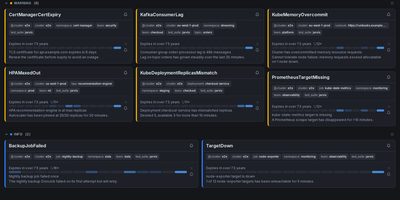
Jarvis
Alertmanager forgets an alert the moment it resolves; Jarvis remembers everything. This web frontend watches all your Alertmanager clusters at once and streams firing alerts into one live view over WebSocket, no refresh as problems appear or clear. Every alert's lifecycle is stored, so the resolved view answers how often something fired and how long it burned, and a grace period keeps a missed poll from being recorded as a phantom resolution. When an alert lands, claim it so the team sees who is on it, and leave comments bound to that alert fingerprint; notes survive restarts and re-fires, so the next person inherits the context. Silencing gets a rehearsal: preview exactly which alerts a silence will hit before creating it, fire a one-click Fast-Silence from the list, and save templates for recurring maintenance. Filters use the Alertmanager matchers you already know, save as named sets, ride in shareable URLs, and one can be your default view. Point Jarvis at every member of an HA gossip cluster and duplicates collapse by fingerprint, while protected upstreams authenticate with OAuth2, bearer tokens or basic auth per cluster. Sign-in is optional through built-in accounts or any OIDC provider, and it runs as one hardened container on port 8080, with PostgreSQL available when you want replicas. Keep it behind your VPN or an authenticating proxy, as its own docs insist. Running on a dedicated VPS on RepoCloud with guaranteed CPU, RAM, and SSD, full root SSH access, and a browser serial console. Apache-2.0 licensed.

Garlic Hub
Garlic Hub runs your digital signage network from one self-hosted console, managing the players, the media library, and the playlists behind every screen without per-device fees. Build presentations as SMIL playlists: full-screen master playlists for a single message, reusable internal playlists for shared blocks like opening hours, and multizone layouts that split one display into independent areas. The visual zone editor arranges those areas by percentage or pixels, even overlapping, while the template editor produces image content without leaving the browser. Media arrives from local uploads, external links, screencasts, cameras, or stock platforms, organized in hierarchical folders with bulk actions. Date and time conditions, recurrence, and triggers from touch, key presses, or network messages decide what plays when, and nested playlists can take over by priority. Players fetch updates by polling or receive an immediate push when reachable, and the fleet view shows status at a glance with remote publish, refresh, and screenshot actions. Roles per module, OAuth2 tokens, a REST API, and webhooks let larger operations automate publishing and guard who changes what, in six interface languages. Running on a dedicated VPS on RepoCloud with guaranteed CPU, RAM, and SSD, full root SSH access, and a browser serial console. AGPL-3.0 licensed.
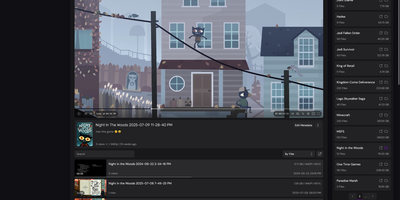
MediaServer
Your folders are the library with MediaServer, a self-hosted player that scans the directories you already keep and serves their video and audio through a tidy web interface. Browsing feels like a personal YouTube: folders open as shelves of content, and the custom player keeps the video going as you explore what to watch next. Keyboard shortcuts drive playback, speed controls and player statistics sit a click away, and an ambient background glows behind the video. Every view is remembered: full watch history with timestamps, re-watch counts, per-user totals, and playback heatmaps replace the single watched tick other servers stop at. Metadata belongs to you: edit titles, thumbnails, tags, seasons, and release dates for videos, folders, and albums, and the edits survive files being moved or renamed. Music gets its own treatment with embedded cover art, a lyrics viewer and editor fed by LrcLib, and auto-scrolling lines that follow the song. Subtitles extract themselves from embedded and external files, folders and single videos share as readable links, and each share renders a rich preview card for Discord or chat. Behind the scenes, a dashboard manages libraries, scanning jobs, users, and server performance. Running on a dedicated VPS on RepoCloud with guaranteed CPU, RAM, and SSD, full root SSH access, and a browser serial console. AGPL-3.0 licensed.
SeldonVigil
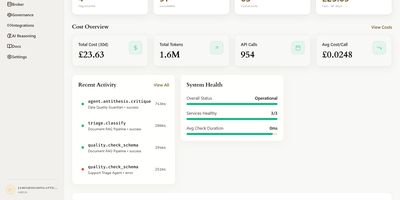
When an AI agent overspends, misbehaves, or breaks a policy, SeldonVigil shows what it did, what it cost, and which rule it tripped. Agents report their runs as traces, and the Trace Explorer lays a run out as a decision tree with latency, tokens, cost, attributes, and events, searchable by agent, model, or status. Incoming traces are screened for prompt injection and checked against rule-based policies built from regex, threshold, behavioral, and composite rules, and violations appear in a Security view with severity, source, and status. Budgets track spend per agent or tenant against alert thresholds and period resets, anomaly detection flags traces that cost three standard deviations above an agent's seven-day mean, and a cost-aware model router can fall back across providers. Governance keeps policies in draft, active, and deprecated states, while certification pipelines walk an agent through static analysis, a vulnerability scan, policy validation, and a manual approval. Tenants never see each other's rows. A Broker view lists Redpanda topics, consumer groups, and health, and an AI Reasoning page runs root cause analysis on anomalous agents once an OpenAI key is set. A command-line client manages agents, policies, budgets, and traces. The default deployment runs in development mode, where any username with a fixed password signs in as administrator; a production overlay disables that and requires an OIDC identity provider. Running on a dedicated VPS on RepoCloud with guaranteed CPU, RAM, and SSD, full root SSH access, and a browser serial console. MIT licensed.