ByteChef
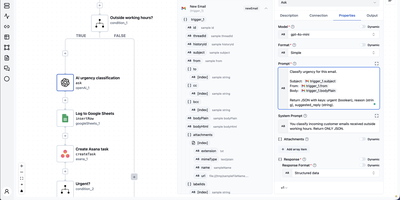
Drag an AI agent onto a canvas beside a Gmail trigger, a condition, and a Google Sheets step, and ByteChef runs the whole thing as one durable workflow that resumes where it stopped. Runs that fail or wait for a human pick up from the step they reached. The visual editor maps values between steps with data pills, and its 250+ connectors double as agent tools and MCP tools. An agent combines a model from twelve LLM providers, including OpenAI, Anthropic, Mistral, and Ollama, with chat memory, knowledge-base retrieval, and tools. It streams structured answers. Flow controls cover conditions, branches, loops, parallel and fork-join paths, subflows, error handling, and approval steps that pause for a person. Workflows start from webhooks, polling, schedules, forms, or app events, and code steps run JavaScript, Python, or Ruby. Workflows can be exposed through an MCP server for Claude Desktop, Cursor, or Windsurf, and ByteChef consumes external MCP servers too. Data Tables add typed relational tables with a spreadsheet-like grid and CSV import and export. The Agent Playbook opens a chat with the agent as you build it. Every run is listed with per-step input, output, and errors. Running on a dedicated VPS on RepoCloud with guaranteed CPU, RAM, and SSD, full root SSH access, and a browser serial console. Apache 2.0 + EE licensed.
NocoDB
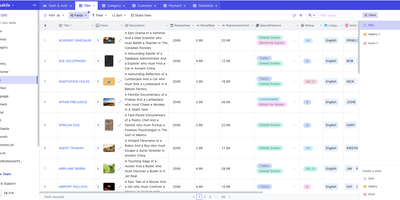
Any existing relational database becomes a collaborative, Airtable-style smart spreadsheet under NocoDB. It connects to PostgreSQL, MySQL, MariaDB, SQL Server, or SQLite, introspects the schema - tables, relationships, indexes - and renders it as interactive Grid, Gallery, Kanban, Calendar, and Form views without migrating a single row. Your business data stays in your database; NocoDB keeps only its own metadata (view configs, permissions, webhooks) in a separate store. Every connected table automatically gets REST APIs with Swagger documentation, effectively turning legacy databases into modern backends. The spreadsheet layer adds 20+ field types including formulas, lookups, rollups, links, attachments, and currency, plus sorting, filtering, grouping, and multi-field editing. Views can be locked or shared publicly with password protection, role-based access control scopes permissions per user, and webhooks plus CSV, Excel, and Airtable import round out integration. An ERD view visualizes the schema. Built with Node.js and Vue, deployed via Docker, handling millions of rows.
Webstudio
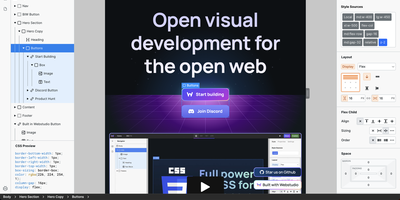
Webstudio delivers a professional-grade visual website builder that outputs semantic HTML and clean CSS without inline style pollution or JavaScript-heavy render paths. The live canvas editor provides direct manipulation of all CSS properties — flexbox, grid, spacing, typography, transforms, and filters — with real-time preview across responsive breakpoints. The component system supports reusable instances with variants and overrides, while design tokens maintain consistent colors, fonts, and spacing across the entire site. Data bindings connect to external content sources through native integrations with Strapi and Supabase, plus a generic CMS interface for any REST API backend. The Scroll Timeline API powers animations at 120 FPS off the main thread, with presets for rotate, scale, translate, opacity, color, and filter effects. Projects build as dynamic Remix applications with server-side rendering or export as static HTML, CSS, and JavaScript files. The Webstudio CLI generates Docker-ready builds that run a Node.js server on port 3000, with Nginx reverse proxy configuration for SSL termination via Let's Encrypt. The builder requires minimum 1 GB RAM and 1 CPU core for Docker builds. MCP integration enables AI agents to create and modify websites programmatically. On RepoCloud, deploy Webstudio projects on a dedicated VPS with root SSH access, persistent storage, and complete control over your hosting, custom domains, and deployment pipeline, all under the AGPL-3.0 license.
AutoGen Studio
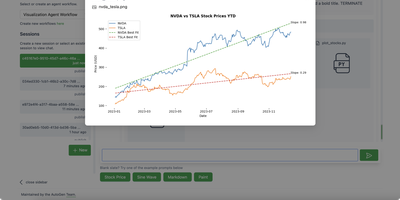
Prototype multi-agent AI systems without writing orchestration code: AutoGen Studio is Microsoft's low-code interface over the AutoGen AgentChat framework. You compose teams of LLM-powered agents in a visual Team Builder, either by drag-and-drop from a component library or by editing the declarative JSON specification directly. Each agent gets a model, a prompt, tools (Python functions), and the team gets termination conditions and an orchestration pattern, sequential or LLM-driven. The Playground runs teams interactively with live message streaming between agents, a visual control-transition graph, tool-call and code-execution tracking, and pause/stop controls, which makes it a practical debugger for agent behavior. Finished teams export as JSON for use in any Python application via the TeamManager class, or serve as an API endpoint. Any OpenAI-compatible model endpoint works, including local servers like Ollama or vLLM. Microsoft labels it a research prototype: use it for prototyping and evaluation, and build production systems on the underlying AutoGen framework.
Conduit
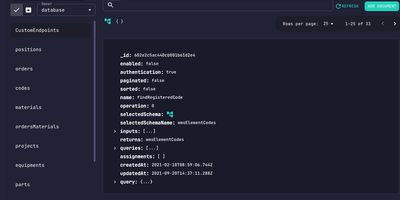
Conduit is a self-hosted backend platform that gives your application user accounts, databases, APIs, chat, and notifications out of the box, so you can skip months of boilerplate and ship the product itself. Define a data schema in the admin dashboard and Conduit generates CRUD and query endpoints for it automatically, backed by your choice of MongoDB or PostgreSQL. The Router module exposes every capability over REST, GraphQL, and WebSockets, and publishes Swagger documentation for each route as you build. Authentication covers a wide range of sign-in methods, and the Authorization module layers resource-level permission rules on top of every account. Realtime chat ships as a ready module with rooms and message history that clients join over WebSockets. Email and SMS modules send through multiple providers, and SMS doubles as a two-factor authentication channel that hardens sign-ins. File uploads land in the Storage module with several cloud providers supported, and PushNotifications keeps your mobile users informed. An Embeddings module adds text-to-vector generation and semantic search when you want AI features inside your app. Forms collect submissions and forward responses to an email address, covering contact pages and lead capture. A CLI bootstraps a working deployment in minutes, and production installs run on Docker Compose or Kubernetes. Running on a dedicated VPS on RepoCloud with guaranteed CPU, RAM, and SSD, full root SSH access, and a browser serial console. MIT licensed.
prest
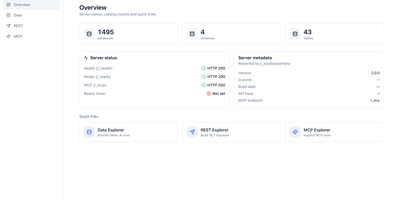
pRESTd points at your PostgreSQL or MySQL database and instantly serves every table as a REST API, so the CRUD backend you were about to spend a week writing already exists. Every table answers at its own address with filtering, ordering, pagination, and column selection in the query string, and batch endpoints group several operations into one call. When a table endpoint is not enough, drop a SQL file into the queries folder and it becomes a named route with bound parameters, or store the scripts in the database and manage them through the admin API. Turn on the auth module and the server issues JWTs from your own users table, checks them on every route, and enforces table-level permissions so public tables stay open while payroll stays shut. The same database also appears as a read-only MCP endpoint, which lets Claude, Cursor, and other AI clients discover your tables and query them with your permissions instead of a copied export. One process can front several databases at once, Postgres and MySQL side by side, each under its own alias for tenants or reporting replicas. An embedded Studio in the same binary browses the catalog and rows, builds GET requests, and invokes MCP tools, so you can inspect everything from the browser before writing a line of client code. Running on a dedicated VPS on RepoCloud with guaranteed CPU, RAM, and SSD, full root SSH access, and a browser serial console. MIT licensed.
Sim Studio
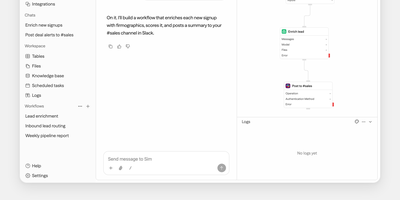
Sim Studio lets teams build, deploy, and monitor AI agent workflows by dragging blocks onto a visual canvas and wiring them into executable pipelines, backed by over 1,000 integrations. The React Flow editor represents each step as a node: LLM calls, tool invocations, conditional branches, and data transformations form directed acyclic graphs that run as complete agent pipelines. Every major LLM provider works natively, including OpenAI, Anthropic, Google Gemini, Groq, and Cerebras, plus local models through Ollama and vLLM. Integrations span Gmail, Slack, Microsoft Teams, Telegram, WhatsApp, Notion, Google Workspace, Airtable, GitHub, Jira, Linear, Perplexity, Firecrawl, PostgreSQL, Supabase, Pinecone, and Qdrant. Built-in tables provide a database layer, a file store offers shared team storage, and knowledge bases powered by PostgreSQL with pgvector enable retrieval-augmented generation. Finished workflows deploy as REST API endpoints, scheduled jobs, or Slack bots, with block-by-block execution traces for full observability. Real-time collaborative editing via Socket.io supports simultaneous multi-user construction. Alternatively, describe agent behavior in natural language and Sim assembles the workflow automatically. Built on Next.js App Router, Bun runtime, Drizzle ORM, and Tailwind CSS. 29,400+ GitHub stars and 100,000+ builders. Apache-2.0 licensed.
Corteza
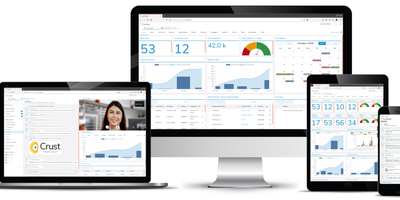
Salesforce's platform model, 100% open-source (Apache 2.0): Corteza is a Go/Vue.js low-code platform developed under a foundation, so there is no open-core bait to grow out of. The heart is Corteza Compose: namespaces contain applications, modules define record structures the way Salesforce objects do, and a drag-and-drop page builder assembles record pages, list pages, dashboards, and charts from configurable blocks. Automation comes from a visual, BPMN-style workflow engine plus JavaScript automation scripts, so cross-application business logic - approval chains, field updates, notifications - is configured rather than programmed. Granular role-based permissions reach down to individual modules, fields, and records, mirroring real organizational hierarchies. Corteza CRM ships as the flagship application built entirely on Compose: leads, accounts, opportunities, campaigns, and cases with a 360-degree customer view, covering most Salesforce standard objects - and because it is just a Compose app, adding or reshaping modules is configuration, not a fork. Everything is reachable over REST APIs, deliberately familiar tooling eases Salesforce admin migration, and a CLI can even generate synthetic records for load-testing what you build.
AGenUI Studio
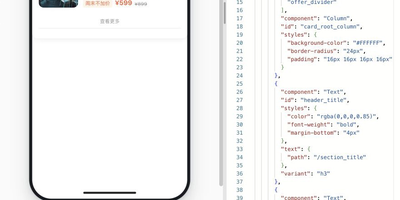
AGenUI Studio turns a written description into a working interface card: an AI agent generates the UI, binds it to your APIs and data, and packages it so it runs anywhere, no Studio required. Bring your own model by entering any OpenAI-compatible or Anthropic Messages endpoint and key in the console settings, and generation proceeds contract-first, steered by design rules you publish as versioned Markdown revisions. You preview each card live as it is generated, then refine it over multiple turns while every component, binding, and action you did not target stays protected from accidental edits. The console also manages the supporting cast: a local knowledge base, API definitions, and reusable operators, all starting from bundled demo data you can swap for real services whenever you are ready. When a card is finished, download it as a self-contained Runtime Package carrying its data sources, bindings, actions, and operators, and execute it with the bundled Card Runtime inside your own application, or register a delivery target and publish straight from the workbench over a callback or a message queue. Applications subscribe to native run events over HTTP and SSE, and production deployments can replace the local defaults piece by piece, MySQL for storage, Redis for hot state, MCP services for knowledge and data, while the packages keep the same contracts. Running on a dedicated VPS on RepoCloud with guaranteed CPU, RAM, and SSD, full root SSH access, and a browser serial console. Apache-2.0 licensed.
Lowdefy
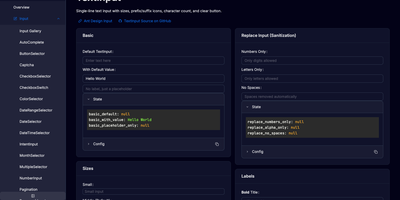
Lowdefy is a config-first web stack that turns YAML files into production web applications, complete with forms, tables, charts, authentication, and live connections to your databases and APIs. You declare pages as trees of blocks (inputs, buttons, tables, charts, markdown), wire events to actions, and the runtime renders a responsive app without a frontend codebase to maintain. More than 50 logic operators handle conditions, lookups, formatting, and state, so dynamic behavior comes from config rather than custom JavaScript scattered across components. Requests run on the server against MongoDB, PostgreSQL, MySQL, REST APIs, Google Sheets, S3, Elasticsearch, and Stripe, keeping credentials off the browser entirely. Sign-in arrives through Auth.js with more than 75 providers, public and private pages, and role-based access control deciding who sees each page and block. When the built-in catalog runs out, npm plugins add custom blocks, connections, operators, actions, and auth providers, declared in the same YAML. Schema validation checks every property before the app serves traffic, and one framework upgrade improves every app built on it. Build once and run the server anywhere Node.js runs, from a single VPS to a container platform. Running on a dedicated VPS on RepoCloud with guaranteed CPU, RAM, and SSD, full root SSH access, and a browser serial console. Apache-2.0 licensed.
1FlowBase
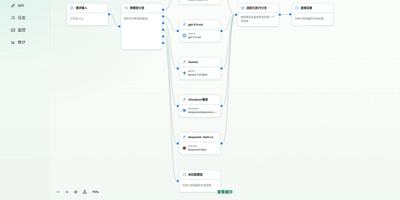
1FlowBase gives teams a single self-hosted foundation that connects model providers, retains every AI conversation, and turns that activity into working business applications. You connect OpenAI, Anthropic, Gemini, DeepSeek, Alibaba Cloud Bailian, or any OpenAI-compatible API through provider plugins and publish one stable endpoint for clients. Requests convert between Anthropic Messages, OpenAI Chat Completions, and OpenAI Responses, so applications keep working when a provider changes. You can route traffic by model name, fall back across branches when a provider fails, and combine planning, execution, and review models into a virtual model that callers use like any other model. Every gateway conversation is recorded with its model, reasoning effort, status, token totals, recorded cost, and latency, then broken down by model and by user in statistics views. You define data models and data sources, expose CRUD APIs, schedule workflows, and publish an OpenAPI 3.1 document for each application. Agents reach the same runtime through MCP with progressive list, get, and call tool discovery, and you manage MCP instances and third-party servers from the console. Pages come from native React blocks that you edit in place with a built-in AI assistant. Running on a dedicated VPS on RepoCloud with guaranteed CPU, RAM, and SSD, full root SSH access, and a browser serial console. Apache-2.0 licensed.
LLemonStack
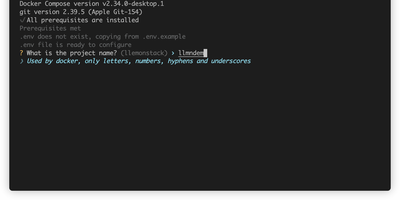
One CLI command deploys a complete AI development environment: n8n, Flowise, Supabase, Ollama, Qdrant, LiteLLM, Langfuse, Open WebUI, LightRAG, Browser-Use, Firecrawl, Crawl4AI, and more, all pre-wired with networking, credentials, and database connections. LLemonStack eliminates the hours of Docker Compose configuration that typically precede any local AI agent project. The llmn CLI initializes isolated project environments with auto-generated secure credentials, starts services in dependency order (databases first, then middleware, then apps), and displays a dashboard showing every service URL and access token. n8n brings 400+ workflow integrations, Flowise provides visual agent building, Ollama runs local LLMs like Llama and Mistral, Qdrant stores vectors at high performance, Open WebUI offers ChatGPT-style model interaction, and LiteLLM proxies requests to any provider with cost tracking. Langfuse automatically logs traces for every LiteLLM query, providing full observability. Each project maintains isolated Postgres schemas preventing data collision across parallel stacks. Firecrawl and Crawl4AI extract web content into LLM-ready formats for RAG pipelines feeding LightRAG or Qdrant. Dozzle streams live container logs for debugging. Import/export tooling migrates workflows between projects with automatic credential reconfiguration. Running on a dedicated VPS on RepoCloud with guaranteed CPU, RAM, and SSD, full root SSH access, and a browser serial console. AGPL-3.0 licensed.
Daptin
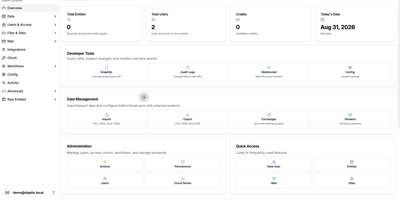
Define your tables once, and Daptin runs the backend around them: every schema becomes a permission-aware JSON:API resource with CRUD, relationships, filtering, and pagination, plus an optional GraphQL surface over the same model. Users, groups, and row-level permissions gate who can read or change each record, with JWT login, one-time codes, and OAuth and OIDC endpoints for sign-in. Files ride along as asset columns backed by local or cloud storage through rclone, with presigned uploads and storage sync. Actions chain validation, conditions, and ordered outcomes into reusable operations, scheduled tasks run them on a cron clock as a chosen user, and state machines track each record's lifecycle with an audit trail. Changes stream out live over WebSockets and feeds, while FTP, calendar and contacts routes, and an OpenAI-compatible LLM gateway expose the same model to other tools. Plans, quotas, and metering let you charge for API and model usage from the same server. Running on a dedicated VPS on RepoCloud with guaranteed CPU, RAM, and SSD, full root SSH access, and a browser serial console. LGPL-3.0 licensed.