DragonflyDB
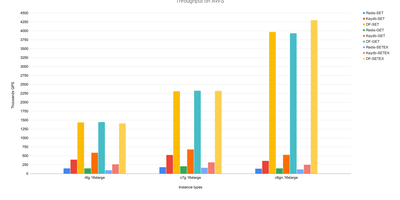
With over 30,000 GitHub stars and benchmarks showing 25x the throughput of single-threaded Redis, DragonflyDB is a modern in-memory data store that eliminates the need for complex Redis Cluster deployments by fully utilizing every CPU core on a single machine. Its shared-nothing, thread-per-core architecture written in C++ supports over 200 Redis commands and 13 Memcached commands, making it a true drop-in replacement that requires zero application code changes. A single DragonflyDB instance scales vertically from 8GB to 768GB of RAM across up to 64 cores, replacing entire Redis Cluster topologies with one process while maintaining full compatibility with Strings, Hashes, Lists, Sets, Sorted Sets, Streams, JSON, and Bloom Filters. The novel dashtable data structure and cache eviction algorithm achieve higher hit rates than LRU and LFU with zero memory overhead per entry. Forkless point-in-time snapshotting eliminates the memory spikes associated with Redis BGSAVE, while automatic backup scheduling via cron syntax supports both local disk and AWS S3 cloud storage. Primary-replica replication follows the Redis replication protocol up to version 6.2, and Prometheus-compatible metrics at the default port enable Grafana monitoring dashboards out of the box. DragonflyDB also exposes an HTTP admin interface on its main TCP port for operational monitoring. Running on a dedicated VPS on RepoCloud with guaranteed CPU, RAM, and SSD, full root SSH access, and a browser serial console. BSL 1.1 licensed.
CubeJS
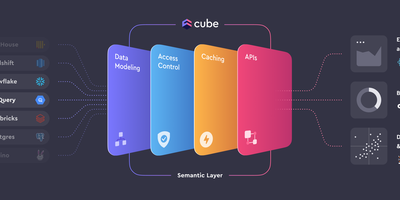
Between your databases and everything that consumes data - BI tools, embedded analytics, AI agents - sits Cube (formerly Cube.js), an open-source semantic layer. Metrics, dimensions, joins, and access rules are defined once as code in YAML, JavaScript, or Python, forming a governed data model that every downstream consumer shares, so "revenue" means the same thing in every dashboard. Caching is two-level: an in-memory cache absorbs bursts of identical queries, and declared pre-aggregations - rollup tables built in the warehouse or in Cube Store, Cube's distributed columnar engine, and refreshed in the background - deliver sub-second latency while cutting warehouse compute costs. The query planner routes each request to cache, rollup, or source automatically. Consumers connect through a Postgres-compatible SQL API (any tool that speaks Postgres works), plus REST, GraphQL, and a Meta API for model introspection. Row-level security and multi-tenancy are enforced in the layer itself, upstream of every client. Sources include Snowflake, BigQuery, Databricks, Postgres, MySQL, Presto, and Athena. Headless by design - bring your own UI.
Neon
Neon reimagines PostgreSQL with a serverless architecture that decouples storage from compute, enabling instant copy-on-write database branching, autoscaling under load, and scale-to-zero when idle with sub-second cold starts. The lakebase architecture distributes durability across three layers: stateless compute nodes running unmodified PostgreSQL, safekeepers providing Paxos-based WAL quorum replication, and a pageserver that materializes pages on demand while offloading immutable history to S3-compatible object storage via MinIO or AWS S3. Copy-on-write branching creates full database clones as metadata operations without duplicating data, enabling developers to spin up isolated test environments, run parallel CI/CD pipelines, or recover from data loss through point-in-time restore across the configurable history window. Autoscaling dynamically adjusts CPU and memory based on live traffic without manual capacity planning, while scale-to-zero ensures costs drop to storage-only during idle periods. Neon maintains 100% PostgreSQL compatibility with broad extension support including PostGIS, pg_cron, pgvector, pg_stat_statements, and hundreds more, so existing applications connect with standard PostgreSQL drivers and ORMs unchanged. The API-first control plane enables programmatic provisioning, branch management, and multi-tenant fleet operations for platform builders and AI agent integrations. Acquired by Databricks in May 2025 and backed by over 22,800 GitHub stars. Deploys via Docker Compose with pageserver, safekeepers, storage broker, and compute nodes backed by MinIO object storage. Running on a dedicated VPS on RepoCloud with guaranteed CPU, RAM, and SSD, full root SSH access, and a browser serial console. Apache 2.0 licensed.