Mail-in-a-Box
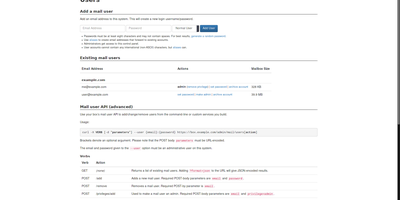
Mail-in-a-Box turns a single Ubuntu server into a fully functional email system with one setup command, installing and configuring Postfix for SMTP, Dovecot for IMAP, Roundcube for webmail, and Z-Push for Exchange ActiveSync push notifications in an automated sequence that would take days to replicate manually. The DNS server auto-configures the full suite of email authentication records: SPF, DKIM, DMARC, DNSSEC with DANE TLSA, MTA-STS, and SSHFP. Getting all of these right is what separates email that lands in inboxes from email that lands in spam, and most manual installations never achieve the complete set. Nextcloud integration adds CardDAV contact sync and CalDAV calendar sharing across devices. Let's Encrypt certificates provision and renew automatically for every hosted domain. The web control panel manages users, aliases, custom DNS records, and automated backups, protected by TOTP two-factor authentication. Daily health checks verify that services run correctly, ports remain open, TLS certificates stay valid, and DNS records resolve properly, alerting you before delivery problems develop. Multiple domains and users operate from one installation with internationalized domain name support. Built-in HTTPS static site hosting uses the TLS infrastructure already in place. Runs on a dedicated RepoCloud VPS with guaranteed resources, root SSH, and browser serial console for complete email sovereignty. CC0 public domain licensed.
Poweradmin
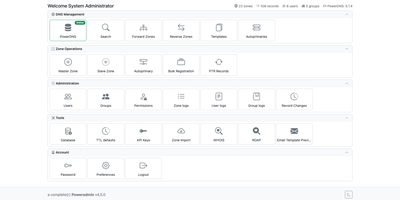
PowerDNS answers the queries; Poweradmin gives you a browser-based control panel for its zones, records, DNSSEC keys, and users, with a REST API for automation. Create master, native, and slave zones, and let zone templates stamp predefined record sets onto new ones. Edit records inline with filters, or open the optional Record Wizard for DMARC, SPF, DKIM, CAA, TLSA, and SRV. Reverse zones link to their forward zones. The batch PTR tool fills whole network ranges, bulk add takes one CSV line per record, and secondary zones can be imported over AXFR. For DNSSEC, manage keys and copy DS and DNSKEY records for your registrar; changes are applied or rectified through the PowerDNS API so signed zones stay consistent. Every record and zone edit is logged with before and after snapshots, and the logs can be filtered and exported. The panel is translated into 43 languages, including right-to-left ones. Permission templates, users, and groups control who touches which zones, sign-in works through LDAP, OIDC, or SAML, and administrators can switch on authenticator-app or email two-factor codes. API keys can be read-only, limited to chosen operations, or restricted to specific zones, and companion projects link Terraform, ExternalDNS, cert-manager, and Certbot. Dynamic DNS clients such as ddclient and inadyn update records through a dyndns2-compatible endpoint. Running on a dedicated VPS on RepoCloud with guaranteed CPU, RAM, and SSD, full root SSH access, and a browser serial console. GPL-3.0 licensed.
Networking Toolbox
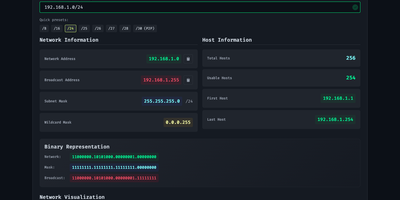
Subnet math, DNS lookups, DHCP options, and certificate checks share one browser tab in Networking Toolbox, a free toolkit for sysadmins and network engineers. Need to carve a /24 into departments? The VLSM planner fits named subnet requirements into a parent block, reports each subnet's efficiency and the leftover space, and exports the plan as CSV or JSON. Merging address lists? CIDR utilities summarize, split, compare, and deaggregate prefixes, with set operations for difference, overlap, and containment. Writing configs? Generators build DHCPv4 and DHCPv6 options, PXE profiles, Kea or ISC snippets, and SPF, DKIM, DMARC, CAA, TLSA, and SRV records, and DNSSEC helpers calculate key tags and DS records. Something broken? Diagnostics query DNS through Cloudflare, Google, Quad9, OpenDNS, or a resolver of your choice, read TLS certificate chains, grade HTTP security headers, trace redirects, check TCP ports, look up BGP routes and RDAP records, and test mail servers. Need a refresher? Reference guides explain private ranges, CGNAT, IPv6 address types, and common ports. A keyboard search palette puts any tool a few keystrokes away, and bookmarked tools stay available offline. Eighteen themes, four languages, custom branding, and accessibility switches make it feel like your own, and a keyless JSON API serves the subnet, CIDR, IP, and DNS utilities to scripts. Running on a dedicated VPS on RepoCloud with guaranteed CPU, RAM, and SSD, full root SSH access, and a browser serial console. MIT licensed.
PowerDNS-Admin
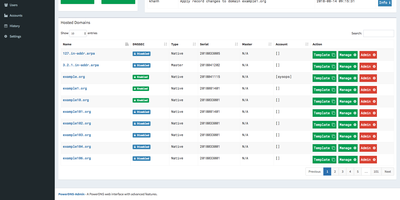
Raw zone files and API calls become something a whole team can operate safely once PowerDNS-Admin puts its web interface in front of a PowerDNS authoritative server. It's a Python/Flask application covering full forward and reverse zone management, with the touches that matter in daily DNS work: zone templates for stamping out consistent new domains, easy IPv6 PTR record editing (reverse zones by hand are misery), full IDN/Punycode support for internationalized domains, and DynDNS 2 protocol support so routers and scripts can update records the way they would against a commercial dynamic-DNS service. Access control is enterprise-grade: local users, LDAP against OpenLDAP or Active Directory, SAML, and OAuth via Google, GitHub, Azure, or OpenID Connect, hardened with TOTP two-factor authentication. Role-based permissions extend to zone-specific access control - hand a developer their project's zone without exposing the rest of your namespace - and activity logging records who changed which record when, the audit trail bare PowerDNS never gives you. The dashboard monitors PDNS service configuration and statistics, and its own API exposes zone and record management for automation on top of the UI. Runs against MySQL/MariaDB or PostgreSQL, talking to PowerDNS through its REST API. MIT-licensed.