mailez
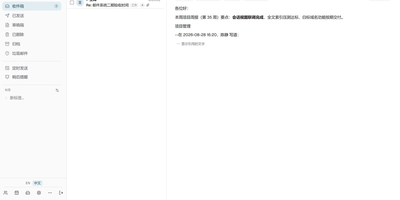
Mail for your own domain stays on your own server with mailez, a self-hosted stack that delivers over SMTP, IMAP, and POP3 and adds a webmail, calendar, contacts, file storage, and an admin console, all started with a single command. Readers get a draggable three-pane webmail that updates itself over a push channel, merges replies into conversations, folds quoted history, and searches with from:, to:, has:attachment, and date terms. Keyboard shortcuts, a command palette, snooze, scheduled send, undo for bulk moves, and quick reply keep daily mail fast, and the interface installs as an offline-capable app with light and dark themes. Privacy-minded users add PGP signing and encryption, two-factor login, and remote-image blocking, and write server-side rules in a Sieve editor. Calendar, contacts, and Drive sit beside mail, with ICS subscriptions, vCard import, CardDAV and CalDAV sync, and share links. Phones and desktop clients configure themselves through autoconfig. Administrators manage domains, mailboxes, aliases, relays, and external mailbox fetching in one console, generate DKIM keys with a click, and follow a DNS wizard and a health page that verify MX, SPF, DMARC, DKIM, blocklists, and MTA-STS. Audit logs and role-based access keep shared servers accountable. The free community edition runs on a single node, while archiving, DLP, LDAP, ActiveSync, and AI features belong to the paid enterprise edition. Running on a dedicated VPS on RepoCloud with guaranteed CPU, RAM, and SSD, full root SSH access, and a browser serial console. AGPL-3.0 licensed.
Parse DMARC
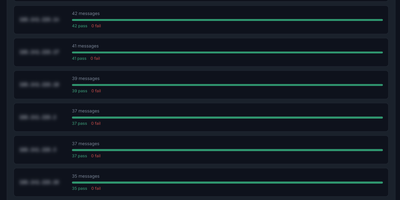
Parse DMARC reads the DMARC aggregate reports that Google, Microsoft, and Yahoo email about your domain every day and shows you, in one dashboard, who is sending mail as you and whether it passes authentication. It fetches the reports over IMAP, unpacks the gzip, zip, and XML attachments automatically, and charts your pass rate, message volume, and top sending sources at a glance. Any report opens down to its raw records, so when an unfamiliar IP starts sending as you, the evidence is one click away instead of buried in XML. Reports forwarded through Exchange or Outlook as message attachments are unwrapped too, and a local Maildir intake covers servers where the mailbox lives on the same host. A built-in generator writes your _dmarc TXT record from a form, so tightening your policy does not mean hand-writing DNS syntax from memory. Twenty-eight Prometheus metrics and a shipped Grafana dashboard move the same data into the monitoring stack you already run. An MCP server lets an AI assistant query your reports directly, asking which sources failed DKIM this week in plain language. Everything stores in a single SQLite file inside one static Go binary, with dark mode for late-night incident reviews. Running on a dedicated VPS on RepoCloud with guaranteed CPU, RAM, and SSD, full root SSH access, and a browser serial console. Apache-2.0 licensed.