Webtor
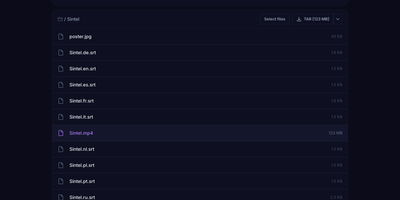
Webtor turns any magnet link or .torrent file into instant in-browser streaming and direct downloads on your own server, with no desktop torrent client and nothing to install for viewers. Drop in a magnet, an infohash, or a torrent file and the file list appears in seconds; pick a video and it plays in the built-in player while the pieces are still arriving, or take a plain HTTP download link for any single file instead. Whole torrents come down as ZIP or TAR archives generated on the fly with the folder structure preserved, and formats from MKV and MP4 to FLAC and MP3 stream without a separate transcoding step in most cases. Torrents you keep go into a personal library that recognizes movies and series automatically and enriches them with posters and descriptions, and the same library can mount as a network drive over WebDAV or S3 and play on a TV through the Stremio addon. Subtitles are matched from OpenSubtitles inside the player, uploaded tracks are supported, and optional AI translation renders them in your language; a master password locks the instance, the player embeds into other sites through the JavaScript SDK, and a REST API drives everything from your own code. Running on a dedicated VPS on RepoCloud with guaranteed CPU, RAM, and SSD, full root SSH access, and a browser serial console. MIT licensed.
etcd
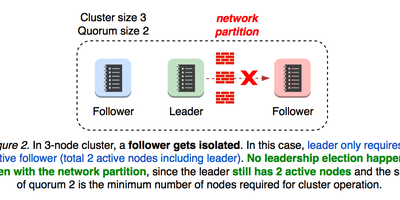
With over 52,000 GitHub stars and its role as the foundation of every Kubernetes cluster worldwide, etcd is the distributed key-value store that handles the most critical data in modern infrastructure — cluster state, configuration, service discovery, and distributed coordination. Built in Go and graduated from the CNCF, etcd uses the Raft consensus algorithm to maintain a strongly-consistent, highly-available replicated log across a cluster of machines, gracefully handling leader elections during network partitions and tolerating machine failure including the leader node. The gRPC API provides atomic key-value operations including put, get, delete, and transactions with multi-key compare-and-swap semantics, enabling distributed locking, leader election, and configuration management without external coordination. Watch operations stream real-time change notifications for specific keys or key ranges, powering reactive architectures that respond immediately to configuration updates. Version 3.7 introduces RangeStream for streaming large result sets in chunks, keys-only range requests for faster metadata queries, and bootstraps entirely from v3store after eliminating the legacy v2 store dependency. Automatic TLS encryption with optional client certificate authentication secures all cluster communication, while role-based access control restricts key access per user. The embedded bbolt B+ tree storage engine provides consistent reads and writes with configurable compaction policies. Benchmarked at 10,000 writes per second per instance with linearizable reads, etcd supports clusters of 3, 5, or 7 members for fault tolerance. Running on a dedicated VPS on RepoCloud with guaranteed CPU, RAM, and SSD, full root SSH access, and a browser serial console. Apache 2.0 licensed.
Cozystack
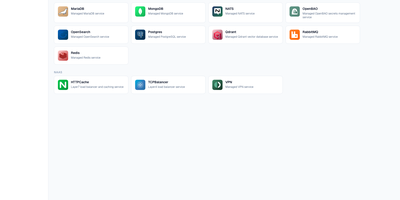
A rack of ordinary servers becomes your own cloud, with tenants ordering real infrastructure from a catalogue instead of filing tickets. Cozystack is an open-source, Kubernetes-based cloud platform that turns bare metal into a self-service system for spawning Kubernetes clusters, databases, virtual machines, load balancers, object storage, and HTTP caching services through a standard REST API. Hosting providers use it to sell managed services on hardware they already own, platform teams use it to give developers isolated environments inside quotas, and organizations leaving VMware run virtual machines and containers side by side with live migration and replicated storage. Tenants stay separated, GPU capacity can be shared between groups, and every service instance ships with preconfigured monitoring dashboards and alerts, gathered per tenant or into one hub. Because services are requested as Kubernetes resources, a billing system integrates by submitting a manifest, and platform packages are plain YAML delivered by FluxCD, so extending the catalogue means editing files your team already understands. Installation bootstraps immutable nodes over PXE or ISO, and the built-in web dashboard deploys applications and shows what the platform is doing without hiding the API underneath. The whole control plane runs on your hardware, auditable end to end. Running on a dedicated VPS on RepoCloud with guaranteed CPU, RAM, and SSD, full root SSH access, and a browser serial console. Apache-2.0 licensed.
Apache APISIX
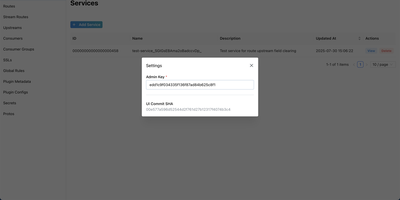
With 17,000 GitHub stars, 460+ contributors, and deployments across telecommunications, automotive, and financial services running on over 10,000 CPU cores at the largest known installations, Apache APISIX delivers a fully dynamic API gateway achieving 140,000 QPS on eight cores with sub-millisecond latency through NGINX's event-driven architecture and LuaJIT-compiled plugin execution. The 100+ open-source plugins cover authentication (JWT, OAuth 2.0, OIDC, Keycloak, LDAP), observability (Prometheus, Datadog, SkyWalking, OpenTelemetry), traffic management (rate limiting, circuit breaking, canary releases, traffic splitting), and security (CORS, IP restriction, CSRF protection) — all hot-reloadable without process restarts via etcd-based real-time configuration synchronization. Multi-protocol support handles HTTP, gRPC, MQTT, TCP, UDP, and WebSocket traffic for both north-south API access and east-west service mesh communication. AI gateway capabilities proxy requests to 20+ LLM providers with semantic caching, token-aware rate limiting, provider failover routing, and content moderation. Custom plugins extend the gateway in Lua, Go, Java, Python, or WebAssembly. Radixtree route matching handles 100,000+ routes without performance degradation. Functions as a Kubernetes ingress controller with native service discovery for Consul, Nacos, and Eureka. Deploy via Docker or Helm charts with horizontal scaling through etcd cluster coordination. Running on a dedicated VPS on RepoCloud with guaranteed CPU, RAM, and SSD, full root SSH access, and a browser serial console. Apache 2.0 licensed.

ownCloud Infinite Scale
Files belong to the project, not to whoever uploaded them: ownCloud Infinite Scale is a self-hosted file sharing and collaboration platform where teams work in Spaces, data rooms that stay intact when people join, leave, or change roles. Inside a Space, members browse, upload, version, and share files from the web interface or synced clients, with full control over links, permissions, and expiry. Documents open for real-time editing through the web office integration of your choice, favorites and recent files keep daily work one click away, and full-text search with tags finds content across every Space you can access. Personal files live alongside team Spaces, a recycle bin catches mistakes, and administrators manage users, groups, roles, and storage from the same deployment. One service runs the whole platform for a home server, and the same system scales out for schools, companies, and public institutions that must keep data on their own infrastructure. Running on a dedicated VPS on RepoCloud with guaranteed CPU, RAM, and SSD, full root SSH access, and a browser serial console. Apache-2.0 licensed.
Headlamp
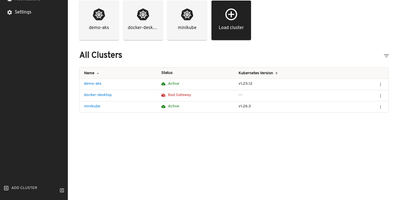
The Kubernetes project's own answer to cluster management UIs: maintained under SIG UI governance, Headlamp's roadmap tracks Kubernetes releases and its design philosophy reflects community needs rather than a vendor's product strategy. The React interface provides full read-write capabilities adapted to each user's RBAC permissions — delete, scale, edit, and restart buttons appear only when the authenticated user holds the corresponding cluster role, preventing accidental unauthorized actions. Multi-cluster support surfaces workloads across development, staging, and production from a single view without context switching. The plugin architecture drives extensibility through a curated catalog: an AI Assistant plugin answers natural-language cluster queries and performs operations via configurable LLM keys, Flux handles GitOps, Karpenter manages nodes. Integrated terminals provide browser-based exec access to running pods, live log streaming follows container output with filtering, and the YAML editor displays inline Kubernetes API documentation alongside resource definitions. Deployment creation forms let you configure containers, environment variables, volumes, and replicas without writing manifests. Side-by-side cluster comparison views surface differences in workload distribution. Works with any distribution: EKS, GKE, AKS, Minikube, Docker Desktop. Helm chart installation via the Headlamp repository with images on GitHub Container Registry. Running on a dedicated VPS on RepoCloud with guaranteed CPU, RAM, and SSD, full root SSH access, and a browser serial console. Apache-2.0 licensed.
Foxel
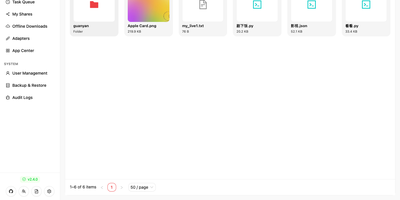
Foxel is a private cloud drive that gathers files scattered across disks, NAS shares, S3 buckets, and consumer cloud accounts into one browser file manager, then lets you find any of them by describing what is inside. Storage adapters for local folders, S3, WebDAV, SFTP, FTP, SMB, Google Drive, OneDrive, Dropbox, Telegram, AList, and Seafile mount each backend at its own path, so browsing, uploading, moving, copying, zipping, and extracting work the same everywhere. Type a plain-language query such as the scene you remember from a photo, and semantic search returns matching images and documents using the embedding provider and vector database you configure. Previews open images, video, PDFs, Office files, text, and code in the browser without a download. Role-based access control pairs Admin, User, and Viewer roles with per-path read, write, delete, and share rules, and an audit log records who did what from which IP address. Share folders through public or password-protected links that expire on a date you choose, or expose the library as an S3 endpoint, a WebDAV network drive, or signed temporary direct links. A task center runs indexing, backups, and scheduled jobs in the background, plugins add custom pages at runtime, and a built-in AI agent can browse, search, and process files, but it asks for approval before it changes any file. Running on a dedicated VPS on RepoCloud with guaranteed CPU, RAM, and SSD, full root SSH access, and a browser serial console. MIT licensed.
Argus
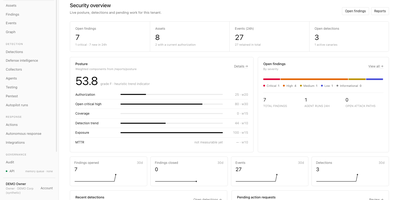
Hand your security alerts to a team of AI specialists and keep the final say on every action. Argus pulls events from cloud, identity, code, endpoint, and Kubernetes sources, runs fifteen detection rules, and turns matches into deduplicated findings enriched with CISA KEV and EPSS scores. Nine specialist agents hunt for evidence, build timelines, estimate blast radius, and propose fixes, but their only write path is a pending request that waits for human approval. Response playbooks can block an attacker or isolate a laptop through a catalog of 27 typed actions, starting in shadow mode with dry runs, caps, automatic rollback, and a tenant kill switch. Plant canary tokens aimed at rogue AI agents, replay eight simulated agent-driven attacks, and route OpenAI and Anthropic traffic through a gateway with model allowlists and budgets. Every step is written to a signed audit chain. A self-hosted command center with roles, TOTP sign-in, and Slack approvals fits small teams that have no SOC of their own. Running on a dedicated VPS on RepoCloud with guaranteed CPU, RAM, and SSD, full root SSH access, and a browser serial console. MIT licensed.
Composr
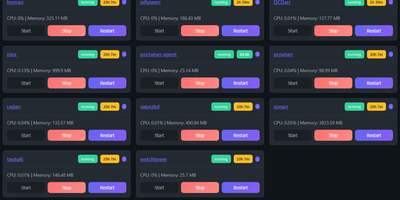
Managing multi-server container fleets often deteriorates into fragmented SSH sessions, mismatched compose files, and conflicting port allocations. Composr consolidates multiple Docker host daemons into a unified web dashboard that controls running containers, stack definitions, and system metrics from a single interface. Operators can connect remote Docker daemons through encrypted TCP sockets, inspect container health, and stream live execution logs with sub-second responsiveness. A built-in project creation wizard guides administrators through drafting new Compose topologies across local directories or remote server nodes. In-browser CodeMirror editors deliver live syntax highlighting for YAML files, configuration dotfiles, and reverse proxy definitions without detaching containers from disk. The platform tracks service properties directly, letting you toggle Compose profiles, relocate services between YAML manifests with pre-flight risk checks, and detect target port collisions before redeployment. Integrated backup managers bundle container metadata, compose files, and environment definitions into downloadable archive packages for automated disaster recovery. System operators can open interactive browser terminals into any active container, execute batch maintenance tasks, and configure scheduled image update checks. Running on a dedicated VPS on RepoCloud with guaranteed CPU, RAM, and SSD, full root SSH access, and a browser serial console. MIT licensed.
Apache EventMesh
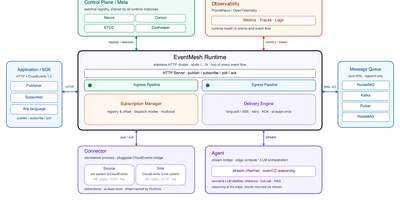
Applications publish an event once and stop caring who needs it next: Apache EventMesh receives CloudEvents over plain HTTP, stores them durably, and delivers each one to every subscription that matches. Producers call publish, consumers call subscribe or unsubscribe, and the runtime owns the registry, offsets, acknowledgements, and redelivery that messaging clients usually force you to build yourself. Subscribers choose load-balanced delivery for competing workers, broadcast delivery for every listener, or multicast for selected groups, and they receive events by HTTP long polling, Server-Sent Events, or WebSocket push. Filters drop irrelevant events before they leave the mesh, while transformers reshape payloads so a producer and consumer can disagree about format without either one changing code. Kafka and RocketMQ act as pluggable write-ahead storage, with an in-memory backend for development, and stateless runtime instances scale horizontally without consumer-group rebalancing. Twenty-three connectors move events into and out of RabbitMQ, Pulsar, MongoDB, MySQL change data capture, Redis, S3, Prometheus, Slack, DingTalk, Lark, WeChat, and AI services, each checkpointing offsets so failures replay instead of silently losing data. Agent-to-Agent protocol support and MCP connectors let AI agents exchange asynchronous events alongside synchronous tool calls, and event-triggered agents can publish decisions back into the mesh for downstream delivery. Running on a dedicated VPS on RepoCloud with guaranteed CPU, RAM, and SSD, full root SSH access, and a browser serial console. Apache-2.0 licensed.
Nixopus
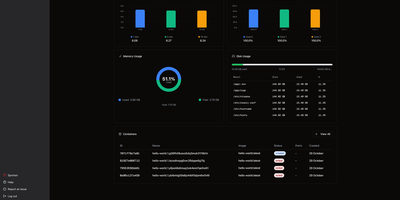
Tell an AI agent to deploy your app and watch it actually happen. Nixopus connects to your GitHub repo, analyzes the codebase to detect your framework, generates the right Docker configuration, resolves dependency conflicts, and ships the whole thing to your server with HTTPS enabled. When something breaks, the agent reads the logs, creates a pull request with a fix, and redeploys without waking you up. The chat interface lets you deploy, add custom domains, check logs, roll back, and troubleshoot in plain English from the web dashboard or directly from your VS Code or Cursor editor. Extensions bring one-click installs for 100+ self-hostable apps like Appwrite, Excalidraw, and Ollama, each showing you exactly what it runs on your server before installation. Connect multiple servers and monitor CPU, memory, disk, and running containers across your entire fleet from a single dashboard with draggable widget layouts. The built-in terminal opens SSH sessions right in the browser with split-pane support, so you can watch logs in one pane while running commands in another. Framework detection covers Next.js, Django, Rails, Go, FastAPI, and anything else that fits a container image. Every deployment gets automatic TLS via Caddy with Let's Encrypt certificates provisioned and renewed silently. Previous container images are retained so rollbacks skip the rebuild step entirely. Deploy on a dedicated VPS on RepoCloud with guaranteed CPU, RAM, and SSD, full root SSH access, and a browser serial console. AGPL-3.0 licensed.
Tau
Tau delivers a complete self-hosted cloud platform where Git is the control plane and WebAssembly is the runtime. The Go binary deploys as interconnected nodes that form a P2P network using libp2p for automatic service discovery, eliminating Kubernetes entirely. Serverless functions compile to WebAssembly for secure multi-tenant execution with automatic horizontal scaling — write in Go, Rust, AssemblyScript, or C and deploy by pushing to Git. Branch-based environments map Git branches to isolated deployments, so staging and production run identical infrastructure from different refs. Static website hosting serves frontends with global distribution and automatic content-addressed deduplication via IPFS-derived storage. The built-in K/V database provides distributed storage with automatic replication across nodes, while object storage handles file management with content addressing. Pub/Sub messaging enables real-time communication between functions and external services including WebSocket support. Spore Drive automates multi-host deployment and rolling updates from a single command across bare metal or VMs running Ubuntu. The Dream CLI provides a complete local development environment that mirrors production exactly — same services, same routing, same deployment flow. Zero-configuration HTTPS provisions TLS certificates automatically for custom domains. The web console at console.taubyte.com provides visual project management, or use the tau CLI for Git-native workflows. Running on a dedicated VPS on RepoCloud with guaranteed CPU, RAM, and SSD, full root SSH access, and a browser serial console. BSD-3-Clause licensed.
FolderHost
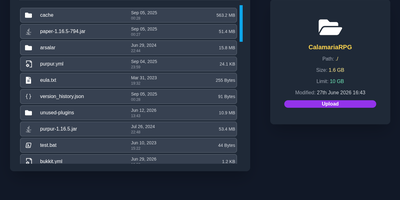
FolderHost turns a folder on your server into a private cloud that you and your team reach from any browser, with the whole platform shipping as one executable of about 19MB and zero dependencies to install. Upload, download, move, copy, rename, archive, and extract files through a familiar explorer interface, with chunked uploads that survive big transfers and a recovery bin that keeps accidental deletions restorable within limits you set. Code files open in a real editor where several people can type at once, which makes it a surprisingly handy way to tweak server configs or a game server's files together live. Long-running programs can be registered as services and started, stopped, and driven from a built-in terminal that shows live uptime and memory use. Accounts come with granular permissions for every action, optional folder scopes that confine a user to one directory tree, and per-instance storage quotas. Every activity lands in audit logs you can review and auto-expire, sessions use short-lived tokens tied to the login device, and TLS can be self-signed for a LAN or issued through Let's Encrypt for a public domain. Running on a dedicated VPS on RepoCloud with guaranteed CPU, RAM, and SSD, full root SSH access, and a browser serial console. GPL-3.0 licensed.
ProxMate
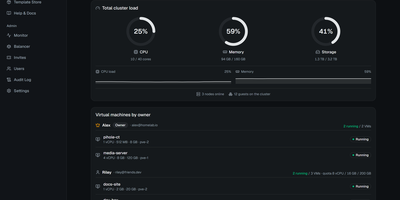
You have a Proxmox cluster with spare capacity and people who keep asking you for a VM: ProxMate turns that cluster into an invite-only cloud where those people help themselves, inside limits you set. Invite links carry CPU, memory, and disk quotas, and tenants spin up VMs or LXC containers from an ISO, the Template Store, or twenty curated cloud images, pasting an SSH key to get a ready-to-SSH box in about a minute. Automatic placement picks the node with the image and the most free capacity, so nobody needs to learn your topology. Projects group machines with per-project usage totals and whole-project start and stop, and any VM can be shared with another tenant as viewer, operator, or manager, never with delete rights. Both a graphical noVNC console and a text console with copy and paste run in the browser, so access never needs open ports, and an optional per-VM browser IDE puts VS Code inside the guest. Backups run on schedules with rolling retention and one-click restore, snapshots are instant, power schedules stop dev boxes overnight, and time-boxed invites suspend access without deleting anything. Admins watch live per-VM sparklines, audit every action, and balance memory across nodes with live migration. Running on a dedicated VPS on RepoCloud with guaranteed CPU, RAM, and SSD, full root SSH access, and a browser serial console. AGPL-3.0 licensed.
PlikShare
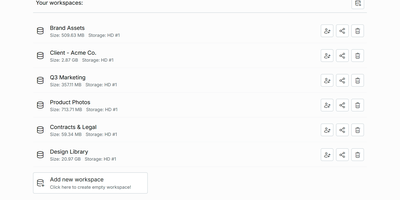
Sending a client a big file should not mean renting seats on someone else's cloud, and PlikShare turns your own server into a file sharing platform with unlimited users, unlimited workspaces, and no per-seat pricing. Its central idea is the box: a controlled gateway between your folders and the outside world, where you invite collaborators, mint anonymous links, and decide who may upload, download, preview, or drop files into an upload-only inbox. Quick share links carry custom slugs, expiry dates, passwords, and download caps, and every box can embed into another website as a live widget whose permissions update the moment you change them. Storage is your choice per workspace, from the server's own disk to S3, Cloudflare R2, Backblaze B2, Azure Blob, Google Cloud Storage, or any S3-compatible server, and each storage picks one of three encryption modes, including full encryption where names and contents are sealed with keys derived from each user's password. Bulk uploads arrive as a single zip that rebuilds its folder structure on landing, bulk downloads assemble from an explorer tree, and previews cover video, audio, PDFs, Markdown with diagrams, and even the inside of zip archives. Single sign-on through multiple OIDC providers, granular admin roles, an optional MCP server for scoped AI agents, and OCR or chat integrations round out a platform that stays lean on a small server. Running on a dedicated VPS on RepoCloud with guaranteed CPU, RAM, and SSD, full root SSH access, and a browser serial console. AGPL-3.0 licensed.
Cozy Cloud
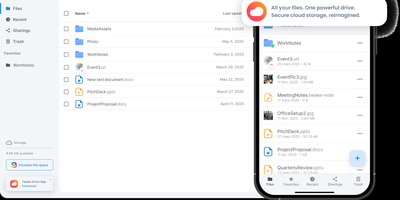
With over 1,200 GitHub stars, 12,000+ commits, and more than a decade of active development distributed under the AGPL-3.0 license, Cozy Cloud operates as a comprehensive personal data hub that goes far beyond file storage by connecting your documents, contacts, calendars, banking transactions, energy bills, and productivity tools into a single self-hosted platform where no third party profiles you. The cozy-stack Go binary handles file storage, CouchDB document management, job scheduling, app serving, and the REST API in a single process consuming approximately 150MB of RAM idle. Sandboxed konnectors import data from 50+ external services — banks, utility providers, telecom operators, cloud drives — running as isolated jobs via nsjail to prevent untrusted code from accessing other user data. The built-in app store serves web applications in subdomain-isolated environments with Content Security Policy headers, each app communicating exclusively through the documented REST API. Real-time synchronization via PouchDB replication and WebSocket keeps files, contacts, and documents consistent across desktop clients, mobile apps for iOS and Android with automatic photo backup, and the web interface. Security features include automatic Let's Encrypt TLS certificates, Argon2id password hashing, optional TOTP two-factor authentication, and GDPR-compliant data export via the CLI. Each user receives their own isolated instance with independent storage, database, and application configuration. Running on a dedicated VPS on RepoCloud with guaranteed CPU, RAM, and SSD, full root SSH access, and a browser serial console. AGPL-3.0 licensed.
ManageIQ
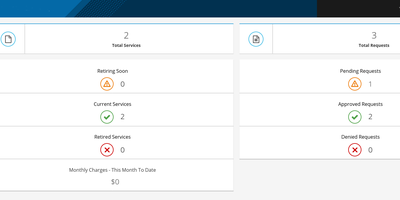
ManageIQ gives operators one console for every cloud and hypervisor the organization runs, connecting to VMware, OpenStack, AWS, Azure, Google Cloud, Kubernetes, OpenShift, and Nutanix to continuously discover inventory, map relationships, and listen for changes without installing agents. Discovered estates become manageable: operators publish bundles of resources into a self-service catalog that end users order like apps, then govern the full life cycle through policy, compliance, delegated operations, and retirement. SmartState analysis scans the contents of VMs, hosts, and containers agentlessly, even foreign or uncooperative ones, feeding security and compliance policies that flag drift automatically. Utilization metrics reveal idle systems and right-sizing opportunities, with capacity planning and what-if scenarios before hardware purchases. Chargeback and showback assign rates to tenants, group VMs by tag or container images by label, and generate reports in multiple currencies. Embedded Ansible automation executes playbooks for provisioning and remediation, and the Spassky release adds Nutanix and Terraform Enterprise providers on a Rails 7.2 core. Running on a dedicated VPS on RepoCloud with guaranteed CPU, RAM, and SSD, full root SSH access, and a browser serial console. Apache-2.0 licensed.
Jmal Cloud
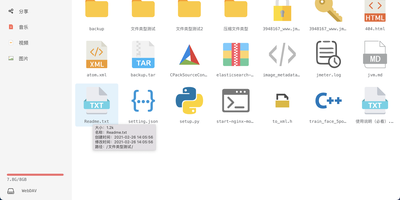
Jmal Cloud is a self-hosted private cloud drive that keeps your files on your own server, with online previews, resumable uploads, full-text search, and WebDAV access. The web manager previews photos, videos, Office documents, PDFs, EPUB books, and even CAD DWG drawings in the browser, then puts recently modified files, favorites, shared folders, and a trash bin a click away. Huge uploads resume from the exact chunk that stopped, while full-text search drills into text, PDFs, and Office documents when filenames fail you. Connect Alibaba Cloud OSS, Tencent Cloud COS, or MinIO as storage backends and browse every bucket through the same folders. Wire in a self-hosted OnlyOffice Document Server and draw.io to edit Word, Excel, and PowerPoint files and sketch flowcharts or mind maps without leaving the drive. Mount the library as a local network drive over WebDAV, share folders through links for upload and download, and push scheduled backups with the Rust jmalcloud CLI. Packages and Docker images cover Ubuntu, Debian, CentOS, Fedora, and Arch on x86_64 and ARM64, and the interface speaks English, Chinese, and Japanese. Running on a dedicated VPS on RepoCloud with guaranteed CPU, RAM, and SSD, full root SSH access, and a browser serial console. MIT licensed.