Agenvoy
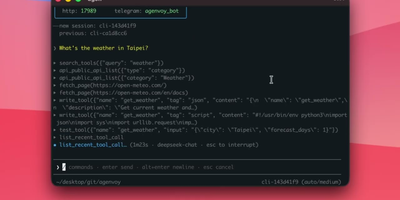
While ordinary chatbots sit idle between prompts, Agenvoy runs around the clock on your own machine, turning one-sentence requests into finished research, files, and reports. Say what you need once and it builds the missing tool itself, tests that tool inside a sandbox, saves it, and reaches for it again the next time a similar job appears. Recurring work becomes a schedule in plain words; a morning briefing, a watched folder, or a weekly report then runs unattended, and a long task interrupted mid-run resumes from its checkpoint instead of starting over. Ask questions about your own files and it searches them like a private archive, transcribing audio and video into text it can quote back to you. Each task is routed to the model tier that fits it, a light model for lookups and a heavy one for hard reasoning, across subscription logins, API keys from eleven providers, or a local Ollama that never phones home. Commands run in a sandbox with the network off until you approve a call, sensitive paths ask before they open, and credentials wait in the system keychain instead of the chat history. You drive it from the terminal, the browser dashboard, or Telegram and Discord when you are away from the desk, and it lends its sandboxed tools to Claude Code and Codex over MCP. Running on a dedicated VPS on RepoCloud with guaranteed CPU, RAM, and SSD, full root SSH access, and a browser serial console. AGPL-3.0 licensed.
MCPProxy
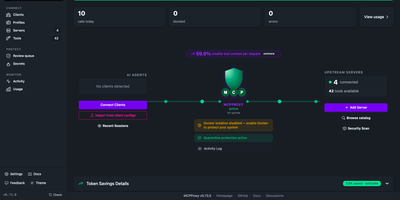
MCPProxy puts one safe endpoint in front of every MCP server your AI agents use, and it holds each new server in quarantine until a person approves it. Add stdio or HTTP servers on the Servers page, then review the captured tool definitions and scanner findings in the Review queue before any agent can call them. The Tools page lists every tool with a Read, Write, or Destructive tier, an approval state, and a usage count, plus switches to hide whatever you do not want exposed. Agents see a short set of discovery and call tools instead of the full catalog, and the Home dashboard estimates how much context that saves per request. The Activity Log records each call with its server, intent, status, and duration, and exports for audits. The Usage page charts calls per tool, response sizes, errors, latency, and activity over time, filtered by profile, client, or token. Profiles and agent tokens scope what each client may reach, a Secrets page keeps credentials out of config files, and a setup wizard connects Claude Code, Claude Desktop, Cursor, Windsurf, and VS Code. Platform teams and solo builders get one place to see and control everything their agents can touch. Running on a dedicated VPS on RepoCloud with guaranteed CPU, RAM, and SSD, full root SSH access, and a browser serial console. MIT licensed.
CowAgent
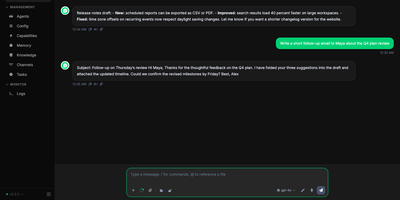
CowAgent is a personal AI agent that plans a task, picks the right tool, and keeps working until the job is done, all from a browser console on your own server. Open the chat page to hand it a request, and watch it read files, run terminal commands, search the web, and report back. Build a team of agents, each with its own role, model, skills, and knowledge, then have them collaborate in one shared conversation. Memory is layered into context, daily notes, and core facts, so the agent gets to know you over time, and a knowledge base organizes saved articles and documents into a browsable wiki. Install skills from a hub, from GitHub, or by describing one in plain language, and connect MCP tools through a form or pasted JSON. Provider credentials for chat, vision, image generation, speech, and embeddings live in one Models page, so each capability can use a different vendor. Connect Telegram, Slack, Discord, WeChat, Feishu, DingTalk, or WeCom and schedule recurring tasks. An OpenAI-compatible Chat API and shareable guest pages put the agent in front of other people. Running on a dedicated VPS on RepoCloud with guaranteed CPU, RAM, and SSD, full root SSH access, and a browser serial console. MIT licensed.
PiClaw
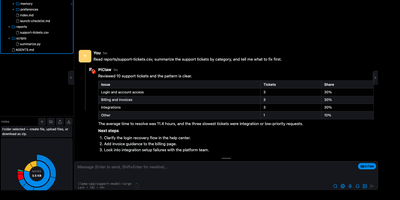
Chat, files, editor, and shell share one browser window, so nothing the agent does happens out of sight. PiClaw streams replies from the model provider you configure, hosted or a local OpenAI-compatible server, and you can steer a running turn, queue follow-ups, or branch a side question with /btw. The workspace sidebar shows a file tree with folder sizes. Open a Markdown note for a live preview with checklists and tables, a CSV for a table view, or a script in the code editor with syntax highlighting and an optional Vim mode. A detachable terminal runs shell commands in the same workspace, and the agent's own file and shell tools work there too. Scheduled tasks run on cron timings, chat history stays searchable between visits, and nightly Dream memory consolidates notes into plain files. Settings pages cover providers, models, MCP servers, keychain secrets, budgets, and session recordings. Optional add-ons bring Draw.io, kanban boards, and Proxmox or Portainer tools. Browser sign-in supports authenticator codes and passkeys, and the layout adapts to phones. A homelab server, a laptop, and a phone can all open the same private agent workspace, which suits solo developers and small teams. Running on a dedicated VPS on RepoCloud with guaranteed CPU, RAM, and SSD, full root SSH access, and a browser serial console. MIT licensed.
Kanzo
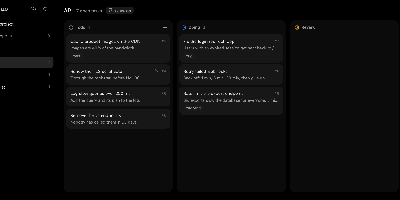
Give your coding agents a board they can work, not just read: Kanzo is a self-hosted kanban board where you and your agents move the same tasks through the same columns at the same time. Tell an agent to take the next task and it moves the card to doing, comments as it works, and leaves the result where you can read it in the browser. Projects follow the code automatically: the agent finds the right board from the Git remote of the repository it is working in, and you can link more repositories to a project from its menu. Press n to add a task, search every project with a slash or Command-K, paste an image straight into a card or comment, and park half-formed ideas in an optional Backlog column that agents leave alone until you promote them. The whole board is one folder, and a private Git repository you own keeps it in step across a laptop, a desktop, and a Raspberry Pi, with conflicts resolved by choosing which side to keep. Statuses are yours to rename in the config file, the board exports cleanly to Markdown or JSON, and one click in the sidebar installs updates and restarts the service. Running on a dedicated VPS on RepoCloud with guaranteed CPU, RAM, and SSD, full root SSH access, and a browser serial console. AGPL-3.0 licensed.
DB-GPT
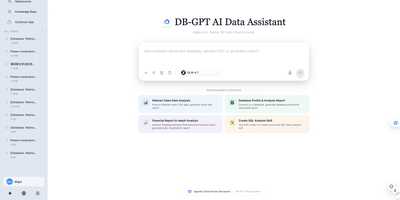
DB-GPT lets a team talk to its data: ask a business question in plain English, and an AI agent plans the work, writes the SQL, runs it, and hands back charts and a written report. Connect MySQL, PostgreSQL, SQL Server, ClickHouse, DuckDB, Doris, StarRocks, or MaxCompute, or drop in CSV and Excel files, including several at once. Every step appears in a live task view with its query, result table, code, and console output, and the agent pauses to ask clarifying questions, with answer options, when the data cannot settle the matter. Reusable skills package proven procedures, including CSV analysis, SQL analysis, and financial report analysis, and a skill creator helps write new ones. Code executes in a sandbox, parallel sub-agents split larger jobs, and an agentic knowledge-base search answers questions over uploaded documents. Scheduled tasks run saved conversations on a cron timetable with on/off switches and execution history, while MCP connectors link tools like Notion, Linear, Tavily, and GitHub. Pick OpenAI, DeepSeek, Qwen, SiliconFlow, Ollama, or vLLM for the model, then use the application and AWEL workflow tools to build data apps of your own. Running on a dedicated VPS on RepoCloud with guaranteed CPU, RAM, and SSD, full root SSH access, and a browser serial console. MIT licensed.
PentaGI
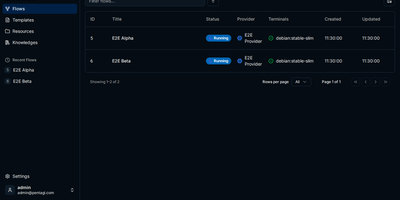
Autonomous red team execution without manual script coordination is what PentaGI delivers through a multi-agent penetration testing platform engineered for automated security assessments. Security engineers configure testing scopes, target IP ranges, domain lists, and rules of engagement through an interactive web console with real-time execution graphs. Autonomous agent personas break down high-level assessment goals into discrete tactical phases, orchestrating network port discovery, service banner fingerprinting, web application crawling, and CVE verification. Specialized agents query integrated Graphiti knowledge graphs and local vulnerability repositories to synthesize attack paths, validate exploitability, and confirm finding veracity before issuing alerts. Operators monitor live agent terminal streams, inspect sandboxed tool executions, and adjust active LLM provider routes across OpenAI, Anthropic, or local Ollama endpoints. The template editor allows red teams to compose reusable testing playbooks with customizable security prompt chains, safety constraints, and automated remediation reporting. Audit logs capture full command histories, raw tool outputs, and LLM reasoning steps to generate compliance-ready technical documentation. Running on a dedicated VPS on RepoCloud with guaranteed CPU, RAM, and SSD, full root SSH access, and a browser serial console. MIT licensed.

Hexis
Hexis gives every AI agent in your company one governed brain: skills, tool manuals, and knowledge stored as files in a git repository you own. Engineers and non-technical teammates browse the same workspace to load plugins, read company context, and propose improvements without touching git themselves. A proposed change shows its exact diff to the owners of the files it touches, and it ships only when they approve, on the branch rules you set. Agents propose too: one that hits a broken skill mid-task can suggest the fix as a change request and wait for a person to decide. Claude Code, Cursor, Cline, Codex, and ChatGPT connect over MCP and discover skills by search at call time, so the context window stays lean. Each agent acts with its user's own permissions, resolved per file, and the credentials behind tools stay in an encrypted vault the agent never holds. Roles and folder-level grants decide who sees what, and your team signs in behind your own SSO. Every save is a commit, so history, blame, and revert come free, and the knowledge base can start from the bundled template in minutes. Running on a dedicated VPS on RepoCloud with guaranteed CPU, RAM, and SSD, full root SSH access, and a browser serial console. Apache-2.0 licensed.
Automatos AI
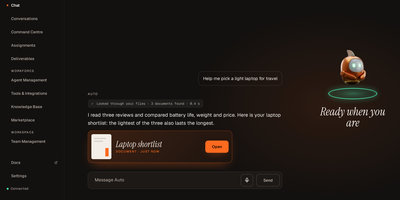
Command a whole team of AI agents from one chat box and collect finished reports, code, and content on a server you control. Say what you need and Auto routes the request to the right agent, tool, or Playbook, streams its thinking, shows every tool call, and files a ticket for another agent when the job needs one. Each agent has its own model, persona, skills, and success metrics, and the Command Centre shows the board, live status, calendar, and questions waiting for you. Playbooks turn repeatable work into multi-step automations, and Missions coordinate several agents on one goal. The marketplace installs ready-made agents, skills, and packages, and Composio connects more than a thousand outside apps once you add your own key. Models come from OpenRouter, direct provider keys, NVIDIA's free hosted models, or your own Claude Code sessions paired as agents. Knowledge bases index your documents into a searchable graph, analytics break spend down by provider and agent, and installable themes redraw the interface with voice control built in. Nothing here is locked behind a paywall, the local edition has no login so put it behind your own gate, and the whole stack starts from one Docker Compose command. Running on a dedicated VPS on RepoCloud with guaranteed CPU, RAM, and SSD, full root SSH access, and a browser serial console. Apache-2.0 licensed.
RESTai
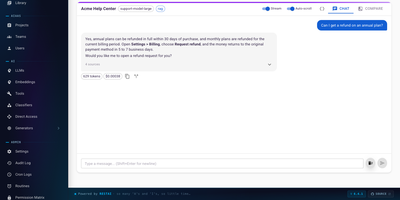
Every AI project you build in RESTai becomes an endpoint that any app can call over plain HTTP. RESTai gives you a browser dashboard where each project gets its own model, system prompt, tools, and chat playground. Build knowledge-base assistants over uploaded files and synced web pages, ReAct-style agents that call MCP servers, or drag-and-drop block projects that need no model at all. Connect Ollama, OpenAI, Anthropic, Gemini, vLLM, Azure, Bedrock, or any OpenAI-compatible endpoint, and let teams share the ones you approve. Daily charts follow tokens, cost, and latency per project, with rate limits, guardrails, prompt version history, and evaluation runs for quality tracking. Teams, roles, two-factor sign-in, white-label branding, and an audit trail cover administration. A one-line chat widget embeds a project on any website, and connectors reach Telegram, Slack, and WhatsApp. One install can serve several branded assistants and bill each team separately. Running on a dedicated VPS on RepoCloud with guaranteed CPU, RAM, and SSD, full root SSH access, and a browser serial console. Apache-2.0 licensed.
MCPHub
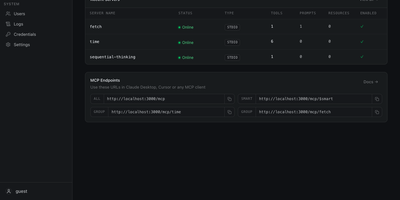
One endpoint for every MCP server you run: MCPHub gathers local and remote Model Context Protocol servers behind stable URLs, so AI clients connect once and see what you allow. Claude Code, Cursor, and Cherry Studio can use four routes: everything at /mcp, a named group at /mcp/{group}, one server at /mcp/{server}, or semantic tool search at /mcp/$smart. Smart routing runs vector search on PostgreSQL with pgvector and an OpenAI-compatible key, so the model gets a shorter tool list. Servers attach over stdio, SSE, or streamable HTTP, OpenAPI services can be wrapped as MCP tools, and changes apply without downtime. In the other direction, MCP tools can be exported as an OpenAPI 3.0.3 spec for OpenWebUI and other OpenAPI clients. Bearer keys, OAuth 2.0 (client and server modes), and GitHub or Google sign-in in database mode control access, with per-user visibility for servers and groups. Encrypted per-user credentials let one shared server use each person's own key. Logs show tool-call activity, request status, and latency, health checks track each connection, and the dashboard controls which tools, prompts, and resources each server exposes. Large text tool results can be compressed, interactive MCP Apps are proxied through MCPHub routes, and a built-in market lets you browse a server catalog. Typical uses include a team-wide gateway, per-project groups, and direct single-server routes for debugging. Running on a dedicated VPS on RepoCloud with guaranteed CPU, RAM, and SSD, full root SSH access, and a browser serial console. Apache-2.0 licensed.
Murmur
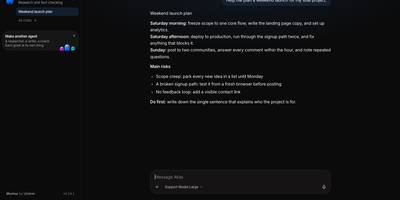
Every AI agent gets a face, a colour, and a job in Murmur, a chat app that makes running Hermes Agent as friendly as texting a colleague. Start from a template (Researcher, Writer, Planner, Coder, Coach, or Chef) or describe a new agent from scratch, then talk to one at a time or drop several into a group room and call on a single one with an at-mention. Replies stream in live, long jobs show a plan that ticks itself off, and every step appears in plain words. Connect a model with a ChatGPT plan, a local model server, or an API key from OpenRouter, OpenAI, Anthropic, and others, with the model and thinking effort chosen per agent or chat. Agents can reach Notion, Linear, Todoist, Figma, and dozens of other apps, and they ask for an Allow or Don't allow before changing anything important. Morning briefings run as routines, a memory view shows what each agent knows with controls to edit or forget it, and WhatsApp or Telegram can be linked by scanning a code. A voice call mode lets an agent answer out loud, and slash commands set long-running goals or ask quick side questions. Chats sync across browser, desktop, and phone. Solo builders, homelab fans, and small teams get a calm front door to their own agents. Running on a dedicated VPS on RepoCloud with guaranteed CPU, RAM, and SSD, full root SSH access, and a browser serial console. MIT licensed.
EDDI
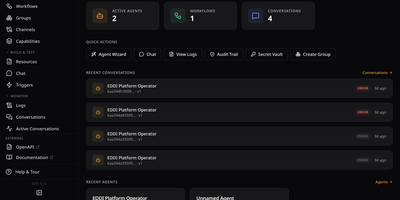
Deploy autonomous conversational AI agents and coordinate complex multi-agent workflows through EDDI, an open-source orchestration middleware that turns declarative configuration files into secure, production-grade enterprise assistants. Engineering teams connect AI models from twelve different commercial and local providers, using bilateral Model Context Protocol tools to let external desktop clients and coding assistants interact directly with running conversational services. Autonomous agents collaborate through structured group interaction patterns including round table discussions, peer reviews, Delphi consensus rounds, and devil's advocate debates to refine generated solutions before delivery. Declarative workflow extensions automate external REST API calls with dynamic request templating, extracting structured properties into persistent conversation memory and chaining multi-step service interactions without custom script glue. Built-in secret vaults safely manage sensitive API credentials, while the centralized web dashboard provides live conversation inspection, token quota enforcement, and comprehensive audit logging for regulatory compliance. Running on a dedicated VPS on RepoCloud with guaranteed CPU, RAM, and SSD, full root SSH access, and a browser serial console. Apache 2.0 licensed.
MindRoom
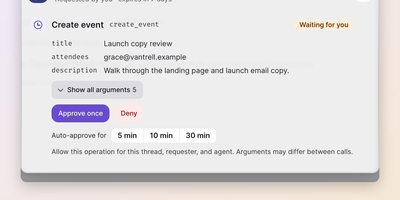
Your team's group chat could have a colleague who has read every email, ticket, and document, remembers all of it, and answers in seconds; MindRoom puts AI agents like that into your chat rooms as full participants. Each agent is a real user on the open Matrix protocol, so you talk to it in MindRoom Chat on web or mobile, in any other Matrix client, or through bridges in Slack, Telegram, WhatsApp, and Discord. Give every agent its own model: a local model for private rooms, a frontier model for hard coding problems, and switch per room or thread whenever the work changes. Agents connect to more than 100 tools, including Gmail, calendars, GitHub, Google Drive, Home Assistant, and any MCP server, and they search your own documents and knowledge bases for answers with sources. Memory persists across conversations and platforms, so an agent remembers people, preferences, and project context months later and can turn repeated work into reusable skills. Before an agent sends an email or runs a command, an approval card shows exactly what will happen; you tap once to allow it, and sandboxed workers keep executed code away from your credentials. Schedule morning briefings, silent inbox checks, and recurring digests in plain language, or wake an agent from any other system with a single HTTP request. Running on a dedicated VPS on RepoCloud with guaranteed CPU, RAM, and SSD, full root SSH access, and a browser serial console. Apache-2.0 licensed.
BugTraceAI
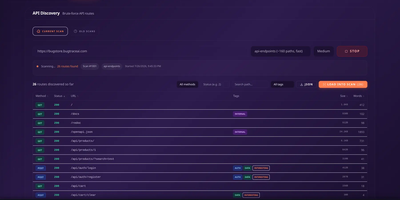
Point an AI pentesting crew at a web app you own and watch it hunt: BugTraceAI plans the checks, sends specialist agents after each weakness class, and brings back evidence you can inspect. A scan moves through six visible phases, from crawling and endpoint discovery through strategy, exploitation and validation, and ends in a findings table where every result carries a severity, a CVSS score and a confirmed status. The web dashboard follows the hunt live as a graph of specialists branching from a coordinating agent, and its API discovery workspace brute-forces routes and loads the interesting ones straight into a scan. Analysts get their own toolbox of more than twenty utilities for poking HTTP traffic by hand, an AI repeater for replaying requests, and ModelLab for comparing models on cost and results. Findings download as a ZIP with the full report, and a terminal workspace with pipeline, findings, agents, timeline and logs views suits keyboard-driven work. Bring your own model through OpenRouter, Anthropic, Z.ai or a local endpoint, and aim the whole suite at the bundled BugStore practice shop when you want to rehearse safely. Running on a dedicated VPS on RepoCloud with guaranteed CPU, RAM, and SSD, full root SSH access, and a browser serial console. Apache-2.0 licensed.
Accounted
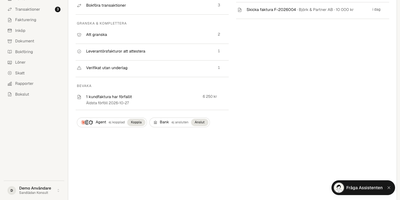
Accounted is an open-source accounting platform built for Swedish sole traders and limited companies that keeps double-entry bookkeeping, invoicing, payroll, and tax filings compliant with Swedish accounting law. Create and send customer invoices with mixed VAT rates, generate PDFs, and track payment status, while supplier invoices record input VAT and feed batch payment files your bank can upload. Connect the bank feed to reconcile transactions automatically, then watch matched entries clear in passes instead of hunting through statements line by line. VAT declarations map onto the SKV 4700 form with per-rate breakdowns, and tax reports export in the formats the tax agency expects for sole traders and companies. Run payroll with salary runs and payslips, file employer declarations, and sync the tax account so booked movements reconcile against the agency record. Every receipt and document lands in an archive with integrity checks and seven-year retention, and period locks with sequential voucher numbers keep the books audit-ready. An AI agent can categorize transactions, draft vouchers, and prepare declarations through the built-in agent tools, while every posting waits for your approval before it commits. Import or export the standard SIE format to move between Swedish accounting systems, and send or receive electronic invoices through the Peppol network. Running on a dedicated VPS on RepoCloud with guaranteed CPU, RAM, and SSD, full root SSH access, and a browser serial console. AGPL-3.0 licensed.
Agent-Me
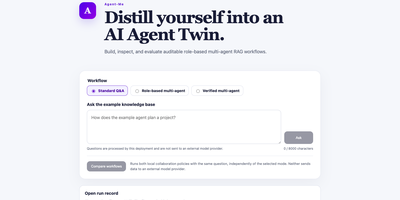
Build an AI twin that has to show its homework. Agent-Me answers questions from a folder of Markdown notes you control, and every reply arrives with the exact source excerpts behind it. Pick Standard Q&A for a direct grounded answer, Role-based multi-agent to watch a planner, researcher, critic, and writer hand work to each other, or Verified multi-agent to add a final check on citation paths and answer metadata. When the notes do not contain an answer, the critic blocks the draft and the app says so instead of inventing one. Press Compare workflows to run the baseline and verified pipelines on the same question and read the results side by side. Download a sanitized run record for any collaboration, then open it later in the browser to review the trace without re-running anything. The interface speaks nine languages, and the default mode never calls an outside model, so private notes stay on your server. Swap in your own documents and test supported, unsupported, and adversarial questions to see exactly where an assistant stays grounded. Running on a dedicated VPS on RepoCloud with guaranteed CPU, RAM, and SSD, full root SSH access, and a browser serial console. MIT licensed.
Atom
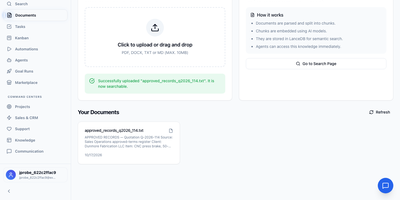
Give an AI agent a price list and it drafts the quote; hand it an invoice and it checks the numbers against purchase and receiving records before anyone pays. Atom is a self-hosted AI agent platform for business automation that wraps every agent action in governance: permissions, ordered policies authored in a canvas editor, human approval checkpoints, and durable audit records. Work starts from your files and instructions, with demonstrated workflows that map unfamiliar spreadsheet columns, calculate against source records, and produce cited Word or PowerPoint documents you can inspect line by line. Corrections become reusable teaching: saved field mappings, commercial terms, and contextual lessons carry into new work, and each job keeps the accepted snapshot it started with. Questions, approvals, and waits survive restarts, completed operations are retained, and uncertain effects must be reconciled before anything retries, so long-running business processes do not silently double-act. Results keep provenance back to the source records and operations that produced them, and unresolved requirements block completion instead of being invented away. You bring the model: configure a hosted provider or a local OpenAI-compatible endpoint, route by capability and cost, and run everything in a single-tenant workspace with user, role, and workspace boundaries. A starter sample runs with no model or cloud key at all. Running on a dedicated VPS on RepoCloud with guaranteed CPU, RAM, and SSD, full root SSH access, and a browser serial console. AGPL-3.0 licensed.