n8n
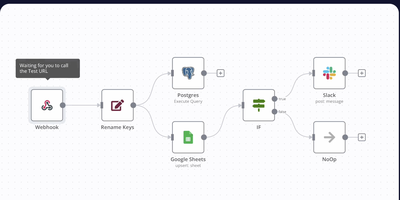
Webhooks, cron schedules, and app events trigger chains of nodes that fetch, transform, and route data: n8n is a workflow automation platform built around a visual, node-based editor. It ships with 400+ built-in integrations covering databases like Postgres, SaaS tools like Slack and HubSpot, and every major AI provider. When a pre-built node does not exist, the HTTP Request node calls any REST API, and the Code node runs JavaScript or Python inline, so you are never blocked by a missing connector. Workflows execute as directed graphs with branching, loops, error handling, and sub-workflows, and every run is logged for inspection and replay during debugging. It also includes LangChain-based nodes for building AI agents with tool calling and memory. Self-hosting on RepoCloud gives you unlimited workflow executions with no per-task pricing, and all data stays on your instance. Runs on Node.js with SQLite by default; add Postgres and Redis queue mode when you need to scale workers horizontally.
PentaGI
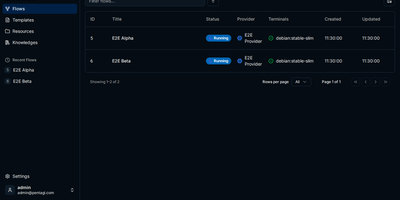
Autonomous red team execution without manual script coordination is what PentaGI delivers through a multi-agent penetration testing platform engineered for automated security assessments. Security engineers configure testing scopes, target IP ranges, domain lists, and rules of engagement through an interactive web console with real-time execution graphs. Autonomous agent personas break down high-level assessment goals into discrete tactical phases, orchestrating network port discovery, service banner fingerprinting, web application crawling, and CVE verification. Specialized agents query integrated Graphiti knowledge graphs and local vulnerability repositories to synthesize attack paths, validate exploitability, and confirm finding veracity before issuing alerts. Operators monitor live agent terminal streams, inspect sandboxed tool executions, and adjust active LLM provider routes across OpenAI, Anthropic, or local Ollama endpoints. The template editor allows red teams to compose reusable testing playbooks with customizable security prompt chains, safety constraints, and automated remediation reporting. Audit logs capture full command histories, raw tool outputs, and LLM reasoning steps to generate compliance-ready technical documentation. Running on a dedicated VPS on RepoCloud with guaranteed CPU, RAM, and SSD, full root SSH access, and a browser serial console. MIT licensed.
Heym
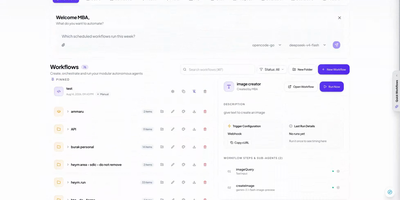
Heym lets you build AI agents and workflows on a visual canvas, run them from APIs, schedules, or chat, and watch every execution, token, and cost. Describe a system in text or voice and the AI Assistant draws the graph. Prefer hands-on? Compose it from LLM and Agent nodes, conditions, switches, loops, merges, and sub-workflows. An orchestrator calls named sub-agents in parallel. RAG runs on Qdrant or pgvector, and a knowledge graph keeps facts across runs. Triggers: cron, webhooks, messaging integrations, inbox events, WebSocket messages. Playwright nodes automate browsers, and Codex or OpenCode steps work on repositories. Checkpoints pause an agent so a person can accept, edit, or refuse before the run resumes. Every run lands in History. Traces list model requests, tool calls, tokens, latency, and USD cost, and alerts fire on errors, duration, spend, or run count. Evals compare prompts across models. OpenTelemetry exports reach Jaeger, Grafana Tempo, or Datadog. Publish workflows as REST or SSE endpoints, as MCP tools for Claude Desktop and Cursor, or as public Portal chat pages, then add dashboard widgets, Data Tables, a Kanban Board, and Drive file sharing. Running on a dedicated VPS on RepoCloud with guaranteed CPU, RAM, and SSD, full root SSH access, and a browser serial console. Source-available under the MIT License with the Commons Clause.

AIHOT
AIHOT is a self-hosted engine for running your own AI news site: it watches the sources you choose, scores every story twice, and publishes only the coverage worth reading. Point it at RSS feeds, web list pages, JSON APIs, X accounts, WeChat public accounts, or content pushed in by scripts, polled on schedules you control. After deduplication and pre-screening, every story faces two independent scoring passes under the same rubric, so one generous run cannot wave a weak story through. Coverage of the same story clusters into one event across the last two weeks, so forty outlets on one launch read as a single developing story. Hotness is measured per event: each source counts once per 48 hours and its weight halves daily, so repeat posting cannot inflate the ranking. Digests compile on schedule: a daily edition at 08:00, a weekly review on Mondays, and a monthly rollup on the first, assembled by rules without model calls. Readers browse topic pages by company, research direction, and content form, search titles, summaries, and full text, and keep local favorites with export and import. From the admin backend you can test sources, correct scores by hand, calibrate selection against labeled samples, and swap the model behind each pipeline step. Output flows through RSS, a public API, MCP, agent Markdown, and llms.txt, so humans and AI agents can subscribe. Running on a dedicated VPS on RepoCloud with guaranteed CPU, RAM, and SSD, full root SSH access, and a browser serial console. MIT licensed.
EvoScientist
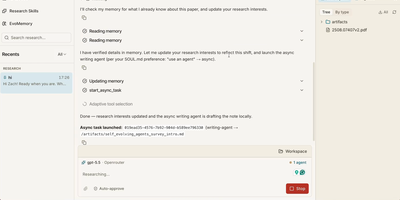
EvoScientist gives a research project a team of cooperating AI agents that plan experiments, read papers, write and debug code, and draft reports, then remember what they learned so the next project starts further ahead. A researcher can schedule a weekday arXiv digest as a cron-style task, optionally graded against a rubric checklist, while a lab lead reviews the reusable skills that AutoSkills proposes from recurring patterns. The EvoSkills catalog adds ready-made skills such as academic slides, paper figures, and experiment pipelines. Six sub-agents cover planning, research, coding, debugging, data analysis, and writing, following a workflow of intake, plan, execute, evaluate, write, and verify. Each turn is distilled into a memory that links itself into a knowledge graph you can browse in the EvoMemory view, next to profile pages for you, your research taste, and the agent's SOUL. Work from a terminal UI, a browser workspace with a file tree and agent panel, or messaging channels including Telegram, Slack, and Feishu that share one session. Rubric and goal commands grade each turn against acceptance criteria you approve. MCP servers plug in extra tools with one command, shell commands ask for approval by default, and the Docker image confines file edits to the folders you mount. Choose Anthropic, OpenAI, Google, MiniMax, NVIDIA, or any OpenAI-compatible endpoint such as vLLM. Running on a dedicated VPS on RepoCloud with guaranteed CPU, RAM, and SSD, full root SSH access, and a browser serial console. Apache-2.0 licensed.
Antares
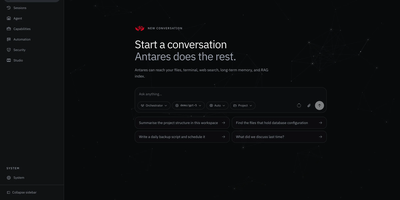
Most AI agents are a chat box with confidence; Antares is a working security specialist that shows its evidence. Point it at a target you are authorized to test and its specialist agents map the surface, test web applications against OWASP, probe APIs, and record every confirmed finding with its reproduction steps. When the run ends, the findings are already compiled into a report, because the agent kept the evidence as it went instead of reconstructing it afterward. The same workspace handles ordinary work between engagements: it reads and writes files, runs your shell, drives a real browser, searches the web, and retrieves from a built-in memory and RAG index that remembers what matters across sessions. Give it a goal and it holds to that goal across turns, schedules its own follow-up work, and answers from Telegram and Discord when you are away from the dashboard. Bring your own models, since everything runs on your machine or server from one binary, with the dashboard, terminal UI, and API served by a single process. Running on a dedicated VPS on RepoCloud with guaranteed CPU, RAM, and SSD, full root SSH access, and a browser serial console. Apache 2.0 licensed.
SoduWork
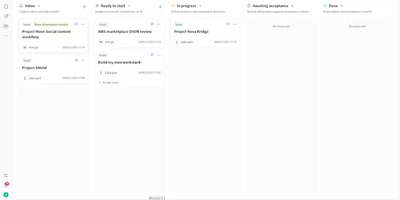
When an AI agent says the job is done, SoduWork makes a second agent check the work against your acceptance criteria and a person sign off before the request closes. You file a request, AI refines it and drafts the criteria, and you assign it to yourself, a colleague, or an agent. A failed review sends the work back with reasons. Seven harnesses are supported: Pi, OpenCode, Qwen Code, Kimi Code, DeepSeek Harness, Codex Harness, and Codex. Switch between them mid-conversation without losing history or the working folder, and any program that speaks the Agent Client Protocol joins through a catalog entry. Routine steps run on cheap or local models, hard ones on strong models, and long tasks move to a cloud runner on a server you provide. Save a chat that went well as a versioned plugin with inputs, workflow steps, and acceptance criteria, then submit it for review, grant it to chosen people, or revoke it. Plugin Developer drafts plugins from a description in chat, and the catalog already covers documents, slide decks, spreadsheets, deep research, PDF work, meeting minutes, and code repair. Admins get roles, usage and cost tracking, a model catalog, and an audit log, and connectors reach business systems through OAuth sign-in, OpenAPI documents, and MCP servers. Running on a dedicated VPS on RepoCloud with guaranteed CPU, RAM, and SSD, full root SSH access, and a browser serial console. MIT licensed.
Nod
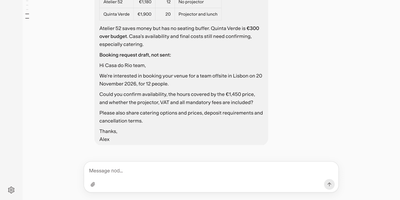
Nod is a personal AI assistant with its own computer, so you can hand it an errand like chasing an unpaid invoice or cancelling a trial and watch it finish the job on real websites. One ongoing conversation follows you from the browser to Telegram and WhatsApp, and long jobs become saved tasks with live status lines on a Scheduled page. Connect Gmail, Calendar, Slack, Notion, Linear, or an n8n instance, and it reads threads, drafts the replies you owe, and prepares a one-page brief before each call. Every action that could change something is checked against your rules, and anything uncovered waits for your yes. Passwords, codes, and cards sit in a Vault that the server types into websites, so the model never sees them. Memory notes are visible, editable, and tied to the message they came from. Schedules run recurring checks like a weekly recap or a price watch that speaks up only on change. Usage lists every action with costs and a monthly spending limit. Pick OpenAI, Anthropic, Gemini, OpenRouter, Bedrock, or a local Ollama server as the model. Running on a dedicated VPS on RepoCloud with guaranteed CPU, RAM, and SSD, full root SSH access, and a browser serial console. Apache-2.0 licensed.
RocketRide
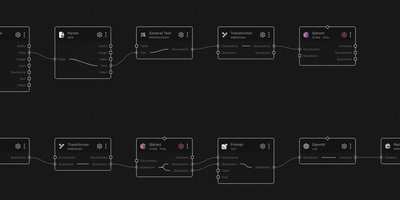
Building an AI pipeline in RocketRide means dragging nodes for models, vector stores, document parsers, and agents onto one visual canvas and wiring their typed lanes together, with no boilerplate in between. Press play on a webhook, chat, or file-dropper source node to start the pipeline. The catalog holds 170 nodes across 21 types, including 16 LLM nodes for OpenAI, Anthropic, Gemini, Mistral, and Ollama, vector stores such as Qdrant, Pinecone, Milvus, and pgvector, OCR, entity recognition, PII anonymization, reranking, and database connectors. Agent nodes run CrewAI, LangChain, LlamaIndex, or Deep Agents, and a persistent memory node carries context from one run to the next. Every pipeline is plain JSON. Commit it, diff it, review it, then run the identical file on a laptop, a server, or RocketRide Cloud. Tracing shows call trees, token usage, latency, and memory for each run, so you can compare models, agents, and tools before scaling up. Applications call pipelines through TypeScript and Python SDKs, and coding agents such as Claude and Cursor can build, change, and deploy them in plain language. Example pipelines cover document intake that reads text from scans and masks personal data, question answering over private files, and agent workflows, while Discord and Telegram source nodes feed chat bots into the pipeline. Running on a dedicated VPS on RepoCloud with guaranteed CPU, RAM, and SSD, full root SSH access, and a browser serial console. MIT licensed.
Obscura
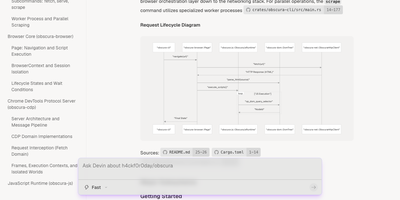
Obscura is the headless browser you point Puppeteer or Playwright at when Chromium feels like renting a truck to fetch a letter. Start the server and your existing automation connects over the usual DevTools protocol, opens pages, clicks, types, waits for selectors, and reads the fully rendered result, JavaScript included. Scrape one page or fan out across many in parallel, evaluating an expression on each and getting structured output back. Capture viewport or full-page screenshots, export PDFs, intercept requests to block or rewrite them, and manage cookies and headers per session. An MCP mode lets AI agents drive the browser as a tool instead of shelling out to scripts. Stealth mode randomizes fingerprints per session, presents realistic browser identity signals, and blocks thousands of known tracker domains before they load. Proxies, persistent storage for cookies and local storage, and robots handling round out the controls for longer crawls. The whole thing starts instantly and sips memory compared with a conventional headless Chrome, so a modest server can keep many more pages in flight. Running on a dedicated VPS on RepoCloud with guaranteed CPU, RAM, and SSD, full root SSH access, and a browser serial console. Apache-2.0 licensed.
OpenSuperBot
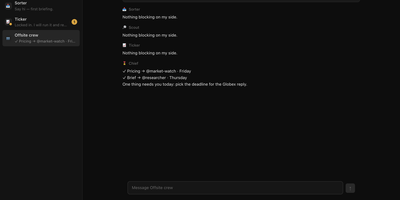
Always-on AI teammates that each get a real computer of their own, with a browser, files and a terminal, working from your hardware instead of a vendor cloud: that is OpenSuperBot. You hire a teammate from the sidebar with a name and a one-line job, and it works inside its own sealed computer with a browser, shell and persistent workspace. At a login wall the bot asks you to take over its live screen and sign in once inside its own browser profile, so passwords never pass through the gateway. Group threads let you ask the whole room at once: everyone answers in parallel, the chief of staff closes with a dispatch table, and @names pick which teammates respond. Nothing leaves the workspace without your say-so, because outward actions stop at a draft-and-hold approval chip. Standing approvals cover repeat sends to one destination for an hour or a day, and money and bookings always ask. Memory is a visible file you control: tell a bot a rule and it posts the exact change as a chip, and forget removes it the same way. Routines come from plain conversation, so a daily digest, a secret webhook trigger or a quiet status-page watch can be scheduled in chat. Each teammate runs a model you pick, with daily token budgets and live step cards for every action. Running on a dedicated VPS on RepoCloud with guaranteed CPU, RAM, and SSD, full root SSH access, and a browser serial console. MIT licensed.
DBHub
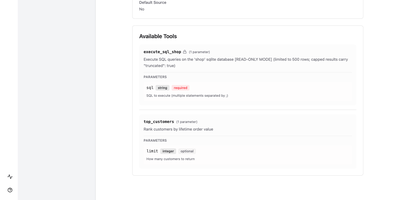
Give every AI assistant on your team safe, structured access to your databases through one small server. DBHub exposes just two tools by default, one to run SQL and one to search schemas, which costs about 1.4k tokens of context where alternatives load nearly 20k. Point Claude Code, Claude Desktop, Cursor, VS Code, or Copilot CLI at it and they can explore tables, columns, indexes, and procedures step by step, then run queries under read-only mode, row limits, and timeouts. Define several sources in one TOML file and DBHub serves PostgreSQL, MySQL, MariaDB, SQL Server, Oracle, and SQLite side by side. Write custom tools for the queries you repeat, with typed parameters and allowed values, so models call a clean function instead of improvising SQL. Opt in to query plans and connection-pool health checks when you need them. A built-in workbench in the browser runs statements, fills in custom tool forms, and lists a trace of every recent request with timing and client. SSH tunnels and SSL reach databases behind bastion hosts, and a bearer token protects the HTTP endpoint. Running on a dedicated VPS on RepoCloud with guaranteed CPU, RAM, and SSD, full root SSH access, and a browser serial console. MIT licensed.
PocketPaw
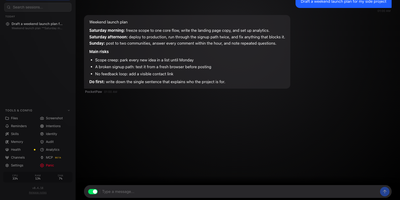
Ask for a recycling reminder from your phone on Sunday and have a research report waiting by Monday, without handing your data to a subscription service. PocketPaw is a personal agent you host yourself, reachable from the browser dashboard or the chat apps you already use, including Discord, Slack, WhatsApp, Telegram, Signal, Matrix, Teams, and Google Chat. Pick a backend for the work: Claude Agent SDK, OpenAI Agents, Google ADK, Codex CLI, OpenCode, or Copilot SDK, then point it at a cloud key or a local Ollama model. Over fifty tools cover browsing, web search, files, shell commands, OCR, voice, image generation, and delegation to helper agents. Reminders and scheduled intentions run on their own, and memory keeps long-term facts and compacts old sessions. Identity files shape the agent's tone and instructions, and a skills library adds new slash commands. A guardian model reviews tool calls, with injection scanning, plan mode approvals, tool profiles, and an audit log for oversight. Analytics show cost, latency, and traces against monthly budget caps. Memory, tool logs, and cost traces all live on your own server. Running on a dedicated VPS on RepoCloud with guaranteed CPU, RAM, and SSD, full root SSH access, and a browser serial console. MIT licensed.

Mediary Scout
Mediary Scout puts an AI agent in charge of your cloud drive media library: name a movie, series, or anime and it finds a release, transfers it into your own drive, and checks that the files really arrived. Connect Quark, UC, 115, 123, GuangYaPan, and Tianyi, mostly with a QR code scan, and the agent probes live free space on every drive before each run, hard-blocking any that is full or over quota. It prefers a single drive that can cover every missing episode and combines drives only when none can, recording which drive holds each episode in one library. Search starts with the bundled PanSou for share links, optional Haisou and Prowlarr sources add more links and magnets, and transfers land in a staging folder first, where the agent inspects real file sizes, deletes ad files and lower-bitrate duplicates, then sorts episodes into Season folders. A daily patrol fills in missing episodes of tracked shows. Foreign titles that arrive without Chinese subtitles get matching .ass or .srt files from assrt.net, renamed to match the video. Unhappy with a file? Leave a plain-language note on the title, and the agent blacklists that source on every drive and fetches a replacement. A built-in HTTP API lets Claude Code, Codex, or OpenClaw queue titles and check progress, while multi-user mode gives family members separate accounts, drives, and libraries. Running on a dedicated VPS on RepoCloud with guaranteed CPU, RAM, and SSD, full root SSH access, and a browser serial console. 0BSD licensed.
FounderOS
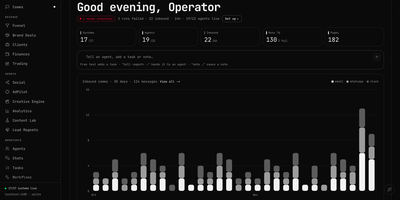
For a solo founder, FounderOS is one live dashboard where AI-assisted departments take care of the busywork of running a company. Home shows system health, agent counts, and inbound message volume, plus a free-text bar that turns a sentence into a task, a note, or an instruction for a named agent. Comms merges email, Slack, WhatsApp, and meeting threads into one inbox with unread counts, needs-reply flags, snooze, mark done, and reply starters that include a drafted answer. Funnel tracks touches, new leads, conversions, and revenue by source, with a pipeline from first touch to converted client. Agents shows a roster of AI seats and a conductor that delegates work, with runs by seat, open task lanes, and the items waiting on you. Tasks adds in-progress, overdue, and runtime stats beside a schedule. The Knowledge Visualizer maps notes, skills, agents, and accounts into a network with matrix, timeline, ranking, and findings views. Clients, Brand Deals, Finances, Social, and Content Lab sit in the same sidebar, and every integration stays optional until you connect it. A bundled demo company makes exploring easy. Creators, small agencies, and one-person businesses get a daily operating view in a single tab. Running on a dedicated VPS on RepoCloud with guaranteed CPU, RAM, and SSD, full root SSH access, and a browser serial console. MIT licensed.
Coder
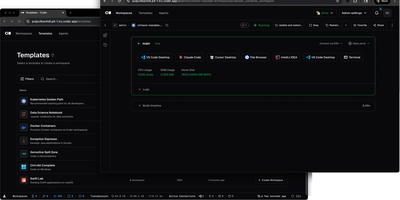
With over 14,000 GitHub stars and enterprise adoption by security-conscious organizations, Coder transforms how development teams provision, manage, and secure their coding environments. Every workspace is defined as a Terraform template, meaning infrastructure engineers can standardize development environments across EC2 instances, Kubernetes pods, Docker containers, or any combination, while developers get self-service provisioning that launches in seconds rather than days of manual setup. The WireGuard-based networking layer establishes encrypted tunnels between developer machines and remote workspaces, providing low-latency access without exposing ports or configuring VPN concentrators. Automatic idle detection shuts down unused workspaces after configurable periods, directly reducing cloud compute costs for organizations running hundreds of developer environments. The Coder Agents feature introduces native AI coding capabilities where the agent loop executes entirely within the control plane on self-hosted infrastructure, keeping LLM API credentials out of individual workspaces and eliminating credential exfiltration risks. Centralized model governance allows platform teams to approve specific AI providers and models, set per-user spend limits, and maintain complete audit logs of all prompts, tool calls, and agent activity. IDE integration supports VS Code through a dedicated extension, JetBrains IDEs via Gateway and Toolbox plugins, and browser-based code-server for web access. The template registry provides pre-built configurations for common development stacks. DevContainer support builds environments from standard devcontainer.json specifications. Deploy on a dedicated VPS on RepoCloud with guaranteed CPU, RAM, and SSD, full root SSH access, and a browser serial console. AGPL-3.0 licensed.
OpenAgent
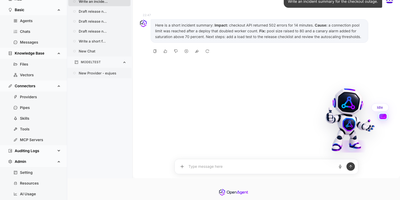
Chat, research, and everyday chores all run through OpenAgent, a private AI assistant hosted on a server you control. Pick from more than thirty model providers, including OpenAI, Anthropic, Gemini, DeepSeek, and local Ollama models, and switch models inside a conversation. Agents can drive a real browser, search the web, run shell commands, read and write Word, Excel, and PowerPoint files, and call any MCP server. Every tool call shows its arguments and result. Upload PDFs and spreadsheets to build isolated knowledge bases with semantic search, then attach them to a chat. A drag and drop workflow builder chains steps with branches, parallel tasks, and schedules. The admin console tracks token use and cost per user and model with charts and a message heatmap, lists every tool, records audit logs, and shows live CPU, memory, and API latency. Single sign-on through OIDC, OAuth2, LDAP, or SAML and separate workspaces keep teams apart, and a REST API with Swagger docs exposes every feature. Running on a dedicated VPS on RepoCloud with guaranteed CPU, RAM, and SSD, full root SSH access, and a browser serial console. Apache-2.0 licensed.
Vibe-Trading
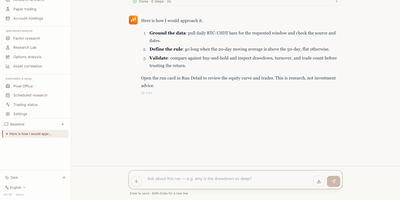
Ask for a backtest of a 20/50 moving-average crossover on BTC-USDT for 2024, and Vibe-Trading plans the run, fetches the bars, writes the strategy, and returns a run card with drawdown, trades, and a buy-and-hold comparison. The web chat keeps every session, accepts uploaded filings and spreadsheets, and links each answer to a Run Detail page with the equity curve and the data source used. Eleven backtest engines cover A-shares, global equities, crypto, futures, forex, options portfolios, and cross-market composites, and the alpha zoo benchmarks factor libraries like GTJA191 across a chosen universe. Swarm teams (investment committee, quant desk, risk review) split a question among macro, quant, and catalyst workers and merge the result into one report. Paper trading tracks cash, fills, and NAV between sessions, the portfolio view proposes allocation changes, the options page draws multi-leg payoffs and Greeks, and scheduled playbooks repeat a brief on a timetable. The Shadow Account reads broker trade journals, extracts implicit rules, and replays your trades against a rule-based alternative. Model providers include OpenRouter, OpenAI, Anthropic, DeepSeek, and local Ollama, and any broker execution is opt-in within limits you set and can halt. Running on a dedicated VPS on RepoCloud with guaranteed CPU, RAM, and SSD, full root SSH access, and a browser serial console. MIT licensed.