
LibrePhotos
With over 8,000 GitHub stars and continuous development since 2020, LibrePhotos delivers the core intelligence of Google Photos — face recognition, object detection, semantic search, and automatic album generation — entirely on your own hardware without sending a single photo to a third-party server. The Django 5 backend processes uploaded media through a machine learning pipeline that runs face detection via the face_recognition library, clusters identified faces using scikit-learn and HDBSCAN, generates image captions through BLIP and Moondream 2, and classifies scenes using Places365 or Google's SigLIP 2 vision-language model with zero-shot classification against 900+ real-world tags. Semantic search lets you find photos by natural language queries like "sunset at the beach" without manual tagging, while metadata search filters by person, camera, lens, file type, and filesystem path. The React 18 frontend built with Vite presents a timeline view, fullscreen lightbox with slideshow mode, photo detail sidebar showing location and people, and a folder navigation view with breadcrumb paths. RAW files from any camera are converted via ImageMagick, videos processed through FFmpeg, and Live Photos paired with their RAW+JPEG counterparts as unified entries. Public album sharing via link provides fine-grained privacy controls, and duplicate detection uses perceptual hashing to identify near-identical images. Deployment runs as a single unified Docker container or via Docker Compose with Kubernetes manifests also available. Running on a dedicated VPS on RepoCloud with guaranteed CPU, RAM, and SSD, full root SSH access, and a browser serial console. MIT licensed.
Novu
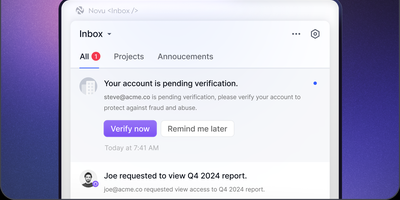
Powering notification delivery for thousands of organizations with over 39,000 GitHub stars, Novu is the open-source communication infrastructure that eliminates the need to build separate integrations for every messaging channel. The TypeScript-based platform provides a single API endpoint that routes notifications across In-App Inbox, Email via SendGrid, Mailgun, AWS SES, and Postmark, SMS through Twilio, Vonage, and Plivo, Push via Firebase Cloud Messaging, Expo, and APNS, and Chat through Slack, Discord, Microsoft Teams, and WhatsApp. The embeddable React Inbox component delivers real-time WebSocket-powered notifications with read/unread states, action buttons, and user-controlled preferences directly inside your application. The workflow engine orchestrates complex multi-channel delivery with conditional branching, time delays, digest batching to reduce notification fatigue, throttle controls, and per-step channel fallbacks. Novu Connect introduces Agent Communication Infrastructure enabling AI agents built with LangChain, Claude, or custom frameworks to hold threaded two-way conversations with humans across any supported channel through a single conversation model with identity resolution and credential management. The backend runs on Node.js with NestJS, MongoDB for notification storage, Redis with BullMQ for job queuing, and Socket.io for real-time delivery. Self-hosting deploys via Docker Compose with the dashboard accessible at port 4200. Running on a dedicated VPS on RepoCloud with guaranteed CPU, RAM, and SSD, full root SSH access, and a browser serial console. MIT licensed.
New API
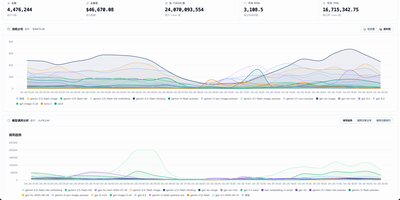
New API is a Go-powered LLM gateway that funnels over 40 AI providers, from OpenAI and Anthropic to Google Gemini, Azure, AWS Bedrock, DeepSeek, and Mistral, through a single OpenAI-compatible endpoint with intelligent routing and enterprise cost controls. Bidirectional format conversion translates between OpenAI Chat Completions, Claude Messages, and Gemini GenerateContent APIs transparently, so clients call any provider using their preferred format while the gateway handles the rest. Routing logic supports weighted random channel selection, priority-based failover, and automatic retry on provider errors to maximize uptime. The React admin dashboard shows usage charts, token consumption tracking, per-model cost breakdowns, and real-time request monitoring. Multi-tenant architecture includes three role levels, token-based authentication, per-user quota management, and a three-phase billing system with tiered pricing via a custom expression language. Multimodal support covers text completion, vision, embeddings, text-to-speech, speech-to-text, image generation, and creative task providers like Midjourney-Proxy and Suno-API. The interface ships in five languages including English, Chinese, Japanese, and French. Docker deployment runs with SQLite or MySQL for persistence. 45,000+ GitHub stars. AGPL-3.0 licensed.
OpenLIT
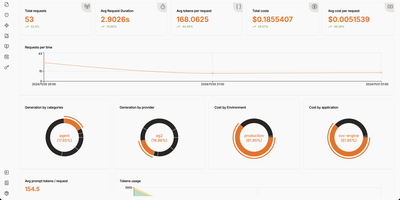
Your AI application is burning through API tokens faster than you can refresh the billing page, and you have no idea which prompt template is responsible. OpenLIT plugs that visibility gap with a self-hosted observability platform built specifically for LLM workloads. Add one line of code to instrument 90+ LLM providers, agent frameworks, and vector databases, then watch every request flow through a tracing dashboard that shows tokens consumed, latency measured, and dollars spent per call, per model, per environment. The requests view lists every LLM interaction with provider, model, cost, and token breakdown in a filterable table, while the trace detail panel lets you drill into individual spans to read the exact prompt sent and response received. Prompt Hub turns prompts into versioned artifacts you deploy, rollback, and A/B test without touching application code. OpenGround compares models side by side on the same input, so you can evaluate cost-versus-quality tradeoffs before committing to a provider. Automated evaluations run LLM-as-a-judge scoring on live production traces, flagging hallucinations, bias, and toxicity in real time. The Vault stores and rotates API keys centrally so secrets stay out of your codebase. Custom dashboards let you build drag-and-drop monitoring views with charts, stat cards, and tables backed by SQL queries against ClickHouse. GPU utilization, memory, temperature, and power metrics feed into the same platform for end-to-end infrastructure visibility. Running on a dedicated VPS on RepoCloud with guaranteed CPU, RAM, and SSD, full root SSH access, and a browser serial console. Apache 2.0 licensed.
Open Code Review
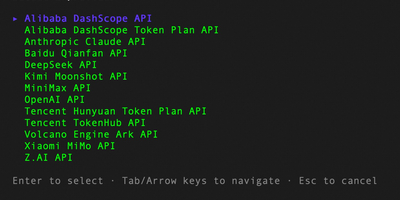
Originated as Alibaba Group's official internal AI code review assistant serving tens of thousands of developers and identifying millions of code defects over two years before open-sourcing in May 2026 — now at 21,000+ GitHub stars — Open Code Review is the production-hardened platform that proves enterprise-grade code review can be fully open-source under Apache 2.0. The hybrid architecture separates deterministic engineering pipelines (file selection, diff parsing, rule matching for NPE, thread-safety, XSS, and SQL injection across 10+ languages) from LLM-powered agent reasoning with tool-use capabilities including FileRead, CodeSearch, and cross-file context inspection, consuming approximately one-ninth the tokens of general-purpose coding agents while delivering line-level precise comments with severity and confidence scoring. The bundled web dashboard (port 4173) provides review management, findings triage, result browsing, and direct GitHub posting without external dependencies, while the session viewer (port 5483) renders full LLM request/response traces for debugging and auditing. Integration spans GitHub Actions, GitLab CI, GitFlic CI, and Gerrit with delegation mode enabling Claude Code, Cursor, and other AI agents to leverage OCR's engineering logic alongside their own LLM reasoning. Supports OpenAI, Anthropic, Google Gemini, DeepSeek via built-in providers plus Ollama and vLLM for air-gapped deployments. Running on a dedicated VPS on RepoCloud with guaranteed CPU, RAM, and SSD, full root SSH access, and a browser serial console. Apache 2.0 licensed.
1Panel
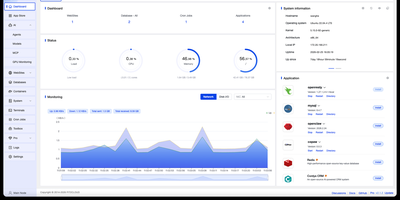
Backed by over 36,000 GitHub stars and 120 contributors with 123 releases since 2022, 1Panel has rapidly become the go-to open-source alternative to cPanel and Plesk for modern Linux server management. The platform delivers a clean Vue.js dashboard powered by a Go backend using the Gin framework, providing visual management of Docker containers, images, networks, and volumes without touching the command line. Its curated app marketplace offers one-click installation of 165+ trusted open-source applications including Nextcloud, Bitwarden, Umami analytics, WordPress, and NocoBase, each running in isolated containers for maximum security. Native AI capabilities set 1Panel apart from every competing panel: deploy Ollama LLMs directly from the dashboard, spin up OpenClaw personal agents, monitor GPU utilization, and manage AI models through a unified interface. Website management includes automatic domain binding, Let's Encrypt SSL certificate provisioning, and Nginx configuration with zero manual setup. Security runs deep with built-in firewall rules, fail2ban integration, container isolation, WAF protection, and comprehensive audit logging enabled from day one. Automated backups support AWS S3, Cloudflare R2, and local storage with one-click restore from any snapshot. The panel supports Debian, Ubuntu, CentOS, and Rocky Linux across x86_64, aarch64, armv7l, ppc64le, and s390x architectures. Running on a dedicated VPS on RepoCloud with guaranteed CPU, RAM, and SSD, full root SSH access, and a browser serial console. GPL-3.0 licensed.
Casdoor
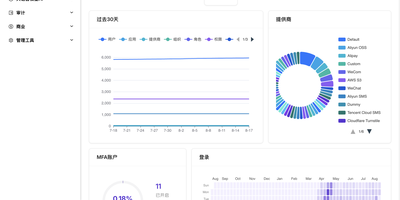
With 13,800+ GitHub stars and active releases through 2026, Casdoor is the open-source identity platform that ships OAuth 2.0, OIDC, SAML 2.0, CAS, LDAP, SCIM 2.0, WebAuthn passkeys, TOTP multi-factor authentication, and Face ID biometric login in a single Go binary with a React web console — covering every authentication protocol your organization will ever need. Social login connects 50+ identity providers including Google, GitHub, Microsoft Azure AD, Facebook, WeChat, DingTalk, Apple, Twitter, and LinkedIn without custom code. The AI-first architecture includes a Model Context Protocol gateway for AI agent authentication and Agent-to-Agent protocol support for securing LLM-powered workflows. Built-in Casbin integration delivers authorization primitives beyond basic RBAC: attribute-based access control, relationship-based access control, and custom policy models through a unified engine. The organization-scoped multi-tenancy model isolates users, applications, and identity providers per tenant with customizable login pages, branding, and SMTP configuration. SCIM 2.0 endpoints automate user provisioning from HR systems and Active Directory. Official SDKs for Go, Java, Node.js, Python, and PHP accelerate application integration. The RESTful API exposes every resource for programmatic management. Comprehensive audit logs record authentication events and administrative actions. Deploy via Docker Compose with MySQL or PostgreSQL, the all-in-one SQLite Docker image for quick trials, or the official Kubernetes Helm chart for production clusters. Running on a dedicated VPS on RepoCloud with guaranteed CPU, RAM, and SSD, full root SSH access, and a browser serial console. Apache 2.0 licensed.
MindsHub
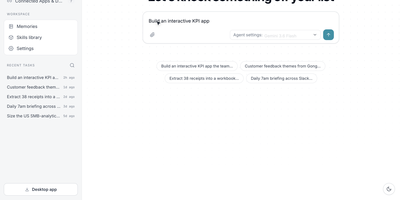
Backed by $50M+ from Benchmark, Y Combinator, and NVIDIA with 800+ contributors and 39,000+ GitHub stars, MindsHub Cowork is the unified AI workspace where open-source models handle entire projects — research, reporting, internal tools, scheduled operations — and return finished, shareable deliverables. The platform runs two interchangeable open-source agent harnesses, Anton and Hermes, swappable from a dropdown without losing context. A built-in Model Router pre-wires 25+ models spanning Anthropic Claude, OpenAI GPT, Google Gemini, DeepSeek, Qwen, Kimi, Grok, and MindsHub Air with automatic failover — no per-provider API keys required. A secure credentials vault connects BigQuery, PostgreSQL, Salesforce, HubSpot, Zendesk, Gong, Gmail, Google Drive, Notion, Linear, Stripe, and Slack, keeping secrets scoped per connection so agents never see raw keys. Agent output becomes publishable artifacts — documents, dashboards, apps, and code — each deployable to a live shareable URL. Cross-session persistent memory, a reusable skill library, and a background scheduler supporting hourly, daily, and weekly cadences enable autonomous recurring workflows. The architecture separates a React/Vite frontend (shipping as both Electron desktop app and web SPA) from a FastAPI backend with a versioned REST API at /api/v1 covering conversations, projects, artifacts, schedules, and connectors. Self-host via Docker Compose with nginx on port 3000 and the API on port 26866, or deploy on-prem, in a VPC, or air-gapped. Running on a dedicated VPS on RepoCloud with guaranteed CPU, RAM, and SSD, full root SSH access, and a browser serial console. MIT licensed.
Zero Email
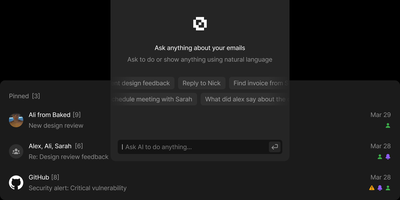
Zero unifies Gmail, Outlook, and IMAP accounts into a single AI-enhanced inbox with keyboard-driven navigation that matches premium email clients in speed. Backed by 10,000+ stars and positioned as the alternative to Superhuman, it keeps your email data in your own PostgreSQL database while LLM agents handle categorization, priority sorting, draft composition, and natural language mailbox queries. You choose whether models run locally or through cloud providers you control. The Next.js and React interface delivers customizable keyboard shortcuts for every action: reading, archiving, labeling, composing. A WorkflowEngine defines automated multi-step rules including label application, bulk archiving, and conditional routing based on sender, subject, or content analysis. Built on Drizzle ORM with Better Auth handling Google OAuth, styled with TailwindCSS and Shadcn UI components, the interface is polished without being bloated. MCP integration exposes email management tools to external AI assistants for programmatic inbox control through standardized protocols. The Nizzy CLI handles environment configuration, database synchronization, and development server orchestration. Deploys via Docker Compose with a single database initialization command. Running on a dedicated VPS on RepoCloud with guaranteed CPU, RAM, and SSD, full root SSH access, and a browser serial console. MIT licensed.

Karakeep
Previously known as Hoarder and now holding 28,000+ GitHub stars, Karakeep is the most popular open-source bookmark-everything application — combining AI-powered automatic tagging with full-text search, page archival, and cross-platform access for digital content hoarders who refuse to let valuable links disappear. The Next.js frontend with tRPC communication delivers a responsive interface for saving links, notes, images, and PDFs, while Puppeteer crawls bookmarked pages to fetch titles, descriptions, and images automatically. LLM-based auto-tagging supports OpenAI, Anthropic, or local models via Ollama for privacy-first deployments that never send data to external services. Meilisearch powers full-text and semantic search across all stored content including OCR-extracted text from images. A rule-based automation engine triggers custom actions based on bookmark properties — automatically sorting, tagging, or archiving content matching defined conditions. Full page archival via Monolith preserves complete page snapshots against link rot, while yt-dlp integration archives videos from YouTube and other platforms. RSS feed ingestion automatically captures new articles from subscribed sources. Collaborative lists enable teams to build shared bookmark collections, with per-list permissions and real-time sync. Native iOS and Android apps, Chrome and Firefox extensions, and browser bookmark sync via Floccus ensure capture from any device. Importers migrate data from Chrome, Pocket, Linkwarden, Omnivore, and Tab Session Manager. Running on a dedicated VPS on RepoCloud with guaranteed CPU, RAM, and SSD, full root SSH access, and a browser serial console. AGPL-3.0 licensed.
LibreDesk
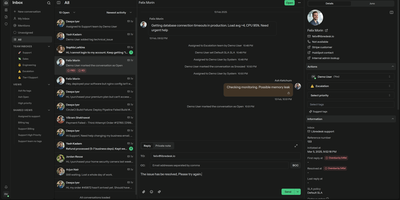
LibreDesk unifies live chat, email, and future channel integrations into a single agent inbox where every customer conversation converges regardless of origin, replacing per-seat-priced tools like Zendesk, Intercom, and Freshdesk with a zero-cost alternative that has surpassed 2,000 GitHub stars. Built on a Go backend with a Vue.js 3 and ShadcN UI frontend, it ships as a single binary requiring only PostgreSQL and Redis. The embeddable live chat widget drops onto any website with a snippet, while the AI assistant handles initial customer queries using answers grounded in your knowledge base before escalating to human agents when needed. Agent copilot drafts replies, summarizes conversation threads, and rewrites messages for tone adjustment directly within the inbox interface. Automation rules trigger on conversation events to tag, assign, and route tickets based on configurable conditions, while auto-assignment distributes workload by agent capacity or custom criteria. SLA management tracks response and resolution time targets with breach notifications, and automated CSAT surveys measure satisfaction after conversation closure. Macros save frequently sent responses as reusable templates that simultaneously set tags and assign conversations. Role-based access control provides granular per-action permissions for teams and individual agents, and SSO supports Google, Microsoft, and any OIDC provider. The HTTP/JSON API and webhook system enable custom integrations with external tools. Running on a dedicated VPS on RepoCloud with guaranteed CPU, RAM, and SSD, full root SSH access, and a browser serial console. AGPL-3.0 licensed.
TaxHacker
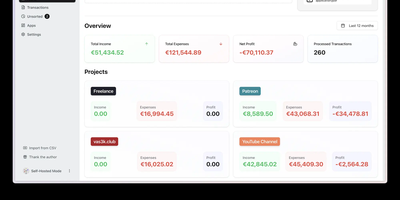
With 6,600+ GitHub stars and created by vas3k — one of the indie developer community's most recognized builders — TaxHacker is the self-hosted AI accounting application that turns receipt chaos into structured financial intelligence without surrendering a single document to third-party cloud services. Upload photos of receipts, invoices, or PDF bank statements, and the LLM pipeline automatically extracts dates, merchants, amounts, line items, tax breakdowns, and vendor information into an Excel-like structured database with custom fields you define through your own AI prompts. Currency handling covers 170+ fiat currencies and 14 cryptocurrencies (BTC, ETH, LTC, and more) with automatic conversion using historical exchange rates from the actual transaction date — critical for international freelancers filing in one reporting currency. The AI layer supports OpenAI (GPT-4o, GPT-4.1-mini), Google Gemini, Mistral, or fully local models via Ollama, LM Studio, vLLM, and LocalAI through OpenAI-compatible endpoints for complete air-gapped deployments. Features include multi-project workspace isolation, custom categories with AI-driven auto-classification, bulk document upload with batch processing, email server monitoring for automated attachment ingestion, flexible CSV export with attached documents, and comprehensive tax report generation. The tech stack runs Next.js 15+ for the frontend and tRPC API, Prisma ORM for database models and migrations, PostgreSQL 17+ for persistence, and Ghostscript plus GraphicsMagick for PDF rendering. Running on a dedicated VPS on RepoCloud with guaranteed CPU, RAM, and SSD, full root SSH access, and a browser serial console. MIT licensed.

CubeSandbox
CubeSandbox gives every AI agent its own hardware-isolated MicroVM with a dedicated Linux kernel — not a shared-kernel container but a true KVM virtual machine — booting in under 60ms with less than 5MB of memory overhead per instance, enabling thousands of concurrent sandboxes on a single server via kernel sharing and Copy-on-Write memory. The Rust-built CubeProxy exposes an E2B SDK-compatible REST API on Axum, so existing E2B Cloud applications switch by changing one environment variable with zero client code changes. CubeMaster orchestrates cluster-level scheduling in Go while Cubelet manages node-local sandbox lifecycles including create, run, pause, resume, snapshot, and destroy operations. CubeVS, the eBPF-powered network layer, enforces per-sandbox isolation with LPM trie-based egress policies entirely in kernel space — no userspace context switches — while CubeEgress provides an L7 security proxy with per-domain, per-path, and per-method allowlists plus automatic credential injection that keeps secrets invisible to sandbox code. Hundred-millisecond-granularity snapshots enable checkpoint, rollback, and parallel fork from any saved state. The volume framework supports E2B-compatible pluggable storage with independent lifecycle and cross-sandbox sharing. Production deployment uses Terraform on Tencent Cloud or Helm charts on Kubernetes, K3s, or TKE, with full ARM64 support alongside x86_64 and AutoPause/AutoResume for cost optimization. Running on a dedicated VPS on RepoCloud with guaranteed CPU, RAM, and SSD, full root SSH access, and a browser serial console. Apache 2.0 licensed.
OpenCode Manager
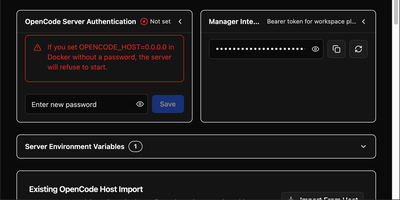
OpenCode Manager is a mobile-first command center for AI coding agents. Install the PWA on your phone or tablet and you get real-time streaming chat, multi-repository Git operations, and scheduled automation right in your pocket. Git integration handles SSH-authenticated repo cloning, worktree management, unified diffs, and branch operations across all your projects in one dashboard. Chat with coding agents through Server-Sent Events streaming that supports slash commands, @-mentions for files, Plan and Build modes, and Mermaid diagram rendering for architecture discussions. Schedule reusable prompts to run against any repository on intervals or cron expressions, with each run tracking history and linking to sessions so you can pick up exactly where automation left off. MCP server configuration adds local and remote HTTP servers with OAuth support, plugging into the broader Model Context Protocol ecosystem. A dedicated assistant workspace provides an isolated AI environment with auto-provisioned skills for managing schedules, notifications, and settings. Multiple AI providers are supported including Anthropic, GitHub Copilot, and OpenAI-compatible services, each configurable with custom system prompts and granular tool permissions. Push notifications alert you to session events, agent questions, errors, and task completions across all managed repositories.
Flowise
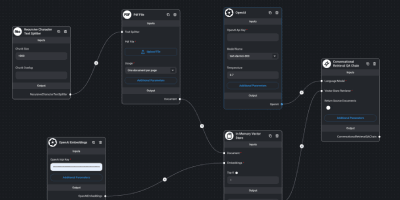
Drag nodes onto a canvas and ship an LLM app: Flowise is an open-source visual builder for AI agents and LLM applications, written in Node.js on LangChain.js and licensed Apache-2.0. You assemble flows by dragging nodes onto a canvas: models, prompts, memory, vector stores, retrievers, and tools, then wire them together and test in the built-in chat panel. Three builder types cover increasing complexity: Assistant for simple RAG chat over uploaded files, Chatflow for single-agent systems with techniques like rerankers and Graph RAG, and Agentflow for multi-agent orchestration with branching, looping, shared flow state, and human-in-the-loop checkpoints. Over 100 integrations connect data sources, vector databases, and both proprietary and open-source models, plus MCP client and server nodes for standard tool interop. Finished flows are exposed as REST APIs, embedded chat widgets, or via JS and Python SDKs - each flow gets an endpoint the moment it is saved, removing the deployment gap between a working prototype and something your application can call. Execution logs, visual step debugging, and external log streaming trace behavior, while input moderation and rate limiting act as guardrails; RBAC, SSO, and workspaces cover team deployments. Self-hosting keeps prompts, encrypted credentials, and conversation data on your own instance, which matters when flows handle internal documents or customer data - and wiring a model, prompt, memory, and vector store on the canvas replaces the boilerplate a hand-coded LangChain project would need.
Sourcebot
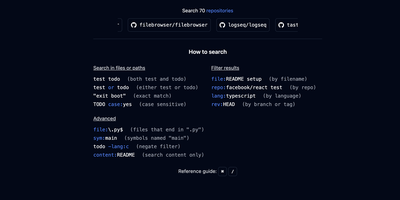
Point Sourcebot at your GitHub, GitLab, Bitbucket, Azure DevOps, Gerrit, or Gitea repositories and get regex, symbol, and filtered search results in under a second across thousands of repos and branches. Backed by Y Combinator with production deployments at NVIDIA, Shutterstock, SeatGeek, Arista, and Red Hat, the Zoekt-powered engine deploys as a single Docker container with zero external data transmission. Ask Sourcebot connects reasoning models like Claude Opus to your entire codebase, enabling natural language questions that return structured answers grounded with inline citations and navigable code snippets, backed by automatic tool calls that search code, follow references, and read files across all indexed repositories. Ask connectors extend this to Jira, Slack, Linear, and Confluence via MCP, pulling external context alongside code for debugging and documentation. IDE-level code navigation provides goto definition and find all references across repository boundaries without local cloning. The built-in file explorer renders any indexed file with syntax highlighting, breadcrumb navigation, and git blame showing per-line commit attribution. An analytics dashboard tracks daily, weekly, and monthly search activity. Permission syncing from GitHub and GitLab enforces access control lists so users only see repositories they are authorized to access. Running on a dedicated VPS on RepoCloud with guaranteed CPU, RAM, and SSD, full root SSH access, and a browser serial console. Other licensed.
ClassroomIO
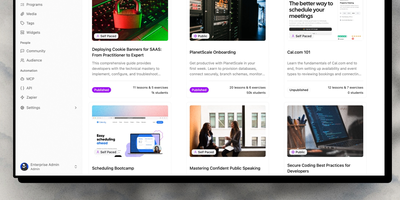
Turn company knowledge into structured courses in minutes: ClassroomIO's AI course builder takes your documents, policies, or topic outlines and generates complete lessons with exercises using Gemini, GPT-4o, or Claude — then an in-lesson AI tutor helps employees study the material at their own pace. The SvelteKit 5 and Hono API architecture backs a platform purpose-built for employee compliance training, customer education, and partner certification programs. Programs group courses into cohorts with team management, progress tracking, and goal setting. Live Kahoot-style quizzes drive real-time engagement during training sessions with automatic scoring and leaderboards. Exercises support multiple question types with automatic grading for multiple choice and AI-assisted evaluation for open-ended responses — teachers review and override all AI decisions. Branded certificates with custom IDs reward course completion. Custom domain mapping through Cloudflare lets organizations serve their learning portal under their own brand. MinIO provides S3-compatible storage for documents and video uploads. The REST API and signed webhooks enable programmatic enrollment and completion tracking, while an MCP server on npm supports AI-native authoring workflows. An embeddable widget drops the course catalog onto any website. Better Auth handles sessions and OAuth with optional SSO. Running on a dedicated VPS on RepoCloud with guaranteed CPU, RAM, and SSD, full root SSH access, and a browser serial console. AGPL-3.0 licensed.
SD WebUI Forge
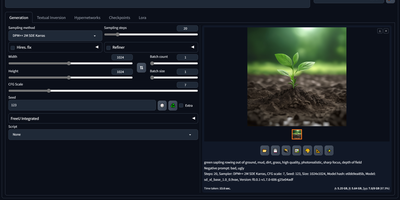
With 12,800 GitHub stars and backing from the same developer who created ControlNet, Stable Diffusion WebUI Forge replaces Automatic1111's inference backend with a dynamic GPU memory management system that runs SDXL 30-75% faster while consuming significantly less VRAM — enabling 1024x1024 generation on 6GB cards where A1111 requires 8GB or more. The Gradio 4 interface provides txt2img, img2img, inpainting, and outpainting workflows with a Forge Canvas supporting pressure-sensitive input from Wacom tablets and Microsoft Surface devices. Native Flux.1 model support loads Flux Dev and Schnell checkpoints using BitsandBytes NF4 and FP8 quantization for deployment on consumer GPUs without model splitting. Built-in ControlNet integration includes all preprocessors — Canny, Depth, Normal, OpenPose, MLSD, Scribble, Segmentation, Tile, and IP-Adapter — without requiring separate extension installation. The extension ecosystem maintains full compatibility with popular Automatic1111 extensions including Adetailer for face enhancement, After Detailer, Regional Prompter, and Dynamic Prompts. LoRA loading supports standard, LyCORIS, and DoRA formats with automatic weight detection. The API provides RESTful endpoints for txt2img, img2img, extra single/batch processing, and progress monitoring enabling headless batch generation. Deploy via one-click installer package, Python virtual environment, or Docker with NVIDIA GPU passthrough. Running on a dedicated VPS on RepoCloud with guaranteed CPU, RAM, and SSD, full root SSH access, and a browser serial console. AGPL-3.0 licensed.