Agentic Security
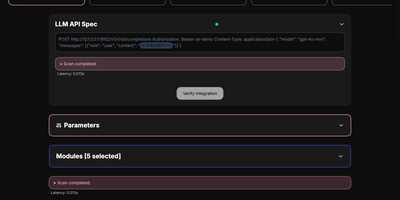
Find out how easily your chatbot can be talked into misbehaving before a stranger on the internet does. Agentic Security points a library of attack prompts at any LLM endpoint you can describe in a few lines of HTTP, then reports which attack families got through. Paste a request template with a marker where the attack goes, press Verify Integration to confirm the endpoint answers, and start the scan. Pick from jailbreak corpora on Hugging Face, obfuscation mutations like Base64, ROT13, mirrored words, and scrambled text, or drop your own CSV of prompts into a folder. Presets cover OpenAI, DeepSeek, Groq, Gemini, Claude, Azure, and custom APIs. Set a token budget, switch on concurrency, and watch a per-module table of failure rates and estimated cost fill in live. Download failed prompts as a CSV, export the full log, or generate a config and run the same scan as a CI gate with failure thresholds. Re-run the same scan after every model or system prompt change to spot regressions early. Running on a dedicated VPS on RepoCloud with guaranteed CPU, RAM, and SSD, full root SSH access, and a browser serial console. Apache-2.0 licensed.
Imbo
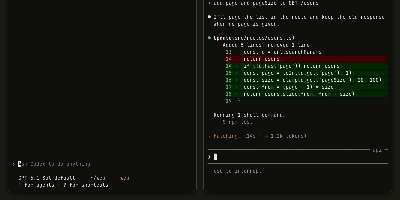
Your coding agents work in separate terminals and cannot ask each other anything; Imbo gives Claude Code, Codex, opencode, Cursor CLI, and six other agent tools one shared messaging network, so a session can send a question to another session and get an answer while both keep working. Messages land inside the receiving session mid-task, and a reply wakes an idle session so it can act on the answer. You add people by account ID, and their agents can message yours; group chats let several sessions from several people coordinate on one brief, with every reply reaching every member. Sessions can send files that land in the receiving machine's ~/.imbo/files folder, and an agent asks you first before sending your data out, deleting files, spending money, or touching production. From the web app or the iPhone app you can message your own sessions from anywhere, and a closed Claude Code session reopens in the background to pick the message up. The server is a single binary with a bundled PostgreSQL, HTTPS through Let's Encrypt, email code sign-in, and optional domain restrictions on who may register. Running on a dedicated VPS on RepoCloud with guaranteed CPU, RAM, and SSD, full root SSH access, and a browser serial console. Apache-2.0 licensed.
Neo Chat
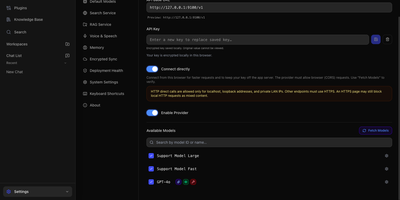
One chat window, every model you already pay for, and a history that stays in your own browser unless you decide otherwise. Neo Chat connects to Google, OpenAI, Anthropic, and any OpenAI-compatible gateway, so switching models mid-project takes one click. Agent mode runs multi-step tool workflows, and Deep Research drafts a plan for approval before producing a cited report that can be resumed if it stops. Attach files, build a knowledge base for retrieval, and let memory carry preferences between conversations. Browse a market of ready-made assistants and text skills, add OpenAPI plugins or remote MCP servers, and search the web through a configurable service. Answers render Markdown, math, diagrams, and charts, plus editable artifacts and interactive checklists, quizzes, flashcards, and calculators. Voice input and read-aloud sit beside the composer, and optional encrypted sync moves settings between devices. An access password can protect a shared deployment, and a health page checks that everything is configured. Switch models mid-conversation, keep one history, and stop juggling a tab for every provider. Running on a dedicated VPS on RepoCloud with guaranteed CPU, RAM, and SSD, full root SSH access, and a browser serial console. MIT licensed.
Biniou
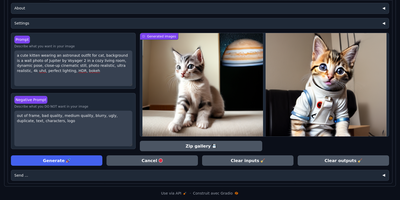
Thirty generative AI tools behind one login on your own server: that is Biniou, a self-hosted studio for making images, text, music, video, and 3D objects without sending a prompt anywhere else. The chatbot module runs GGUF language models locally, a multimodal variant sees images, Whisper transcribes speech, and a translation module covers 200 languages. Image work spans text-to-image across Stable Diffusion, SDXL, Flux, PixArt, and Kandinsky model families, plus img2img, inpainting, outpainting, ControlNet, face swapping, upscaling with Real-ESRGAN, and face restoration with GFPGAN. Music arrives from MusicGen, MusicLDM, AudioGen, and Bark voice generation, video from Modelscope, AnimateDiff, and Stable Video Diffusion, and Shap-E turns text or images into 3D shapes. Modules hand outputs to each other, so a generated caption can become a prompt and a still can become a clip. Everything runs from 8GB of RAM with no dedicated GPU, works offline once models are downloaded, and a control panel inside the interface handles updates, restart, authentication, network access, and one-click sharing. Models are managed from the same panel, generation settings are saved as metadata in every file, and CUDA acceleration is there when hardware allows. Running on a dedicated VPS on RepoCloud with guaranteed CPU, RAM, and SSD, full root SSH access, and a browser serial console. GNU General Public License v3.0 licensed.
Proval
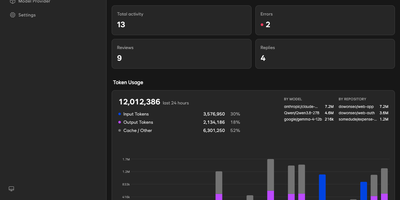
Proval is a self-hosted AI code review agent that reads every pull request on your GitLab, Forgejo, or GitHub server and posts a consolidated, severity-grouped review with inline comments, using a model you run yourself. When a pull request gets a meaningful push, a planning agent groups changed files into review units and dispatches specialist sub-agents in parallel, each exploring the codebase so cross-file issues surface. A writing agent merges their findings into one review, with comments on the affected lines, including multi-line ranges. Reply to any Proval comment and it reads the thread context and answers, and it works on issues too, greeting new ones and answering follow-ups on every message or only when mentioned. Choose per repository whether reviews run on first push only, every push, or not at all, skipping drafts until they are marked ready. Every review, reply, and issue comment is logged with its token usage, so each model's cost shows in the dashboard instead of hiding in an API bill. Your code is never stored; review context goes only to the LLM endpoint you configure, whether that is a cloud API or a local Ollama or llama.cpp server on your own network. Connect GitLab or Forgejo with an access token and webhooks, or GitHub through a GitHub App; Gitea and Codeberg use the same Forgejo-compatible path. Running on a dedicated VPS on RepoCloud with guaranteed CPU, RAM, and SSD, full root SSH access, and a browser serial console. AGPL-3.0 licensed.
Anysub
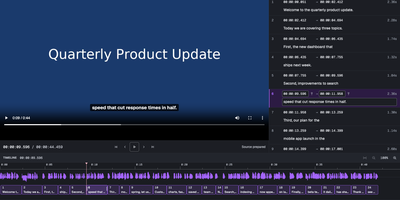
Need subtitles but not a cloud upload? Anysub transcribes audio and video with Whisper on your own server and hands back editable cues. Drop in a video or audio recording, pick a Whisper model from tiny to large, and the worker transcribes it with word-level timing. The studio then puts the video, the cue list, and a zoomable waveform timeline side by side, so every subtitle can be dragged, trimmed, split, merged, or retyped. Warnings flag cues that run too fast, too long, or overlap a neighbor, and autosave with undo keeps edits safe. Long uploads resume after a dropped connection, and the searchable library finds projects by name or by the words spoken inside them. Finished tracks export as SRT, WebVTT, plain text, or JSON with words and metadata. Administration pages manage model downloads, transcription defaults, upload limits, disk usage, and connected workers, and a first-run setup code protects the owner account. Running on a dedicated VPS on RepoCloud with guaranteed CPU, RAM, and SSD, full root SSH access, and a browser serial console. AGPL-3.0 licensed.
RSSBox
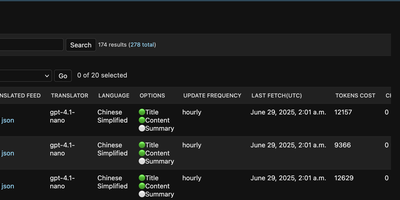
Foreign-language feeds are where good information usually goes to be ignored, and RSSBox fixes that by translating, filtering, and merging RSS sources, then republishing them as clean feeds your existing reader can subscribe to. Add a feed, pick a translation engine, and RSSBox republishes it with titles, full articles, or summaries translated, optionally showing both languages side by side. Each feed can use a different engine, from DeepL to any OpenAI-compatible model endpoint, and the admin shows translation status plus the tokens or characters each source has consumed. Update schedules are set per feed, so a fast-moving news source refreshes hourly while a quiet personal blog checks in once a day. Keyword filters quietly drop the recurring topics you never open, and AI filtering goes further by judging items against what you actually read. Tag several related sources and RSSBox merges them into a single unified feed, translations and filters applied, ready to follow as one stream. Full-text fetching pulls complete article bodies from feeds that only publish excerpts, so the translation covers the whole story rather than the teaser paragraph. Your reader app never changes: it simply subscribes to the translated feed URL like any other source. Running on a dedicated VPS on RepoCloud with guaranteed CPU, RAM, and SSD, full root SSH access, and a browser serial console. GPL-3.0 licensed.
Bionic
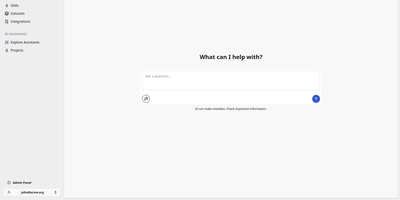
Bionic gives a company its own private AI workspace where models can read documents, use approved tools, run code, and hand back finished files. Staff open a chat, pick a model, and ask for work; the agent searches datasets, calls connected systems including Gmail, Google Drive, Salesforce, ServiceNow, and Jira, and saves spreadsheets, reports, and PDFs as artifacts. Skills package reusable instructions for jobs like release readiness, incident briefings, policy gap reviews, and RFP responses, so a good workflow gets written once and reused by everyone. Datasets collect security policies, product docs, handbooks, and support archives for grounded answers. Administrators manage API keys, watch token usage and request charts, set rate limits, configure providers, and divide people into teams with their own assistants. SSO, role-based access, and an audit trail keep the rollout governed. Developers can issue model and assistant keys and turn any OpenAPI specification into a new integration. Running on a dedicated VPS on RepoCloud with guaranteed CPU, RAM, and SSD, full root SSH access, and a browser serial console. Apache-2.0 licensed.
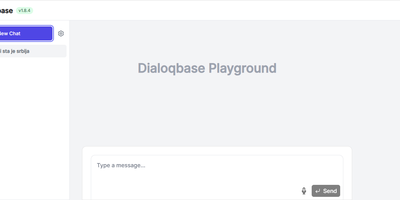
Dialoqbase
Retrieval-augmented chatbots on your own knowledge base - that is the whole mission of Dialoqbase, an open-source bot-building platform. Feed it content through a broad set of data loaders - web pages and full crawls, sitemaps, PDFs, DOCX, CSV, plain text, GitHub repositories, YouTube videos, and MP3/MP4 audio - and it handles the whole RAG pipeline in one self-contained app: chunking, embedding, vector storage, and LLM querying. The distinguishing architecture choice is PostgreSQL with pgvector for embedding storage and similarity search, which removes the separate vector-database dependency, and Redis-backed Bull queues for ingesting large documents without blocking the API. Model choice is wide open: OpenAI, Anthropic Claude, Google Gemini, Cohere, Fireworks, Hugging Face, local models via Ollama, and any OpenAI-compatible endpoint, with an equally broad list of embedding providers. Finished bots embed on any website with customizable styling or deploy to Telegram, Discord, and WhatsApp, and an API creates and manages bots programmatically. Multi-user support adds registration limits and per-user bot quotas. MIT-licensed and free for commercial use.
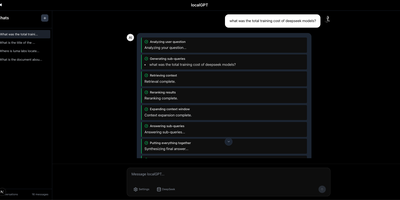
LocalGPT
If a document is too sensitive for a hosted chatbot, LocalGPT lets you question it in plain English on your own server, with every answer citing the passages it used. Drop PDF, DOCX, HTML, Markdown, or plain-text files into a named index and scanned PDFs are read through OCR. Vector and full-text results are fused by rank, then a cross-encoder reranker keeps the best passages. A router decides per question between searching your documents and answering directly. Complex questions split into sub-questions that are searched separately, pooled, and answered in one pass. Progress cards stream the retrieval, reranking, and synthesis stages into the chat as they run. An optional verification pass appends a confidence percentage to the answer. A session-scoped semantic cache answers repeated questions faster. Per-chat settings toggle decomposition, pruning, verification, search type, model, and retrieval depth. Swap the answer model per session or per message, and choose the embedding model when you build an index. From a terminal, one command indexes a folder and another asks a question, and a REST API exposes every action the interface can take. A start script runs everything in Docker against Ollama on the host or in a container. Running on a dedicated VPS on RepoCloud with guaranteed CPU, RAM, and SSD, full root SSH access, and a browser serial console. MIT licensed.
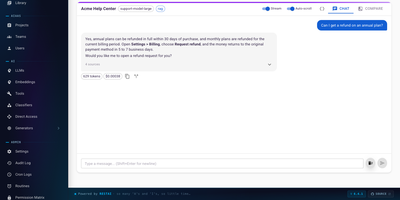
RESTai
Every AI project you build in RESTai becomes an endpoint that any app can call over plain HTTP. RESTai gives you a browser dashboard where each project gets its own model, system prompt, tools, and chat playground. Build knowledge-base assistants over uploaded files and synced web pages, ReAct-style agents that call MCP servers, or drag-and-drop block projects that need no model at all. Connect Ollama, OpenAI, Anthropic, Gemini, vLLM, Azure, Bedrock, or any OpenAI-compatible endpoint, and let teams share the ones you approve. Daily charts follow tokens, cost, and latency per project, with rate limits, guardrails, prompt version history, and evaluation runs for quality tracking. Teams, roles, two-factor sign-in, white-label branding, and an audit trail cover administration. A one-line chat widget embeds a project on any website, and connectors reach Telegram, Slack, and WhatsApp. One install can serve several branded assistants and bill each team separately. Running on a dedicated VPS on RepoCloud with guaranteed CPU, RAM, and SSD, full root SSH access, and a browser serial console. Apache-2.0 licensed.
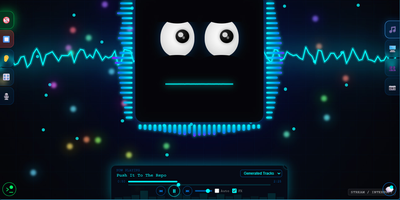
OpenVoiceUI
OpenVoiceUI is the voice-first front end for a self-hosted AI agent that lives entirely on your own hardware; you talk, it answers out loud, and it builds live pages on screen while the conversation runs. Hold a hands-free conversation with wake word, push-to-talk, and the ability to interrupt, or switch to text when the room is quiet. Speech recognition runs in the browser for free or through Deepgram, Groq Whisper, or your own Whisper server, while nine speech providers from local Supertonic to ElevenLabs give the agent its voice, cloned voices included. As it talks, the agent opens live canvas pages, dashboards, galleries, reports, and tools, and files them on an OS-style desktop you can reopen from the start menu. Ask for music and it generates songs with a built-in player and playlists; ask for images and it creates those too, alongside an audio clip maker and a soundboard. Profiles swap the agent's persona, voice, and model provider, animated faces react while it speaks, and sub-agents and workspace files stay visible in the admin dashboard. The agent itself runs in the OpenClaw gateway with your choice of model provider, so your keys, conversations, and files never leave your server. Running on a dedicated VPS on RepoCloud with guaranteed CPU, RAM, and SSD, full root SSH access, and a browser serial console. MIT licensed.
Open Agent Email
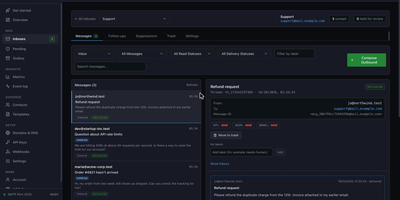
Every AI agent that deals with people eventually needs an email address, and Open Agent Email gives each one a real inbox on your own domain. Agents receive mail in proper threads, reply in place, send new messages, schedule sends up to 90 days ahead, and handle attachments, labels, search, trash and restore from one mailbox. A human approval gate can hold any outgoing message until a person clicks approve or reject, with an expiry and a full history, so a risky reply never reaches a customer unchecked. Incoming mail is screened for prompt-injection tricks and hidden text, checked against SPF, DKIM, and DMARC, and can be scanned for viruses before an agent reads it. Agents connect through a REST API with an OpenAPI file, dependency-free Python and TypeScript SDKs, the oae command line, signed webhooks, a live WebSocket stream, or 96 MCP tools for coding agents. The browser dashboard covers guided setup, inboxes, pending approvals, the outbox queue with retries, delivery metrics with bounce and complaint tracking, contacts, templates, domains with DNS verification, and API keys. Sending runs through your own relay, SES events feed suppression lists automatically, and scoped per-inbox keys limit what each agent may do. Running on a dedicated VPS on RepoCloud with guaranteed CPU, RAM, and SSD, full root SSH access, and a browser serial console. Apache-2.0 licensed.
ChainForge
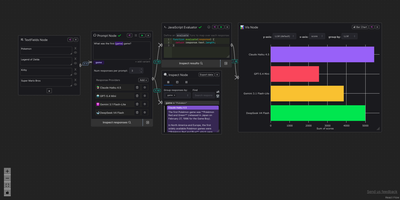
Comparing prompts and models by eye stops working fast, so ChainForge lays every experiment out on one visual canvas. Drop a table of inputs into a Prompt Node, add a handful of models, and the app sends every combination of template variable and model, then collects the answers in an Inspect Node that groups responses by any variable. Evaluator nodes score outputs with a few lines of code, and visualization nodes plot pass rates and numeric scores as histograms or box plots. Chat Turn nodes test follow-up questions, to see if a model caves when a user pushes back. Sparkle buttons draft synthetic table rows, test questions, and starter evaluator code with a model of your choice, and an LLM scorer can judge answers against a rubric you write. Example Flows open ready-made experiments, from a no-key starter with tiny in-browser models to prompt template comparisons, sycophancy checks, gender bias audits, red-teaming runs, and 188 flows converted from OpenAI Evals. Documents, Chunking, Retrieval, and Rerank nodes cover retrieval experiments. Finished flows export as cforge files, and results export to spreadsheets or JSON for the rest of the team. Running on a dedicated VPS on RepoCloud with guaranteed CPU, RAM, and SSD, full root SSH access, and a browser serial console. MIT licensed.
ChatChat
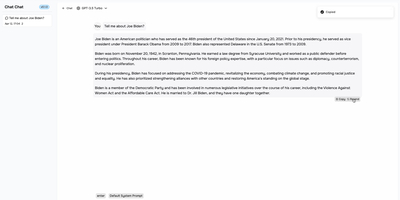
One clean interface in front of Anthropic, OpenAI, Google Gemini, Cohere, and more: Chat Chat is a Next.js front door to the major AI providers, ending the juggling of separate subscriptions, tabs, and UIs per model. Bring your own API keys, pick a provider and model per conversation, and switch between them as the task demands: Claude for long-form reasoning, GPT for code, Gemini for multimodal work - the interface stays identical. Beyond configured presets, custom providers plug in with their own API endpoints and keys, which covers OpenAI-compatible gateways and local inference servers. The design splits into two dedicated modes: a chat interface for conversational work with customizable system prompts, and a search interface that pairs AI processing with query handling for research-style questions. The stack is modern and hackable - Next.js 14, Tailwind CSS, shadcn/ui on Radix primitives, Jotai for state - with full internationalization including English, Chinese, and Japanese. Self-hosting means your conversation history and API keys live on your instance rather than a third-party wrapper service, and pay-per-token API pricing typically beats stacking multiple monthly chat subscriptions. AGPL-licensed and deliberately simple to deploy: one container, environment variables for keys, done.
Atom
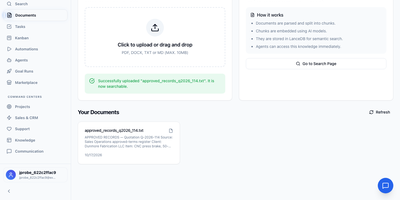
Give an AI agent a price list and it drafts the quote; hand it an invoice and it checks the numbers against purchase and receiving records before anyone pays. Atom is a self-hosted AI agent platform for business automation that wraps every agent action in governance: permissions, ordered policies authored in a canvas editor, human approval checkpoints, and durable audit records. Work starts from your files and instructions, with demonstrated workflows that map unfamiliar spreadsheet columns, calculate against source records, and produce cited Word or PowerPoint documents you can inspect line by line. Corrections become reusable teaching: saved field mappings, commercial terms, and contextual lessons carry into new work, and each job keeps the accepted snapshot it started with. Questions, approvals, and waits survive restarts, completed operations are retained, and uncertain effects must be reconciled before anything retries, so long-running business processes do not silently double-act. Results keep provenance back to the source records and operations that produced them, and unresolved requirements block completion instead of being invented away. You bring the model: configure a hosted provider or a local OpenAI-compatible endpoint, route by capability and cost, and run everything in a single-tenant workspace with user, role, and workspace boundaries. A starter sample runs with no model or cloud key at all. Running on a dedicated VPS on RepoCloud with guaranteed CPU, RAM, and SSD, full root SSH access, and a browser serial console. AGPL-3.0 licensed.
DopplerTask
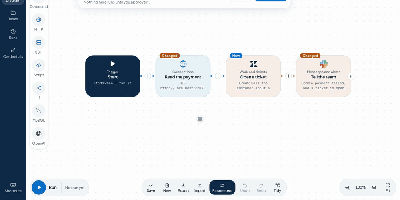
DopplerTask is the control layer where AI agents build your automations and you decide what goes live. You describe the outcome in plain language, and your agent assembles a task from a library of eighty-one ready-made steps spanning messaging, ticketing, sales, operations, documents, databases, queues, and AI models. The proposal lands in a visual editor that people and agents share, with new and changed steps marked and the old value of each field beside the new one. Nothing goes live until you approve it, and the previously approved version keeps running untouched in the meantime. Once a task is live it can start from a webhook, a schedule, a message queue, a manual click, or the agent itself, and every run is recorded with the output of each step, the person who started it, and the person who approved the version. Failed runs resume from the step that failed, with retries and continue-on-failure where you want them. Agents reference your credentials by name only; the values stay encrypted on your server, beyond the agent's reach, and separate tokens for people and agents plus single sign-on keep access tidy. Running on a dedicated VPS on RepoCloud with guaranteed CPU, RAM, and SSD, full root SSH access, and a browser serial console. MIT licensed.
ABC User Feedback
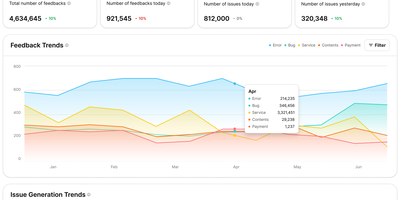
One board holds every piece of customer feedback, from app store reviews to survey answers, and turns the repeating ones into tracked issues. Each project defines channels like App Review, VOC, or Survey with custom fields for text, numbers, dates, selects, images, and AI-generated values. The feedback table filters by keyword, date, and field, expands rows for detail, and exports results when a report is due. Issues carry status labels and appear in a kanban or list view, with ticket links that point to Jira or another tracker. A dashboard charts feedback and issue trends over any date range, with counters for today and yesterday. The AI field can summarize, translate, or score sentiment on incoming messages, and issue recommendation suggests where a new message belongs, with token usage limits and notifications to cap spending. Webhooks announce events to other systems, API keys let apps submit feedback directly, and role-based access limits what each member can do. Members join by email invitation, and single sign-on connects an existing identity provider. A CLI starts the full stack, and optional OpenSearch improves search and AI accuracy. Running on a dedicated VPS on RepoCloud with guaranteed CPU, RAM, and SSD, full root SSH access, and a browser serial console. Apache-2.0 licensed.