Open Source App Cloud Marketplace
Deploy, host, and scale with one click, at half the cost. Then customize with AI agents.
Amplication
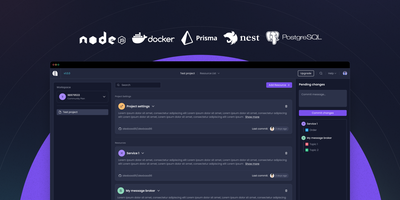
Amplication turns entity definitions into production-ready backend services, generating NestJS with Prisma and Apollo GraphQL for Node.js or ASP.NET Core for .NET, eliminating months of boilerplate. The plugin-driven Data Service Generator hooks into code generation lifecycle events, enabling teams to inject CI/CD manifests, proprietary authentication schemes, testing configurations, and cloud-specific deployment targets for AWS, Azure, and GCP without forking the core generator. Blueprint templates encode organizational architecture standards, security policies, and coding conventions into reusable foundations that keep every generated service consistent across the engineering organization. Jovu AI translates natural language requests into entities, relationships, fields, modules, DTOs, and custom API actions, automatically aligning each resource with predefined standards. Generated services include full CRUD operations with input validation, Swagger/OpenAPI documentation, authentication middleware, database-agnostic ORM via Prisma, optional React Admin interfaces, and Jest test scaffolding. Code output syncs to Git repositories as pull requests, preserving standard review workflows while letting developers edit every generated line and add custom business logic. Supports PostgreSQL, MySQL, and MongoDB as database targets. Over 16,000 GitHub stars with enterprise adoption. Apache 2.0 licensed.
GoatCounter
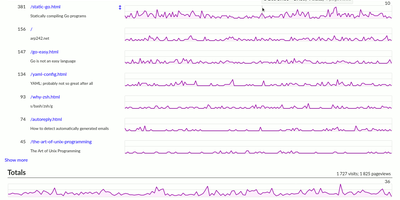
GoatCounter delivers meaningful web traffic insights — pageviews, referrers, browsers, screen sizes, country-level geolocation — without setting a single cookie, without collecting personal data, and without forcing GDPR consent banners on your visitors. Written entirely in Go and distributed as a single compiled binary consuming roughly 25MB of RAM, it adds just 3.5KB to your pages via the tracking script, with a JavaScript-free tracking pixel alternative for sites that avoid scripts entirely, plus backend middleware integration and log file import for server-side collection. The dashboard displays pageview counts per path with hourly resolution, referrer sources grouped by domain with full URL on hover, browser and OS version breakdowns, screen size distributions, and country-level location data derived from IP addresses that are immediately discarded after geolocation. Campaign tracking supports UTM parameters and custom data attributes. A public stats option exposes your dashboard at a shareable URL for build-in-public transparency. SQLite serves as the default database requiring zero administration, while PostgreSQL handles higher-traffic deployments with multi-site setups. Built-in ACME and TLS certificate management eliminates reverse proxy requirements for HTTPS — no Nginx or Caddy needed. The REST API provides programmatic access to all analytics data. Deploy as a single binary, via Docker with the official arp242/goatcounter image, or through native packages. Running on a dedicated VPS on RepoCloud with guaranteed CPU, RAM, and SSD, full root SSH access, and a browser serial console. EUPL-1.2 licensed.
OpenSign
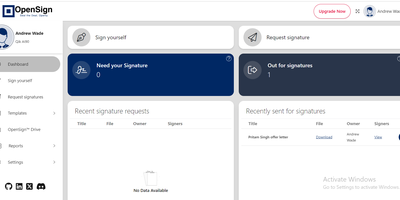
With 6,700 GitHub stars, 79 releases, and 40 contributors since its October 2023 launch, OpenSign delivers a fully free electronic signature platform that removes the per-envelope pricing and seat limits of commercial e-signing services. The React-based frontend provides a drag-and-drop interface for placing signature fields, initials, date stamps, text inputs, and checkboxes onto PDF documents, while the Parse Server backend built on Node.js handles document routing through configurable multi-signer workflows with sequential or parallel signing order. Guest signers authenticate via one-time-password email verification without requiring account creation, while registered users manage documents through OpenSign Drive — a centralized vault with folder organization and status tracking across draft, in-progress, completed, and declined states. Every signing action generates tamper-proof audit trails logging timestamps, IP addresses, email addresses, and phone numbers, culminating in a detailed completion certificate attached to the finished document. The REST API v1.2 exposes endpoints for document creation, template dispatch, self-signing, and real-time webhook notifications on document lifecycle events, with regional deployments available in US and EU. PDF templates with pre-placed widgets enable repeated dispatch to different signers in a single API call. Custom branding controls email invitation templates, signing page appearance, and completion certificate styling. Deploy via Docker Compose with MongoDB, Caddy reverse proxy, and automatic HTTPS provisioning. Running on a dedicated VPS on RepoCloud with guaranteed CPU, RAM, and SSD, full root SSH access, and a browser serial console. AGPL-3 licensed.
SuperTokens
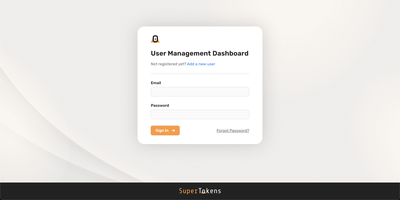
Powering authentication for over 15,000 GitHub stargazers and production deployments across startups and enterprises alike, SuperTokens delivers the complete login infrastructure that Auth0, Firebase Auth, and AWS Cognito charge premium prices for — entirely open source under Apache 2.0 with no per-user limits. The Java-based core service runs as a lightweight HTTP microservice that connects to PostgreSQL or MySQL and handles email-password login, passwordless magic links and OTP via email or SMS, social OAuth with Google, GitHub, Facebook, Apple, and any custom OIDC provider, phone-password authentication, and time-based one-time password multi-factor authentication. Session management uses rotating refresh tokens with anti-CSRF and anti-session-fixation protections, verifying tokens locally in your backend SDK without network round-trips to the core. Frontend SDKs for React, React Native, Angular, Vue, and vanilla JavaScript provide pre-built UI components for login, signup, email verification, and password reset flows, all customizable through an override system that lets you add pre- and post-API logic, custom hooks, and user event handlers. The built-in user management dashboard enables administrators to view users, reset passwords, revoke sessions, modify roles, and manage email verification status. Multi-tenancy and organization support powers B2B SaaS applications with tenant-level authentication configuration and Enterprise SSO via SAML and OIDC. Migration tools support bulk importing millions of existing password hashes, TOTP secrets, and role mappings. Running on a dedicated VPS on RepoCloud with guaranteed CPU, RAM, and SSD, full root SSH access, and a browser serial console. Apache 2.0 licensed.
Wallabag
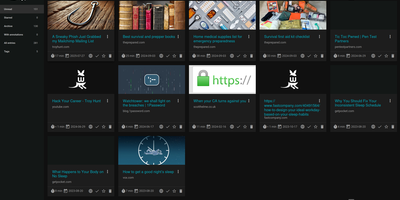
With 12,800+ GitHub stars and over a decade of active development since 2013, wallabag is the most established open-source read-it-later application — built for readers who want complete ownership of their article archive without depending on services that shut down (RIP Pocket). The Symfony-based PHP application extracts clean article content using Graby and php-readability, stripping advertisements, pop-ups, and tracking scripts to deliver a distraction-free reading experience optimized for both desktop and mobile screens. Save articles via Chrome, Firefox, or Safari browser extensions, Android and iOS native apps, REST API, or the built-in bookmarklet — all syncing to your self-hosted instance. Organize your library with tags, automated tagging rules that classify articles by content patterns, starred favorites, and archived collections. The annotation system enables highlighting extracts and attaching notes directly within articles for research and reference workflows. Import your existing reading lists from Pocket, Omnivore, Instapaper, Pinboard, Readability, and browser bookmarks. Export articles in PDF, ePUB, MOBI, JSON, CSV, TXT, or HTML for offline reading on Kindle, Kobo, and other e-readers. Full-text search with filters by reading time, domain, language, and creation date makes retrieval instant across thousands of saved articles. RSS feed output integrates with feed readers and automation services. Docker deployment with SQLite, MySQL, or PostgreSQL persistence backends takes under five minutes. Running on a dedicated VPS on RepoCloud with guaranteed CPU, RAM, and SSD, full root SSH access, and a browser serial console. MIT licensed.

Bagisto
Bagisto is an eCommerce framework for businesses demanding full ownership and zero recurring platform fees. Built on Laravel 12 and Vue.js, version 2.4 supports seven product types — simple, configurable, virtual, downloadable, grouped, bundle, and booking — with multi-channel inventory management across unlimited warehouses and sales channels. The multi-vendor marketplace module transforms a single store into a full marketplace with vendor dashboards, commission management, automated approval workflows, and seller-managed product catalogs supporting 10M+ SKUs through Elasticsearch and OpenSearch indexing. Payment processing handles Stripe, Razorpay, PayU, PhonePe, and PayPal v2 with secure checkout sessions and IPN processing. The headless commerce architecture exposes a GraphQL API via Laravel Lighthouse, enabling decoupled storefronts built with Next.js or any frontend framework, while the PWA module delivers mobile-optimized shopping experiences. AI integration through the Laravel AI SDK connects GPT-5, Gemini, Mistral, and other LLMs for automated product descriptions, chatbot support, and AI-powered image search with TensorFlow.js fallback. Enterprise security features include admin two-factor authentication, Google reCAPTCHA Enterprise, and EU-compliant online contract withdrawal per Directive 2023/673. Built-in SEO tools handle meta titles, descriptions, keywords, and channel-wise sitemap generation. Redis caching, Laravel queues for async operations, and horizontal scaling support containerized deployments across multiple application and database servers. Running on a dedicated VPS on RepoCloud with guaranteed CPU, RAM, and SSD, full root SSH access, and a browser serial console. MIT licensed.
Lemmy
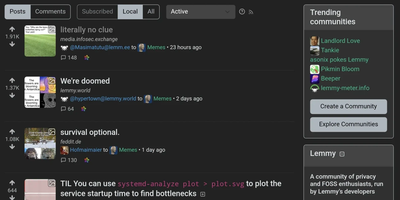
Powering over 496 instances with more than 35,000 monthly active users and 26,500 communities, Lemmy has established itself as the leading open-source, federated link aggregation platform in the Fediverse. Built entirely in Rust for memory-safe, high-performance server operation, Lemmy enables anyone to run their own Reddit-style community that automatically connects with every other Lemmy instance — and compatible ActivityPub platforms like Mastodon, PieFed, and Kbin — through standardized federation protocols. Users create and subscribe to topic-based communities, submit posts containing text, links, or images, engage through threaded comment discussions, and shape content visibility through upvote/downvote mechanisms. Instance administrators retain full control over moderation policy, federation allowlists and blocklists, site appearance, and user registration settings, while community moderators can sticky posts, lock threads, ban users, and maintain public moderation logs for transparency. The platform supports private messaging between users, email notifications, RSS and Atom feed generation for every community, comprehensive internationalization with dozens of language packs, custom emoji support, and both light and dark themes through a clean mobile-responsive interface. Deployment is straightforward with official Docker Compose configurations and Ansible playbooks, backed by a PostgreSQL database with pict-rs for image hosting. Lemmy's Rust backend consistently benchmarks among the most efficient Fediverse server implementations, enabling small VPS instances to serve thousands of users. Running on a dedicated VPS on RepoCloud with guaranteed CPU, RAM, and SSD, full root SSH access, and a browser serial console. AGPL-3.0 licensed.
Medusa
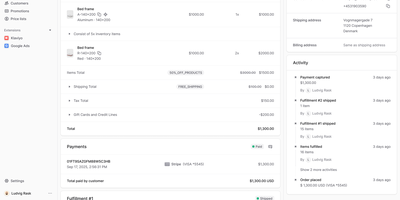
With over 35,000 GitHub stars and 460 contributors, Medusa is the headless commerce framework that gives development teams full ownership of their e-commerce backend without license fees, per-transaction charges, or revenue sharing. The modular architecture ships over 18 domain modules covering products, collections, categories, inventory, pricing, carts, orders, payments, fulfillment, promotions, customers, users, API keys, and stock locations, each independently usable and replaceable. REST and GraphQL APIs expose every commerce operation to any frontend framework — official starters exist for Next.js with community options for Nuxt, Remix, and Gatsby. The React-based admin dashboard provides out-of-the-box order management, product maintenance, promotions configuration, B2B accounts, and multi-warehouse inventory, extensible via the Admin SDK for custom views and workflows. The workflow engine orchestrates long-running commerce processes like checkout, fulfillment, and returns with compensating transactions for reliability. Over 200 official and community plugins integrate Stripe, PayPal, Klarna, Algolia, Meilisearch, SendGrid, Mailchimp, Contentful, Sanity, and Klaviyo. Native multi-region and multi-currency support handles tax-inclusive pricing, region-specific payment and fulfillment providers, and localized storefronts from a single backend. Enterprises including Viessmann, Makro PRO, and INSPIRED Pet Nutrition run Medusa in production. Self-hosting deploys via Docker or directly on Node.js with PostgreSQL and Redis. Running on a dedicated VPS on RepoCloud with guaranteed CPU, RAM, and SSD, full root SSH access, and a browser serial console. MIT licensed.
Homelable
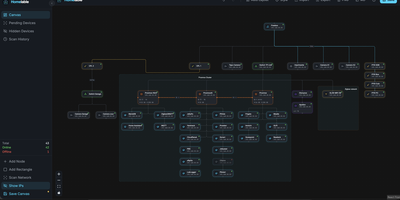
Homelable turns your entire homelab into a live, interactive network canvas where every device, link, and service shows its real-time status at a glance. Run an nmap-powered network scan against your subnets and the tool fingerprints services, queues unknown devices for review, and drops approved hosts onto a drag-and-drop canvas with 15 native node types covering routers, switches, hypervisors, NAS boxes, IoT sensors, and more. Import your full Zigbee2MQTT mesh (controllers, routers, end devices with link quality indicators) and Z-Wave JS device trees in one click, preserving the actual RF topology without manual wiring. Proxmox integration pulls in hosts, VMs, and LXC containers so you can nest virtual machines inside their parent hypervisor node on the canvas. The Rack Canvas mode documents the physical side of your lab: create racks with configurable U-height, mount gear into slots, and patch ports across devices to track your cabling. Health checks run every 60 seconds using ping, HTTP, HTTPS, TCP, SSH, or Prometheus scrape endpoints, with WebSocket push delivering green, red, or pending status pulses directly to the canvas. Split your infrastructure across multiple canvases organized by site, rack, or purpose, and share a read-only Live View URL with anyone on your network. A built-in Model Context Protocol server lets AI assistants like Claude query and modify your topology through natural language. Deploy on a dedicated VPS on RepoCloud with guaranteed CPU, RAM, and SSD, full root SSH access, and a browser serial console. MIT licensed.
Nango
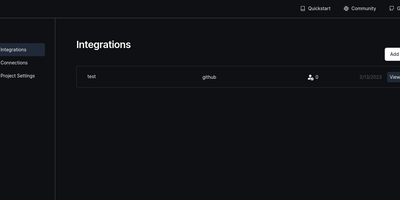
The integrations your SaaS product offers its own users - that is what Nango, an open-source product-integrations platform, exists to build. It solves the repetitive infrastructure work behind every third-party API connection: OAuth flows, API key handling, token refresh, encrypted credential storage, rate-limit backoff, retries, and multi-tenant connection management. It ships pre-built auth configurations for 800+ APIs. Your users connect their accounts through an embeddable, white-label Connect UI, and your backend then reads or writes data through Nango's proxy, SDKs, or REST API without ever touching raw credentials. Integration logic is written as TypeScript functions covering actions, scheduled data syncs, and webhook processing - all running on one runtime with retries, checkpointing, and per-connection logs built in. Syncs pull records incrementally on a schedule, one-way or two-way, which suits RAG pipelines, search indexing, and keeping local copies of external data current. Selected actions can also be exposed as tool schemas or through a built-in MCP server, so AI agents operate on user-connected accounts without ever handling provider credentials. Auth support spans OAuth 2.0, OAuth 1.0a, API keys, basic auth, and JWT, and observability - logs, metrics, failure detection, and a reconnect flow for expired credentials - is scoped per customer connection for easier support debugging. Works with any backend language. Self-hosting on RepoCloud keeps all customer credentials and synced data on infrastructure you control, which matters for data residency and compliance requirements.
Artifact Keeper
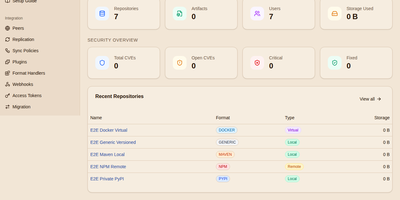
Artifact Keeper serves as a self-hosted universal software artifact repository that consolidates container images, application libraries, and infrastructure bundles under a unified management control plane. Software development teams can publish and resolve dependencies using their existing build tools, including Docker, Helm, npm, PyPI, Maven, Cargo, NuGet, and Terraform without installing proprietary client plugins. Remote repositories act as transparent pull-through caching proxies for public upstreams like Docker Hub and PyPI, accelerating internal CI/CD build speeds while insulating production pipelines from external registry outages. Virtual repositories combine multiple local, remote, and third-party endpoints into single URLs, resolving packages across prioritized internal teams and public registries automatically. Automated security scanners evaluate incoming packages for Common Vulnerabilities and Exposures using Trivy and Grype engines, assigning letter grades and enforcing quarantine policies to block vulnerable binaries before production release. Administrators can sign package metadata with cryptographic GPG keys, configure peer mesh replication across geographic regions, and manage team permissions using OpenID Connect, SAML, and granular access tokens. Running on a dedicated VPS on RepoCloud with guaranteed CPU, RAM, and SSD, full root SSH access, and a browser serial console. MIT licensed.

OpenPanel
Known as the open-source Mixpanel alternative that respects user privacy, OpenPanel delivers a unified web and product analytics platform combining Mixpanel's behavioral analysis with the simplicity of Plausible and full data ownership through self-hosting. Cookieless tracking eliminates consent banners entirely while still capturing events, page views, sessions, user journeys, funnels, retention cohorts, and custom properties with full GDPR compliance by design. The 2.3 KB async script loads without blocking page rendering, and 16 official SDKs cover Next.js, React, Vue, Astro, Remix, Nuxt, Angular, Svelte, React Native, Swift, Kotlin, Python, PHP, Laravel, Express, and REST API for custom integrations. Real-time dashboards display live visitor counts, active sessions, and event streams as they happen. Custom chart builders create tailored visualizations from any tracked event with breakdowns by property, time period, and user segment. Session replay reconstructs individual user journeys showing every page visited, event triggered, and interaction recorded. Funnel analysis identifies conversion drop-offs with step-by-step breakdown and property filtering. Retention analysis measures how often users return with customizable time windows and cohort comparisons. A/B testing and variant tracking enable experiment measurement directly within the platform. Event notifications alert when specific events occur or thresholds are crossed. The self-hosted deployment uses Docker Compose with ClickHouse for high-speed analytical queries, PostgreSQL for metadata, and Redis for real-time processing — deployable on any VPS or Kubernetes cluster. Running on a dedicated VPS on RepoCloud with guaranteed CPU, RAM, and SSD, full root SSH access, and a browser serial console. AGPL-3.0 licensed.
Docmost
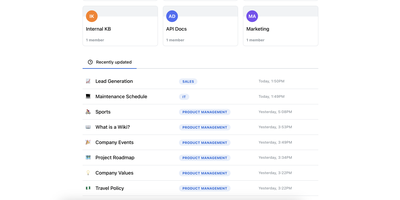
Confluence and Notion both want your team's documentation in their cloud; Docmost, an open-source collaborative wiki platform, keeps it on your server. The centerpiece is a Notion-style block editor with CRDT-based real-time collaboration: multiple people edit the same page simultaneously and changes merge without conflicts or overwrites. Content lives in spaces - per team, project, or department - with nested page trees, role-based permissions, groups, inline comments, page history with restore, and full-text search across everything. The editor covers tables, code blocks, callouts, KaTeX math, and file attachments, and diagramming is built in rather than bolted on: Mermaid, Draw.io, and Excalidraw all render inside pages, alongside embeds for Airtable, Loom, Miro, and more. Migration paths include Notion, Markdown, HTML, and ZIP archive imports (Confluence, PDF, and DOCX importers ship in the Enterprise edition, along with SSO via SAML/OIDC/LDAP and MFA). The stack is TypeScript with PostgreSQL and Redis, deploys via Docker Compose, runs in air-gapped environments with no external dependencies, and is translated into 10+ languages. The AGPL-3.0 community edition carries no per-seat fees; the project has passed 20,000 GitHub stars since its 2024 launch.
Kotaemon
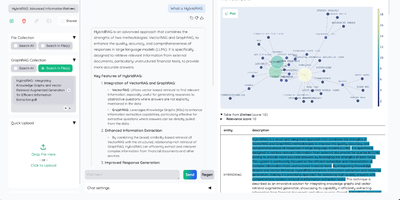
Kotaemon is a document QA platform that combines advanced RAG techniques with a clean Gradio-based web interface for chatting with your documents. Built by Cinnamon, the Python backend supports any LLM provider including OpenAI, Azure OpenAI, Cohere, Groq, and local models via Ollama and llama-cpp-python, with a model management panel for configuring LLM and embedding providers from the UI. The default hybrid RAG pipeline combines full-text keyword retrieval with vector similarity search and applies re-ranking to ensure optimal result quality, while multi-modal document parsing extracts content from tables and figures alongside text. Advanced citations link every answer to specific source passages with relevance scores, viewable directly in the built-in PDF viewer with highlighted text spans. GraphRAG indexing via NanoGraphRAG, LightRAG, or Microsoft GraphRAG builds knowledge graphs from document collections for relationship-aware retrieval. Agent-based reasoning supports question decomposition for multi-hop queries using ReAct and ReWOO strategies. Multi-user authentication organizes documents into private and public collections with sharing and collaboration features. The platform supports Docker deployment in lite, full, and Ollama-bundled variants, runs on port 7860, and stores application data in a persistent volume. MCP tool integration enables external system connections for extended retrieval capabilities. On RepoCloud, deploy Kotaemon on a dedicated VPS with Docker, root SSH access, and complete control over your document AI infrastructure, all under the Apache 2.0 license.
TRIP
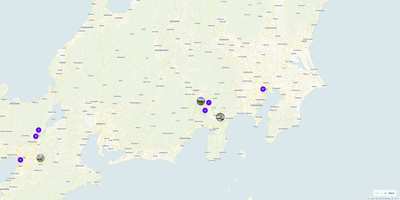
Plan multi-day expeditions, map custom waypoints, and coordinate shared group travel itineraries with TRIP, a private self-hosted journey management platform free from commercial tracking. Travelers can drop custom pins across global topographic or satellite maps, tagging locations with categories, visit durations, cost estimates, accessibility notes, and pet-friendly attributes. The visual trip builder organizes individual stops into ordered daily schedules, helping you calculate travel intervals and rearrange destination sequences using intuitive drag-and-drop tools. You can attach reference photos, booking confirmations, external links, and packing checklists directly to each itinerary milestone. Shared workspace controls enable travel companions to collaborate on upcoming road trips, leave comments on specific attractions, and coordinate shared responsibilities in real time. Dynamic filtering lets you isolate culinary destinations, outdoor hikes, or cultural landmarks by budget and travel style. Offline caching ensures your navigational routes and saved coordinates remain accessible in remote backcountry areas with spotty cellular coverage. Running on a dedicated VPS on RepoCloud with guaranteed CPU, RAM, and SSD, full root SSH access, and a browser serial console. MIT licensed.

PeerTube
The fediverse's answer to YouTube comes from French non-profit Framasoft: PeerTube is a TypeScript/Angular video platform where hundreds of independently operated instances federate over ActivityPub into one network. Videos you publish are discoverable across the whole video fediverse, and viewers can follow your channels from Mastodon or any ActivityPub platform - or plain RSS - without needing an account on your instance. The namesake innovation attacks video hosting's core cost problem: alongside HLS delivery, an optional WebRTC-based P2P layer lets concurrent viewers' browsers share video segments with each other, so a video going viral distributes its own bandwidth demand instead of crushing your server; instance redundancy extends this by letting friendly instances cache each other's videos. Livestreaming is first-class - stream via OBS or any RTMP software, host permanent streams, enable replays, and interact through live chat. Creators get channels, playlists, analytics, built-in video editing (trim, watermark), and an embeddable player for any website. There are no ads, no data mining, and no recommendation algorithm engineered for watch-time - the project's explicit design stance. Admins control federation policy, P2P settings, and theming; a plugin system extends the rest. AGPL-licensed, 300+ contributors, in active development since 2015.
Posta
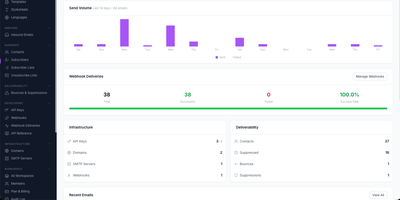
Built as a developer-first alternative to SendGrid, Mailgun, and Postmark, Posta delivers a complete self-hosted email infrastructure platform handling both outbound delivery and inbound reception through a single HTTP API with official SDKs for Go, PHP, and Java. The Go backend processes email through Redis and Asynq with automatic retries, priority queues, and async delivery while PostgreSQL stores templates, contacts, campaigns, and delivery analytics. Outbound features include versioned multi-language templates with variable substitution and stylesheet inlining, bulk campaigns with subscriber targeting and A/B testing per-variant metrics, scheduled timezone-aware delivery with draft/paused/cancelled lifecycle states, email address verification checking syntax, MX records, disposable domains, and role accounts, plus web view links with signed expiring URLs and one-click unsubscribe headers. The built-in SMTP receiver with TLS handles inbound email at your domains, parses messages and attachments, scores spam, and forwards structured payloads to your application via HMAC-verified webhooks with real-time SSE notification streams. The Vue-based dashboard manages templates, SMTP server pools, domains, contacts, API keys, campaigns, and email logs with dark and light mode support while admin-level platform metrics expose delivery rate trends, bounce rate graphs, and latency percentiles alongside Prometheus integration and daily health reports. Deploy via Docker with PostgreSQL and Redis. Running on a dedicated VPS on RepoCloud with guaranteed CPU, RAM, and SSD, full root SSH access, and a browser serial console. Apache 2.0 licensed.
Wiki.js
Team and product documentation on a fast Vue frontend with PostgreSQL storage: Wiki.js is a Node.js wiki engine. Its distinguishing trait is per-page editor choice: authors pick Markdown with live preview, a WYSIWYG visual builder for non-technical writers, or raw HTML, page by page. Native Git synchronization commits every page change to GitHub, GitLab, Bitbucket, Azure DevOps, or any Git remote - bi-directionally, so edits made in the repository flow back into the wiki - giving documentation version-controlled backup for free. Authentication coverage is among the broadest of any self-hosted wiki: local accounts with self-registration, social login via Google, GitHub, Discord, and Slack, and enterprise SSO through LDAP/Active Directory, SAML, CAS, Auth0, Okta, Azure AD, Keycloak, and generic OAuth2/OIDC, with optional MFA. Built-in full-text search runs on PostgreSQL with zero setup, and external engines like Algolia or Solr can substitute. Page history with visual version comparison, granular group-based permissions per path, nested navigation menus, 50+ integration modules, and full localization round it out. AGPLv3-licensed with a 28k-star community.