Bknd
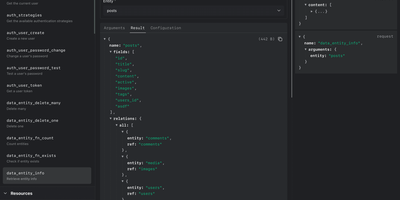
For developers who want a complete visual backend without stitching together separate database, auth, and storage services, Bknd delivers an all-in-one self-hosted Backend-as-a-Service platform with a built-in administrative dashboard. Data schemas evolve visually. Authentication strategies plug in cleanly. Media uploads route straight to object storage. Inside the interactive Admin UI, you can create relational entities, define field validation rules, inspect records, and test generated REST and OpenAPI endpoints on the fly. User management comes ready out of the box with configurable password and OAuth authentication flows, role-based access permissions, and row-level security policies for multi-tenant SaaS products. A unified media manager connects local filesystems, S3 buckets, Cloudflare R2, MinIO, or Cloudinary so applications can handle user avatars, document attachments, and galleries without custom upload pipelines. Visual workflow automation lets you chain triggers, HTTP tasks, and data mutations into repeatable backend flows, while an integrated Model Context Protocol server allows AI agents to query and manage application state directly. You can operate entirely through the visual dashboard, lock down production schemas in code-only or hybrid modes, and connect frontend interfaces using pre-configured login and upload elements. Running on a dedicated VPS on RepoCloud with guaranteed CPU, RAM, and SSD, full root SSH access, and a browser serial console. Apache-2.0 licensed.

Quackback
Quackback unifies customer feedback boards, feature voting, public roadmaps, release changelogs, help centers, status pages, and a multi-channel support inbox into a single self-hosted workspace that replaces Canny, Productboard, and Intercom. Product teams use its branded boards to collect feature requests and bug reports, merge duplicate submissions, and rank demand by user votes or customer segments. When a request moves into development, two-way integrations with Linear, GitHub, and Jira automatically update the card across customizable Kanban status columns or quarterly timeline views on your public roadmap. Support agents work out of a shared inbox that brings real-time Messenger web chat, inbound email threads, and durable support tickets together under one roof, complete with SLA timers, office hours, saved macros, and CSAT surveys. Conversations that uncover a feature gap convert directly into votes on existing feedback posts without losing thread context. Quinn, the built-in AI assistant, answers common questions from your Help Center articles, drafts agent replies, and exposes a Model Context Protocol server so external AI tools can triage posts or manage tickets. Once features ship, publishing a scheduled changelog entry automatically notifies every voter via email and in-app alerts. Running on a dedicated VPS on RepoCloud with guaranteed CPU, RAM, and SSD, full root SSH access, and a browser serial console. AGPL-3.0 licensed.
Maintainerr
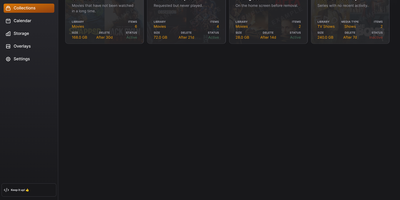
Automating media server storage reclamation, Maintainerr is an open-source library maintenance platform that identifies unwatched, abandoned, or stale movies and shows across Plex, Jellyfin, and Emby and clears them on a schedule. Storage drives fill up rapidly when household members request four-season series or high-bitrate films, watch a single episode, and abandon the rest indefinitely. Instead of forcing administrators to audit disks by hand, the rule engine evaluates metadata from your media server alongside Tautulli watch histories, Seerr and Ombi request records, and Radarr, Sonarr, or Sportarr profiles every eight hours. Matching items enter a staging collection that syncs back to your media server home screen as a Leaving Soon row, complete with dynamic poster overlays displaying the exact removal date so viewers have a grace period to finish watching. Before enabling any destructive workflow, you can run the Test Media inspector against any movie or episode to preview rule evaluations and protect favorites with global or per-collection exclusions. Once the countdown expires, the collection handler deletes or unmonitors files, updates import-list exclusions so automated lists never re-download removed titles, clears orphaned requests in Seerr and Ombi, removes leftover sidecar folders, and dispatches alerts through Discord, Slack, Telegram, Pushover, Gotify, Email, or webhooks. Running on a dedicated VPS on RepoCloud with guaranteed CPU, RAM, and SSD, full root SSH access, and a browser serial console. MIT licensed.

BookLogr
For avid readers who want to catalog their home bookshelves and track annual reading progress without handing personal habits to commercial social networks, BookLogr delivers a self-hosted personal library and reading tracker that replaces Goodreads and The StoryGraph. Searching by title, ISBN-10, or ISBN-13 pulls book covers, author names, page counts, and descriptions directly from OpenLibrary, while manual entry and user-defined custom fields let you record text, numbers, dates, selections, or boolean attributes for rare and indie editions. Configurable library tabs organize titles across Reading, To Be Read, Already Read, Did Not Finish, and All views with instant author filtering. As you read, you can update your current page number or completion percentage, log start and finish dates across multiple re-reads, and rate completed books on a granular 0.5 to 5.0 star scale. Readers can capture page-linked notes and favorite quotes, keeping reflections private or publishing them to a dedicated Notes and Quotes feed on a shareable public profile. Automated Mastodon integration posts reading milestones to the fediverse, while OpenID Connect single sign-on and single-user mode adapt the workspace for households or solo collectors. Built-in Goodreads CSV import and one-click exports to CSV, JSON, and HTML guarantee complete data portability. Running on a dedicated VPS on RepoCloud with guaranteed CPU, RAM, and SSD, full root SSH access, and a browser serial console. Apache-2.0 licensed.
OpenCloud
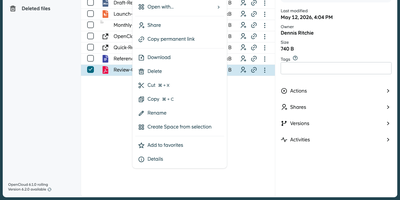
Organizations seeking complete data sovereignty over their documents, spreadsheets, and shared project folders can deploy OpenCloud as a self-hosted workspace for file sync, sharing, and real-time collaboration across web, desktop, iOS, and Android clients. Teams organize departmental assets inside dedicated Spaces where files belong to the project rather than individual user accounts, ensuring continuity when personnel change and enabling delegated space managers to assign granular read, edit, or upload permissions. Through built-in WOPI integration with Collabora Online, multiple colleagues can co-edit Microsoft Office and OpenDocument files simultaneously in the browser with automatic conflict locking and version history recovery. External partners and clients can access files via password-protected public links with custom expiration dates or upload deliverables into write-only File Drop folders without seeing existing directory contents. Cross-organization collaboration works seamlessly over the Open Cloud Mesh federation protocol, while full-text and tag-based search locates documents across personal and shared drives in seconds. Client devices synchronize changes in real time with support for virtual files on demand, resumable chunked uploads, and offline mobile access with camera document scanning. Running on a dedicated VPS on RepoCloud with guaranteed CPU, RAM, and SSD, full root SSH access, and a browser serial console. Apache-2.0 licensed.

Gameyfin
Transform folders of DRM-free PC installers and retro game archives into a browsable, cover-art-rich digital storefront with Gameyfin, a self-hosted video game library server for LAN parties, homelabs, and family networks. Point the server at your mounted storage directories and its automated scanner indexes game archives, executables, and multi-part installers while showing real-time progress and estimated completion times. Bundled metadata plugins pull game synopses, release dates, developer credits, screenshots, and high-resolution box art from IGDB, Steam, and SteamGridDB according to your configured provider priority. Players can browse collections by genre or platform, inspect detailed game pages, and download installers directly through their web browser or via a built-in BitTorrent tracker and seeding client that distributes bandwidth across LAN participants. Administrators can manage multiple isolated libraries, trigger quick or full folder scans, customize UI themes including colorblind-accessible palettes, and enforce single sign-on via OAuth2 and OpenID Connect identity providers. Every cover image and metadata record is cached locally on disk so offline LAN events keep full browsing and download functionality without internet access. Built-in Prometheus actuator endpoints expose library and runtime metrics for infrastructure monitoring dashboards. Running on a dedicated VPS on RepoCloud with guaranteed CPU, RAM, and SSD, full root SSH access, and a browser serial console. AGPL-3.0 licensed.
Cronmaster
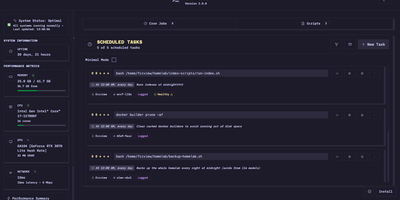
Silent background task failures and scattered crontab files across Linux hosts make routine maintenance risky, which Cronmaster solves with a visual scheduling dashboard and live execution log viewer. Five-field cron expressions translate automatically into plain English alongside one-click schedule presets. Operators can create, comment, clone, pause, or delete scheduled jobs across single or multiple Linux users in seconds. A built-in script manager lets you write, duplicate, and organize reusable Bash scripts from starter templates right inside the browser. Turning on per-job execution logging wraps commands automatically to record standard output, standard error, start and finish timestamps, duration, and exit codes. Log retention policies keep disk usage bounded automatically. Long-running tasks stream their console output live over Server-Sent Events, and any job can be triggered on demand with a single click. Across the top of the workspace, real-time hardware telemetry cards report system uptime, CPU load, memory consumption, network throughput, and GPU utilization. Administrators can protect the interface with local password authentication, OpenID Connect single sign-on with group and role rules, or Bearer API keys for the full REST API. Running on a dedicated VPS on RepoCloud with guaranteed CPU, RAM, and SSD, full root SSH access, and a browser serial console. AGPL-3.0 licensed.
Safebucket
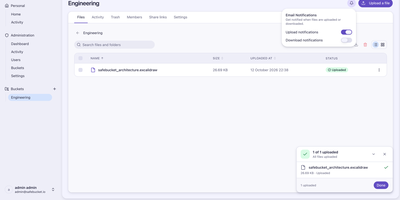
By routing file transfers directly between client browsers and S3-compatible object storage through time-limited presigned URLs, Safebucket enables organizations to share large files and folders without bottlenecking their application server. Teams organize documents into logical buckets with nested folder hierarchies, preview images, videos, audio tracks, and PDFs inside a sandboxed browser viewer, or bundle up to one hundred selected items into a single client-side ZIP download. Public Quick Share links let external recipients download files or entire folders from a browser or via command-line curl redirects, while Reverse Share turns any shared folder into a secure dropbox where guests can upload files back under size and count quotas. Every shared link supports optional password protection, expiration dates, and maximum view limits, complemented by per-file expiration timers and a soft-delete trash bin with configurable retention. Two-tier role-based access control pairs platform roles (Admin, User, and Guest) with bucket-level permissions (Owner, Contributor, and Viewer), allowing teams to invite external collaborators via challenge-verified email links. Authentication integrates with OpenID Connect identity providers and LDAP or Active Directory servers alongside TOTP multi-factor authentication. Administrators gain a four-view governance console covering platform storage metrics, user and bucket inventories, and searchable audit trails filtered by action, user, and date range. Running on a dedicated VPS on RepoCloud with guaranteed CPU, RAM, and SSD, full root SSH access, and a browser serial console. Apache-2.0 licensed.

Surmai
When a family vacation or group expedition spans multiple airlines, hotels, rental cars, and currencies, Surmai brings every reservation and shared cost into one collaborative travel planner. Each trip breaks down into dedicated sections for transportation legs, lodging stays, daily activities, and travel notes. Confirmation codes, terminal numbers, departure times, and street addresses stay right where everyone in your party can find them. Built-in airport, city, and airline directories auto-complete flight routes in seconds, or you can forward booking confirmation emails directly into an active trip for automatic parsing. The chronological itinerary view then weaves flights, hotel check-ins, and excursions into a clean day-by-day timeline so your group can spot layover gaps immediately. Boarding passes, train tickets, and PDF vouchers live inside a central attachment vault. Installing the Progressive Web App caches your entire itinerary and travel documents on your phone for offline viewing at airport gates or remote trailheads. A built-in expense ledger logs shared purchases across multiple currencies so nobody has to guess who paid for dinner. Administrators can invite fellow travelers over SMTP email, enable OAuth2 or OpenID Connect login with Authentik, Keycloak, Google, or Microsoft, and replicate backups continuously to S3-compatible object storage. Running on a dedicated VPS on RepoCloud with guaranteed CPU, RAM, and SSD, full root SSH access, and a browser serial console. MIT licensed.
TeamMapper
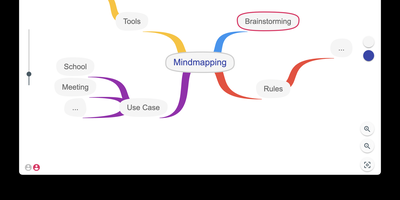
Turning chaotic group brainstorming sessions into structured visual diagrams, TeamMapper provides a real-time collaborative mind mapping workspace that teams and classrooms can join instantly without creating user accounts. Workshop facilitators, teachers, and product squads start from a central root topic and branch outward into hierarchical radial trees, using keyboard shortcuts and full undo-redo history to capture ideas at the speed of conversation. Every node can be styled with custom branch and background colors, adjustable font weights and sizes, external reference links, uploaded raster images, and visual pictograms from the ARASAAC library to reinforce memory and visual association. Sharing a live session takes a single click: hosts distribute either a view-only link, a full modification invite URL, or a scannable QR code so remote colleagues and students in the same room can edit branches simultaneously. When enabled by the administrator, an integrated AI assistant can automatically generate initial mind map branches and subtopics from a text prompt to jump-start planning sessions. Completed maps export cleanly to JSON, Mermaid diagram syntax, scalable SVG vectors, high-resolution PNG images, or printable PDF documents, and existing JSON maps can be re-imported at any time for follow-up workshops. Built-in privacy controls automatically purge inactive mind maps and orphaned image attachments after a configurable retention window, simplifying GDPR compliance for schools and enterprises. Running on a dedicated VPS on RepoCloud with guaranteed CPU, RAM, and SSD, full root SSH access, and a browser serial console. MIT licensed.
VoucherVault
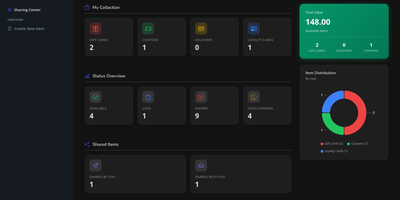
Stop losing money to forgotten paper gift cards and expired retail coupons by centralizing every voucher, loyalty barcode, and store credit inside VoucherVault, a self-hosted digital wallet accessible from any browser or mobile device. Point your phone camera at physical cards during item creation to scan 1D barcodes and 2D QR codes with automatic format detection, or upload original PDF receipts and image attachments directly to each entry. At the checkout register, pull up high-contrast QR codes and scannable barcodes instantly, even inside underground stores without cellular reception thanks to the manual 48-hour offline caching mode. Gift card balances update automatically as you log individual partial redemptions in the per-item transaction ledger. Configurable Apprise notification rules alert you 30 days and 7 days before any voucher expires across Telegram, Discord, Gotify, Ntfy, or email. Households and teams can share specific cards between accounts while keeping personal items private, and administrators can enable OpenID Connect single sign-on for frictionless login. Multi-currency conversion automatically calculates portfolio totals across international vouchers. A built-in REST API endpoint even exposes live portfolio counts and value statistics directly to Home Assistant dashboards. Running on a dedicated VPS on RepoCloud with guaranteed CPU, RAM, and SSD, full root SSH access, and a browser serial console. GPL-3.0 licensed.
Budget Board
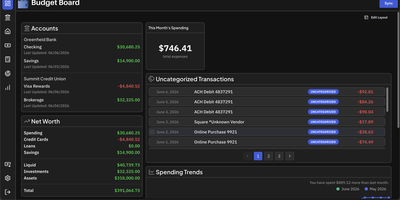
Budget Board is an open-source personal finance dashboard built to replace Mint by unifying checking accounts, credit cards, property assets, monthly category budgets, and long-term savings goals under your own roof. Households can connect their financial institutions through SimpleFIN for North American banks or LunchFlow for international accounts so balances and daily transactions sync automatically on a configurable schedule. If you prefer offline statement management, the bulk CSV importer parses custom date and amount formats while mapping rows directly to your accounts. Once transactions arrive, you can train the built-in machine learning auto-categorizer on your historical spending with a customizable confidence threshold, or define deterministic rules that match merchant descriptions, dates, and amounts. Monthly budget cards track hierarchical parent and child categories against spending limits, and the goals workspace calculates progress toward paying down debt or building an emergency fund. Interactive trends charts let you filter cash flow, net worth, and category breakdowns across custom date ranges and accounts. Multi-user households can secure their financial records with local two-factor authentication or external OpenID Connect single sign-on, alongside localized date and currency formatting in English, German, French, and Simplified Chinese. Running on a dedicated VPS on RepoCloud with guaranteed CPU, RAM, and SSD, full root SSH access, and a browser serial console. AGPL-3.0 licensed.
Marmot
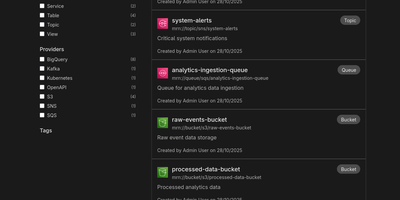
Cataloging tables, topics, queues, and APIs across fragmented data stacks usually demands heavyweight enterprise governance suites, yet Marmot delivers fast full-text asset discovery and AI-ready metadata context in a single self-hosted service. Data engineering and platform teams use its 71 official plugins to automatically ingest schemas, run histories, and dependencies from Apache Kafka, Airflow, Iceberg, Superset, PostgreSQL, BigQuery, and AsyncAPI specifications without moving raw table rows or message payloads. From the web interface, analysts can run structured boolean queries, filter assets by custom tags or PII classifications, and inspect column-level schemas in seconds. Interactive upstream and downstream lineage graphs let engineers trace how events flow from message brokers into warehouse tables and BI dashboards so they can assess what breaks before renaming a column or deprecating an endpoint. Shared business glossaries, bidirectional ownership assignments, and curated data product bundles ensure every department speaks the same language and knows exactly which team maintains each pipeline. Through the built-in Model Context Protocol server, AI assistants in Cursor, Claude Desktop, and LibreChat can invoke tools like discover_data, find_ownership, and lookup_term to answer natural-language questions against live catalog metadata instead of guessing. Platform administrators can also manage catalog resources declaratively using the REST API, CLI, Terraform provider, or Pulumi integration. Running on a dedicated VPS on RepoCloud with guaranteed CPU, RAM, and SSD, full root SSH access, and a browser serial console. MIT licensed.
Quantum
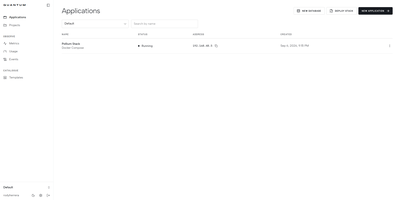
From a bare Linux server, Quantum builds and runs GitHub repositories, multi-service Docker Compose stacks, and managed databases through a self-hosted PaaS dashboard with automated webhook deployments and live container telemetry. Connect a GitHub account, pick a branch, and let the build engine compile from a Dockerfile or custom install, build, and start commands on every git push or release tag. Multi-service Compose files can be pulled from a repository or pasted into the editor, with automatic `${VAR}` placeholder detection and isolated internal networks so containers communicate by service name. Provision PostgreSQL, MySQL, MariaDB, MongoDB, and Redis instances with one-click backups, or deploy pre-configured templates for n8n, Directus, WordPress, Uptime Kuma, and Ollama. Live log streams, an interactive browser terminal, `.env` secret management, persistent volume mounts, and private registry credentials come built into every service view. Need to patch a file quickly? Clicking Open in VS Code launches a sidecar `code-server` instance mounted directly to the container filesystem. Organization and project roles enforce granular access while real-time CPU, memory, and network charts track health across 15-minute to 24-hour windows. Running on a dedicated VPS on RepoCloud with guaranteed CPU, RAM, and SSD, full root SSH access, and a browser serial console. MIT licensed.
Bytedesk
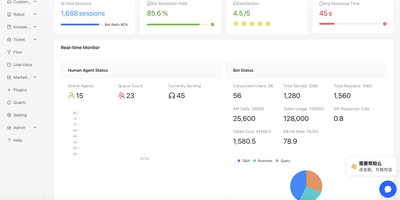
Support teams handling website live chat, email queues, and social messaging channels gain a unified, AI-assisted helpdesk in Bytedesk. Incoming conversations from web widgets, mobile SDKs, WhatsApp, WeChat, and email flow into a single agent workbench equipped with skill-group routing, VIP priority rules, and automatic human handoff. Customer-facing AI agents connect to Ollama, DeepSeek, OpenAI, Qwen, and Zhipu models to answer recurring inquiries using retrieval-augmented generation (RAG) over internal knowledge bases and FAQ libraries, complete with function calling and Model Context Protocol (MCP) tool execution. Complex escalations convert into SLA-tracked tickets with custom approval workflows, or transition directly into browser-based WebRTC video calls, screen sharing sessions, and FreeSwitch voice call center queues. Supervisors track real-time queue depth, bot resolution rates, token usage, automated AI quality scores, and customer satisfaction surveys from the analytics dashboard. Native client SDKs for Web, iOS, Android, Flutter, UniApp, WordPress, and WooCommerce make embedding customizable chat widgets straightforward across any storefront. Running on a dedicated VPS on RepoCloud with guaranteed CPU, RAM, and SSD, full root SSH access, and a browser serial console. AGPL-3.0 licensed.
Pastefy
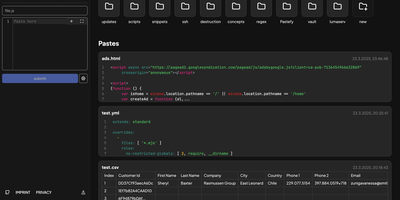
Pastefy gives developers a self-hosted pastebin and GitHub Gist workspace where multi-file code snippets, Mermaid architecture diagrams, and terminal recordings can be shared in a single click or cURL command. Its multi-tab editor highlights syntax across more than 200 programming languages so you can bundle scripts, configuration files, and documentation inside one URL. Markdown notes render cleanly. SVG graphics, CSV tables, GeoJSON maps, unified diffs, calendar events, regex testers, and Asciinema `.cast` terminal sessions all preview interactively in the browser. Sensitive snippets stay locked behind client-side AES password encryption, automatic expiration timers, and public, unlisted, or private visibility controls. Authenticated users organize pastes into nested folders, fork community snippets, generate QR codes or styled code screenshots, and embed interactive viewers into external docs. Command-line users pipe output directly via `curl -F [email protected]`, manage pastes from VS Code or Raycast extensions, and automate workflows through the REST API v2 with official JavaScript, Java, and Go SDKs. Single sign-on supports GitHub, Google, Discord, Twitch, and custom OpenID Connect providers. Running on a dedicated VPS on RepoCloud with guaranteed CPU, RAM, and SSD, full root SSH access, and a browser serial console. MIT licensed.
FeatBit
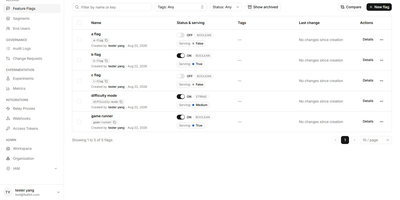
Engineering and product teams ship code to production daily with FeatBit, an enterprise feature flag and experimentation platform that controls exactly which user segments, regions, or percentage rollouts see each new capability. When a regression appears in production, operators toggle an instant kill switch, dial back canary weights from full traffic to one percent, or restrict access to internal QA accounts without redeploying containers. Reusable user segments group customers by subscription tier, device property, or custom attributes for consistent targeting across environments. Server-side and client-side SDKs for .NET, Java, Go, Python, Node.js, React, React Native, JavaScript, and OpenFeature synchronize flag states over WebSockets in under 100 milliseconds and evaluate rules locally in memory. Built-in A/B/n experimentation links flag variations to custom conversion events, click tracking, and pageview metrics so teams can validate product hypotheses with live telemetry. Scheduled rollouts, multi-step approval workflows, flag triggers, and webhook integrations with Slack, Datadog, Grafana, New Relic, and OpenTelemetry keep release operations auditable. Role-based access control and single sign-on govern every flag change. Running on a dedicated VPS on RepoCloud with guaranteed CPU, RAM, and SSD, full root SSH access, and a browser serial console. MIT licensed.
Part-DB
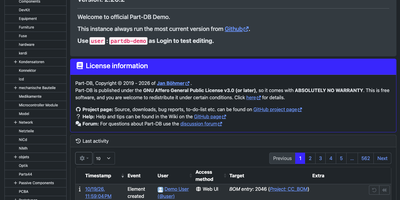
Across electronics labs, hardware startups, and university makerspaces, Part-DB indexes thousands of resistors, microcontrollers, and SMD reels with datasheets, storage locations, and live supplier pricing. Each component record tracks categories, footprints, manufacturers, multi-currency order histories, electrical tolerances, and custom tags for instant parametric search. New shipments populate part attributes, product photos, and PDF datasheets directly from Octopart, DigiKey, Mouser, Farnell, LCSC, or TME, alongside AI-assisted extraction from uploaded datasheets. Print custom barcode labels on demand. Scan internal IDs, GTIN codes, or distributor DataMatrix labels with a webcam or USB scanner to jump straight to any bin. Hardware engineers import KiCad bills of materials into project workspaces to calculate buildable board quantities and deduct stock in one step. Schematic designers can even connect Part-DB as a native KiCad 8 HTTP library source to place verified lab components with pre-linked footprints directly inside their EDA editor. Fine-grained group permissions, SAML single sign-on, WebAuthn two-factor authentication, and a versioned audit log with rollback protect shared inventories. Running on a dedicated VPS on RepoCloud with guaranteed CPU, RAM, and SSD, full root SSH access, and a browser serial console. AGPL-3.0 licensed.