Retinue
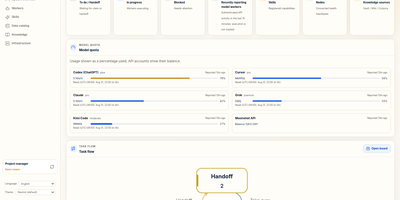
Retinue shows who is doing what across a fleet of AI agents, on a shared board where every task is a card with exactly one holder, a written acceptance check, and a receipt chain that cannot be rewritten. Operators publish cards, agents claim them through MCP or a token-scoped HTTP API, report progress, and hand off, and an agent that is not the holder gets a refusal when it tries to write. The Home dashboard counts what is waiting, running, and blocked, charts task flow and dispatch, and shows quota gauges for Claude, Codex, Cursor, Grok, and Kimi subscriptions. A collaboration workspace draws delegation graphs, device and model timelines, module contributions, and message conversations for any selected task. Operations pages report token usage by worker, and a data health page flags stale reports and duplicate identities. Read-only importers pull session data from Claude Code and Codex, and optional Lark, Feishu, and Telegram bridges turn chat messages into intents. The interface switches between English and Simplified Chinese. Running on a dedicated VPS on RepoCloud with guaranteed CPU, RAM, and SSD, full root SSH access, and a browser serial console. AGPL-3.0 licensed.

ShopClass
Running a niche marketplace should not mean renting listings from a platform that owns your audience; ShopClass lets you launch your own classifieds site, job board, property portal, or local marketplace. Sellers post listings with photos organized by categories and hierarchical locations, and each category carries its own custom fields, so vehicles ask for make, model, and mileage while jobs ask for salary and type and homes ask for rooms and area. Visitors search and filter across everything with SEO-friendly URLs, registered users manage their own listings, and moderation tools keep spam and abuse under control. You can charge for the privilege through paid plans and listing upgrades such as fees, premium placement, bumps, and highlights, turning the site into a business rather than a hobby. Static pages with a built-in editor cover the rest of the site, themes reshape the frontend, plugins extend it through the established Osclass extension API, and multi-language support serves audiences in their own language. Photos live on disk or S3-compatible storage, cleanup tools purge expired and blocked content, and a one-click updater pulls new releases when you are ready. Running on a dedicated VPS on RepoCloud with guaranteed CPU, RAM, and SSD, full root SSH access, and a browser serial console. GPL-3.0 licensed.
OpenTranscribe
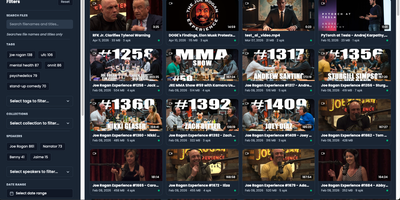
OpenTranscribe is a self-hosted transcription platform that converts your audio and video library into searchable, speaker-labeled transcripts, then lets you summarize and chat with those recordings. Upload files up to 15 GB, record from the browser microphone, or paste a link from YouTube and a thousand other sites, and playlists queue up for batch processing automatically. WhisperX produces word-level timestamps in over 100 languages, while the diarization engine works out who spoke when, corrects turn boundaries, and recognizes the same voice again across different recordings. Speaker profiles accumulate a voice fingerprint, speaking-time analytics, and merged identities, so a regular guest is named correctly in every episode without relabeling. Point it at an LLM and recordings gain structured summaries with action items, suggested tags and collections, and a chat interface that answers questions about your transcripts with citations, grouped into projects that pin their source recordings and standing instructions. Leave the model unconfigured and transcription, diarization, full-text and semantic search, and redaction still run entirely on local models. Watch folders, S3 buckets, and network shares import new media on a schedule with three-layer deduplication and automatic stitching of split recordings, and everything exports as subtitles, Word or PDF documents with citeable numbered lines, or Markdown. Running on a dedicated VPS on RepoCloud with guaranteed CPU, RAM, and SSD, full root SSH access, and a browser serial console. AGPL-3.0 licensed.
QVMConsole
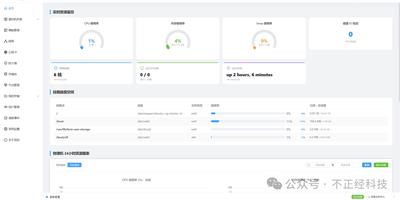
QVMConsole turns a KVM host into a small private cloud where tenants create, clone, snapshot, and console into their own virtual machines from one web panel without ever touching the hypervisor. Create machines from templates, linked clones, or ISO images across x86_64 and ARM hosts with BIOS or UEFI firmware, multiple disks, and multiple network cards, then manage power, reinstalls, imports, and exports from the same console. Each tenant receives an isolated VPC built on Open vSwitch with its own logical switch, VLAN, DHCP, NAT, and access control, plus cloud-style security groups, port forwarding with health checks, bandwidth limits, and monthly traffic quotas. Storage pools span host disks and LVM volumes, VM disks migrate between pools online, and snapshots carry their own quotas with restore and UEFI safeguards. Open any machine in the browser through the noVNC console, complete with shortcut keys and one-click password paste, and follow long operations in an asynchronous task center that streams progress live. Administrators enforce two-factor authentication, confirm sensitive actions a second time, and cap every tenant by CPU, memory, disk, VM count, public IPs, and runtime hours through fine-grained quotas or a lightweight cloud mode. Running on a dedicated VPS on RepoCloud with guaranteed CPU, RAM, and SSD, full root SSH access, and a browser serial console. Apache-2.0 licensed.

RocketplaneIO
RocketplaneIO is a self-hosted AI SRE platform that gives Kubernetes clusters zero-instrumentation eBPF observability plus a copilot capable of safely diagnosing and fixing issues without your telemetry ever leaving your infrastructure. Point it at any cluster, and an eBPF DaemonSet starts capturing HTTP, gRPC, SQL, Redis, and Kafka spans across every service, including compiled binaries, with cross-service context propagation and no code changes required. The live service map draws itself from actual network traffic, matching technology logos from container images and coloring each node's health from RED metrics. Every log line sits two clicks from its parent distributed trace, and a PromQL query engine, embedded from the real Prometheus evaluator, runs over ClickHouse for long-term metric retention. The complete Kubernetes inventory (Services, Ingress, ConfigMaps, network policies, persistent volumes, CRDs) syncs continuously and is searchable alongside traces and logs. When the copilot identifies a problem, it picks from a catalog of roughly 30 risk-classified safe actions; each action verifies its preconditions, captures a before-state snapshot, executes, checks the result, and rolls back automatically on failure. Disruptive operations pause for explicit human approval before proceeding. An MCP endpoint exposes the identical guardrailed toolbox to external AI agents, so Claude Code or Cursor can operate the cluster through the same safety boundary the browser copilot uses. Complex remediations compose as searchable, forkable Starlark workflows that compile deterministically at save. Running on a dedicated VPS on RepoCloud with guaranteed CPU, RAM, and SSD, full root SSH access, and a browser serial console. Apache-2.0 licensed.

Immich Insights
Immich Insights turns the photo library you already keep in Immich into a year-in-review style dashboard of how you actually shoot. Connect it with your own Immich API key and it reads your asset metadata into a local snapshot, without copying your original photos, then builds the overview Immich itself never shows: total photos and videos, storage used, favorites, albums, and your newest additions. Pick any year or a custom date range and see that period's shooting volume, favorites, albums, and devices. Camera statistics break your library down by device and manufacturer, with leaderboards you can correct when the same camera appears under different names. Exposure analysis shows your ISO, focal length, and shutter speed distributions, the focal lengths you reach for most, and how your settings shift by hour of day. Rhythm charts map your shooting by month, weekday, and hour, with a calendar heatmap of your most active days. A zoomable timeline marks the moments that matter: first photo, a new device joining the library, your longest gap, your busiest day ever. People and location views count faces and mapped places by country and continent, and a photography profile scores your habits. Clicking any chart value opens the matching photo thumbnails, and reports export as PDF, CSV, or JPG. Running on a dedicated VPS on RepoCloud with guaranteed CPU, RAM, and SSD, full root SSH access, and a browser serial console. MIT licensed.

TLDR Radio
Every morning, TLDR Radio converts the day's TLDR newsletters into chapterized podcast episodes you listen to instead of read, generated entirely on your own server. Pick a date at the Broadcast Desk, hit Broadcast, and a few minutes later chapterized episodes wait in your browser, one per newsletter with each story as its own track. All fourteen TLDR newsletters can sit on the Desk for manual runs, join the overnight build, or both, and the overnight selection shows an estimated listening time measured from your own episodes. Scheduled builds retry until the day's issue appears and can send an ntfy notification when the audio is ready. The player groups your library by day, shows each chapter with its section heading, source summary, and link to the original, and offers 15-second skips, playback speed up to 2.5x, auto-advance, resume, and keyboard shortcuts. Sponsor segments become their own clearly marked chapters in a different voice, announced out loud so an ad is never mistaken for news, and easy to skip. Sixty-eight voices can be auditioned in Settings, and every episode downloads as a single tagged MP3 with album, title, and author set for podcast and audiobook apps. Running on a dedicated VPS on RepoCloud with guaranteed CPU, RAM, and SSD, full root SSH access, and a browser serial console. MIT licensed.
Shortlist
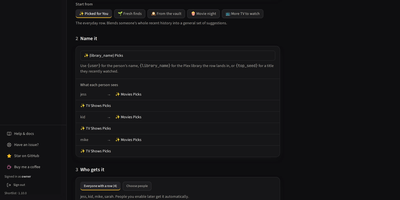
Everyone on your Plex server gets their own private recommendation rows with Shortlist, built from what each person actually watched and visible to nobody else. For each viewer it reads their Plex watch history, picks unwatched titles from your library, and explains every pick with the reason it earned its place. Rows land on Plex Home labelled, hidden from every other account by share filters, and only then promoted, so a row is never visible to the wrong person, not even briefly. Six row kinds, from Picked for You to seasonal picks and personal requests, start from eleven templates instead of a blank form. A seasonal row follows the calendar through Halloween, Christmas, and twenty more ready-made occasions, then hides itself between seasons. Rebuilds run nightly, weekly, or monthly on your cadence, and the dashboard shows what was delivered against what people started and actually finished, per user and per row. Missing a strong pick, Shortlist asks Radarr, Sonarr, or Overseerr for it: the boldest few auto-send nightly, the rest wait for one click in the Requests inbox. No AI key is required; add one and Describe a row turns slow-burn heist films into a themed row filled nightly for each person. Running on a dedicated VPS on RepoCloud with guaranteed CPU, RAM, and SSD, full root SSH access, and a browser serial console. MIT licensed.
YAFFA
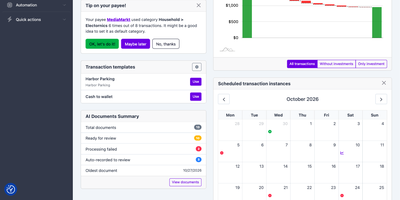
If your money is split across a bank app, a brokerage portal, and a half-abandoned spreadsheet, YAFFA, a self-hosted personal finance application, gathers it into one ledger with budgets, scheduled transactions, and forecasts. Record withdrawals, deposits, and transfers across unlimited accounts, and split a single supermarket receipt across categories so it lands in both Food and Household. Suggestions surface your most-used accounts and payees, and each payee's default category fills in automatically. Define rent, salary, or a loan payment once as a scheduled transaction; it appears on the dashboard calendar, enters with one action or records itself, and feeds the forecast. Import bank history from CSV or QIF files with rules for country- and bank-specific formats, and review every row before it is recorded. Optional AI document processing turns a receipt, invoice, or forwarded email into a draft transaction with payee, date, amount, and line items, using your own OpenAI or Gemini key and self-hosted Tesseract OCR for images. Accounts in different currencies roll up into your default currency using daily rates from the free Frankfurter service. Investments track gain and loss, with optional daily prices from Alpha Vantage. The dashboard summarizes accounts and upcoming schedules, the cash flow report can look ahead with a forecast, and Find Transactions filters history by payee, category, tag, or date. Running on a dedicated VPS on RepoCloud with guaranteed CPU, RAM, and SSD, full root SSH access, and a browser serial console. MIT licensed.
IMPulse
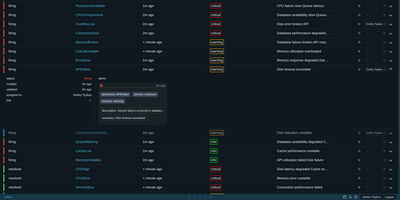
Incident response moves into the chat tool your team already lives in, with every alert landing as a Slack, Mattermost, or Telegram thread that carries a Take It button and a running escalation clock. IMPulse gives each incident a lifecycle that prevents duplicates and reduces noise. Responders take an incident, assign it, or freeze it until tomorrow, next Monday, or later, from the thread or from the web table. Escalation chains, nested as deeply as needed, wait and then notify the next person, and schedules can be edited in the UI or read from Google Calendar. Inhibition rules suppress child incidents when a parent is active, and maintenance windows mute matching alerts during planned work. The web table offers multi-column sorting, Alertmanager-style filters with regex, custom colors, an archive of closed incidents, and a light or dark theme. Sign-in goes through your chat platform, so nobody needs a separate account. Jinja2 templates reshape incident messages, thread replies, and Jira tasks, and webhooks reach Twilio, Zvonok, Instatus, and other outside services. Several instances can run together for high availability, and a REST API with Swagger documentation exposes incidents to scripts. Running on a dedicated VPS on RepoCloud with guaranteed CPU, RAM, and SSD, full root SSH access, and a browser serial console. GPL-3.0 licensed.
Magec
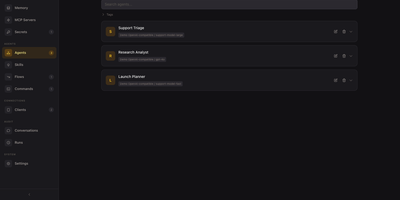
One self-hosted admin console runs a team of AI agents you can reach by voice, chat, webhook, or schedule. Each agent gets its own model backend, system prompt, memory, tools, and voice, with OpenAI, Anthropic, Gemini, Ollama, or any OpenAI-compatible API behind it. A visual flow editor chains agents with routers, joins, loops, parallel fan-out, templates, and small code blocks, so a question can be sorted and answered by the right specialist. Every run is recorded as a step-by-step timeline you can open and read, and conversations are browsable per client. Connect tools through the Model Context Protocol, keep long-term memory in PostgreSQL, and store API keys as secrets that models only ever see as placeholders. Voice runs on the server with wake word detection and speech models, and clients cover a voice web app, Telegram, Discord, Slack, webhooks, and cron jobs. One password-protected console manages every agent, flow, and client. Running on a dedicated VPS on RepoCloud with guaranteed CPU, RAM, and SSD, full root SSH access, and a browser serial console. Apache-2.0 licensed.
Lurker
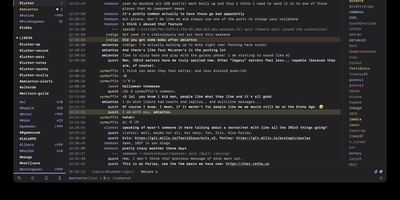
Lurker keeps you present in every IRC channel you care about, holding your connections open around the clock and recording everything said so a retro, searchable web client can hand it all back whenever you return. Invite your friends and each person gets their own set of networks under one roof, while admins decide which networks members may join and which channels newcomers are pointed at. Nothing said while you were away is lost: the full history is searchable by nick, channel or network, and clicking a result jumps straight to that moment, whether it happened an hour or a year ago. The everyday annoyances are handled too, with drafts that follow you between devices, a highlight and ignore system that cuts noise, bookmarks and private notes on users, reactions, replies, and image uploads that are optimized, stripped of metadata and stored on your own disk or S3. If you prefer your old client, the built-in bouncer speaks the soju and ZNC dialects with SASL, network discovery, on-demand scrollback and read markers that stay in sync everywhere, and DCC file transfers with an XDCC queue still work. Optional companion containers generate inline link previews in isolation and keep your IRC connections alive across restarts of the main service. Running on a dedicated VPS on RepoCloud with guaranteed CPU, RAM, and SSD, full root SSH access, and a browser serial console. MPL-2.0 licensed.
Xianyu SaaS
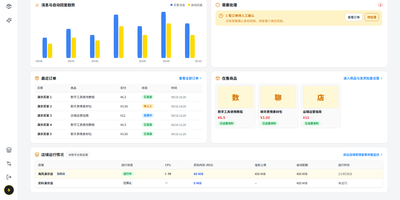
Xianyu SaaS runs all of your Xianyu (Goofish) shops from one self-hosted console, answering buyers with AI, delivering digital goods the moment orders verify, and keeping every store isolated in its own process. Add each shop by scanning a QR code in the Xianyu app, then switch between stores from one header while the overview tracks messages, replies, delivery results, orders, and pending tasks. The AI customer service center lets you pick a service persona, write shop-wide reply requirements in plain language, and maintain a separate knowledge entry for every product, covering audience, specifications, usage, delivery notes, and after-sales wording. Keyword rules answer the repetitive questions first, with product-specific rules outranking store-wide ones, and anything unmatched falls through to the AI with product knowledge and chat history in context. When a buyer pays, the system re-checks the platform order before delivering, drawing card keys one to fifty at a time from named pools, sending netdisk resources, or posting fixed text instructions, with a five-minute sweep catching orders missed while a shop was offline. A conversation workbench lets you search chats, take over from the AI with one click, send up to eight queued images, and jump from any order straight into the buyer's thread. A built-in operations agent manages a shop through chat, updating product knowledge, toggling reply rules, or binding delivery stock on request. Running on a dedicated VPS on RepoCloud with guaranteed CPU, RAM, and SSD, full root SSH access, and a browser serial console. GPL-3.0 licensed.
MATE
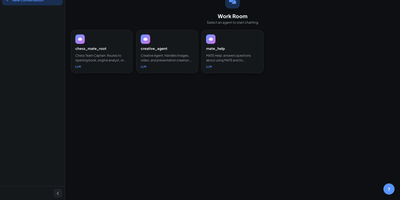
Change an agent's prompt, model, or audience from a dashboard and watch it go live without a single redeploy. MATE opens in a Work Room where any root agent can be picked from a card grid and chatted with directly. The Studio holds the builder: a drag-and-drop canvas draws parent and child agents, attaches tools and MCP servers, and keeps every configuration versioned with one-click rollback. Trace Replay plays a past conversation back across that canvas so each hand-off is visible. A template library imports ready-made agent teams, from research pipelines to support desks. The Control Room covers governance: role-based access per agent, dollar costs per agent and project, budgets that warn or block, guardrails for personal data and prompt injection, and alerts to Slack, Discord, email, or a webhook. Eval suites score replies by exact match, similarity, or an LLM judge, and a Playground compares models or prompts side by side on score, speed, and cost. Agents can be embedded as a chat widget, called through an OpenAI-compatible endpoint, or exposed over MCP and A2A. Agencies running client agents and platform teams juggling dozens of them can manage the lot from one dashboard. Running on a dedicated VPS on RepoCloud with guaranteed CPU, RAM, and SSD, full root SSH access, and a browser serial console. Apache-2.0 licensed.
Snowshare
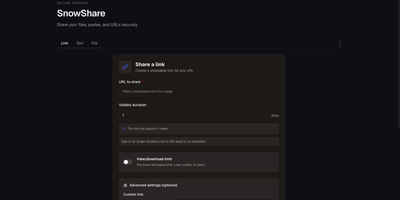
A dropped connection should not restart a 20 GB upload: SnowShare is a self-hosted app for sharing files, links, and pastes, with resumable transfers and an expiry date, a view limit, a password, and a QR code available on every share. Put several files into one share and let recipients preview common formats right in the browser, shorten a long address with an optional custom slug, or publish text and code with syntax highlighting. People you send a link to can open it with or without an account, depending on how you configure the instance. Give your users email and password accounts or OAuth sign-in, turn on email verification and CAPTCHA, and set separate storage quotas for anonymous visitors and registered users. Keep uploads on local disk or move them to S3-compatible storage, apply your own branding, and change quotas, sharing rules, SMTP, and storage from the admin panel without restarting. Automate sharing through the REST API with keys created from your profile, drop the generated ShareX uploader files into your capture tool, and receive signed webhook events when shares are created, opened, or deleted. Read the interface in English, French, Spanish, German, Dutch, or Polish, and let expired shares clean themselves up every hour. Running on a dedicated VPS on RepoCloud with guaranteed CPU, RAM, and SSD, full root SSH access, and a browser serial console. CC0 1.0 licensed.
Exameow
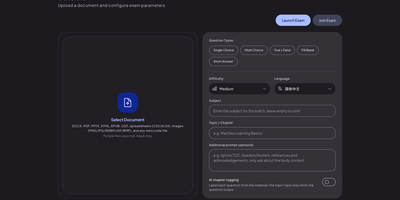
Upload a PDF, a slide deck, or a stack of lecture notes, and Exameow turns the material into exam questions you can actually practice with. The generator reads PDF, DOCX, XLSX, PPTX, EPUB, ODT, TXT, CSV, HTML, and image files, then writes single-choice, multiple-choice, true/false, fill-in-the-blank, and short-answer items through any OpenAI-compatible API you point it at. Counts per type, difficulty, output language, and chapter filters shape each batch, and large documents split automatically with duplicates removed. Practice runs sequentially, shuffled, as a timed mock exam assembled from type quotas, or against your wrong-question list, which clears items after repeated correct answers. Exam mode hides answers for honest attempts; flashcard mode reveals them for review, and AI grades short answers against reference answers with manual regrading available. Teachers publish a bank to the online exam relay and share a six-digit code: students join from any browser, sit a timed session, and get instant scores on objective questions. Question banks import and export as XLSX or CSV with smart column mapping, and practice records stay in your own database. Running on a dedicated VPS on RepoCloud with guaranteed CPU, RAM, and SSD, full root SSH access, and a browser serial console. Apache-2.0 licensed.
Routerly
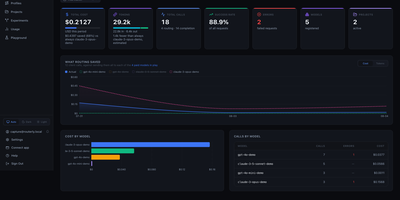
Routerly is the one front door for every AI model your apps use: point your OpenAI or Anthropic client at it, and it chooses the right model for each request, enforces your budget, and keeps the receipts. Nothing in your code changes except the base URL, and from that moment streaming chat completions and messages flow to OpenAI, Anthropic, Gemini, Mistral, Cohere, xAI or your own Ollama models behind a single token. Nine routing policies score every candidate in parallel: cheapest, fastest, healthiest, most capable, biggest context, least rate-limited, fairest, most budget left, and one that asks a small model to judge which model fits the task. When the winner errors or times out, the next candidate takes over automatically, and the recorded routing trace shows exactly why each model won or lost. Guardrails can block or log content that breaks your rules, and phone numbers, card numbers, SSNs, IBANs and emails can be scrubbed out before anything reaches a provider. Every call is logged with tokens, USD cost and latency, and hard limits per model, project and token reject overspending requests before a provider can charge for them. Projects keep separate tokens, model lists and budgets for each team or tool, role-based permissions decide who may change what, and alerts land in Slack, email, webhooks or PagerDuty when budgets or providers misbehave. Running on a dedicated VPS on RepoCloud with guaranteed CPU, RAM, and SSD, full root SSH access, and a browser serial console. AGPL-3.0 licensed.
OpenGTM
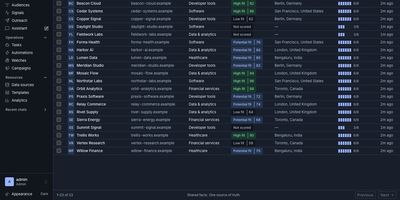
OpenGTM turns a market, a list, or a workbook into enriched, researched, ready-to-contact prospects on servers you control. Give it a market and it sources companies and people; hand it a CSV or a Clay table and it maps the columns into a shared record library. Enrichment columns run as waterfalls that try providers in cost order until a field is filled, and before anything spends a cent you see best and worst case estimates, with a workbook budget ceiling that halts paid calls on its own. Research columns send an agent to answer the hard question for each row, and the answer keeps citations to the pages it actually fetched, so a human can audit the claim before outreach. Live audiences segment your records and watch for hiring and buying signals, refreshing on schedules and firing automations when a prospect heats up. Finished rows flow out to HubSpot, Salesforce, Slack, Sheets, Airtable, Instantly, Smartlead, webhooks, or a warehouse, while every cell keeps a trace of provider attempts, latency, and cost. Your own agents get the same workspace through a REST API, webhooks, and an MCP server with scoped read and write tokens, and a seeded zero-key demo means the team can explore the whole loop before adding a single provider key under Settings. Running on a dedicated VPS on RepoCloud with guaranteed CPU, RAM, and SSD, full root SSH access, and a browser serial console. AGPL-3.0 licensed.