Feishin
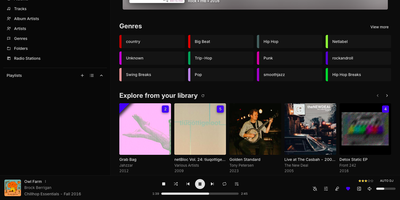
A streaming-style music player for your own Navidrome, Jellyfin, or OpenSubsonic server, on the desktop or in a browser. Home leads with a featured carousel, genre shortcuts, most played, and newly added releases. Browse by album, artist, genre, folder, or radio station. Queue, lyrics, and visualizer panels can each sit in the player sidebar. Japanese lyrics can show furigana and romaji. Star ratings, favorite hearts, and scrobbling to your server come built in. Shape the sound with a parametric equalizer, a compressor, ReplayGain, and optional transcoding. Auto DJ tops up a dwindling queue with songs or whole albums. Navidrome smart playlists get a visual rule editor with match-all or match-any groups. Choose from 32 built-in themes and 39 interface languages. The catch: Feishin is only the player, so the music server stays separate. In a browser it plays through the web player backend, while the desktop app adds MPV and built-in lyrics fetching. Docker environment variables can preset and lock the server, so guests only type a username and password. Running on a dedicated VPS on RepoCloud with guaranteed CPU, RAM, and SSD, full root SSH access, and a browser serial console. GPL-3.0 licensed.
Black Candy
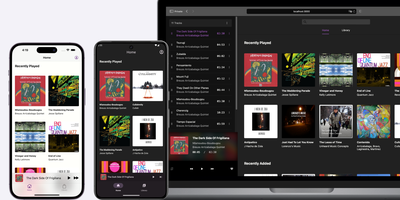
With 4,300+ GitHub stars and native mobile apps on three platforms, Black Candy transforms any VPS into a private Spotify-style streaming service for your personal music collection. The Ruby on Rails 7 backend with Hotwire Turbo and Stimulus delivers a responsive single-page-feeling web player supporting album browsing, artist views, playlists, favorites, and queue management without full page reloads. Point it at a media directory containing MP3, FLAC, OGG, AAC, or WAV files and Black Candy indexes metadata, fetches album artwork from Discogs API, and begins streaming immediately with on-the-fly transcoding that adapts bitrate to client bandwidth. Multi-user support gives each account independent playlists, favorites, and listening history while sharing the same music library — ideal for families or shared households. Native iOS, Android, and F-Droid apps maintained as separate repositories provide offline caching, background playback, and server discovery for mobile listening. The admin panel manages user accounts, configures media paths, and sets Discogs API tokens for automatic cover art retrieval. Deployment requires one Docker command — `docker run -p 80:80 ghcr.io/blackcandy-org/blackcandy:latest` — with persistent storage volumes for the SQLite database and media directory. For larger deployments, switch to PostgreSQL via environment variables with dedicated database URLs for ActionCable, SolidQueue, and SolidCache. Running on a dedicated VPS on RepoCloud with guaranteed CPU, RAM, and SSD, full root SSH access, and a browser serial console. MIT licensed.
Navidrome
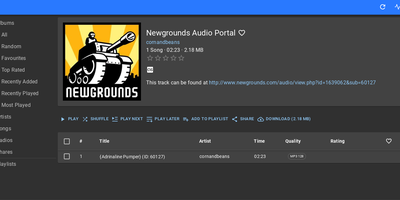
Spotify economics without the subscription or catalog gaps: Navidrome, the reference self-hosted music server, streams your own FLAC, MP3, and ALAC collection from a single Go binary with a React/Material UI web player. Its Subsonic/OpenSubsonic API compatibility is the superpower: 50+ existing clients work out of the box, from Symfonium and DSub on Android to Feishin and Sonixd on desktop, plus Android Auto, CarPlay, and Android TV apps. Transcoding is server-managed and FFmpeg-backed - FLAC direct-plays at home and downsamples to MP3, AAC, or Opus over mobile bandwidth, with the OpenSubsonic transcoding extension letting clients declare capabilities and receive per-track direct-play or transcode decisions automatically. Multi-user support gives every account its own play counts, favorites, ratings, and playlists, and multi-library support scopes different collections to different users. The feature list covers serious listening: Last.fm and ListenBrainz scrobbling, artist bios and images, embedded and external lyrics, audiobook bookmarks, saved play queues that resume on another device, internet radio, jukebox mode, and M3U playlist auto-import kept in sync with your folder. Resource usage is famously low - it runs happily on a Raspberry Pi and scales to six-figure track counts.
Kima
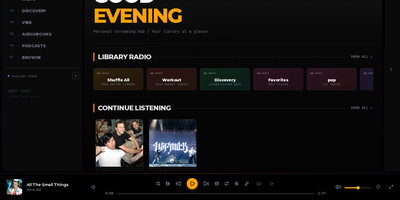
Streaming personal music collections with neural discovery and intelligent playlist curation is what Kima accomplishes as a modern self-hosted audio server that replaces Spotify and Apple Music. Listeners organize their FLAC, MP3, and AAC audio files into responsive grid layouts that scale up to eight columns on ultra-wide displays while automatically fetching album covers, artist biographies, and synchronized line-by-line lyrics. The built-in Vibe System utilizes CLAP neural network audio embeddings to map an entire music collection across two-dimensional clusters and three-dimensional interactive galaxy views, enabling users to explore acoustic relationships or queue smooth sonic paths between distant tracks. Music fans can import playlists directly from Spotify, Deezer, and YouTube using deterministic ISRC matching, while automated Made For You mixes generate era-specific playlists, workout stations, and discovery queues based on individual listening habits. Integrated podcast search pulls subscriptions from iTunes with automatic episode tracking across devices, while native Audiobookshelf connectors synchronize spoken-word chapter positions and playback progress directly into the unified web player. OpenSubsonic API endpoints allow mobile users to stream libraries through native clients like Symfonium and DSub using scoped authentication tokens, while administrators manage multi-user accounts with time-based two-factor authentication. Running on a dedicated VPS on RepoCloud with guaranteed CPU, RAM, and SSD, full root SSH access, and a browser serial console. GPL-3.0 licensed.
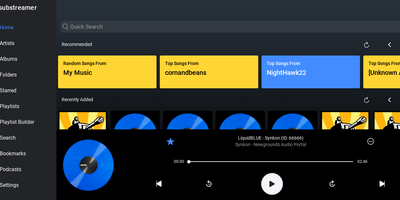
Substreamer
A free, polished web client for Subsonic-compatible music servers: Substreamer is the browser-based frontend you point at your existing streaming backend to play your own library from anywhere. It speaks the Subsonic API (v1.13 and higher), which makes it compatible with the whole ecosystem that has grown around that protocol: the original Subsonic server, its forks Airsonic and Madsonic, and modern implementations like Navidrome and Ampache. That decoupling is the point - your music files, transcoding, and library indexing live on whichever server you prefer, while Substreamer provides the listening experience: browse by artist, album, and genre, build and manage playlists, search your collection, and stream on demand. This RepoCloud deployment runs the containerized web edition, so the same interface is available from any browser without installing a native app, and it pairs with the Substreamer mobile apps that made the client popular. For anyone assembling a self-hosted Spotify replacement - typically Navidrome for the backend plus a good client - Substreamer fills the client half with a clean, familiar player UI. Because it is a stateless client, the container is lightweight and low-maintenance: connect it to your server's URL and credentials, and your entire collection is streaming in minutes, with no subscription and no catalog that can disappear.