LapisLLM
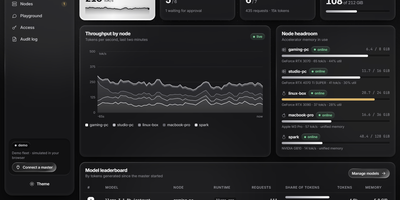
Behind one OpenAI-compatible endpoint, LapisLLM turns the old gaming PC, the work laptop, and the Apple Silicon Mac you already own into a single self-hosted model fleet. A master keeps the registry and routes every request to the right machine, and a small agent on each box runs llama.cpp, vLLM, or MLX and reports its GPU or unified memory. Clients need one base URL and one API key, pick models by name, and see which machine answered in an X-Lapis-Node header. Admission checks free memory minus a reserve before any model starts, first on the master and again on the agent, and a refusal states the numbers. Best-fit placement packs small models onto small machines so the big box stays free, and previews each decision before you commit. New machines stay pending until an admin types the fingerprint printed on that machine, and scoped API keys are shown exactly once. Self-healing brings back the models that should be running after a restart, one at a time per node, while models you stopped stay stopped. Drain a machine out of rotation without clients noticing, export the fleet to JSON without secrets, and scrape Prometheus metrics. The lapis demo command runs a real master with five simulated nodes, so the console can be explored without a GPU. Running on a dedicated VPS on RepoCloud with guaranteed CPU, RAM, and SSD, full root SSH access, and a browser serial console. MIT licensed.
Deploy