Dagger
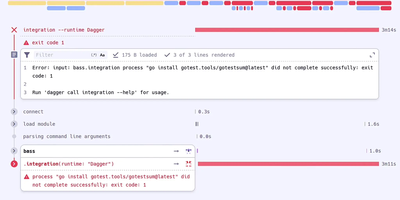
With 16,100 GitHub stars and created by Solomon Hykes (co-founder of Docker), Dagger eliminates proprietary YAML DSLs from CI/CD by letting developers write pipelines as real programs in their preferred language — then executing them identically on a laptop, in GitHub Actions, in GitLab CI, or on any machine with a container runtime. The BuildKit-based Dagger Engine runs every pipeline operation inside OCI containers, constructing a directed acyclic graph where each node is cached by default, parallelized automatically, and produces bit-for-bit reproducible outputs regardless of execution environment. Native SDKs generated from the GraphQL API schema provide Go, Python, TypeScript, PHP, Java, .NET, Elixir, and Rust developers with full type safety, IDE autocomplete, and the ability to unit-test CI pipelines using the same testing frameworks as application code. The module ecosystem enables cross-language composition where a Python team can invoke a Go team's build functions without learning Go, while filesystems, secrets, git repositories, and network tunnels are passed between functions as strongly-typed objects. Pipeline operations cache at container-layer granularity with content-addressed deduplication, and the interactive REPL enables step-by-step pipeline debugging with live container inspection. Host dependencies are explicit and strictly typed, eliminating implicit environment coupling that causes "works on my machine" failures. Running on a dedicated VPS on RepoCloud with guaranteed CPU, RAM, and SSD, full root SSH access, and a browser serial console. Apache 2.0 licensed.
Archon
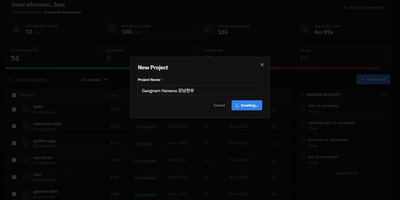
Stop hoping your AI coding assistant remembers to plan before it codes, test after it implements, and review before it ships. Archon wraps Claude Code, OpenAI Codex, and other AI agents inside structured YAML workflows that enforce the same development process every single time. Define your pipeline as a directed acyclic graph of nodes (AI tasks, shell scripts, approval gates, loops) and Archon handles the orchestration: resolving dependencies, running independent nodes in parallel, passing artifacts between steps, and isolating every run in its own git worktree so five bug fixes can proceed simultaneously without conflicts. Ship with 17 pre-built workflows covering everything from "idea to merged PR" to automated conflict resolution, or author your own by committing YAML files to your repository's .archon/workflows/ directory. The web dashboard, launched with archon serve, provides a conversation interface with real-time streaming, a visual drag-and-drop workflow builder for creating DAG pipelines, step-by-step progress monitoring for every run, and a unified sidebar aggregating conversations from CLI, Slack, Telegram, and GitHub into one view. An NLP router parses natural language requests and automatically selects the right workflow. Structured JSON output schemas let you enforce typed responses from AI nodes, with validation and auto-repair for providers that lack native schema support. Every workflow file is version-controlled, portable, and reviewable in pull requests, so your entire team runs identical processes from day one. Running on a dedicated VPS on RepoCloud with guaranteed CPU, RAM, and SSD, full root SSH access, and a browser serial console. MIT licensed.
WoodPecker CI
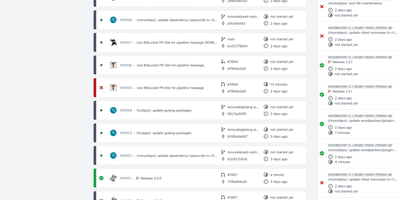
With 7,300+ GitHub stars and active releases through version 3.17, Woodpecker CI is the community-driven fork of Drone CI that kept the entire platform open source under Apache 2.0 — delivering a lightweight, container-native CI/CD engine that runs on minimal resources while providing enterprise-grade pipeline automation. Every pipeline step executes in an isolated Docker container, ensuring reproducible builds with zero host contamination and clean teardown after each run. Define workflows in simple YAML configuration files with step dependencies, conditional execution via when filters, service containers for databases and caches, and matrix builds that test across multiple language versions, platforms, or database engines simultaneously. Deep forge integration connects to GitHub, GitLab, Gitea, Forgejo, and Bitbucket via OAuth and webhooks, triggering pipelines on push, pull request, tag, deployment, and cron events. The plugin ecosystem inherits compatibility with the Drone plugin library — over 100 plugins for Docker builds, S3 uploads, SSH deployment, Slack and Telegram notifications, Helm deployments, and more. The server-agent architecture separates the web UI, API, and scheduler from pipeline execution, enabling horizontal scaling by adding agents across multiple machines or architectures including ARM. Secrets management supports global, organization, and repository-level scopes with approval workflows for forked repository pipelines. The admin web UI provides user management, agent monitoring, and queue control. Docker Compose deployment provisions the complete stack in under five minutes. Running on a dedicated VPS on RepoCloud with guaranteed CPU, RAM, and SSD, full root SSH access, and a browser serial console. Apache 2.0 licensed.