Nebula
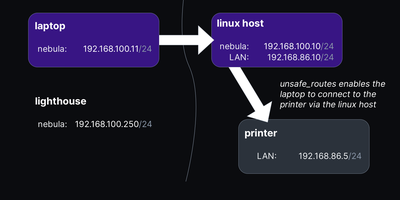
Give every laptop, server, and cloud VM you own one private address that works from anywhere, and that is exactly the overlay network Nebula builds. Each machine runs a single small binary, presents a certificate signed by your own certificate authority, and joins a peer-to-peer layer-3 mesh where tunnels form on demand between hosts that need to talk. Lighthouse nodes, the piece you park on a VPS, keep track of where every peer can be reached and introduce hosts to each other, so machines find each other without any central VPN concentrator carrying their traffic. UDP hole punching and keepalive packets open direct tunnels through home routers and office NAT, and when two hard NATs refuse to cooperate, a relay host forwards the encrypted traffic until a better path appears. Every host enforces its own firewall, default deny on all overlay traffic, with rules keyed to certificate groups, so laptops in the user-endpoint group can reach a server's web port while other groups cannot. Ordinary hosts need no inbound ports at all, and the same binary runs on Linux, macOS, Windows, phones, and FreeBSD, making the mesh feel identical at home, in a datacenter, or across three clouds. Unsafe routes can even pull an existing office subnet into the overlay, giving legacy hardware that will never run Nebula an address on the private network. Running on a dedicated VPS on RepoCloud with guaranteed CPU, RAM, and SSD, full root SSH access, and a browser serial console. MIT licensed.
DefGuard
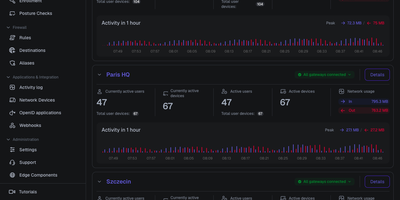
Behind one admin panel, DefGuard runs a WireGuard VPN, an identity provider, and multi-factor authentication, so every person and device proves who they are before reaching your private network. Administrators define VPN locations, assign which users and groups may enter each one, and enforce firewall rules that allow or deny traffic per location, with changes applied to gateways in real time. People enroll remotely through a guided self-service flow, register their own laptops and phones, and connect with desktop and mobile clients that show live connection statistics. Sign-in goes well beyond passwords, because the built-in OpenID Connect provider gives internal tools single sign-on, while TOTP codes, WebAuthn and FIDO2 keys, email tokens, and mobile biometrics gate each connection. Directory teams sync accounts from LDAP and Active Directory, or federate sign-in through Google, Microsoft, and custom OpenID providers, instead of maintaining a separate user list. Every authentication, enrollment, and policy change lands in a searchable activity log, and webhooks plus a REST API let surrounding systems react to access events automatically. Gateways keep enforcing access from a local cache when the control plane is unreachable, and several gateways can front the same location for failover. Running on a dedicated VPS on RepoCloud with guaranteed CPU, RAM, and SSD, full root SSH access, and a browser serial console. AGPL-3.0 licensed.
zrok
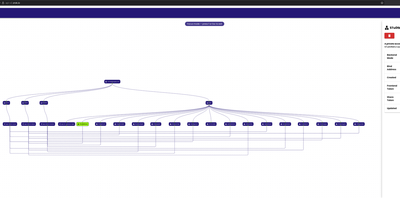
zrok puts services that live behind NAT and firewalls onto the public internet with a shareable URL, without opening a single inbound port. The machine being shared dials out to an OpenZiti overlay network, so a web app on your desk, a Raspberry Pi at home, or a staging box inside a corporate network becomes reachable through your instance while its firewall stays closed. One command shares an HTTP service publicly; add a name from one of your namespaces and the URL stays stable even when you move the backend to a different machine, and an ephemeral name can be promoted to a reserved one when a quick demo turns into a keeper. Private shares skip the public internet entirely and reach only the users you grant, including raw TCP and UDP services, while web and drive backend modes publish static sites or whole folders, with OAuth, password auth, and an interstitial warning page available on public shares. The long-running agent keeps every share and access under one process, restarts the named ones after a reboot, and offers a localhost console for point-and-click sharing; the account-wide web console maps your environments, shares, and accesses as a navigable graph or a sortable table with live activity. Operators get invite-based accounts, InfluxDB-backed usage metrics, and configurable limits that warn or cut off accounts that exceed their quotas. Running on a dedicated VPS on RepoCloud with guaranteed CPU, RAM, and SSD, full root SSH access, and a browser serial console. Apache-2.0 licensed.