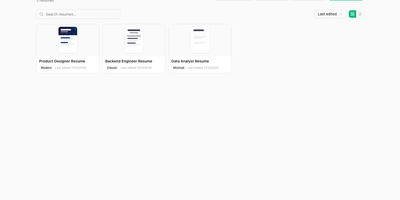
JadeAI
JadeAI is a self-hosted resume builder that pairs a clean drag-and-drop editor with AI help for writing, polishing, and tailoring every application. Pick from 50 templates, then adjust colors, fonts, spacing, and margins in a live preview, with undo and redo keeping every experiment reversible. Paste a job description to get a keyword match, an ATS score, and concrete suggestions, then generate a cover letter in a formal, friendly, or confident tone. A grammar check flags weak verbs and vague claims, a translation tool converts the whole resume into ten languages, and an in-editor chat assistant rewrites sections on request. Upload an existing PDF or image and the AI extracts every field for you. Practice with six preset interviewers, from HR to technical to leader, then review a scored report with a competency radar and an improvement plan. Export to PDF, one-page PDF, DOCX, HTML, TXT, or JSON, and share a link with an optional password and a view counter. Every user brings their own OpenAI, Anthropic, or compatible API key. Running on a dedicated VPS on RepoCloud with guaranteed CPU, RAM, and SSD, full root SSH access, and a browser serial console. Apache-2.0 licensed.
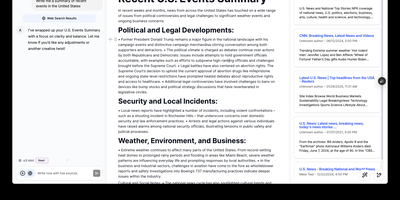
Open Canvas
Open-source alternative to OpenAI's Canvas — a collaborative writing and coding environment where AI agents help you draft, edit, and refine documents through an agentic architecture built on LangGraph. The dual-mode editor combines a BlockNote rich text editor for live-rendered markdown with a CodeMirror-based code editor supporting syntax highlighting across multiple programming languages, letting you switch between prose and code artifacts within the same session. The built-in reflection agent automatically generates style rules and user insights from your chat history, storing them in a shared LangGraph memory store that persists across sessions for increasingly personalized assistance. Pre-built quick actions provide one-click access to common writing transformations including summarize, expand, simplify, and translate, while coding actions offer explain, refactor, add comments, and convert between languages. The monorepo architecture separates the Next.js 14 frontend from the LangGraph agent backend, connecting via HTTP and WebSocket protocols through the @langchain/langgraph-sdk client. Seven LLM providers are supported out of the box — OpenAI, Anthropic Claude, Google Gemini, Fireworks AI, Groq, Azure OpenAI, and local Ollama models — with Supabase handling authentication and data persistence. Deploy via Docker or build from source. Running on a dedicated VPS on RepoCloud with guaranteed CPU, RAM, and SSD, full root SSH access, and a browser serial console. MIT licensed.