Authelia
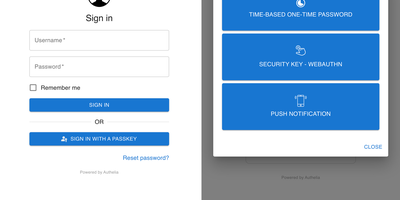
Authelia is the leading open-source SSO and multi-factor authentication server for self-hosted infrastructure. The Go backend compiles to a single binary or Docker container image, serving a TypeScript React web portal that handles first-factor username and password login, second-factor authentication via TOTP, WebAuthn FIDO2 security keys, passwordless passkeys, and Duo mobile push notifications, and an OpenID Connect 1.0 and OAuth 2.0 identity provider with device code flow, JWE encrypted ID tokens, custom claims policies, and network-scoped authorization criteria. The forward authentication model integrates with Nginx auth_request, Traefik ForwardAuth, HAProxy, Caddy, Envoy, SWAG, and Skipper reverse proxies, injecting Remote-User, Remote-Groups, and Remote-Email headers into authorized requests. Granular access control rules match subject, groups, request URI, HTTP method, and network to enforce one-factor and two-factor policies per route. The user backend supports LDAP with attribute mapping, connection pooling, and bind mode, or YAML file-based authentication with Argon2id hashed passwords. Session state stores in Redis for high availability across clustered deployments, while persistent data lives in SQLite, MySQL and MariaDB, or PostgreSQL. Brute force protection locks accounts after configurable failed attempts, and email-based identity verification handles password resets and device registration. Dark, light, and OLED themes with i18n localization customize the portal appearance. On RepoCloud, deploy Authelia on a dedicated VPS with Docker, root SSH access, and complete control over your authentication infrastructure, all under the Apache-2.0 license.
2FAuth
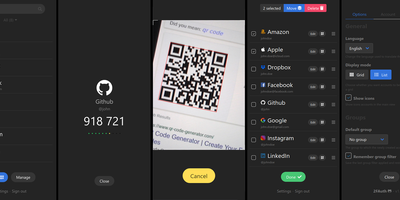
2FAuth generates TOTP, HOTP, and Steam Guard codes from any web browser, freeing your two-factor authentication from dependence on a single smartphone or app. Lose your phone, switch devices, or sit at a desktop computer, and your 2FA codes remain accessible through the web interface. The Laravel and Vue.js application stores account secrets in an encrypted SQLite database that backs up as a single file. Adding accounts works through camera-based QR scanning or manual secret key entry for services that only provide text codes. Group organization with drag-and-drop sorting keeps large collections navigable, categorized however you prefer. WebAuthn authentication with FIDO2 hardware keys protects vault access with phishing-resistant passwordless login, meaning the tool that secures your accounts is itself secured by the strongest available method. Automatic screen lock triggers after configurable idle time, and OTP obfuscation dots out generated codes until you tap to reveal them, preventing shoulder surfing in shared spaces. The REST API enables browser extensions and external applications to request codes programmatically. Import compatibility with Google Authenticator, Aegis, and 2FAS ensures painless migration without re-enrolling every account from scratch. PWA installation places 2FAuth on your device home screen for native-app-like instant access. Runs on a dedicated RepoCloud VPS with guaranteed resources and full root SSH access. AGPL-3.0 licensed.