
Timeful
Picking a meeting time for six people usually takes forty messages, and Timeful replaces them with one link. Create an event, choose a date range or days of the week, and share the URL; guests do not need an account. Each person drags across a time grid to mark what works, and the combined heatmap reveals the overlap at a glance. Times can be marked as available or only if needed, and a best-times toggle highlights the slots that suit the most people. Calendar autofill pulls busy blocks from Google, Apple, Outlook, or an ICS feed so nobody retypes their week. Time zones convert automatically for distributed teams. Event owners can hide responses from other guests, duplicate polls for recurring meetings, export availability as a CSV, and schedule the final slot straight into a Google Calendar event. Availability groups keep a team's live calendar overlap on a single page, and reminder emails go out to attendees on the day of the event. A plugin API lets browser extensions read and write availability. The interface is a calm green grid with no clutter. Running on a dedicated VPS on RepoCloud with guaranteed CPU, RAM, and SSD, full root SSH access, and a browser serial console. AGPL-3.0 licensed.
Happier
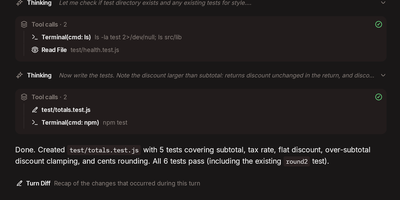
When a dozen coding agents are running at once, Happier puts every session in one list and lifts the ones waiting on you to the top. Sessions that need a decision gather under Needs attention and running ones sit under Working, so nothing stalls unseen. Start Claude Code, Codex, OpenCode, Pi, Cursor, Gemini, Copilot, Qwen, Kimi, Auggie, Kilo, Kiro, or Grok on any computer you have connected, or add a custom ACP backend for another agent CLI. Switch the agent mid-session, let Claude hand a review to Codex as a subagent, and move a live Claude Code or OpenCode session to another machine. Read the tool-call timeline, review the diff, mark exact lines, and send those notes back to the same session or a fresh one. Stage, commit, push, and open pull requests from the Git panel, or give each session its own worktree. Queue messages, steer a running turn, edit files, open a terminal, or dictate to the voice assistant. Pool several accounts so work continues when one hits a usage limit, and watch five-hour and weekly quotas reset. Share a session view-only, with edit rights, or as a public link. Content is end-to-end encrypted by default, and the relay serves the web app, so any browser can reach it. Running on a dedicated VPS on RepoCloud with guaranteed CPU, RAM, and SSD, full root SSH access, and a browser serial console. MIT licensed.
Saltcorn
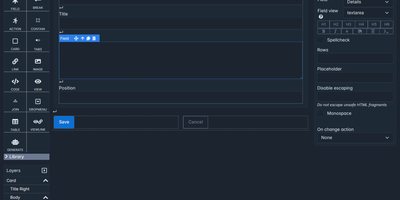
Spreadsheets and old Access databases give way to custom business apps that a team builds itself in a browser with Saltcorn, a no-code database application builder. Tables hold related records with typed and calculated fields, and CSV files import straight into them. Views start from patterns such as list, show, edit, filter, kanban, calendar, gantt, map, and chart, then take shape on a drag-and-drop canvas with a layers tree and desktop, tablet, and mobile previews. A view can embed another view, so clicking a row narrows the others and builds a cross-filtering dashboard with no glue code. Triggers react to row changes, schedules, logins, and API calls, while visual workflows branch, loop, and pause for a person's form before resuming days later. An AI copilot drafts tables, pages, and workflows from a plain-language prompt. The same views also become native Android and iOS apps with offline mode, PDF or image documents, and responsive emails. Every table, view, and page carries a minimum user role, and an auto-generated REST API exposes the data. Packs such as project management and an address book start an app from a ready template. Running on a dedicated VPS on RepoCloud with guaranteed CPU, RAM, and SSD, full root SSH access, and a browser serial console. MIT licensed.
II-Agent
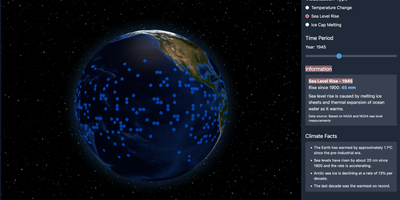
II-Agent is an autonomous AI agent platform that ranked first on the GAIA benchmark by combining multi-step task planning with a full-stack execution environment spanning research, coding, browsing, and content creation. The platform runs a React frontend on port 1420 backed by FastAPI on port 8000, with PostgreSQL for persistence, Redis for task queuing, and MinIO for S3-compatible file storage, all deployable via Docker Compose. Users switch between Anthropic Claude, OpenAI GPT, and Google Gemini mid-conversation using bring-your-own-key authentication. Task domains include deep research with source triangulation, website and mobile app generation from prompts, storybook creation with illustrations, video and image generation via Google Veo and Imagen, presentation building with live collaborative editing, and document manipulation covering PDF extraction, Excel formulas, Word editing, and PowerPoint creation. Built-in connectors integrate Gmail, Slack, GitHub, Notion, Google Calendar, Discord, Dropbox, and Canva for workflow automation. A sandboxed code interpreter runs Python while browser automation with vision capabilities handles web interactions. Custom skills let teams package and reuse workflows. Context management handles up to 120,000 tokens with intelligent window sizing. 3,400+ GitHub stars. Apache-2.0 licensed.

Vexa
Vexa is the only Apache 2.0 meeting bot API that self-hosts the complete transcription pipeline, from bot dispatch to Whisper speech-to-text to knowledge agents, with zero audio leaving your infrastructure. A single POST /bots request sends a transcription bot into any Google Meet, Microsoft Teams, or Zoom call, where it captures audio, runs speaker-attributed transcription through faster-whisper or any OpenAI-compatible endpoint, and streams results to your application via real-time WebSocket with sub-second latency. The built-in agent framework watches live transcripts and your accumulated workspace context, answering mid-call questions grounded in your own meeting history and wiki. An MCP server connects Vexa to Claude, Cursor, and other compatible AI tools, turning every captured meeting into queryable context for external agents. The Terminal, a bundled Next.js web workbench, lets you send bots, watch live transcripts, manage users and API tokens, and chat with your meeting archive from a browser. Docker Compose brings the full stack up on one Linux host in five minutes; the Helm chart scales to thousands of users on Kubernetes with a Pod-per-bot architecture and built-in RBAC. Recordings persist in MinIO or any S3-compatible store, transcripts in Postgres, with Redis handling queues and scheduling. Deploy on RepoCloud for a dedicated VPS with full root SSH access and browser console. Apache 2.0 licensed.
Infrahub
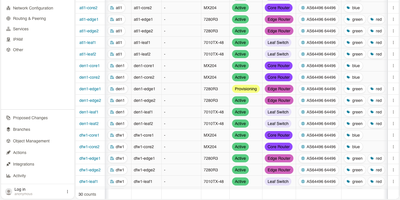
For network and infrastructure teams, Infrahub is one validated source of truth for devices, IP space, circuits, and services, with Git-style branches for every change. You write the schema in YAML, and Infrahub builds the web interface and API endpoints from it, covering sites, devices, interfaces, VLANs, BGP sessions, or any concept your business needs. Built-in IPAM tracks IPv4 and IPv6 prefix trees, utilization, addresses, namespaces, and resource pools. Work on a branch, compare a per-object diff of added, removed, and updated records, resolve conflicts, and merge through a proposed change that bundles data, files, artifacts, schema, and check results. Python checks enforce your own design rules, such as two WAN circuits per site, before anything merges. Immutable history and an activity log answer who changed what, and when. Transformations in Jinja2 or Python render device configurations and other documents as stored artifacts, while Generators create objects from a site design. Git repositories supply schemas, queries, and templates. GraphQL, REST, a Python SDK, an Ansible collection, and a Nornir plugin feed existing automation, Infrahub Sync imports from NetBox or Nautobot, and an optional MCP server lets Claude and Cursor read the data. Running on a dedicated VPS on RepoCloud with guaranteed CPU, RAM, and SSD, full root SSH access, and a browser serial console. Apache-2.0 licensed.
GPT Load
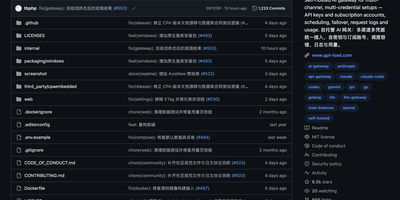
GPT Load has become the go-to self-hosted AI gateway for teams managing multiple LLM provider credentials behind a single URL. The Go-built proxy transparently preserves native API formats for OpenAI Chat Completions, OpenAI Responses, Anthropic Messages, and Google Gemini — applications swap one base URL and keep their existing SDK integration untouched. Twenty built-in channels cover official APIs (OpenAI, Anthropic, Gemini, xAI), cloud platforms (Azure OpenAI, AWS Bedrock, Google Vertex AI), model services (DeepSeek, Moonshot AI, SiliconFlow, Zhipu AI, Alibaba Cloud, Volcengine, OpenRouter, Groq), and subscription accounts (Codex, Claude, Antigravity, Grok) using the same credential management, scheduling, and health system. The intelligent key pool rotates among valid credentials using atomic counters for fair high-concurrency distribution, automatically blacklists failing keys after configurable thresholds, and recovers them via scheduled health checks — all transparent to clients. Weighted load balancing distributes traffic across multiple upstream endpoints while per-credential proxies route individual keys through different egress paths. The Vue 3 management dashboard provides real-time statistics, group configuration, key testing, request logs with full debugging context, per-model cost estimates, and route inspection. Docker deployment exposes the management interface and proxy on port 3001 with SQLite by default, MySQL or PostgreSQL optional, and Redis for distributed leader-follower cluster scaling. Running on a dedicated VPS on RepoCloud with guaranteed CPU, RAM, and SSD, full root SSH access, and a browser serial console. MIT licensed.
PocketBase
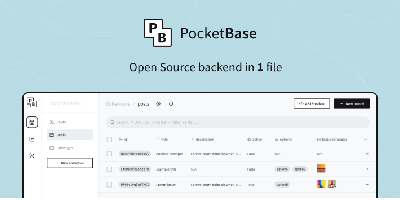
An entire backend in a single Go executable: PocketBase embeds SQLite with realtime subscriptions, authentication and user management, file storage, and an admin dashboard, all behind a REST-ish API. SQLite runs in WAL mode, which outperforms client-server databases for the read-heavy workloads typical of small and mid-sized apps. Authentication supports email/password, one-time passwords, and 15+ OAuth2 providers including Google, Apple, and GitHub, with stateless tokens. Clients subscribe to record changes over server-sent events, and official JavaScript and Dart SDKs cover web, mobile, and Flutter frontends. Collections, rules, and API access permissions are managed visually in the admin UI. When you need custom logic, extend it with JavaScript hooks running in the embedded JS VM of the prebuilt binary, or import PocketBase as a Go library and compile custom business logic into your own single-file backend. File storage attaches uploads to records with thumbnail generation for images and optional S3-compatible external storage. All state lives in one pb_data directory, so backup is a directory copy and upgrade is replacing a binary - one of the lowest-maintenance backends you can run. The contrast with Firebase is the point: where usage-based pricing scales with reads, writes, and bandwidth, PocketBase runs the entire backend at flat hosting cost, and the data is a plain SQLite file you can copy anywhere. MIT-licensed.
BankMCP
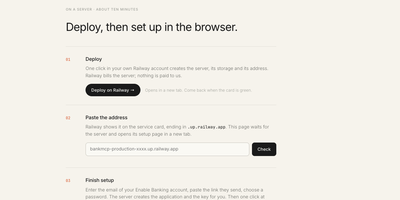
Ask your assistant what you spent on groceries last month, and let it answer from your actual bank accounts instead of a spreadsheet you never update. BankMCP is a small server you run yourself that connects your European banks to Claude, ChatGPT, Cursor, or any MCP client, so questions about balances and spending get real answers. Ask for a balance and it fetches the booked and available figures live; ask where the money went and it searches transactions across every connected account by merchant or invoice number; ask for the month and it totals money in and out while leaving transfers between your own accounts out of the picture. Background watches keep an eye out between conversations: get a webhook when a balance crosses a line, a large debit lands, a named payment arrives, or an expected payment has not shown up by its date. Ready-made prompts cover connecting a bank, building a budget, scanning savings, auditing subscriptions, and spotting unusual transactions. The server is deliberately boring about your data: it keeps consents, account labels, watches, and your login, fetches balances and transactions only when asked, and stores none of them. It is read-only by design, with no payment tools to abuse. Running on a dedicated VPS on RepoCloud with guaranteed CPU, RAM, and SSD, full root SSH access, and a browser serial console. MIT licensed.
Swetrix
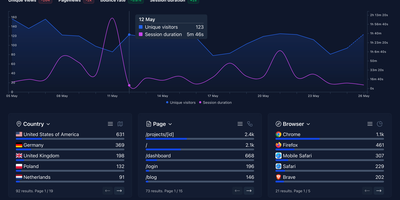
Traffic analytics, real-user performance monitoring, and client-side error tracking - normally three tools - in one cookieless, privacy-first dashboard: Swetrix. The Community Edition ships the same core engine as the cloud product - a NestJS API with ClickHouse for high-volume event storage, MySQL for relational data, and Redis for caching, fronted by a React dashboard and a ~5 KB tracking script with official packages for 20+ frameworks including Next.js, WordPress, and Shopify. Traffic analytics cover pageviews, referrers, UTM campaigns, geolocation, sessions with page flows, funnels, and custom events - all anonymized server-side with no cookies, no cross-device tracking, and no consent banner required for GDPR compliance. Performance monitoring records real-user metrics per pageview: TTFB, DNS and TLS timing, and render times, so regressions surface in the same place as traffic. Error tracking captures unhandled JavaScript exceptions automatically with formatted stack traces, filename/line metadata, affected browsers and pages, first/last-seen timestamps, and a resolve workflow - replacing a separate error monitoring subscription for many teams. Alerts fire to email, Slack, Telegram, Discord, or webhooks on traffic spikes, new errors, and custom events. If Plausible covers your traffic questions but you also want to know why the site broke, Swetrix answers both.
GrayMatter
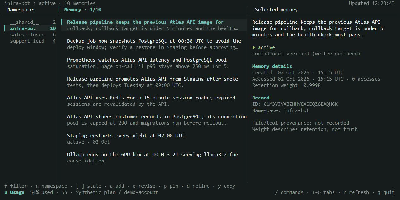
GrayMatter gives AI agents a persistent memory that survives between sessions, so every new run starts from stored facts instead of a blank slate. Agents save facts once and recall them by meaning, receiving the top eight relevant entries instead of a full history replay. A consolidation cycle extracts typed entities (people, organizations, and projects) and links co-mentioned items into a knowledge graph that grows from ordinary use. Every recall can return receipts showing the per-signal ranks, fused score, and provenance behind each fact, so you can audit why the agent remembered something. Deterministic decay gives facts a 30-day half-life and retires stale entries to tombstones, keeping the store current without manual cleanup. Claude Code hooks inject routine recall on every turn, and the context-sync command projects top facts into CLAUDE.md or AGENTS.md inside a set token budget. Agents curate their own memory through the memory_reflect tool, adding, updating, forgetting, and linking facts during a session. The workbench opens six views (Memory, Recall, Activity, Graph, Usage, and Status) for browsing namespaces, inspecting ranking receipts, and tracking subscription limits or API spend. Connect Claude Code, Cursor, Codex, OpenCode, Antigravity, or any MCP-compatible client over stdio, or call the REST API server on port 8080 from your own tooling. Export the graph to Obsidian with one command, turning entities into notes and edges into links. Running on a dedicated VPS on RepoCloud with guaranteed CPU, RAM, and SSD, full root SSH access, and a browser serial console. MIT licensed.
Mage
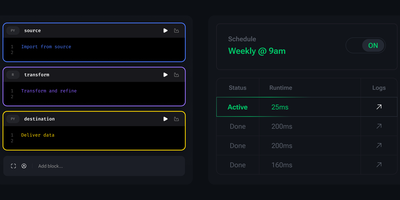
Backed by 8,700+ GitHub stars and designed as a modern alternative to Apache Airflow, Mage delivers the open-source data pipeline platform that combines the interactive flexibility of notebooks with production-grade orchestration in a single self-hosted environment accessible at port 6789. The modular block architecture lets data engineers compose pipelines from Python, SQL, and R code blocks with instant data previews, live execution logs, and visual debugging at each step. Over 100 prebuilt integrations connect sources and destinations including PostgreSQL, MySQL, Snowflake, BigQuery, Redshift, S3, Kafka, MongoDB, Amplitude, Salesforce, and Stripe with parallel stream synchronization for high-throughput data movement. Batch pipelines run on cron schedules or event triggers while streaming pipelines process real-time data from Kafka, Kinesis, and RabbitMQ with stream mode reducing memory usage by approximately 90 percent compared to batch processing. Native dbt integration builds, tests, and runs dbt models directly inside the pipeline editor alongside custom transformation blocks. Spark, Snowpark, and Databricks runtimes handle large-scale distributed processing. AI-assisted development generates code, fixes errors, and optimizes queries within the notebook interface. Monitoring dashboards track pipeline health with integrations to Datadog, Prometheus, New Relic, and OpenTelemetry. Terraform templates deploy production environments to AWS, GCP, or Azure with two commands, while Helm charts support Kubernetes clusters. Running on a dedicated VPS on RepoCloud with guaranteed CPU, RAM, and SSD, full root SSH access, and a browser serial console. Apache 2.0 licensed.
Metabase
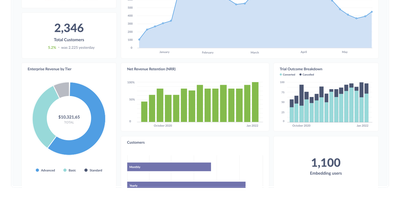
The most widely deployed open-source BI tool, Metabase is a visualization and query layer that sits on top of your existing databases without ingesting or copying data. Non-technical users ask questions through a visual query builder with drill-through menus that answer follow-ups like "broken down by month" without writing a new query, while analysts use the native SQL editor with variables and templates for complex work. Questions assemble into interactive dashboards with filters, auto-refresh, fullscreen mode, and custom click behavior, and dashboard subscriptions email or Slack scheduled reports to stakeholders. It connects to 20+ data sources including PostgreSQL, MySQL, MongoDB, SQL Server, BigQuery, Snowflake, Redshift, and ClickHouse - always querying in place, so there is no second data store to secure, sync, or pay for, and results are always current. Models and metrics let a data team define official, reusable starting points so self-service stays consistent, collections with permissions organize content, and alerts fire when a metric crosses a threshold. The practical effect is cutting the ad-hoc query queue that lands on the data team, since non-technical staff can answer their own questions. Written in Clojure, licensed AGPL, and shipped as a single JAR or Docker image with an embedded application database - a working BI instance runs before most tools finish their installer - the open-source edition has no limits on users, dashboards, or connected databases, where commercial BI platforms price per viewer as well as per creator.
Budibase
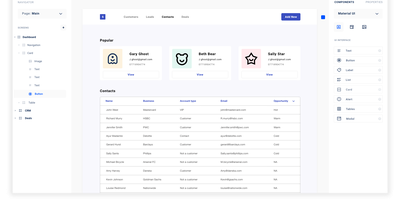
Step right up to the magical world of Budibase, the open-source wizardry that turns the grueling task of building internal tools into a walk in the digital park. Imagine crafting mighty tools and formidable forms in less time than it takes to brew a cup of coffee, all without typing a single line of code! With Budibase, you can charm data from an ancient external database, summon information from a Rest API, conjure up figures from a CSV, or create something entirely new with Budibase's own mystical database. Design your digital dominion with a flick of the drag-and-drop, and automate your kingdom's workflows as if by magic. Join the ranks of the 75,000 teams who've harnessed the power of Budibase to accelerate their business quests. Need to safeguard data like a digital fortress, automate tasks like a sorcerer, or streamline operations like a high-speed chariot? Budibase is your trusty steed in the race to operational victory. And with RepoCloud hosting, you'll save a treasure chest of gold compared to those other cloud-dwelling giants!
Douyin TikTok Download API
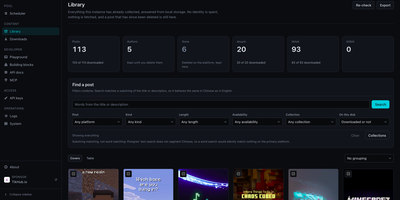
Paste a Douyin, TikTok, or Bilibili link and get back clean structured data plus a watermark-free download, all from a server you own. The playground in the web console parses a shared link into normalized post, author, comment, sound, and hashtag data, and the same call is available through a REST API with 126 operations for scripts and pipelines. Downloads select the clean stream the platform already publishes, including the clip behind a Douyin live photo, and finished videos can be transcribed offline into Mandarin text with punctuation, without any speech API. Collected posts are archived in PostgreSQL, so material deleted upstream stays readable in your own library. A self-maintaining identity pool mints guest identities on a timer, tests and cools them automatically, and tracks live health scores for every identity and endpoint, with circuit breakers tripping before risk controls burn the pool. Scheduling, request logs, download progress from the Go sidecar, and multi-part Bilibili downloads are all managed from the console. AI agents can drive the whole service over MCP, calling the same service layer as the API and the dtk command line instead of a wrapper. Request signing for each platform is implemented natively, short links are expanded against an allowlist before fetching, and one Docker Compose command starts the stack. Running on a dedicated VPS on RepoCloud with guaranteed CPU, RAM, and SSD, full root SSH access, and a browser serial console. Apache License 2.0 licensed.
Mercure
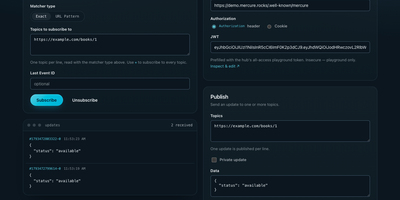
Mercure is a realtime hub that pushes updates from your backend straight to browsers over Server-Sent Events, so live dashboards, chat rooms, and activity feeds refresh the moment data changes. Subscribers connect through the browser's built-in EventSource API and choose topics with exact matchers for single resources or URL Pattern matchers for whole families such as /books/:id. Publishers send one form-encoded POST to the hub endpoint, and Mercure fans each update out to every matching connection instantly. JWT access tokens grant publish and subscribe rights topic by topic, so private updates reach only entitled clients while public topics can stay open to anonymous subscribers. If a connection drops, the client reconnects with its last event ID and Mercure replays the updates it missed from stored history. Subscription events announce every arrival and departure, so your application gets live presence and a current list of who is connected. A built-in debug UI shows messages flowing through the hub alongside active subscriptions, turning realtime bugs into something you can watch happen. Optional end-to-end encryption protects sensitive payloads, and any backend able to send an HTTP POST can publish, whatever language it runs. Running on a dedicated VPS on RepoCloud with guaranteed CPU, RAM, and SSD, full root SSH access, and a browser serial console. AGPL-3.0 licensed.
BugTraceAI
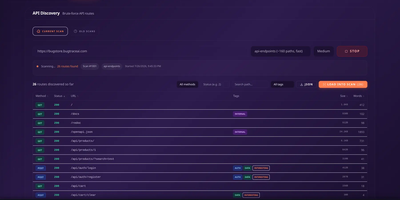
Point an AI pentesting crew at a web app you own and watch it hunt: BugTraceAI plans the checks, sends specialist agents after each weakness class, and brings back evidence you can inspect. A scan moves through six visible phases, from crawling and endpoint discovery through strategy, exploitation and validation, and ends in a findings table where every result carries a severity, a CVSS score and a confirmed status. The web dashboard follows the hunt live as a graph of specialists branching from a coordinating agent, and its API discovery workspace brute-forces routes and loads the interesting ones straight into a scan. Analysts get their own toolbox of more than twenty utilities for poking HTTP traffic by hand, an AI repeater for replaying requests, and ModelLab for comparing models on cost and results. Findings download as a ZIP with the full report, and a terminal workspace with pipeline, findings, agents, timeline and logs views suits keyboard-driven work. Bring your own model through OpenRouter, Anthropic, Z.ai or a local endpoint, and aim the whole suite at the bundled BugStore practice shop when you want to rehearse safely. Running on a dedicated VPS on RepoCloud with guaranteed CPU, RAM, and SSD, full root SSH access, and a browser serial console. Apache-2.0 licensed.
Cloudflare OS
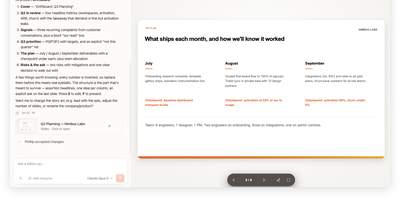
With over 7,700 GitHub stars and thousands of Cloudflare employees using it daily across every function, Cloudflare OS delivers an open-source AI workspace where every employee gets a personal agent grounded in company context, systems, and skills — not a generic chatbot but a programmable workspace that builds real applications, automates workflows, and connects to internal tools through governed access. The Code Mode agent writes and immediately executes code snippets to perform arbitrary tasks, build full-stack Gadgets with client code, server code, APIs, and durable SQLite state, debug errors, and test results within isolated sandboxes. Gadgets are private application instances running in separate sandboxes — each document, spreadsheet, or tool is its own secure runtime that cannot leak data even to attackers with access to other Gadgets. Blueprints enable sharing application code as templates that others instantiate with independent state, credentials, and resources. Gatekeepers provide security governance giving system owners precise control over what agents can see, change, and when human approval is required before actions execute. Built on Cloudflare Workers using Durable Objects for workspace persistence, Dynamic Workers for Gadget execution, and Facets for access management. Zero Trust security via Cloudflare Access verifies every user and request before granting access. Real-time collaboration lets colleagues use shared Gadgets. Deploy to your own Cloudflare account or self-host on workerd, the open-source Workers runtime, on your own servers. Running on a dedicated VPS on RepoCloud with guaranteed CPU, RAM, and SSD, full root SSH access, and a browser serial console. Apache-2.0 licensed.