Postiz
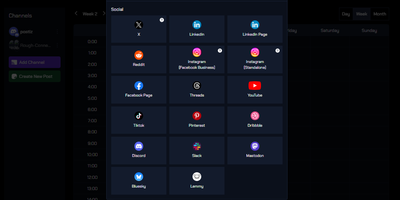
Powering over $145K monthly recurring revenue as a one-person company and holding 34,000+ GitHub stars, Postiz has emerged as the most widely adopted open-source alternative to Buffer, Hootsuite, and Hypefury — combining social media scheduling with AI-driven content creation and agentic automation in a single self-hosted platform. The Next.js 14 frontend with React 18 and Tailwind CSS delivers a visual calendar and Canva-like design editor, while the NestJS backend orchestrates publishing across 30+ social networks including X, LinkedIn, Instagram, TikTok, YouTube, Reddit, Pinterest, Threads, Dribbble, Discord, Bluesky, Mastodon, and Facebook. Temporal handles durable workflow execution for reliable scheduled posting, retry logic, and background job processing. The built-in AI assistant generates post ideas, captions, hashtags, images, and short videos from natural language prompts — all within a single chat interface. An agentic layer exposes a CLI and MCP server that allow AI agents like OpenClaw, Claude, and ChatGPT to autonomously plan, draft, and schedule posts programmatically. Team collaboration includes role-based permissions, approval workflows, multi-workspace management for agencies, and commenting on scheduled content. A full REST API with a NodeJS SDK, N8N custom nodes, and Make.com integration enables automation pipelines. Analytics track engagement, reach, and growth across all connected accounts from a unified dashboard. The self-hosted stack deploys via Docker Compose with PostgreSQL, Redis, and Temporal pre-wired — no feature limitations compared to the cloud version. Running on a dedicated VPS on RepoCloud with guaranteed CPU, RAM, and SSD, full root SSH access, and a browser serial console. AGPL-3.0 licensed.
Mixpost
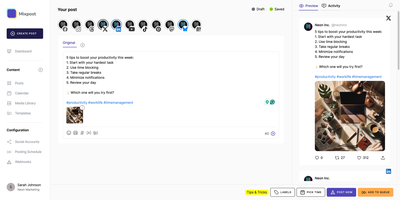
Mixpost puts Facebook, Instagram, X, LinkedIn, YouTube, TikTok, Pinterest, Threads, Bluesky, Mastodon, Pixelfed, and Google Business under a single scheduling dashboard — plan content visually on a drag-and-drop calendar, queue posts for optimal engagement windows, and track audience growth per platform without juggling twelve separate apps or paying per-seat SaaS fees. Built on Laravel with a Vue.js 3 and Inertia.js frontend styled with Tailwind CSS, the Lite edition provides unified content management where each post supports platform-specific customization with individual captions, media attachments, hashtag groups, and first-comment scheduling. Posting queues automate publishing at configurable time slots throughout the day. The media library provides a centralized asset manager with drag-and-drop uploads, stock photo integration via Unsplash, and Tenor GIF search. AI-powered content assistance generates and optimizes post copy. Per-platform analytics dashboards display audience growth, engagement metrics, reach, and impressions with exportable reports. Team workspaces support role-based permissions for collaborative content management across departments. External integrations connect through the REST API, webhooks, n8n, Zapier, and RSS feeds, plus an MCP server for AI assistant publishing. Deploy via Docker Compose with MySQL and Redis. Running on a dedicated VPS on RepoCloud with guaranteed CPU, RAM, and SSD, full root SSH access, and a browser serial console. MIT licensed.
Discourse
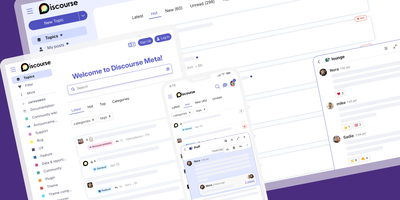
Created by Jeff Atwood, co-founder of Stack Overflow, and battle-tested for over a decade with 47,600+ GitHub stars, Discourse powers community forums for GitHub, Docker, Rust, Netlify, and thousands of organizations worldwide. The platform combines long-form threaded discussion with built-in real-time chat, enabling communities to move fluidly between asynchronous conversations and live interaction. Five automated trust levels progressively unlock permissions — posting links, editing wiki posts, flagging content, and moderating — based on reading time, post count, and community engagement, reducing spam and abuse without manual intervention. The Discourse AI plugin integrates with OpenAI, Anthropic, and self-hosted HuggingFace endpoints for automated topic summarization, sentiment analysis, semantic search, and AI-assisted content triage. Over 200 official and community plugins extend functionality with features like the Data Explorer for ad-hoc SQL queries against the forum database, polls, solved-topic marking, voting, calendar events, and custom user fields. SSO and OAuth support connects Google, Facebook, Apple, GitHub, and SAML identity providers, while reply-by-email and mailing list mode let users participate entirely through their inbox. The Ember.js single-page frontend delivers responsive performance across all devices with PWA support and web push notifications. Deployment uses Docker via the official discourse_docker launcher with automatic Let's Encrypt HTTPS, resource scaling based on server hardware, and support for single-container or multi-container configurations. Running on a dedicated VPS on RepoCloud with guaranteed CPU, RAM, and SSD, full root SSH access, and a browser serial console. GPL v2.0 licensed.
Forem
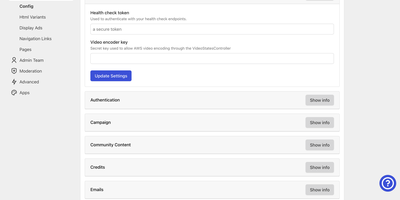
With 22,700 GitHub stars, 4,100+ forks, and proven scale powering dev.to — one of the largest developer communities serving millions of monthly users — Forem provides a complete community platform for building engaged audiences around shared interests, whether for developer documentation, customer communities, fan bases, or professional networks. The Rails backend with Preact frontend delivers article publishing with a rich Markdown editor, threaded discussions, user profiles with portfolio links, tag-based content organization, podcast hosting, classified listings for jobs and events, and social interactions including reactions, bookmarks, and following. AI-powered semantic search using PostgreSQL pgvector embeddings surfaces relevant content across articles and concepts, while scheduled automations enable community bots to create automated roundups, republish curated content, and trigger time-based moderation actions. Score-based content ranking replaces simple reaction counts with nuanced algorithms that resist gaming. The admin dashboard provides user management, content moderation, community settings, analytics, and organization controls. OAuth integration supports GitHub, Twitter, Apple, and configurable OIDC providers for frictionless sign-up. Dynamic open-graph image generation creates branded social cards automatically. Deploy with Kamal 2 to any cloud provider or bare metal server with PostgreSQL and Redis. Running on a dedicated VPS on RepoCloud with guaranteed CPU, RAM, and SSD, full root SSH access, and a browser serial console. AGPLv3 licensed.
Pixelfed
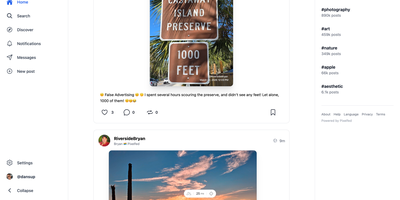
With nearly 7,000 GitHub stars and instances spanning hundreds of federated servers, Pixelfed has become the leading open-source alternative to Instagram — delivering ad-free, algorithm-free photo sharing across the Fediverse. Built on Laravel with a Vue.js frontend, Pixelfed provides a polished, mobile-responsive interface where users upload photos and videos, apply built-in filters, create multi-image posts with alt text, share ephemeral stories, organize content into curated collections, and exchange direct messages — all without tracking, algorithmic manipulation, or targeted advertising. Federation through the ActivityPub protocol means Mastodon, Pleroma, and other Fediverse users can follow Pixelfed accounts, view photo posts in their timelines, and interact through likes, boosts, and replies, while Pixelfed users can discover content through both local and federated timelines. Instance administrators control registration policies, content moderation rules, federation blocklists and allowlists, storage backends including local or S3-compatible options, and server-wide settings. The Mastodon-compatible API enables third-party mobile app support alongside the built-in Progressive Web App experience. Advanced features include blurhash image placeholders for smooth loading, federated groups for community building through FEP-400e and FEP-1b12 extensions, HTTP Signatures with Authorized Fetch for secure federation, and comprehensive data export for full portability. Deployment requires PHP 8.1+, MySQL or PostgreSQL, Redis, and a reverse proxy, with Docker Compose configurations available for streamlined setup. Running on a dedicated VPS on RepoCloud with guaranteed CPU, RAM, and SSD, full root SSH access, and a browser serial console. AGPL-3.0 licensed.
OpenPost
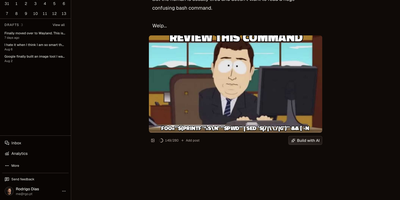
OpenPost is an open-source content creation and publishing suite that unifies multi-platform social scheduling, graphic design, and video editing into a single self-hosted control center. Creators can compose one primary announcement and tailor bespoke copy, media attachments, and thread structures across sixteen distinct networks including Bluesky, Mastodon, X, Threads, LinkedIn, YouTube, and Discord. The integrated browser canvas lets you design multi-slide carousels with custom typography, layer ordering, and automated background removal without juggling external design software. A built-in multitrack video suite allows you to trim footage, render subtitle captions, insert transitions, and slice clips directly by highlighting spoken words in generated transcripts. Social managers can organize campaigns through an interactive visual calendar, stagger deliveries across automated queues, and monitor unified comment streams to answer incoming audience inquiries directly from a single inbox. Teams can organize multiple independent client brands into partitioned workspaces with role-based permissions, automated repost policies, and programmable scheduling webhooks via native REST and Model Context Protocol endpoints. Running on a dedicated VPS on RepoCloud with guaranteed CPU, RAM, and SSD, full root SSH access, and a browser serial console. AGPL-3.0 licensed.
Castopod
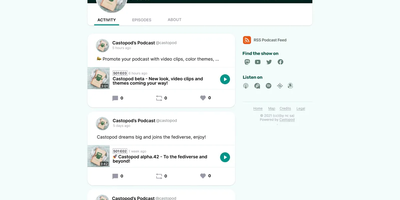
Every podcast you publish through Castopod automatically becomes a Fediverse social account that Mastodon, Pleroma, and Pixelfed users can follow, boost, and comment on from their own timelines. This ActivityPub integration transforms podcast distribution from a one-way broadcast into a two-way conversation where listeners interact with episodes through the social platforms they already use. Beyond federation, the platform manages the complete lifecycle: upload an episode, and auto-generated RSS feeds distribute it to Apple Podcasts, Spotify, Deezer, Podcast Addict, and every compatible directory. IABv2-compliant analytics measure downloads, geographic distribution, and listening apps while maintaining GDPR, CCPA, and LGPD compliance through anonymized data collection. Podcasting 2.0 namespace support unlocks chapters with images, SRT/VTT transcripts, location tags, and person credits that modern podcast apps surface to listeners. Video episodes publish alongside audio, and auto-generated clips feed social media sharing workflows. Monetization tools span Value4Value micropayments, premium subscriptions, funding links, and cookieless advertising. Multi-user roles operate per-podcast: contributors, editors, and admins each work within defined permission boundaries. The PHP application runs behind nginx with MariaDB and Redis on a RepoCloud VPS with dedicated CPU, RAM, and SSD. AGPL-3.0 licensed.
Chatwoot
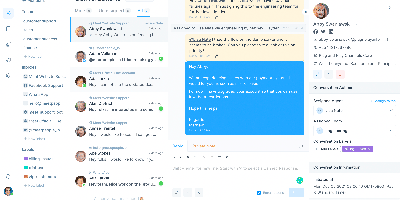
Unleash the power of Chatwoot, the open-source superhero in the world of customer experience! This platform is perfect for businesses craving to connect with their customers across a multitude of channels without breaking the bank. Wave goodbye to the high-and-mighty likes of Intercom, Zendesk, and Salesforce Service Cloud, and say hello to a wallet-friendly powerhouse. Chatwoot turns your agents into customer service ninjas, armed with the latest in workload management, performance tracking reports that refresh themselves (because who has time for that?), and automations that work smarter, not harder. Zap through conversations with lightning-fast responses and manage your social media and email interactions in a single bound. Plus, with Chatwoot, you get to be the Sherlock of customer satisfaction, deducing your CSAT scores on autopilot. All this hosted on RepoCloud, where the cost is as tiny as the effort you'll need to switch over. Get ready to engage, enlighten, and entertain your customers with Chatwoot!
PeerTube
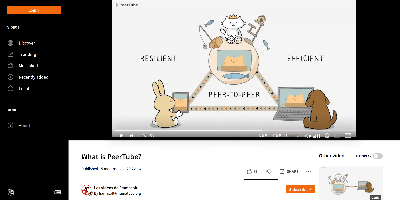
The fediverse's answer to YouTube comes from French non-profit Framasoft: PeerTube is a TypeScript/Angular video platform where hundreds of independently operated instances federate over ActivityPub into one network. Videos you publish are discoverable across the whole video fediverse, and viewers can follow your channels from Mastodon or any ActivityPub platform - or plain RSS - without needing an account on your instance. The namesake innovation attacks video hosting's core cost problem: alongside HLS delivery, an optional WebRTC-based P2P layer lets concurrent viewers' browsers share video segments with each other, so a video going viral distributes its own bandwidth demand instead of crushing your server; instance redundancy extends this by letting friendly instances cache each other's videos. Livestreaming is first-class - stream via OBS or any RTMP software, host permanent streams, enable replays, and interact through live chat. Creators get channels, playlists, analytics, built-in video editing (trim, watermark), and an embeddable player for any website. There are no ads, no data mining, and no recommendation algorithm engineered for watch-time - the project's explicit design stance. Admins control federation policy, P2P settings, and theming; a plugin system extends the rest. AGPL-licensed, 300+ contributors, in active development since 2015.

Social Analyzer
Social Analyzer scans over 1,000 social media platforms in parallel to discover and correlate user profiles from a single username query, making it the most comprehensive OSINT reconnaissance tool of its kind. Three detection modes cover different accuracy and speed tradeoffs: fast HTTP library checks for rapid sweeps, Selenium WebDriver validation for JavaScript-heavy sites, and a special mode for stubborn edge cases. String analysis generates username permutations and combinations to catch related accounts with slight naming variations. Three interfaces serve different workflows: a Node.js web application on port 9005 with a browser-based GUI, a CLI for scripted batch operations, and Python plus Node.js APIs for embedding into automated investigation pipelines. The QeeqBox OSINT library extracts profile metadata, screenshots, titles, descriptions, and activity patterns, all visualized through Ixora-based force-directed graphs that map relationships between discovered accounts. Tesseract OCR analyzes profile images for additional detection vectors. Search results narrow by country codes, website categories, Alexa ranking thresholds, and confidence levels. Optional Google API and DuckDuckGo API integration adds search engine correlation alongside direct platform queries. Docker deployment bundles Node.js, Firefox ESR, Tesseract, and all dependencies into one container. Trusted by law enforcement and security researchers for digital forensics and identity verification. 23,000+ GitHub stars. AGPL-3.0 licensed.
NodeBB
Forum software rebuilt on the modern web stack: NodeBB runs the classic bulletin-board format - categories, threads, local accounts - in real time, on Node.js over MongoDB, Redis, or PostgreSQL. WebSockets stream new posts into open topics as they're written and deliver instant notifications for follows, likes, and subscriptions; built-in chat supports side-by-side private conversations. The headline of recent versions is core ActivityPub federation: your forum can follow, share, and converse with other NodeBB instances, Mastodon, Lemmy, and anything else that speaks the protocol, turning an isolated community into a fediverse node. Everything beyond the common core is a plugin - more than 500 plugins and themes install in one click from the admin panel, covering SSO providers, search backends like Elasticsearch and Solr, galleries, calendars, and more. The theming engine extends base templates with SCSS/CSS on Bootstrap 5, plus a drag-and-drop widget system and custom HTML/CSS/JS injection. Operators get a real-time analytics dashboard, human-readable SEO-friendly URLs with semantic markup, multilingual UI, and full read and write REST APIs for integration. Mobile-first rendering means the same install works everywhere. For communities that outgrew phpBB but don't want Discourse's weight, NodeBB is the natural middle.
Lemmy
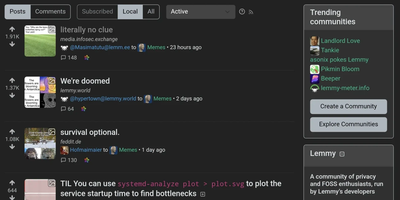
Powering over 496 instances with more than 35,000 monthly active users and 26,500 communities, Lemmy has established itself as the leading open-source, federated link aggregation platform in the Fediverse. Built entirely in Rust for memory-safe, high-performance server operation, Lemmy enables anyone to run their own Reddit-style community that automatically connects with every other Lemmy instance — and compatible ActivityPub platforms like Mastodon, PieFed, and Kbin — through standardized federation protocols. Users create and subscribe to topic-based communities, submit posts containing text, links, or images, engage through threaded comment discussions, and shape content visibility through upvote/downvote mechanisms. Instance administrators retain full control over moderation policy, federation allowlists and blocklists, site appearance, and user registration settings, while community moderators can sticky posts, lock threads, ban users, and maintain public moderation logs for transparency. The platform supports private messaging between users, email notifications, RSS and Atom feed generation for every community, comprehensive internationalization with dozens of language packs, custom emoji support, and both light and dark themes through a clean mobile-responsive interface. Deployment is straightforward with official Docker Compose configurations and Ansible playbooks, backed by a PostgreSQL database with pict-rs for image hosting. Lemmy's Rust backend consistently benchmarks among the most efficient Fediverse server implementations, enabling small VPS instances to serve thousands of users. Running on a dedicated VPS on RepoCloud with guaranteed CPU, RAM, and SSD, full root SSH access, and a browser serial console. AGPL-3.0 licensed.
GrowChief
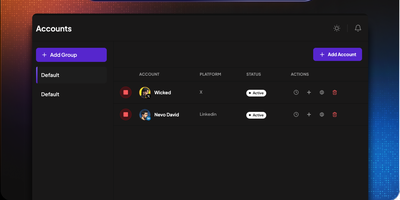
GrowChief delivers a self-hostable social media automation engine that replaces expensive SaaS tools like PhantomBuster, Expandi, and Zopto with a Docker-deployable alternative you fully control. The React and NestJS monorepo architecture runs headful Chrome via xvfb with Playwright and Patchright for maximum stealth — natural mouse movements and randomized interaction patterns make automation indistinguishable from manual browsing. Temporal orchestration manages workflow execution with built-in concurrency control that throttles actions to one every ten minutes per account even when ten workflows trigger simultaneously, preventing rate-limiting and account flags. The enrichment waterfall resolves profile URLs from partial data — provide an email address or organization name and GrowChief queries multiple providers to locate the correct social profile automatically. Working hours scheduling ensures outreach runs only during configurable business hours regardless of when leads enter the pipeline via the public REST API. Proxy support accepts custom SOCKS5 and HTTP proxies per account for geographic distribution and IP isolation. The public API enables full workflow management and lead injection from n8n, Make, Zapier, or any HTTP client, with a dedicated n8n custom node shipping ready to install. The multi-step workflow builder lets you chain connection requests, profile visits, message sends, and conditional delays into repeatable sequences. Running on a dedicated VPS on RepoCloud with guaranteed CPU, RAM, and SSD, full root SSH access, and a browser serial console. AGPL-3.0 licensed.
Friendica
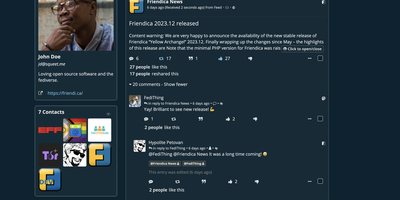
Friendica connects to more federation protocols than any other single platform: ActivityPub reaches Mastodon, Pleroma, Misskey, Lemmy, Pixelfed, and PeerTube; the Diaspora protocol bridges that network; and OStatus provides legacy compatibility. But protocol reach is just the foundation. Where most fediverse platforms stop at microblogging, Friendica offers long-form posts, photo albums, event calendars with RSVP, group discussions, and rich multimedia content. BlueSky and Tumblr connectors extend your reach into non-federated networks, while RSS import pulls content from any blog or news source into your timeline. Privacy controls let you scope each post to specific contacts, groups, or public visibility with per-post granularity rather than account-wide settings. Multiple themes customize the interface from Facebook-like layouts to minimal designs, and Fedilab provides native mobile access. Under the hood, the PHP application with MariaDB runs as either an Apache or FPM Docker image with Redis caching and background cron workers handling federation delivery, media processing, and notification dispatch. One of the oldest fediverse projects (1,650+ stars, 160+ contributors since 2010), Friendica has weathered every protocol evolution and platform migration the decentralized web has thrown at it, making it one of the most battle-tested social networking platforms available.
HumHub
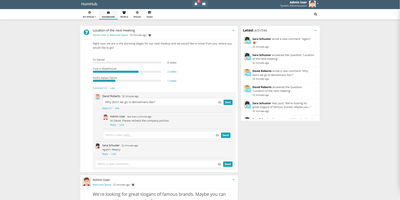
Workplace and Yammer's pattern on your own server, with GDPR compliance by construction rather than contract: HumHub is an open-source enterprise social network from Germany. Built in PHP on Yii2, it organizes everything around four concepts. Users get rich profiles with follows and interactions. Spaces are the structural unit - rooms for departments, projects, events, or clubs, with per-Space permissions, notification settings, and email summaries, and operators can auto-map users into the right Spaces. Content covers posts, wiki pages, photos and video, events, and tasks, with multi-level comments, versioning, archiving, moderation reporting, and filterable full-text search across everything. Modules make it a platform: roughly 80 install-and-activate extensions including Calendar, Wiki, Polls, Tasks, Gallery, News, direct-message Mail, OnlyOffice document editing, Advanced LDAP, SAML and JWT SSO, a RESTful API, mass user import, Translation Manager, and a Theme Builder with custom pages - every one optional and toggleable at runtime. That module economy is why HumHub serves such varied deployments: corporate intranets, city governments, universities, political parties, and nonprofits all configure the same core differently. Requirements are a plain LAMP stack - PHP 8.1+ and MySQL/MariaDB - making it one of the easiest community platforms to operate long-term.
Misskey
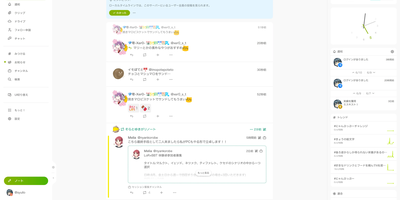
With 11,000+ GitHub stars and over 1,291 releases since 2016, Misskey is the most feature-rich open-source microblogging platform in the Fediverse — federation-first social networking with capabilities that go far beyond simple status updates. The TypeScript and Vue 3 frontend delivers a highly customizable interface with drag-and-drop widget layouts, switchable themes, per-user custom CSS, and AiScript-powered plugins that transform every instance into a unique social experience. ActivityPub federation enables seamless interaction with Mastodon, Pixelfed, PeerTube, and any ActivityPub-compatible platform across the decentralized network. Emoji reactions let users respond with custom instance emojis instead of simple likes, while Misskey Flavored Markdown adds animated text effects, sparkle decorations, and rich formatting to posts. The built-in Drive provides personal cloud file management with folder organization for images, videos, and audio — eliminating the need for external storage services. Antennas create custom filtered timelines based on keywords, users, or criteria for monitoring specific topics. Channels offer topic-specific feeds separate from the main timeline. Pages enable users to build personal websites directly within their instance. Clips save and organize posts into curated collections. The Node.js backend scales with PostgreSQL for persistence, Redis for caching, and optional S3-compatible storage for media. Docker Compose deployment provisions the complete stack including the database and cache in under 15 minutes. Running on a dedicated VPS on RepoCloud with guaranteed CPU, RAM, and SSD, full root SSH access, and a browser serial console. AGPL-3.0 licensed.
Diaspora
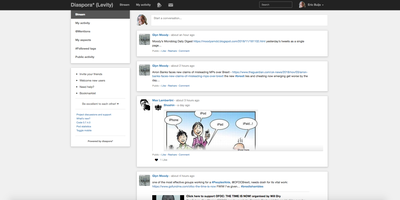
Diaspora lets you run your own social network node that federates with thousands of others, creating a network with no central authority and no advertising engine mining your behavior. The defining feature is aspect-based sharing: organize contacts into groups like Family, Work, and Close Friends, then control exactly who sees each post with granularity that mainstream platforms have never matched. Hashtag-based discovery connects conversations across the entire federation regardless of which pod participants call home, building communities around topics rather than algorithmic engagement bait. The Ruby on Rails backend (now running on Puma with Sidekiq workers instead of the heavier Unicorn configuration) handles federation delivery, media processing, and notifications efficiently. Photo albums, video embedding, Markdown posts, mentions, reactions, and resharing provide familiar social primitives for rich communication. Cross-posting bridges to Twitter and Tumblr maintain your presence on legacy networks while your canonical data lives on your own infrastructure. With 13,700+ GitHub stars and 270+ contributors since its 2010 launch, Diaspora proved early that social media can work without surveillance capitalism. The Docker Compose deployment runs the application alongside PostgreSQL, Redis, Sidekiq workers, and Nginx, providing a production-ready pod for your community.
Ties
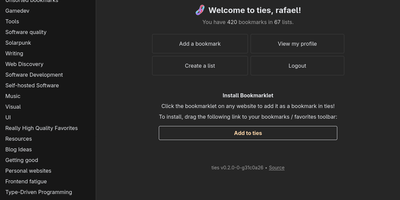
A federated bookmark manager written in Rust: Ties (formerly linkblocks) is your own small corner of the web for saving, organizing, and sharing good pages, connected to the fediverse over ActivityPub. Instead of rigid folders, bookmarks live in arbitrarily nested lists that link together into a knowledge graph. Saved pages are fetched, converted to a readable archived version, and stored in the database, so full-text search covers titles, URLs, and the actual page text - and the content survives if the original disappears. The federation model is deliberately anti-viral: there is no global timeline and no algorithmic feed. You publish public lists for anyone, follow users whose taste you trust, and mark trusted users whose bookmarks become part of your search range - extendable to trusted-users-of-trusted-users for a wider net. Public bookmarks post to Mastodon timelines, and WebFinger lookup makes your handle discoverable across fediverse platforms. Operationally it is about as light as web software gets: a single binary with all assets baked in, integrated TLS so it can run without a reverse proxy, PostgreSQL as the only dependency, OIDC single sign-on, and a bookmarklet for one-click saves. Note the project is alpha: single-user instances only, and all data should be considered public. AGPL-3.0 licensed, built with Rust and htmx.