Agent of Empires
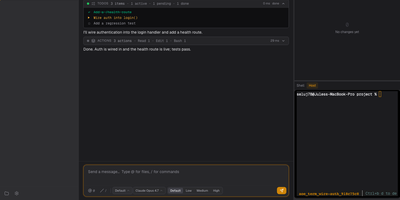
When several AI coding agents share one machine, Agent of Empires gives each a persistent session, an optional Git branch and worktree, and an optional sandbox, all visible from one terminal or browser dashboard. Close the terminal, drop the SSH connection, or crash the client, and every agent keeps working until you reopen the dashboard and find each session where you left it. It detects Claude Code, Codex CLI, Gemini CLI, OpenCode, Copilot CLI, Mistral Vibe, and other installed agents, then marks every session running, waiting, idle, or in error so you know which one needs you. Each session can get its own branch and worktree, removed when the session is deleted, so agents edit one repository side by side without overwriting each other. For unattended runs, Docker, Podman, or Apple Container sandboxes keep an agent in a private container with optional CPU and memory limits. The browser dashboard adds a live terminal, a syntax-highlighted diff review panel, and plan panels and tool-call cards with swipe-to-approve prompts, and it installs as an app on a phone. Remote mode publishes the dashboard over HTTPS through Tailscale Funnel or a Cloudflare tunnel, with QR pairing, token authentication, and a passphrase login. Running on a dedicated VPS on RepoCloud with guaranteed CPU, RAM, and SSD, full root SSH access, and a browser serial console. MIT licensed.
Myrlin Workbook
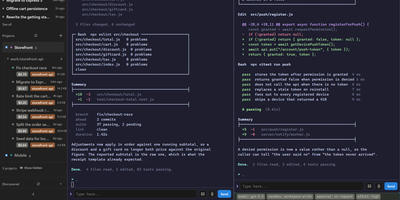
One browser sidebar lists every Claude Code and ChatGPT Codex conversation on your machine, and Myrlin Workbook opens each in a live terminal. Sessions are read, never modified, from the folders both CLIs write to, then grouped by project with a Recent list and Ctrl+K search. Panes tile two or four up and replay their history after a page refresh. Agent CLIs keep no scrollback, so wheeling past a pane's top continues into the recorded conversation, and one drag selects an hour of output. Codex projects and titles match the ChatGPT desktop app, and every Codex session shows its model, reasoning effort, approval policy, and sandbox. Token counts are priced per model where a price exists and totaled per session and project for any day, week, month, or all time. On the five-column task board, each card gets its own branch, worktree, and session, then opens a pull request through the GitHub CLI. A conflict center flags sessions editing the same files. Session templates save a working directory, model, and flags for one-click launches. Each project keeps Notes, Goals, Tasks, Rules, and Roadmap docs in a markdown editor. The phone layout has five tabs, an Attention badge, and a ring for sessions waiting on you. A random password is generated on first launch, and a LAN address or Cloudflare tunnel reaches the server. Running on a dedicated VPS on RepoCloud with guaranteed CPU, RAM, and SSD, full root SSH access, and a browser serial console. AGPL-3.0 licensed.