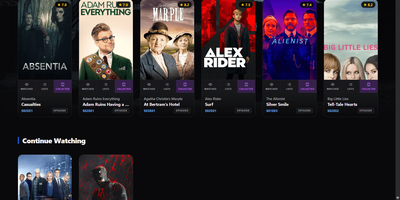
Scrob
Scrob is your own private Letterboxd and Trakt: it syncs Jellyfin, Plex, and Emby libraries, tracks every movie and episode you watch, and keeps ratings and lists on your server. Connect Jellyfin, Plex, Emby, Nuvio, ARVIO, or Stremio and Scrob imports libraries, watched status, and playback progress, then pushes watched state and ratings back to keep every server aligned. Webhooks from Jellyfin, Plex, and Emby and the scrob-kodi addon mark items watched the moment playback finishes; a manual scrobble starts a live session from any title page. Rate titles on a ten point scale, score seasons separately, add reviews, and log repeat plays with their own dates. Personal lists stay private or open to other users on your instance, comments attach to titles, seasons, and episodes, and following users surfaces their ratings and activity. TMDB powers discovery: trending titles, genre and provider filters, release schedules, and search across people and collections merged with your library. Detail pages combine posters, cast, trailers, and your files' quality details, and one click sends a missing title to Radarr or Sonarr. Continue Watching and Next Up cards, a fifteen day episode calendar, and Pick a Movie or Pick a Show suggestions answer what to watch next. Trakt, Simkl, and MDBList sync moves history and ratings in both directions. Running on a dedicated VPS on RepoCloud with guaranteed CPU, RAM, and SSD, full root SSH access, and a browser serial console. GPL-3.0 licensed.
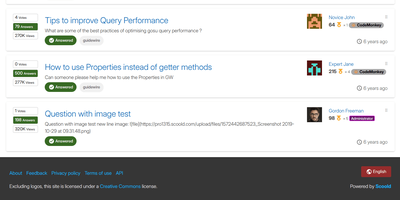
Scoold
Scoold brings Stack Overflow-style Q&A to a server you control, so answers get voted, accepted, and found again instead of scrolling away in chat. Askers get a Markdown editor with live preview, tags, and emojis, and the form suggests similar questions and flags likely duplicates before anything is posted. Answerers collect upvotes, accepted answers, reputation points, and badges, including custom ones with your own text, icon, and color. Authors and moderators can restore any earlier revision, because every edit is kept. Searchers can use Lucene syntax such as exact phrases, wildcards, and boolean operators. Admins split one site into private spaces, up to ten in the free edition, and choose how people sign in: email and password, LDAP, or social providers such as Google and GitHub. They can also back up and restore data, import a Stack Overflow for Teams export, and follow a dashboard of questions, answers, traffic, and active members. Builders get a REST API with OpenAPI docs, signed webhooks, Zapier and n8n connectors, and an optional MCP server for AI assistants. Color themes include a dark mode, Mermaid diagrams and KaTeX formulas can be switched on, and right-to-left languages are supported. SAML, SCIM, file uploads, and chat integrations are Pro-edition features. Running on a dedicated VPS on RepoCloud with guaranteed CPU, RAM, and SSD, full root SSH access, and a browser serial console. Apache-2.0 licensed.
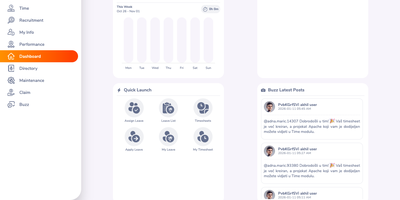
OrangeHRM
Leave balances, timesheets, and employee files tend to scatter across spreadsheets as a company grows; OrangeHRM pulls them into one human resources system that runs entirely on your own server. Human resources staff keep a complete record for every employee, from contact details and job history to documents, dependents, and custom fields the organization defines. Employees request vacation, sick days, or any leave type you configure, and supervisors approve or reject each request against live entitlement balances instead of counting days by hand. Timesheets and punch-in, punch-out attendance records show who worked on which project and for how long, turning payroll preparation into a review step instead of an investigation. When a position opens, vacancies are published, applications collected, and candidates moved through screening, interviews, and offers with every comment kept on the candidate record. Performance reviews run on scheduled cycles with goals and appraisals recorded per employee, so annual reviews stop depending on whoever kept the best notes. Administrators shape the system around the company itself: organization structure, job titles, pay grades, locations, user roles, and the logo and colors employees see at login. Built-in reports answer everyday questions, like whose contracts end this quarter or which department used the most leave, and the directory gives everyone a searchable view of who does what. Running on a dedicated VPS on RepoCloud with guaranteed CPU, RAM, and SSD, full root SSH access, and a browser serial console. GPL-3.0 licensed.
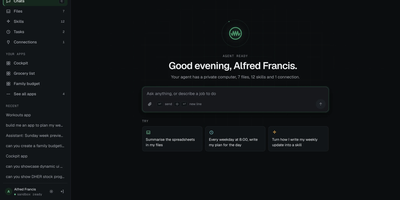
AI Chatbot Framework
Ask for a job in plain words and an agent with its own private computer does it: it reads files, runs commands, calls connected apps, and reports back in the chat. Every user gets a persistent sandbox workspace, so one person's files and commands never touch another's. Type a new message mid-run and the agent picks it up without stopping, or press Stop at any time. For bigger jobs the agent starts sub-agents that work side by side, each on a model of its choice, and the chat shows what each one is doing. Skills teach it repeatable methods in the open Agent Skills format; upload a zip, write one by hand, or let the agent write its own, and use them from a slash menu. The Connections page links Linear, Notion, Jira, Stripe, and other apps through one-click OAuth sign-in, or any MCP server by address. Scheduled tasks run on a repeating or one-time schedule, and each run becomes a readable chat. Small personal apps like a to-do cockpit or budget view appear in the sidebar, and charts, plans, and forms can render right inside answers. A files browser, an artifacts panel, a command menu, light and dark themes, and a phone layout round out the interface. Running on a dedicated VPS on RepoCloud with guaranteed CPU, RAM, and SSD, full root SSH access, and a browser serial console. MIT licensed.
MeshMonitor
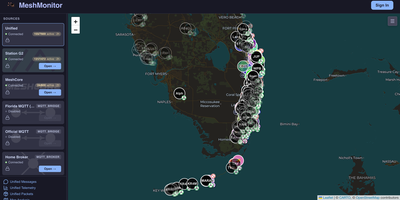
Off-grid radio networks are wonderful until you need to see all of them at once, and MeshMonitor puts every Meshtastic node, MeshCore companion, and MQTT broker on one shared dashboard. Each source keeps its own map, messages, telemetry, and traceroutes, and unified views merge them so a node heard by three radios appears once. Nodes plot on an interactive map with signal colors, clustering, topology overlays, and imported GeoJSON, KML, or KMZ zones. Channel chat supports replies, tapback reactions, and full-text search, and telemetry widgets chart battery, voltage, signal strength, and hop distribution over windows from 15 minutes to 7 days. Automation covers auto-responders, scheduled messages, auto-traceroute, and geofence triggers, with custom Node.js, Python, or shell scripts for anything else. A built-in MQTT broker and bridges filter traffic by topic, channel, or bounding box so a local mesh stays tidy. Security checks flag weak or duplicate encryption keys, and an audit log records every privileged action. Admins grant each person access to specific sources, using local accounts, OIDC sign-in, and MFA, and push alerts reach phones and chat apps through Apprise. Use it for a community mesh club, an emergency preparedness network, a fleet of solar-powered relays, or a neighborhood radio project. Running on a dedicated VPS on RepoCloud with guaranteed CPU, RAM, and SSD, full root SSH access, and a browser serial console. BSD-3-Clause licensed.
Coral
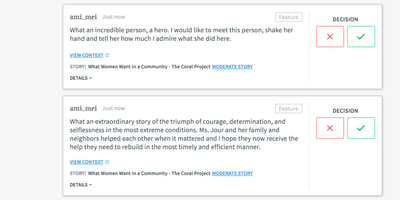
Comment sections at the Washington Post, the Wall Street Journal, and newsrooms across 30 countries run on Coral (also known as Talk) - the platform built by journalists' technologists, started under the Mozilla Foundation and now stewarded by Vox Media as an Apache-2.0 project serving 23 languages. Its founding premise is that online comments are broken and moderation is the fix. Moderators get a full queue system - reported comments, system-held pending comments, and configurable pre-moderation - backed by AI toxicity scoring that warns commenters before posting and holds high-scoring comments for review, Akismet spam detection, banned and suspect word lists, and automatic repeat-offender handling that pre-moderates users whose rejection rate crosses a threshold. Readers get features designed for healthier conversation: journalist badges in threads, muting of annoying voices, notifications, instant new-comment alerts, and timeouts rather than just bans. For publishers the economics are the point - no ads, no trackers, no hidden pixels anywhere in the code, full ownership of audience data, and GDPR compliance beyond requirements. Integration is one embedded script; SSO connects existing registration, and a GraphQL API supports customization and extension.
Kimai
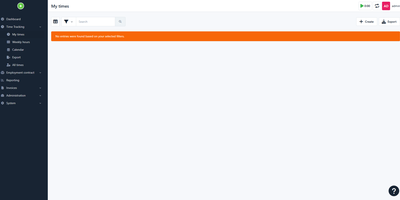
From a freelancer logging billable hours to companies with hundreds of users, Kimai scales professional-grade open-source time tracking - a Symfony/PHP application without the per-seat pricing of Harvest or Toggl. Tracking is flexible by design: run multiple concurrent timers, use punch-in/punch-out mode, or enter times manually, organized by customer, project, and activity with tags, and priced by user-, customer-, or project-specific rates. The billing pipeline is where Kimai earns "professional grade": generate invoices directly from timesheet data with configurable templates (DOCX, ODS, XLSX, PDF), entry grouping, and invoice-number generators, while an export flag locks billed records against editing and excludes them from future invoices - the audit-safety detail spreadsheet workflows never get right. E-invoicing supports EN 16931, XRechnung 3.0, and Zugferd/Factur-X. Enterprise controls come standard: SAML and LDAP login against Google Workspace, Azure AD, or Authentik, TOTP two-factor auth, customizable role permissions, and teams that scope customers and projects to departments. Money and time budgets alert before overruns, advanced reporting slices recorded time by any dimension, and an extensive JSON API plus a plugin marketplace (expenses, approvals, and more) integrate it with existing infrastructure. Over 30 translations, multi-timezone, AGPL-licensed.
Codever
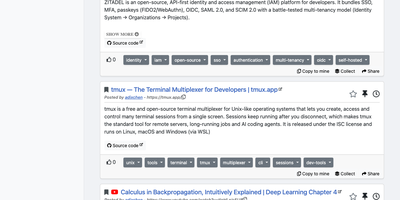
Every developer has a graveyard of browser tabs, chat messages, and stray text files holding links and code worth keeping; Codever replaces the graveyard with a bookmarks, notes, and snippets manager designed for developer workflows. Save a page in two clicks from Chrome or Firefox, drop selected text in as a snippet or note, or use the bookmarklet in any other browser, with title, description, and tags prefilled for you. From IntelliJ IDEA and Visual Studio Code you can push code straight into your library and pull it back without switching to the browser. Bookmarks carry descriptions and tags, and Pinned and Read Later lists sit beside your history so rediscovery takes seconds. Notes are written in Markdown and render with math, tables, and inline code, while snippets keep reusable code one search away with its context attached. Full text search spans bookmarks, notes, and snippets at once, with Brave, Google, Stack Overflow, and Bing one click away when the library comes up empty. Entries can be public, copied into your own collection, or gathered into curated sets for a team or topic. Accounts sign in through Keycloak with GitHub, Google, GitLab, or Stack Overflow, so a self-hosted instance fits the identity setup your team already uses. Running on a dedicated VPS on RepoCloud with guaranteed CPU, RAM, and SSD, full root SSH access, and a browser serial console. MIT licensed.
ProcessWire
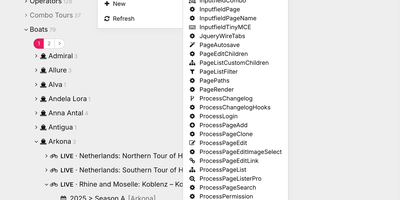
ProcessWire shapes a website around your content instead of the other way around: define your own fields, group them into templates, and manage every page from a tree that mirrors the structure of your site. Any field can sit on any template, from text and numbers to images, files, page references, and repeatable groups with show-if and required-if dependencies. Templates are ordinary files you write however you like, so a page can render HTML, JSON, XML, or an RSS feed with no theming layer in the way. Editors work in a fixed-header admin with light and dark modes, a keyboard-driven search, and a rich text editor that accepts dragged-and-dropped images, while chosen fields can also be edited in place on the live page with a double-click. Lister builds filtered page lists across any field with the columns you pick. Images can be resized, cropped, rotated, and given a focus area for automatic crops. Multi-language text fields, language-specific URLs, and a translation tool for template strings let one page serve several audiences. Role-based access control sets view, edit, and create rights per template, optional two-factor authentication protects logins, and the Modules screen installs and configures plugins. A core upgrade means replacing the wire directory. Running on a dedicated VPS on RepoCloud with guaranteed CPU, RAM, and SSD, full root SSH access, and a browser serial console. MPL-2.0 licensed.
drawDB
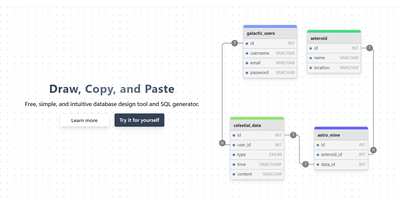
Schema design with no account and a few clicks: drawDB is the browser-based entity-relationship diagram editor and SQL generator - an AGPL-3.0 React project with over 37,000 GitHub stars. Draw tables with columns, data types, defaults, and constraints; connect fields to create foreign-key relationships; group tables into labeled subject areas; and annotate with notes. When the design is ready, one export produces CREATE TABLE DDL - with constraints, indexes, and foreign keys - targeted at MySQL, PostgreSQL, SQLite, MariaDB, SQL Server, or Oracle. Diagrams can be database-specific, unlocking every native type plus dialect features like PostgreSQL enums and composite custom types, or generic for portability across all supported flavors. The reverse direction works too: paste existing DDL into the import dialog and drawDB renders your live schema as a navigable diagram - the fastest way to document an inherited database. Versioning and migration-script generation track schema evolution, full editor ergonomics (undo/redo, copy/paste, duplicate, themes) keep iteration fast, and diagrams export as PNG, SVG, or shareable JSON. Everything runs client-side against browser storage - no backend database connection needed - so the self-hosted Docker deployment is a featherweight static app that keeps proprietary schema designs entirely on your infrastructure.

WBO
A Node.js server, a large shared canvas, and a URL - WBO (Whiteboard Ophir) is collaborative whiteboarding reduced to its essence. There are no accounts and no setup - to collaborate, you send someone the board's link, and every stroke appears for all connected users in real time over WebSockets, with cursor positions shared so you can see where collaborators are working. Board state persists automatically and continuously, so a diagram drawn in today's lesson is still there next week at the same URL. Boards come in three flavors: a public free-for-all, private boards with random unguessable names, and named boards with custom URLs shared by anyone who knows the name. The tools cover teaching and brainstorming needs - pencil, straight lines, rectangles, ellipses, text annotations, eraser, a full color palette with brush sizes - and boards export as SVG or PNG. Despite the simplicity, the server is production-minded: JWT authentication gates board access with granular capabilities (open, edit, and clear as separate permissions), rate limiting caps per-client message volume, reverse-proxy and subpath deployment are supported, and OpenTelemetry provides metrics, logs, and traces. It works on tablets and touch devices, speaks multiple languages, and consumes minimal resources. AGPL-licensed.
Whiteboard
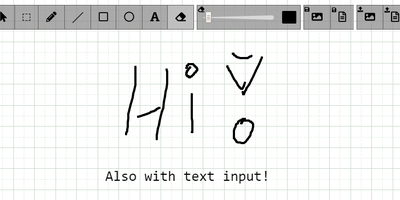
The drawing surface inside WebRTC conference tools like Meetzi and the LAMS online-learning platform is Whiteboard (by cracker0dks) - a lightweight Node.js collaborative sketchboard built to be embedded and customized, which also slots into Nextcloud via the External Sites app. Everyone opening the same whiteboardid URL parameter draws on the same board, with remote user cursors visible live, per-user undo/redo, and an indicator showing the smallest participating screen so nobody draws outside a colleague's view. Content handling goes beyond pen strokes: drag-and-drop or paste images and PDFs from any PC or browser, then resize, rotate, and draw over them on canvas or background; add text and sticky notes; hold Shift for angle-snapped lines and perfect squares. Every function has a keybinding - deliberately friendly to pen displays like Wacom and XP-Pen whose hardware buttons map to shortcuts. Boards save to image or JSON (with reload), export directly to Nextcloud via WebDAV, and persist across restarts with the file-database option. A REST API with bundled interactive docs allows full programmatic control, an optional access token locks down uploads, and YAML configuration tunes behavior and performance. MIT-licensed and reverse-proxy friendly.
TileServer GL
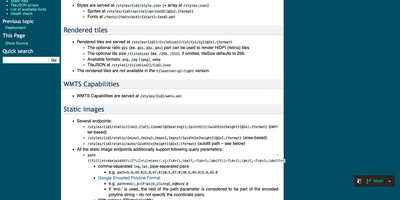
TileServer GL turns map data files on your server into the styled map tiles that websites and mobile apps expect, so your maps stop depending on a commercial tile provider and its usage bill. Feed it an MBTiles or PMTiles file, for example an OpenMapTiles extract of a city, a country, or the whole planet, and it serves vector tiles straight from the file to MapLibre GL JS, mobile SDKs, Leaflet, and OpenLayers clients. The full version renders raster tiles on the server side too, producing PNG, JPEG, and WebP images at standard or retina resolutions for clients that cannot draw vector maps. Cartography stays in your hands through GL styles: the server hosts the style JSON, sprites, and font glyphs, and every layer color, label, and road casing can be restyled and republished without touching the underlying data. GIS tools connect through WMTS capabilities documents, and TileJSON endpoints describe every served dataset for automatic client configuration. Static image endpoints answer with finished map pictures for reports, thumbnails, and emails, centered on coordinates or fitted to an area, with route lines and markers drawn onto the image on request. A built-in browser viewer lists your styles and data sources for a quick look at what is being served, terrain datasets can answer elevation queries by coordinate, and a health endpoint reports when the server is ready. Running on a dedicated VPS on RepoCloud with guaranteed CPU, RAM, and SSD, full root SSH access, and a browser serial console. BSD-2-Clause licensed.
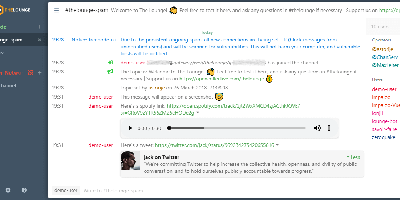
The Lounge
"Forget about bouncers" became a real sentence because of The Lounge: a Node.js web IRC client that holds persistent connections to your networks 24/7, logging everything while you sleep, so closing the browser tab never means missing a message or losing your place in a channel. Open it again from any device - desktop, phone, tablet - and you resume exactly where you left off, with full history synchronized. Because it combines bouncer and client in one process, the experience feels like a modern chat app rather than 1990s infrastructure: push notifications for highlights and private messages (with self-generated VAPID keys, so even Web Push needs no third-party service), automatic link previews, inline file and image uploads, and full IRCv3 protocol support. It installs as a progressive web app from any modern browser, so phones get a native-feel client without an app store. Multi-user support means one instance serves your whole team or community, each user with their own networks and history, and LDAP integration ties into existing authentication. A public mode alternatively serves as an open, registration-free web chat for events or support channels. MIT-licensed, born as a fork of Shout, and a fixture of self-hosting stacks since.
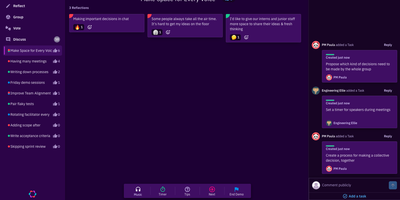
Parabol
Retrospectives, sprint poker, check-ins, and standups all get a home in Parabol, a meeting workspace that walks agile teams through each ritual one stage at a time and keeps every outcome in one place. A retrospective flows from icebreaker to reflect, group, vote, and discuss, with anonymous reflection cards that stay hidden until everyone is done writing, then cluster into themes before dot voting decides what deserves airtime; Start/Stop/Continue, 4Ls, and Mad/Sad/Glad templates are ready to use or customize. Sprint Poker estimates stories on Fibonacci, T-shirt, or custom scales, pulling backlog items from Jira Cloud, GitHub, GitLab, or Linear and pushing the agreed estimate back. Check-ins work through agenda items and task updates, while standups gather written answers on a recurring schedule so distributed teams stay current across time zones. A facilitator timer sets deadlines for asynchronous contributions, with optional Slack or Mattermost notifications to the team. Action items land on a shared task board with active, stuck, done, and future columns, and Pages hold real-time collaborative notes next to the meetings that produced them. Every meeting closes with a summary of attendees, discussion, and next steps that can be emailed to the team. Running on a dedicated VPS on RepoCloud with guaranteed CPU, RAM, and SSD, full root SSH access, and a browser serial console. AGPL-3.0 licensed.
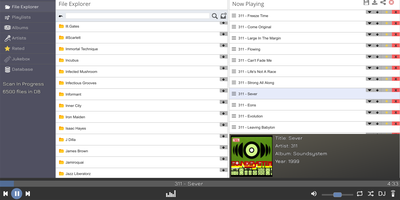
Mstream
"The easiest music streaming server available" is mStream's own billing, and the claim holds up: a lightweight Node.js app that turns a folder of audio files into a private streaming service in minutes, no external database required. Its filesystem-based design is the clever part - the API mirrors your folder structure, so you can browse and play music immediately, before any library scan finishes, and your organization on disk is your organization in the app. It streams flac, mp3, wav, ogg, opus, aac, and m4a, which matters to the audiophile crowd: FLAC plays uncompressed, bit-perfect, with gapless playback for live albums and continuous mixes. The web player runs anywhere a browser does and packs personality - a Milkdrop-style visualizer (Butterchurn), playlist sharing via links, and drag-and-drop uploads straight through the file explorer. Native iOS and Android apps add the feature streaming subscriptions can't match: sync your collection to your phone for true offline playback of music you own. Multi-user support assigns separate directories and permissions per account. Resource usage is famously light - mStream is tested on multi-terabyte libraries and runs happily on a Raspberry Pi, so a small RepoCloud instance serves a lifetime's collection. GPL-licensed, with zero listening-habit telemetry.
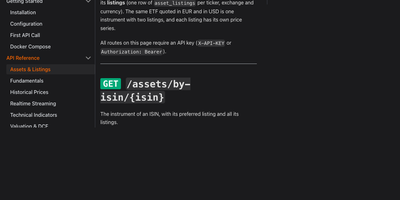
Fonrex
Good European market data is either expensive or wrong, so Fonrex runs it all on your server: a self-hosted API serving per-listing prices, cross-checked fundamentals, DCF valuations, and factor models for European and US shares, with no subscription or per-call meter. Every price is stored per listing in its own currency and dated by trading session, so AIR.PA resolves to Airbus rather than a same-ticker US namesake, and one ISIN can carry many listings cleanly. Fundamentals are cross-checked between sources first; figures that disagree with the consensus are rejected, and every answer names the sources it came from. Value any company three ways with FCF, EPS, and dividend DCF models, compare them side by side, and stress the result with a WACC by growth sensitivity matrix. Factor tools return Kenneth French returns for the US, Europe, and developed markets, compute listing factor exposure, and price equity with the risk-free rate of the right currency, alongside FRED and ECB rates, Treasury curves, and Eurostat indicators. Daily history spans ten years, split-adjusted with a dividend-adjusted close; live ticks stream over WebSocket, indicators and a screener run on your stored prices, and deduplicated news arrives per ticker or as a global feed. Results plug into OpenBB Workspace, Google Sheets, Python notebooks, and Zipline backtests, so spreadsheets, dashboards, and research pipelines all read the same numbers. Running on a dedicated VPS on RepoCloud with guaranteed CPU, RAM, and SSD, full root SSH access, and a browser serial console. AGPL-3.0 licensed.
Wraft
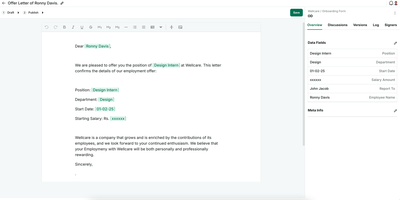
Wraft takes the documents your business runs on, from offer letters and contracts to reports, and gives them a proper lifecycle instead of a life scattered across word processors and email threads. Designers capture the house style once as themes and layouts, template authors build documents from reusable blocks and variants with dynamic fields, and everyone else simply fills in the values and generates a finished, on-brand PDF. Flows define how a document travels from drafting through review and approval to signing and distribution, with an activity log that shows who touched it and when. Pipelines go further, turning one set of data inputs into many generated documents automatically, which is how a hundred personalized letters stop being a hundred manual edits. Workspaces keep teams, roles, and fine-grained permissions separate per organization, imported templates bring existing documents into the system, and because everything is stored as Markdown and JSON your content stays readable and portable long after any single tool. Running on a dedicated VPS on RepoCloud with guaranteed CPU, RAM, and SSD, full root SSH access, and a browser serial console. AGPL-3.0 licensed.