Bonfire
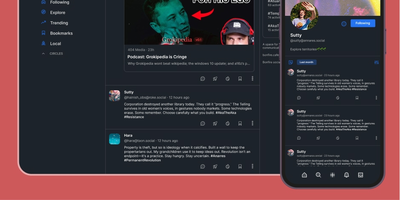
A social network shaped like your community, not like an advertiser's funnel. Bonfire is an open-source toolkit for building federated online spaces where a group hosts its own home, sets its own rules, and still talks with the wider fediverse. Pick a flavour to start: Social for familiar timelines and profiles, Community for groups and topics, Open Science for research collaboration, with coordination and cooperation spaces in development. Everything is an extension, so each instance enables only the pieces it wants, from boundaries and circles that control exactly who sees each post, to custom feeds, direct messages, bookmarks, and trending topics. Members follow people and groups across servers, boost and quote posts, and carry one identity through conversations that cross instance lines. Moderation is granular by design: instance, group, and personal controls combine, and public posts can stay readable without an account to welcome newcomers. Organisers customise branding, extensions, and defaults instead of accepting a platform's roadmap, and developers write new extensions when a community needs a feature nobody built yet. The result is a small, governable internet: your server, your members, connected to everyone. Running on a dedicated VPS on RepoCloud with guaranteed CPU, RAM, and SSD, full root SSH access, and a browser serial console. AGPL-3.0 licensed.
Obsei
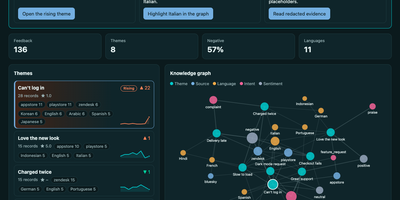
Before any AI model reads a single customer message, Obsei has already stripped out the names, email addresses, card numbers, and ID numbers hiding inside it. Obsei pulls in what customers are saying from App Store and Google Play reviews, Zendesk, Freshdesk, and Intercom tickets, GitHub issues, surveys, YouTube comments, Bluesky, RSS feeds, SQL databases, and even Gong call transcripts. Every record is pseudonymised on the way in and stored in an encrypted database that never phones home. Then the labelling starts: sentiment, intent, language, and your own custom questions, each answered with a confidence score by a zero-shot classifier running locally on your machine, or by an LLM you choose through your own keys. Answers the model is unsure about are escalated to a stronger model or queued for a human instead of being silently wrong. Related complaints roll up into stable themes with week-by-week trends, and anything mentioned by fewer than five people stays hidden, so individuals cannot be picked out of a chart. When a theme spikes, alerts and digests land in Slack, and individual findings can be routed straight into Jira, Linear, or GitHub issues. Your analysts browse it all in the built-in Studio, and your AI agents can ask questions over MCP and get cited, redacted evidence back, with any action they propose waiting for your approval. Running on a dedicated VPS on RepoCloud with guaranteed CPU, RAM, and SSD, full root SSH access, and a browser serial console. Apache-2.0 licensed.
LibreBooking
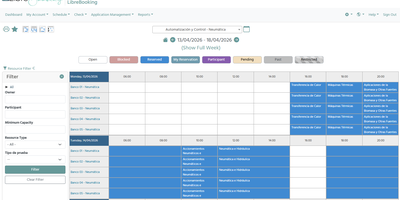
Conference rooms, equipment, boats, and even people can be reserved through LibreBooking, a self-hosted scheduler that keeps double bookings off the calendar. Schedules define bookable time slots with custom layouts and seasonal availability, while each resource carries its own minimum and maximum duration, buffer time, lead time, capacity, and optional approval step. Check-in and check-out can release unclaimed slots automatically, and blackout times close resources for maintenance. Quotas stack limits by hours or reservation count, credits meter peak and off-peak usage, and users can buy credits through Stripe or PayPal. Accessories such as projectors or chairs ride along with a booking under their own quantity limits. Groups carry application, group, resource, and schedule administrator roles, and custom attributes extend reservations, resources, and users with text, dropdown, date, or checkbox fields. Reports can be charted, exported to CSV, printed, or emailed, and public resources publish RSS and iCalendar feeds for Outlook and Thunderbird plus an embeddable calendar snippet. A tablet view beside a door shows live availability for on-the-spot booking, a monitor view fills lobby screens, and a Slack command starts a reservation. Sign-in options include LDAP, Active Directory, OAuth2, and SAML, and the REST JSON API automates bookings. Users can join waitlists, request reminder emails, and accept terms of service before booking, while six color themes restyle the interface. Running on a dedicated VPS on RepoCloud with guaranteed CPU, RAM, and SSD, full root SSH access, and a browser serial console. GPL-3.0 licensed.
Freki
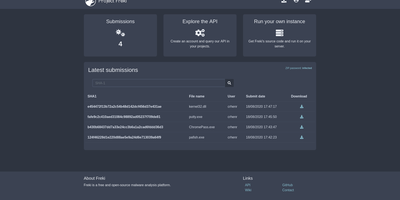
When a suspicious executable lands in your inbox, Freki gives your team a private place to pull it apart before it touches the network. Upload a sample through the web interface and Freki extracts its fingerprints at once: MD5, SHA-1, SHA-256, SHA-384, and SHA-512 hashes, plus CRC32 and SSDEEP fuzzy hashes for spotting near-duplicate variants. Static analysis then dissects Windows PE files without running them, reporting headers, sections, imported libraries, embedded strings, and capabilities identified in the code. A YARA engine sweeps every sample against your rule sets, so signatures your analysts write flag matching files the moment they arrive. Connect a VirusTotal API key and each report gains antivirus detection results from dozens of engines, placed next to your local findings. The same analysis runs through a REST API, so intake pipelines, mail gateways, and triage scripts can submit files and read verdicts automatically. Analysts discuss findings in community comments attached to each sample, building a shared memory of what a file is and why it matters. Accounts control who may submit samples and call the API, and every analyzed sample stays downloadable for re-examination or sharing with trusted peers. Docker Compose brings the whole platform up behind Nginx with its MariaDB database, keeping live malware samples on your own hardware instead of a public service. Running on a dedicated VPS on RepoCloud with guaranteed CPU, RAM, and SSD, full root SSH access, and a browser serial console. AGPL-3.0 licensed.
Ferro Labs AI Gateway
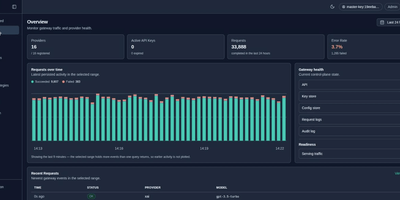
Thirty model providers, one OpenAI-compatible endpoint: Ferro Labs AI Gateway routes every request from your applications to the provider that should answer. Eight routing strategies cover fallback chains, weighted load balancing, lowest latency, lowest cost, content-based rules, A/B tests, and conditional targets, each with retries and circuit breakers. Guardrail plugins filter blocked words, redact personal data, scan for leaked secrets, block prompt injection, validate response schemas, and enforce rate limits and per-key spend budgets. Identical prompts can come back from a response cache, and tool servers connect through MCP so the gateway can run the tool-call loop itself. The console opens with a getting-started checklist, then charts traffic, token throughput, latency percentiles, and cost by model. Providers, routing targets, and plugins each get their own page, a playground sends test chats through the real routing path, and request logs plus an audit trail record who changed what. Scoped admin and read-only keys give every operator separate access, and configuration history allows a rollback. OpenTelemetry traces and Prometheus metrics feed existing dashboards. Running on a dedicated VPS on RepoCloud with guaranteed CPU, RAM, and SSD, full root SSH access, and a browser serial console. Apache-2.0 licensed.
Papercups
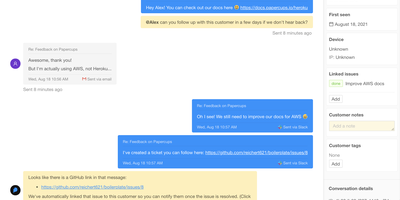
Companies with privacy and security concerns about piping customer conversations through Intercom or Zendesk run Papercups - open-source live customer chat. The stack is a deliberate strength: an Elixir/Phoenix API over PostgreSQL, with real-time messaging powered by Phoenix Channels and Presence - the same BEAM foundation trusted by Discord and PagerDuty for fault-tolerant, low-latency messaging. Customers see a customizable chat widget that embeds in any site as an HTML snippet, a React component, or even inside React Native apps, with configurable colors, greetings, and away messages. Your team sees a dashboard for managing conversations - close, assign, and prioritize - with Markdown and emoji in replies. The killer workflow is the reply-channel integration: connect Slack or Mattermost and every customer conversation becomes a synced thread your team answers without leaving the tool they already live in, with two-way message syncing handled by webhooks. Email and SMS channels extend intake beyond the widget, an analytics dashboard tracks communication patterns, and the Storytime feature adds real-time screen sharing to watch users navigate while you help them. A documented API supports fully custom chat UIs in Svelte, Flutter, or Vue. MIT-licensed and GDPR-conscious - customer data stays in your PostgreSQL.
Tiledesk
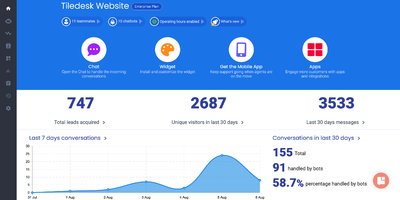
Tiledesk lets you build AI-powered conversational agents with a visual drag-and-drop designer, then deploy them simultaneously across web chat, WhatsApp, Telegram, Facebook Messenger, Instagram, email, and Slack without rebuilding per channel. The no-code Design Studio combines LLM-powered conversations with conditional logic, external API calls, and branching dialogue trees that work identically everywhere. Multi-RAG knowledge management separates content into isolated repositories with hybrid search combining traditional full-text retrieval and semantic understanding via Qdrant vector embeddings, enabling accurate answers even when users phrase queries in unexpected ways. LLM integration supports GPT-4, GPT-4o, Anthropic Claude, and any model exposing an OpenAI-compatible API including locally hosted models via Ollama for complete data sovereignty. The human-in-the-loop system provides seamless escalation from AI agents to live support staff with full conversation context preserved, while multi-agent workflows enable complex orchestration where specialized bots collaborate on different aspects of a customer interaction. REST and MQTT APIs power integration with external systems and webhook-triggered automations, and pre-designed templates accelerate common scenarios. Docker Compose deployment starts the full stack including server, dashboard, messaging engine, and widget. Running on a dedicated VPS on RepoCloud with guaranteed CPU, RAM, and SSD, full root SSH access, and a browser serial console. MIT licensed.
AtomicServer
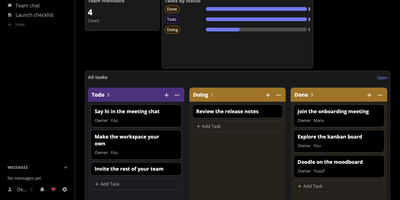
Documents, tables, files, chat, and video meetings share one workspace in atomic.place, and AtomicServer is the part you host yourself so a team can edit together while the data stays on a machine it controls. Documents are collaborative rich text with comments, icons, and cover images, tables enforce a strict schema with keyboard navigation and copy and paste, and any table can switch to a kanban, calendar, dashboard, or timer view. Templates start an issue tracker, a CRM, a project task list, or a time tracker. Live cursors, typing indicators, and presence avatars show who is working where, group channels carry attachments, replies, and search, and an infinite canvas can be drawn on together. Every write is a signed commit, so a full history is kept. Read and write rights follow the resource hierarchy, and invite links bring people in. Websites are designed in the browser, published in one click, and rolled back to any earlier version. Custom classes and properties come from the Ontology Editor, small apps are plain JavaScript screens over the same data, and AI features work with any model through OpenRouter or a local Ollama and support MCP. Typeahead search suggests results as you type. A REST API answers in JSON-AD, Turtle, or JSON-LD for automation, and export and import commands write and read JSON-AD backups. Running on a dedicated VPS on RepoCloud with guaranteed CPU, RAM, and SSD, full root SSH access, and a browser serial console. MIT licensed.
Yacht
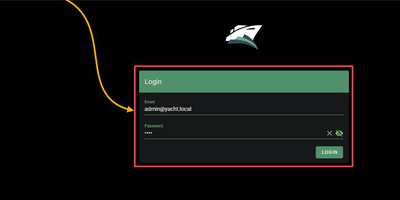
Docker deployment reimagined as an app store: browse a visual catalog of applications, click to deploy with sensible defaults, and customize ports, volumes, and environment variables only when you need to. Point Yacht at any Portainer-compatible template JSON URL and it parses every application into a browsable, searchable interface with pre-configured settings ready for one-click launch. The template framework is fully decentralized — anyone can host template files on GitHub, a personal server, or any URL, creating a community-driven ecosystem of deployment packages without central gatekeeping. Template variables prefixed with ! automatically substitute server-level settings, so !config resolves to your configured path across every deployment without repetitive manual editing. The Python backend handles container lifecycle — start, stop, restart, kill, removal — while streaming real-time logs, providing browser-based shell access, and monitoring resource statistics through the Vuetify dashboard. Docker Compose stacks sit alongside individual containers in the same management interface. Advanced editing lets you modify port mappings, volumes, environment variables, and restart policies on running containers without redeployment. The develop branch introduces agent-managed remote host support for expanding management to additional Docker hosts. Authentication can be disabled for environments behind external proxies like Authelia or Traefik forward auth. Running on a dedicated VPS on RepoCloud with guaranteed CPU, RAM, and SSD, full root SSH access, and a browser serial console. CC-BY-4.0 licensed.
Tracedown
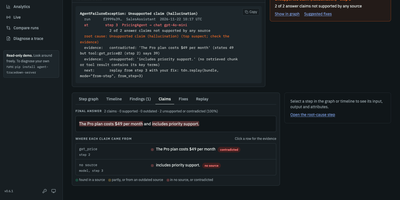
Tracedown finds the exact step that made your AI agent fail, shows the evidence, and replays the run with a fix to prove the problem is gone. Import failed runs from Langfuse, Arize Phoenix or any OpenTelemetry exporter with no code changes, or add one line to any of 13 agent frameworks, including LangGraph, CrewAI, and OpenAI Agents. A failed run turns into an AI stack trace you can paste into an issue, naming the root cause, the evidence, and whether the agent or the user was at fault. Replay re-runs the agent from the broken step with your change while earlier steps come from the recording, and the fix check repeats each suggestion three times without firing real tools. It also checks each claim against its sources, compares runs across prompt and model versions, groups failures into incidents with Slack, PagerDuty, or GitHub alerts, and reports cost per run, step, and model. Diagnosis is rules first, so it runs instantly and privately without an API key, with an optional LLM judge for sharper accuracy. Ask Claude Code or Cursor why a run failed through the built-in MCP server, and export spans over OTLP to any collector. Start as one container for a team, then scale out with Compose or a Helm chart; SSO, roles, and an audit log come included. Running on a dedicated VPS on RepoCloud with guaranteed CPU, RAM, and SSD, full root SSH access, and a browser serial console. Apache-2.0 licensed.
SendPortal
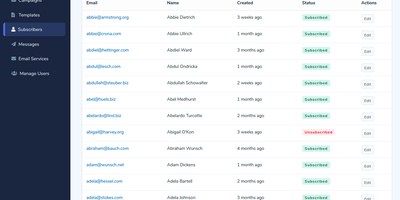
SendPortal is a self-hosted email marketing platform for building subscriber lists, sending campaigns, and tracking exactly what happens to every message after it leaves your server. Grow the list three ways: add contacts one by one, import them in bulk from CSV, or push them through the API, which creates or updates subscribers by email address and attaches tags. Tags and custom segments organize audiences, sending product updates to power users and sale announcements to everyone else. A campaign pairs a subject line, which can insert first name, last name, and email placeholders, with an optional HTML template holding content, unsubscribe, and browser view placeholders. Automatic CSS inlining at dispatch keeps designed emails rendering properly in inboxes that ignore style sheets. Send a test email to yourself before anything goes out, then choose immediate delivery or schedule the campaign for later. Pick Queue Draft to review messages before they leave, or Send Automatically when the audience and content are already right. Open and click tracking, bounce records, and unsubscribe events then flow back through provider webhooks into per campaign reports and a searchable message log. Run several brands or clients side by side in separate workspaces inside one interface. Delivery runs through Amazon SES, Postmark, SendGrid, Mailgun, Mailjet, or your own SMTP server, so deliverability stays with providers built for it. Running on a dedicated VPS on RepoCloud with guaranteed CPU, RAM, and SSD, full root SSH access, and a browser serial console. MIT licensed.
SandBase Harness
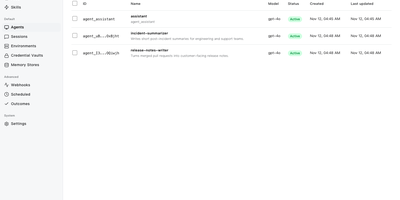
SandBase Harness gives your AI agents a proper home with sessions, tools, sandboxes, and an audit trail instead of a pile of scripts. The console lists agents with their model, status, and version, and an agent page shows its system prompt, attached tools, and skills. Every session keeps a resumable event log, and a transcript view opens any user or agent message as a rendered or raw event. Built-in tools run in a local process, per-session Docker containers, Kubernetes, or a self-hosted worker queue, and permission policies can always allow a tool or always ask a human first. MCP toolsets, credential vaults, and skill packages extend what an agent can reach, with Anthropic's xlsx, pptx, pdf, and docx skills listed next to your own. Memory stores, webhooks, scheduled deployments, and outcome definitions cover longer-running work. Settings include a model provider form, API keys for bearer authentication, and an interactive API reference for sessions, agents, environments, and vaults. A TypeScript SDK and a bundled MCP bridge connect other tools to the same runtime. Running on a dedicated VPS on RepoCloud with guaranteed CPU, RAM, and SSD, full root SSH access, and a browser serial console. Apache 2.0 licensed.
Nerve
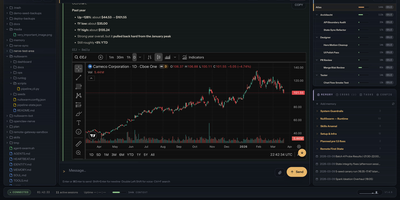
Nerve is the web cockpit for OpenClaw, giving you one real-time screen to run an entire fleet of AI agents instead of chasing them through chat threads. Every agent keeps its own workspace, memory, identity, and skills, and you can switch between agents, browse their files, and edit memory or configuration in a tabbed editor during a live conversation. Work moves onto a kanban board where subagents pick up delegated tasks, and returned work waits in a proposal inbox for your review before it is accepted. Cron jobs run as their own sessions in a navigable session tree, so scheduled automation has logs and output you can actually inspect. Voice is a first-class input: push to talk or use a wake word, watch live transcription, and hear replies spoken back in your chosen language. Ask for a chart and the answer arrives as a real rendered chart, with diffs, file previews, and highlighted code inline in the stream. Token usage, running costs, and context pressure stay visible on every session, so long tasks never quietly drain your budget. Run it privately on localhost, reach it over your LAN behind password authentication and signed-cookie sessions, or keep access inside a Tailscale tailnet. Running on a dedicated VPS on RepoCloud with guaranteed CPU, RAM, and SSD, full root SSH access, and a browser serial console. MIT licensed.
CloudBeaver
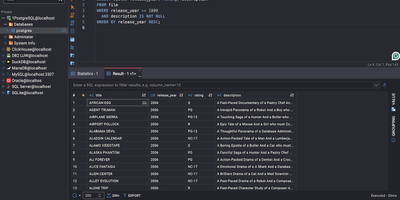
CloudBeaver puts a full-featured database management environment in your browser, connecting to PostgreSQL, MySQL, SQL Server, Oracle, ClickHouse, and over 100 additional engines through one unified interface that requires no desktop client installation. The Java server exposes a TypeScript/React frontend through a GraphQL API where teams can browse schemas, edit data, visualize relationships, and execute queries across all connected databases in a single workspace. The SQL Editor provides syntax highlighting, auto-completion with fuzzy search, AI-assisted SQL generation from natural language prompts, script management with save/download/upload capabilities, execution plan visualization, and multi-tab result display. The Data Editor enables direct cell editing, filtering, sorting, and bulk data modification with support for spatial GIS data rendering. Database administrators access a Navigator panel for browsing schemas, tables, views, foreign tables, triggers, dependencies, and stored procedures across all connected databases. ER Diagrams visualize table relationships and schema structure, while the Visual Query Builder constructs queries without hand-writing SQL. Multi-user administration provides role-based access control, connection sharing with configurable permissions, and session management. SSH tunneling secures remote database connections, and data can be exported or imported in multiple formats. Query History tracks all executed statements with timestamps and execution statistics. Running on a dedicated VPS on RepoCloud with guaranteed CPU, RAM, and SSD, full root SSH access, and a browser serial console. Apache 2.0 licensed.
Comigo
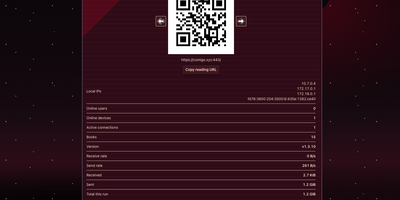
Your comic and manga collection becomes one tidy library with Comigo, readable in any browser on any device in the house. Point it at a folder and it indexes image folders plus zip, rar, tar, cbz, cbr, and epub archives, then serves pages in scroll or page-turning layouts. Pages arrive cropped and compressed for the screen in front of you, and modern heic and avif files read beside plain jpg and png. A QR code on the server screen brings phones and tablets straight into the same library, and reading position follows you between devices mid-chapter. Your history is tracked automatically, so a series paused last month reopens at the exact page where you stopped. The built-in player handles audio and video stored beside your books, which covers drama CDs and anime extras in the same shelves. Plugins add automatic page turning and an on-screen clock, and you can write your own to change how reading sessions behave. Libraries can live on another Comigo server across the network, whole image folders download in batches, and epub files convert for dedicated e-readers. The offline mode reads archives directly inside the browser with nothing uploaded, which suits borrowed machines and locked-down networks. Running on a dedicated VPS on RepoCloud with guaranteed CPU, RAM, and SSD, full root SSH access, and a browser serial console. MIT licensed.
Jmal Cloud
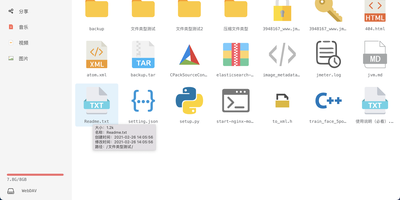
Jmal Cloud is a self-hosted private cloud drive that keeps your files on your own server, with online previews, resumable uploads, full-text search, and WebDAV access. The web manager previews photos, videos, Office documents, PDFs, EPUB books, and even CAD DWG drawings in the browser, then puts recently modified files, favorites, shared folders, and a trash bin a click away. Huge uploads resume from the exact chunk that stopped, while full-text search drills into text, PDFs, and Office documents when filenames fail you. Connect Alibaba Cloud OSS, Tencent Cloud COS, or MinIO as storage backends and browse every bucket through the same folders. Wire in a self-hosted OnlyOffice Document Server and draw.io to edit Word, Excel, and PowerPoint files and sketch flowcharts or mind maps without leaving the drive. Mount the library as a local network drive over WebDAV, share folders through links for upload and download, and push scheduled backups with the Rust jmalcloud CLI. Packages and Docker images cover Ubuntu, Debian, CentOS, Fedora, and Arch on x86_64 and ARM64, and the interface speaks English, Chinese, and Japanese. Running on a dedicated VPS on RepoCloud with guaranteed CPU, RAM, and SSD, full root SSH access, and a browser serial console. MIT licensed.
Usulnet
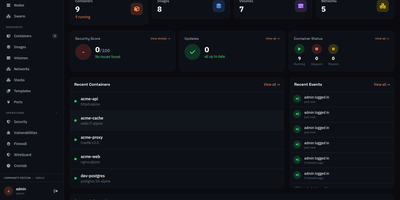
Usulnet packs container management, Trivy security scanning, Nginx reverse proxy, scheduled backups, WireGuard VPN, firewall rules, and multi-node orchestration into a single 70MB Go binary with zero external runtime dependencies. Every module ships in one download with no paid tiers, no telemetry, and no edition gating. Container lifecycle management covers creation, start, stop, restart, pause, kill, and removal with bulk operations, real-time resource statistics, filesystem browsing, and settings editing. Trivy integration scans images and running containers for CVEs with severity scoring, generates SBOMs, and validates CIS benchmarks. The multi-node architecture supports standalone, master, or agent modes where agents connect over NATS JetStream with mTLS encryption, enabling remote Docker host management from a central dashboard. Reverse proxy configuration handles Nginx with automatic Let's Encrypt certificates, TCP/UDP stream proxying, access lists, and dead host detection. Backup operations capture container volumes and Compose stacks on configurable schedules with retention policies and full restore capabilities. A built-in application catalog provides 60+ one-click templates for common services. JWT license validation uses an RSA-4096 public key embedded in the binary, requiring no call-home and working entirely offline. For teams tired of maintaining separate tools for each infrastructure concern, Usulnet collapses the entire stack into a single point of management with Docker Compose deployment alongside PostgreSQL, Redis, and NATS.
MyFin
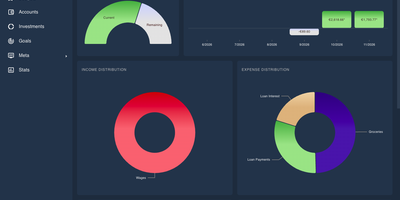
MyFin gives budgets, accounts, loans, and investments one ledger that you host yourself. Transactions are income, expenses, or transfers between your own accounts. Enter them by hand, paste rows copied from a CSV file or your bank's online banking, and split any entry in two. Six account types cover checking, savings, credit cards or loans, investments, meal cards, and cash. Flip exclude-from-budgets on a loan or card account and payments into it count as spending. Categories, entities, and tags describe where money goes. A rules engine matches description, amount, type, and accounts, assigns a category and entity automatically, prefers the most specific rule, and falls back to fuzzy matching. Monthly budgets compare estimated and current amounts for every category. The dashboard totals operating funds, investing, debt, and net worth beside income and expense charts. Stats follows net worth month by month, projects balances forward, and draws a yearly flow from income into spending. Investment assets record buys, sells, income, and costs with fees and taxes to calculate ROI. Goals reserve a fixed amount or percentage of existing balances, ranked by priority. Light and dark themes are built in, the interface speaks English and Portuguese, and an Android app uses the same server. Running on a dedicated VPS on RepoCloud with guaranteed CPU, RAM, and SSD, full root SSH access, and a browser serial console. GPL-3.0 licensed.