Categories
Self-Hosted Analytics AI Tools Business Intelligence Privacy Tools Customer Feedback Sentiment AnalysisDeveloper links
Obsei
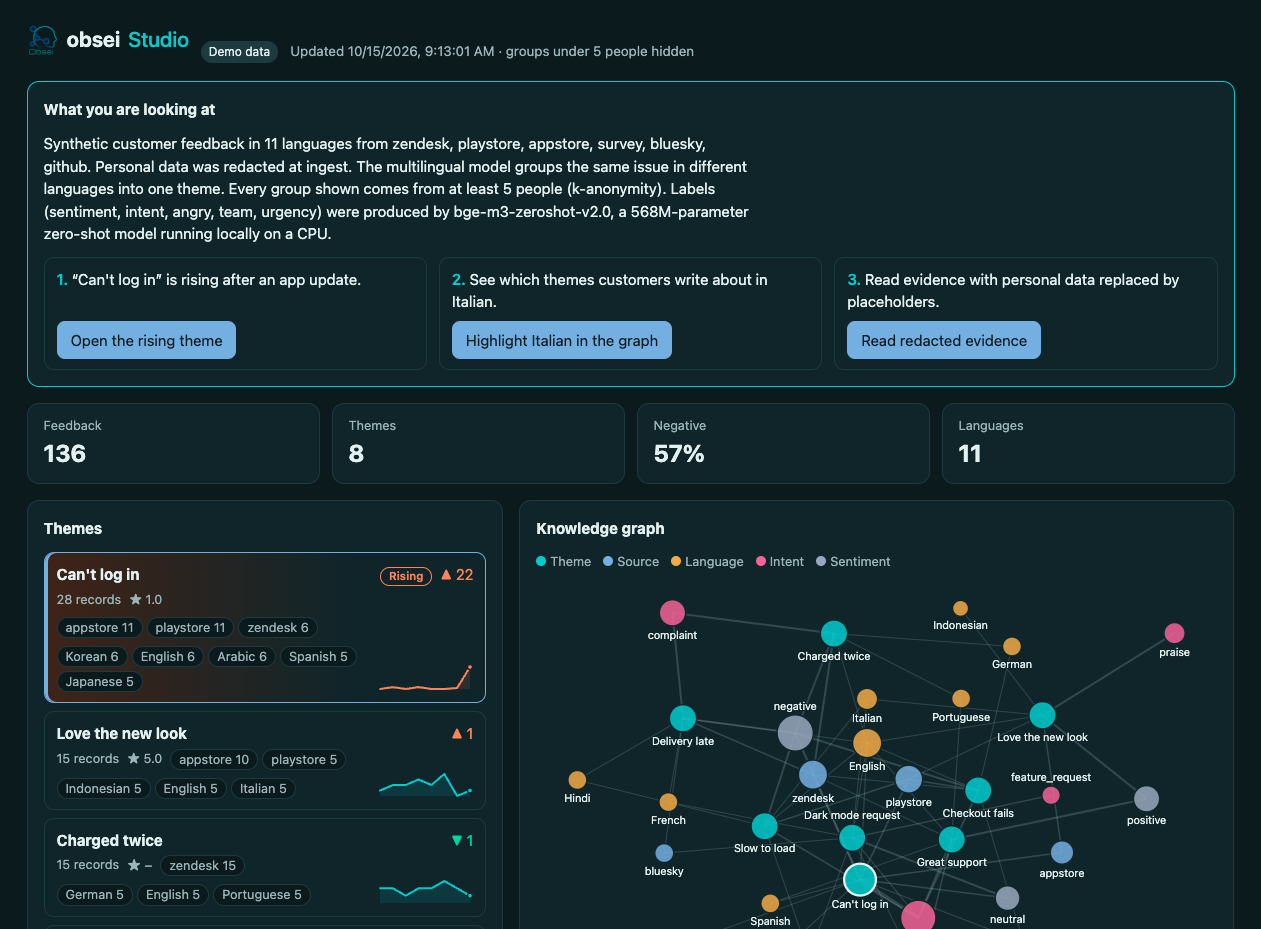
Before any AI model reads a single customer message, Obsei has already stripped out the names, email addresses, card numbers, and ID numbers hiding inside it. Obsei pulls in what customers are saying from App Store and Google Play reviews, Zendesk, Freshdesk, and Intercom tickets, GitHub issues, surveys, YouTube comments, Bluesky, RSS feeds, SQL databases, and even Gong call transcripts. Every record is pseudonymised on the way in and stored in an encrypted database that never phones home. Then the labelling starts: sentiment, intent, language, and your own custom questions, each answered with a confidence score by a zero-shot classifier running locally on your machine, or by an LLM you choose through your own keys. Answers the model is unsure about are escalated to a stronger model or queued for a human instead of being silently wrong. Related complaints roll up into stable themes with week-by-week trends, and anything mentioned by fewer than five people stays hidden, so individuals cannot be picked out of a chart. When a theme spikes, alerts and digests land in Slack, and individual findings can be routed straight into Jira, Linear, or GitHub issues. Your analysts browse it all in the built-in Studio, and your AI agents can ask questions over MCP and get cited, redacted evidence back, with any action they propose waiting for your approval. Running on a dedicated VPS on RepoCloud with guaranteed CPU, RAM, and SSD, full root SSH access, and a browser serial console. Apache-2.0 licensed.
Benefits
- Private by design, not promise
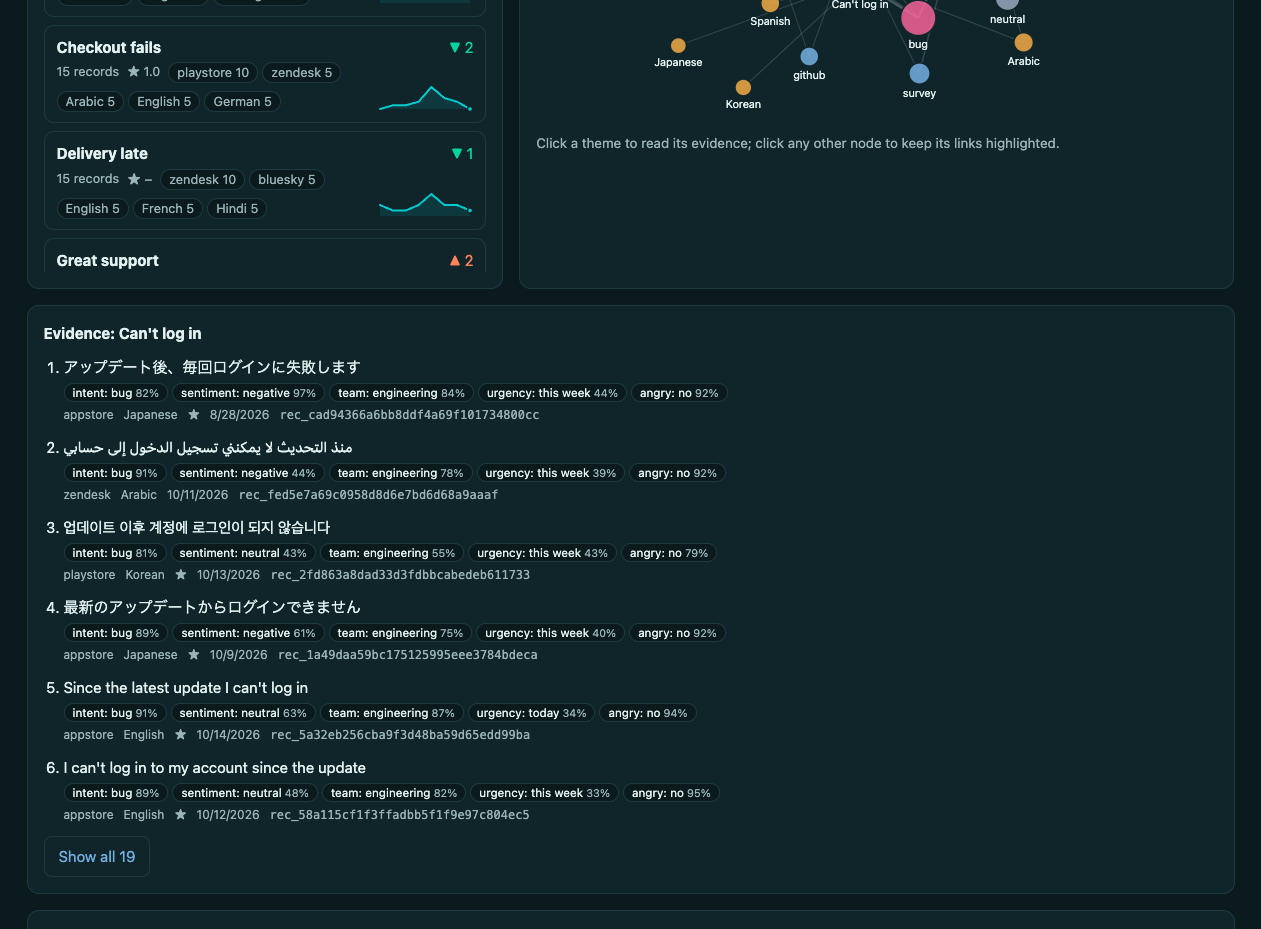
- Emails, phone numbers, payment cards, IBANs, and national IDs from 16 countries are redacted before storage or modelling, authors become salted pseudonyms, and the database is encrypted with zero telemetry.
- Every feedback source, one pipeline
- App store reviews, help desk tickets, GitHub issues, surveys, YouTube, Bluesky, RSS, SQL warehouses, and call transcripts flow into a single stream instead of twenty disconnected exports and dashboards.
- Labels you can defend
- Sentiment, intent, and your own custom fields come with confidence scores from a local zero-shot model or your chosen LLM, and uncertain answers escalate to a stronger model or human review.
- Themes that respect anonymity
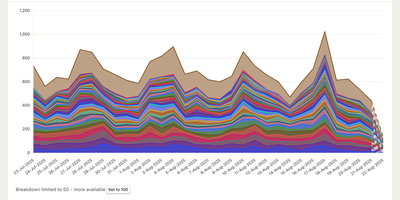
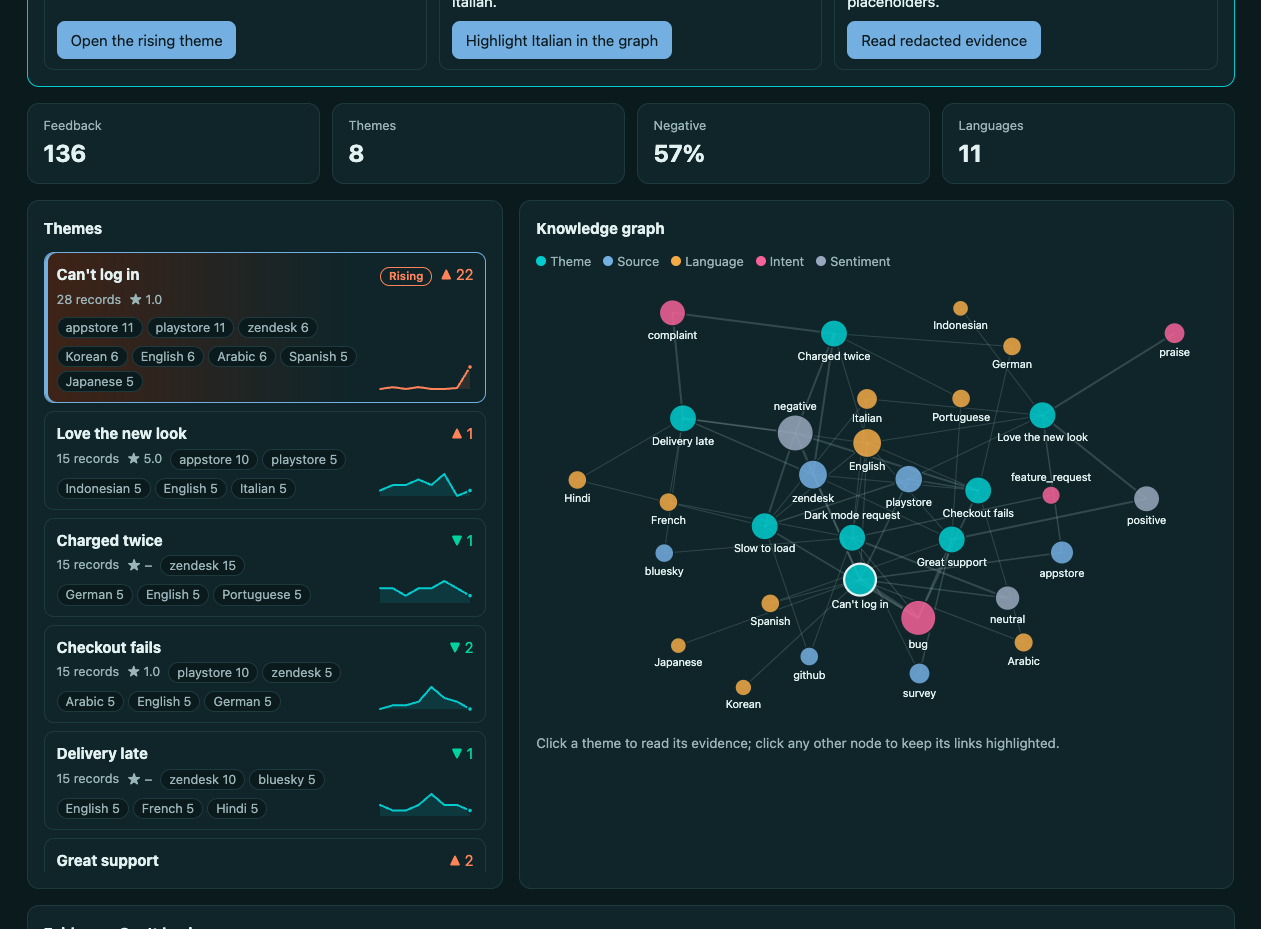
- Feedback groups into stable, trended themes across more than 50 languages, while k-anonymity hides anything said by fewer than five people so small groups cannot expose individuals.
Features
- Redaction before classification
- A dedicated ingest stage replaces personal data with tokens and pseudonymises authors, so downstream models and analysts only ever see cleaned text, in any script or language.
- Bring your own model
- Classify with the in-process zero-shot model on CPU, a decision model, or Ollama, vLLM, OpenAI, Azure OpenAI, Bedrock, and Vertex through LiteLLM, all behind your egress policy.
- Studio and knowledge graph
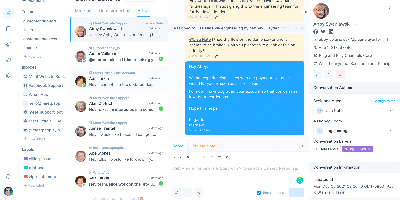
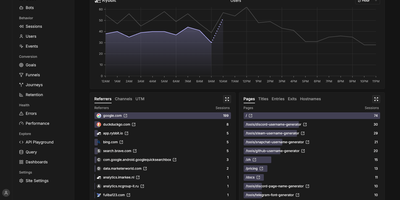
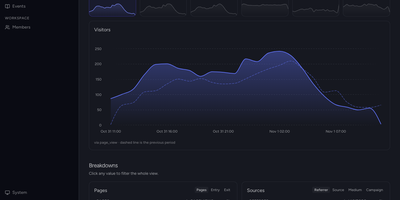
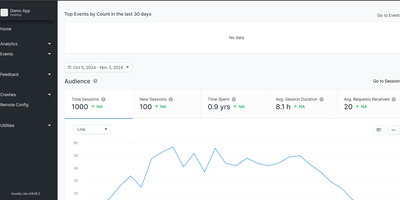
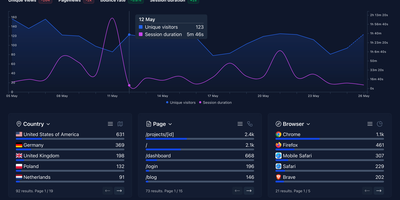
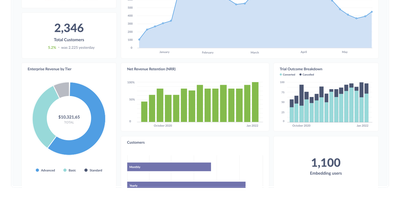
- A read-only dashboard links themes to sources, languages, intents, and sentiment in an explorable graph, with redacted evidence, decision panels, trends, and routing counts per theme.
- Ask with cited evidence
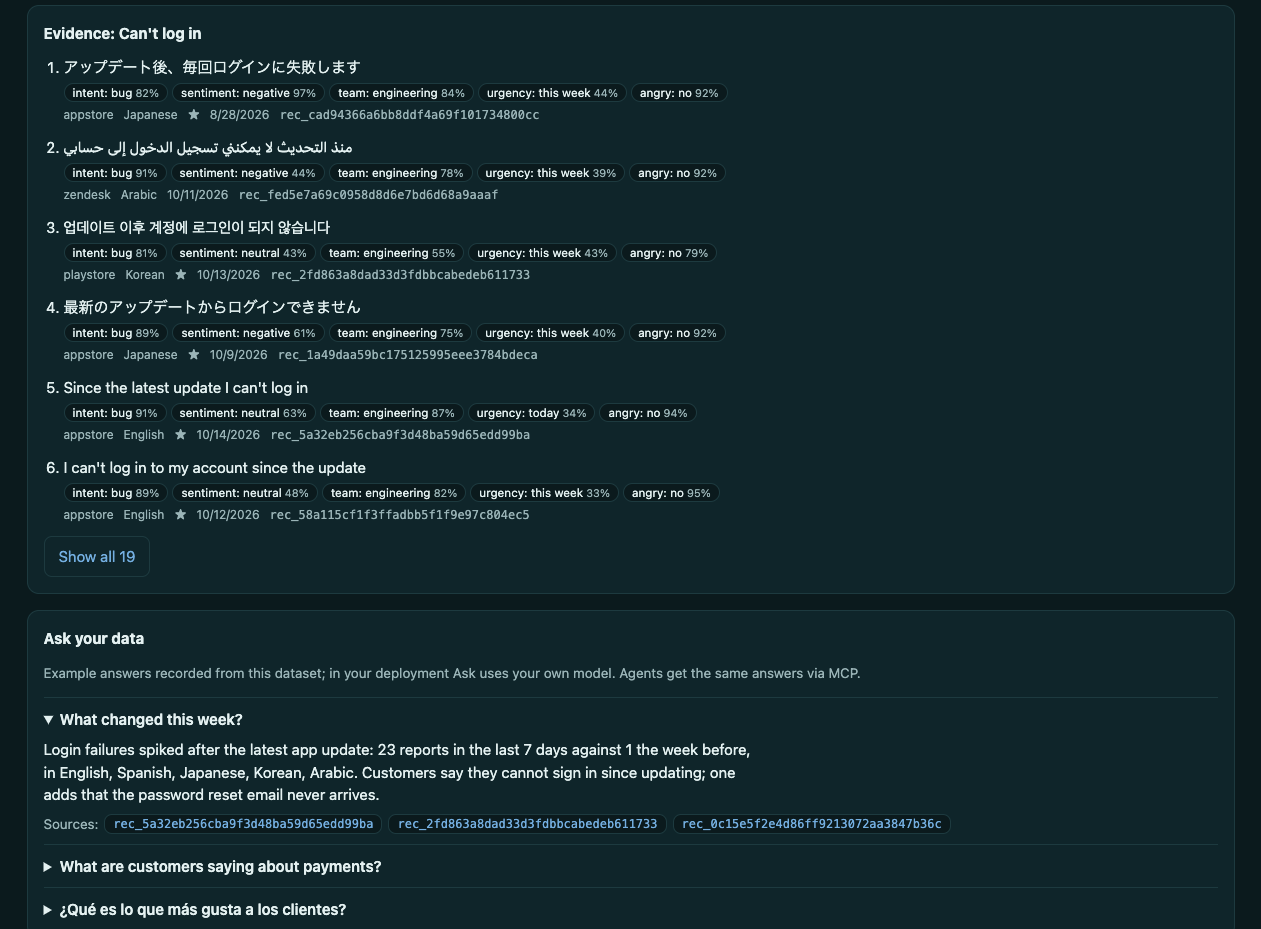
- Analysts and MCP-connected agents ask questions in plain language and get answers citing specific redacted records, with an optional grounding judge and human approval for proposed actions.
- Routes, alerts, and sinks
- Deliver findings to Slack, Jira, Linear, GitHub, webhooks, Parquet, or SQL using ordered rules on labels and confidence, and get alerted when a theme spikes or appears.