RefRef
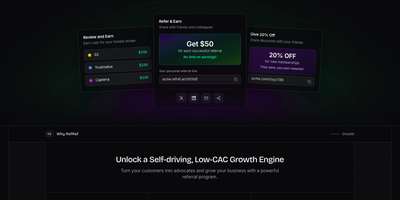
Turn your happiest customers into a tracked referral channel, with rewards, payouts, and fraud checks handled in one place. A small JavaScript snippet on your site records which referrer drove each new customer, and personalized landing pages greet visitors with the name of the friend who invited them. You design reward structures per program, mixing one-off bonuses, recurring commissions, or loyalty incentives, then decide how money moves. Manual approval queues every reward for review, or automatic rules validate and disperse payments on a schedule you set. Referrers get their own portal showing referral links, conversion counts, and reward balances, and affiliates work from a dedicated partner portal with the same visibility. Nudges automatically remind quiet referrers to share again, and fraud monitoring flags suspicious activity before it turns into payouts. Engagement analytics chart program performance across referrers, campaigns, and time, and a sandbox testing environment rehearses the whole flow before real customers arrive. Google sign-in and email delivery through Resend slot in through environment settings, and the Docker Compose deployment brings up the portal, database, and seed data in one command. Running on a dedicated VPS on RepoCloud with guaranteed CPU, RAM, and SSD, full root SSH access, and a browser serial console. AGPL-3.0 licensed.
Feedlog
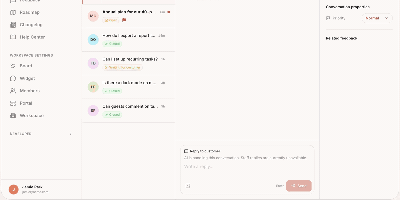
FeedLog gives SaaS teams an AI support agent, a shared inbox, and a feedback-to-roadmap loop in one open-source platform they can host themselves. Customers ask questions inside your product through an embeddable widget, and the agent answers from your help center articles, which you mark as approved knowledge before it can use them. When a question needs a person, the conversation moves into a shared inbox with its full context intact, so customers never repeat themselves and your team replies with email notifications keeping the thread alive. The same widget collects bug reports and feature ideas into feedback boards with posts, voting, comments, and status workflows, while similar-feedback detection finds duplicates and merges fragmented requests before they scatter your priorities. Prioritized work becomes a public roadmap showing what is planned, in progress, and completed, and shipped changes close the loop as changelog entries you can draft with AI from your update notes. Guest access, email and password, Google, GitHub, and SSO sign-in options decide how customers identify themselves, and human support guidance routes billing, account, and privacy requests straight to people. An MCP server connects AI assistants to your boards and articles so agents can query and manage feedback in natural language. Running on a dedicated VPS on RepoCloud with guaranteed CPU, RAM, and SSD, full root SSH access, and a browser serial console. MIT licensed.