NexoPOS
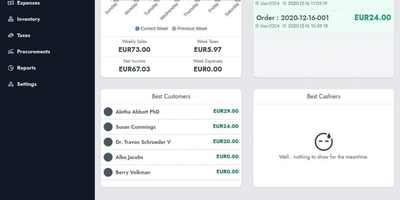
NexoPOS is a point-of-sale platform that runs a whole shop from the browser, covering the till, the stockroom, the customer book, and the day-end numbers in one place. Cashiers ring up sales on a touch-friendly register screen, take cash or card payments, print receipts, and process refunds without leaving the same view. Every sale draws down inventory automatically, and procurement flows record what arrived, from which supplier, and at what cost. Low-stock warnings and a full stock history help owners reorder before shelves go empty. Products carry categories, units, and tax rules, and barcode plus scale barcode support keeps weighed goods moving at the checkout. Regulars earn rewards, join customer groups, and redeem coupons at the till. Managers open and close registers, assign roles and permissions to staff, and review an activity trail for every sensitive action. Reports break down sales, costs, and stock value per period, giving a small shop the numbers usually reserved for chain headquarters. Owners extend the core with installable modules for restaurants, multiple stores, rentals, and bookings, added from inside the dashboard instead of by editing code. The same installation serves a single boutique today and a growing chain tomorrow, since registers, stores, and staff all live in one database. Running on a dedicated VPS on RepoCloud with guaranteed CPU, RAM, and SSD, full root SSH access, and a browser serial console. GPL-3.0 licensed.
ShopNex
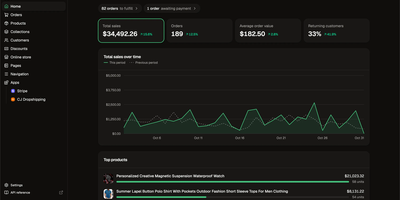
ShopNex is a self-hosted ecommerce platform that gives merchants a browser admin, themeable storefront, hosted checkout, and app integrations without paying a platform subscription or per-sale software fee. You manage products with options, variants, SKUs, stock per variant, collections, product images, and clean URLs, then sell through a bundled Astro storefront using Liquid themes or a custom frontend connected to the typed Storefront SDK. The hosted checkout collects shipping rates, manual payment methods, discount codes, and Stripe Checkout payments, while order records keep payment and fulfillment status, shipping lines, transactions, and price snapshots separate for clean operations. Customer accounts and guest orders are matched by email, staff access is invite-only with owner, admin, and staff roles, and discounts, shipping, taxes, and store settings are controlled from the admin. Integrations receive signed Standard Webhooks with retries and admin redelivery, scoped API tokens grant only the resources an app needs, and OAuth apps clean up tokens and webhooks when uninstalled. You can run one shop by default or switch to multi-shop by domain without migrating data, and every admin and storefront procedure is also exposed as REST under /api/v1 with a live OpenAPI document. Running on a dedicated VPS on RepoCloud with guaranteed CPU, RAM, and SSD, full root SSH access, and a browser serial console. MIT licensed.

Openfront
Why rent your own shop from a platform that takes a cut and sets the rules? Openfront runs the whole store, storefront and back office together, on a server you own. Customers get a fast, mobile-responsive store where they can browse the catalog, open product pages with variants, fill a cart, check out, create an account, and follow their orders. You get the dashboard behind it: products and variants, orders and fulfillment, customers, payments through Stripe and PayPal, shipping integrations, and the everyday work of running a store without ten browser tabs. Stock is tracked across multiple locations with movements and backorders, so a warehouse and a shop floor stop disagreeing about what exists. Gift cards run their full life from creation to redemption, returns and refunds follow a proper claims workflow instead of an email thread, and discounts can be simple codes or automated campaigns. Selling abroad is built in, with multiple currencies and regional pricing, while analytics and reporting show what is actually selling. When clicking through menus is slower than saying it, the built-in AI assistant can add products, change prices, and configure regions from a chat, working inside your own logged-in permissions so it can only do what your role allows. Running on a dedicated VPS on RepoCloud with guaranteed CPU, RAM, and SSD, full root SSH access, and a browser serial console. MIT licensed.
Maho
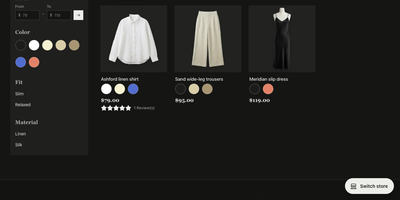
Sell from one storefront or eleven at once: Maho runs your whole shop, from the product grid shoppers browse to the admin grids where you run the business. Customers filter arrivals by price, color, size, fit, and material, open a product page with gallery, stock status, and reviews, and check out in one step with social login and saved cards. In the admin you build customer segments from lifetime value and last-order rules, shape Google Shopping feeds element by element in the XML builder, review revocation requests in a searchable grid, and set up gift cards with fixed amounts and lifetimes from the product tab. Eleven storefront themes come with a live theme editor, a drag-and-drop page builder, an image editor, and content versions, while marketing tools cover email automation, dynamic categories, and a blog. Multi-store setups run many websites, stores, and currencies from one installation, and payments span PayPal, Braintree, Mollie, Klarna, and more first-party modules. Running on a dedicated VPS on RepoCloud with guaranteed CPU, RAM, and SSD, full root SSH access, and a browser serial console. OSL-3.0 licensed.
Lakasir
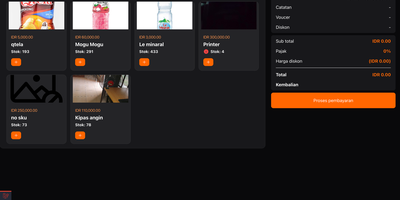
A corner shop, a small cafe, or a minimarket can run its till on Lakasir, a point-of-sale system that keeps sales, stock, and the money owed in one tidy web panel. Cashiers process sales from the cashier menu, apply a discount to a single item or to the whole bill, and print receipts on a USB thermal printer straight from the browser. Products can carry a different price for each basic unit, so a carton, a pack, and a single piece of the same goods all ring up correctly. Purchasing records orders to suppliers, and barcode scanning speeds up receiving, stock counts, and checkout alike. Stock opname sessions walk the shelves with a scanner and reconcile counted quantities against the system, exposing shrinkage before it grows. Receivables track what customers owe the shop and what the shop owes others, with due amounts visible instead of buried in a notebook. Vouchers can be created, handed out, and tracked through redemption, and payment methods are defined by the owner rather than hard-coded. The real-time dashboard watches sales and performance as the day unfolds, and simple accounting rolls income, expenses, and profit into the same picture. Roles and permissions decide who may open the register, edit prices, or see the books. A companion mobile application puts the shop data in a pocket for checks away from the counter. Running on a dedicated VPS on RepoCloud with guaranteed CPU, RAM, and SSD, full root SSH access, and a browser serial console. GPL-3.0 licensed.