Omeka S
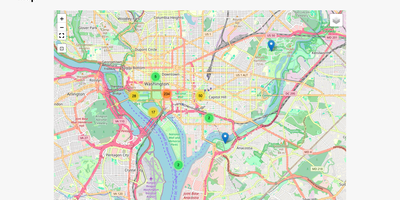
One shared pool of items and media, many independently themed exhibit sites: Omeka S publishes digitized collections for libraries, museums, archives, and universities. Resource templates define which properties an item shows, which data types each accepts, and which fields are required or private, drawing on the built-in Dublin Core, Bibliographic Ontology, and Friend of a Friend vocabularies or any vocabulary an administrator imports. Items can link to other items, so a novel points to its author and the author's record lists every work linked back to it. Media arrive as uploads, URLs, HTML, oEmbed, IIIF, or YouTube. A page editor stacks blocks for HTML, media embeds, browse previews, IIIF images, and maps, a navigation tree arranges menus by dragging, and every site picks its own responsive theme and resource page layout. The Mapping module pins items on interactive maps and adds map blocks and a map browse page. CSV Import loads items, item sets, media, and users from CSV, TSV, or ODS files, importers bring over Omeka Classic and Zotero content, and Collecting forms let visitors contribute files or text for moderators to approve. Roles run from Global Administrator through Supervisor, Editor, Reviewer, and Author to Researcher, with separate permissions per site. A REST API under /api lets other tools read and write resources. Running on a dedicated VPS on RepoCloud with guaranteed CPU, RAM, and SSD, full root SSH access, and a browser serial console. GPL-3.0 licensed.
CollectiveAccess Providence
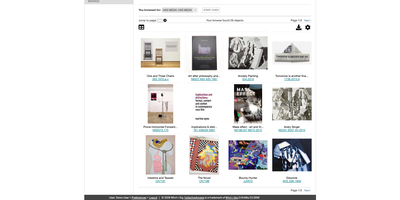
For a museum, archive, or research collection that must describe everything it holds in its own metadata terms, CollectiveAccess Providence offers a web-based catalogue that needs no custom programming. Objects, entities, places, collections, storage locations, and loans link through bi-directional relationships with configurable types such as creator, donor, or subject, and DACS, Dublin Core, and VRA Core come pre-loaded. Fields, entry screens, search displays, and reports are defined in the web interface or an XML installation profile with validation for dates, measurements, and URLs; images, video, audio, PDFs, and 3D scans open in browser viewers with pan and zoom. Mapping files import Excel, CSV, XML, and MARC data in bulk, exports cover OAI-PMH formats such as EAD and Dublin Core plus finding aids and reports, and Getty vocabularies and Library of Congress services supply controlled terms. Staff check items in and out like a library, follow location and provenance history over time, and share sets of records with collaborators. Access can be limited by user or group down to specific fields or record types, logins can use LDAP, and every edit is logged with a user and timestamp. MD5 fixity checks arrive by email, BagIt packages support preservation, an optional GraphQL API handles search, browse, and editing, and a separate companion, Pawtucket2, can publish the catalogue as a public website. Running on a dedicated VPS on RepoCloud with guaranteed CPU, RAM, and SSD, full root SSH access, and a browser serial console. GPL-3.0 licensed.