Categories
Self-Hosted Digital Asset Management Metadata Management Digital Preservation Cataloguing Museum Software Collections Management Archive ManagementStars
Forks
Watchers
Developer links
CollectiveAccess Providence
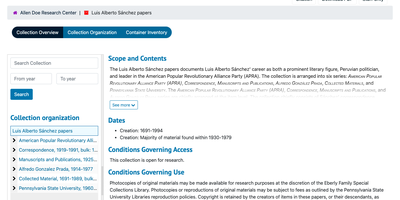
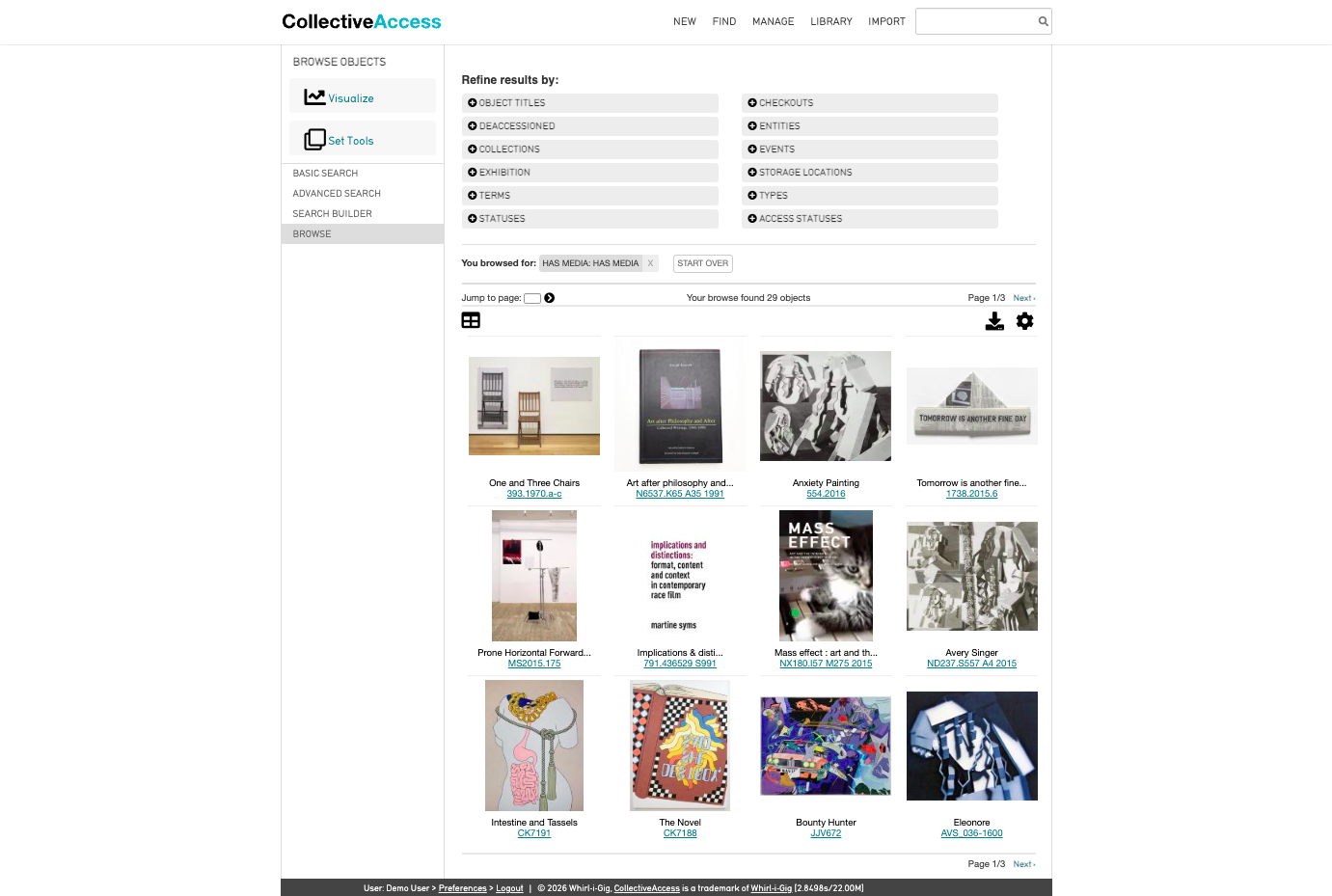
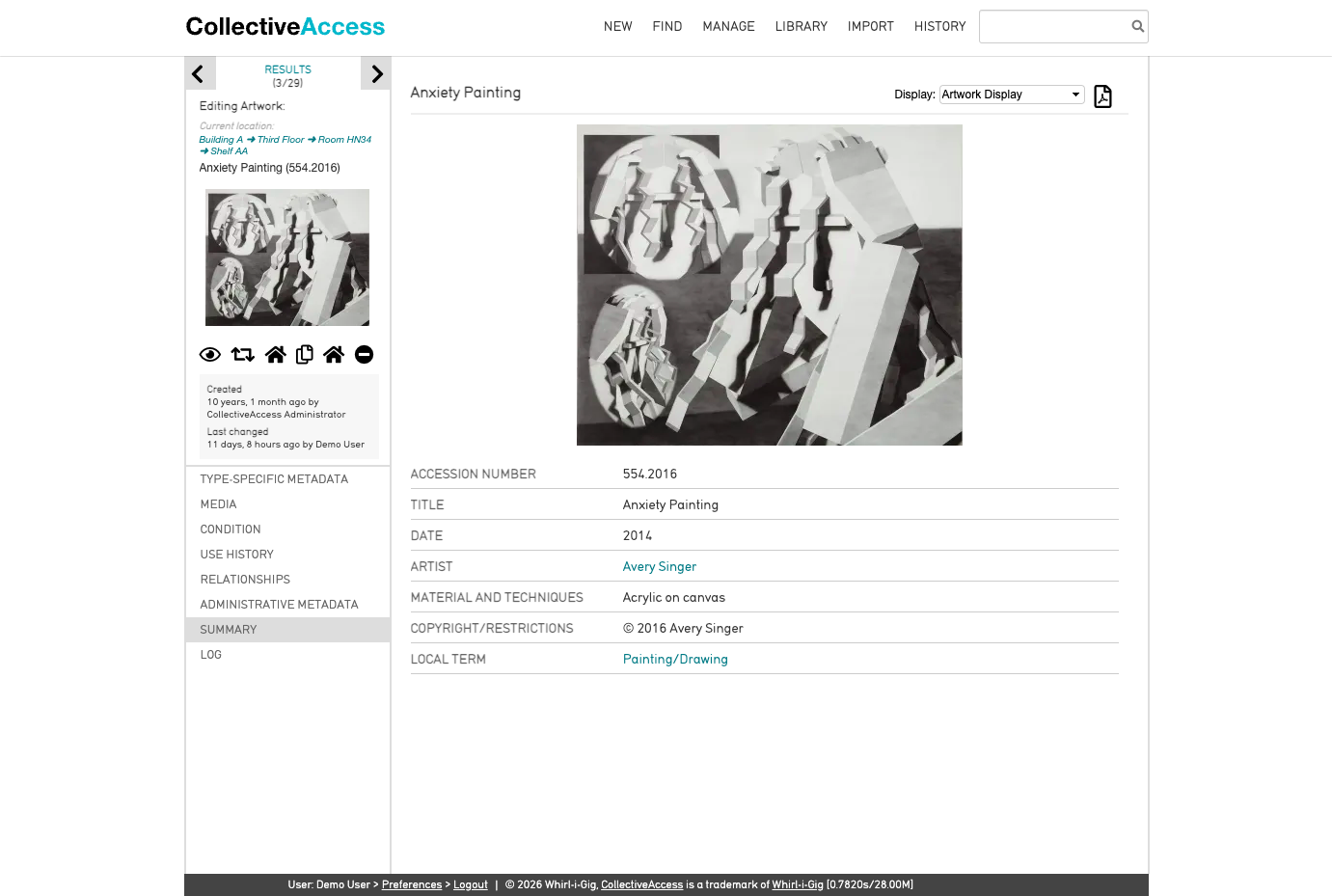
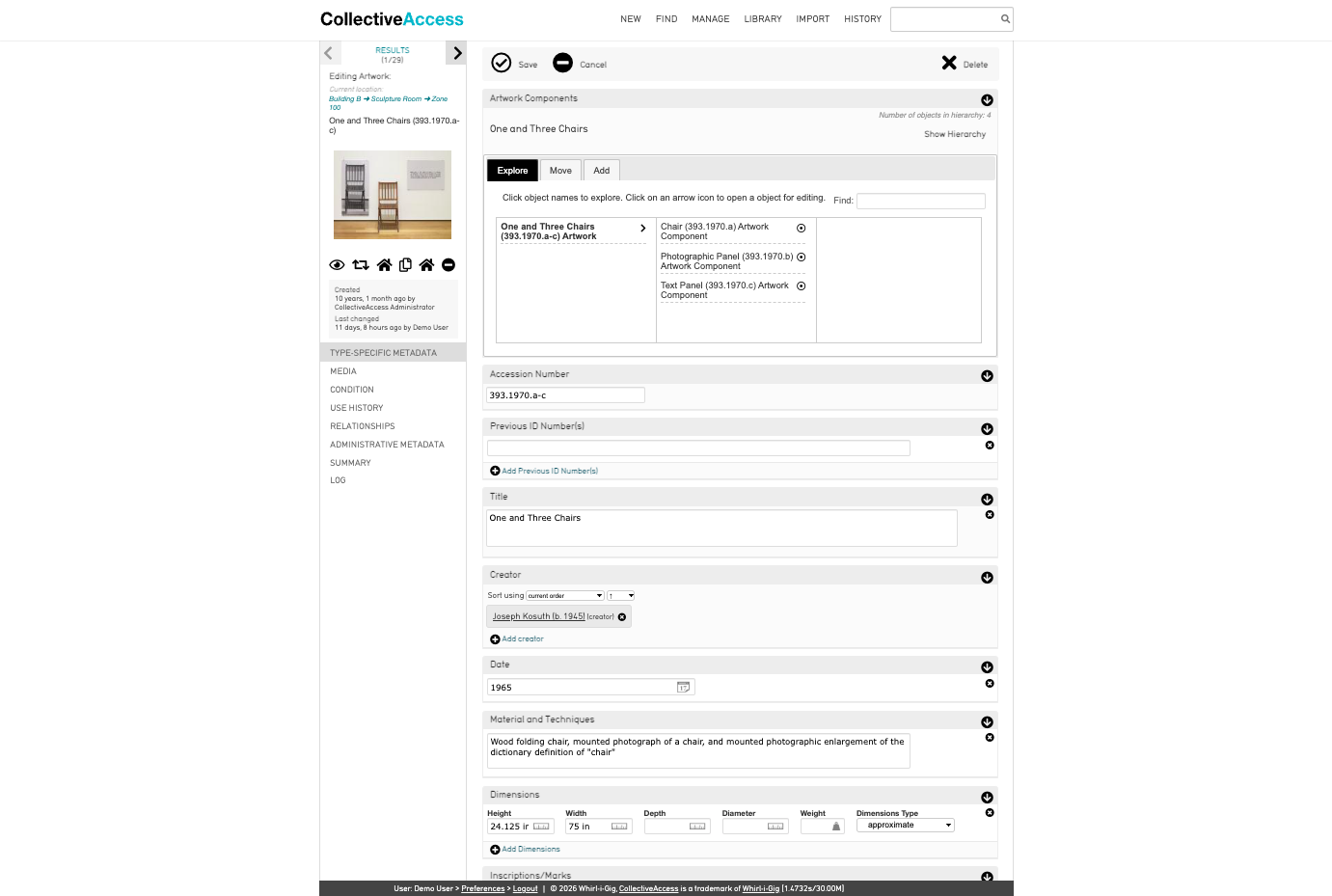
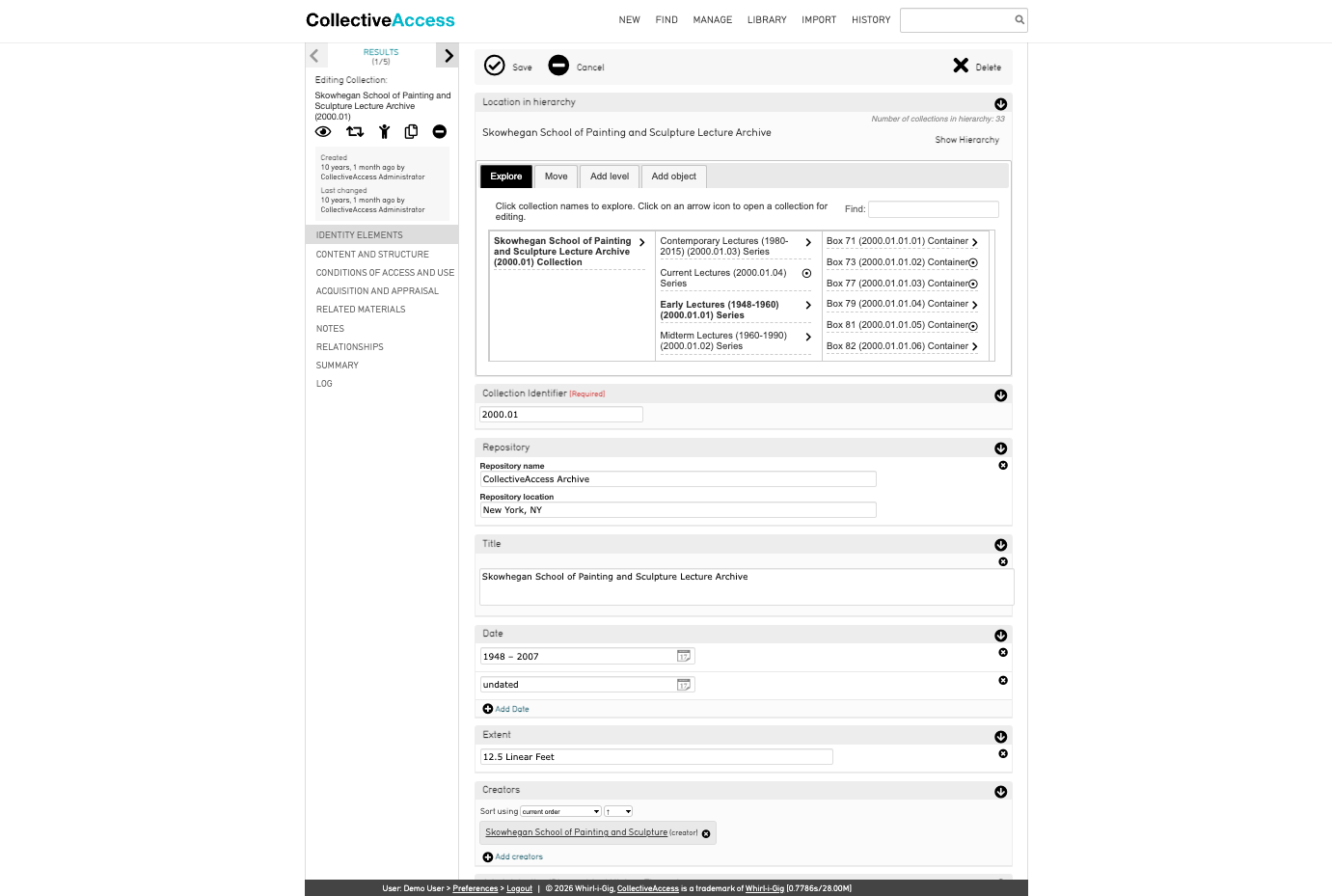
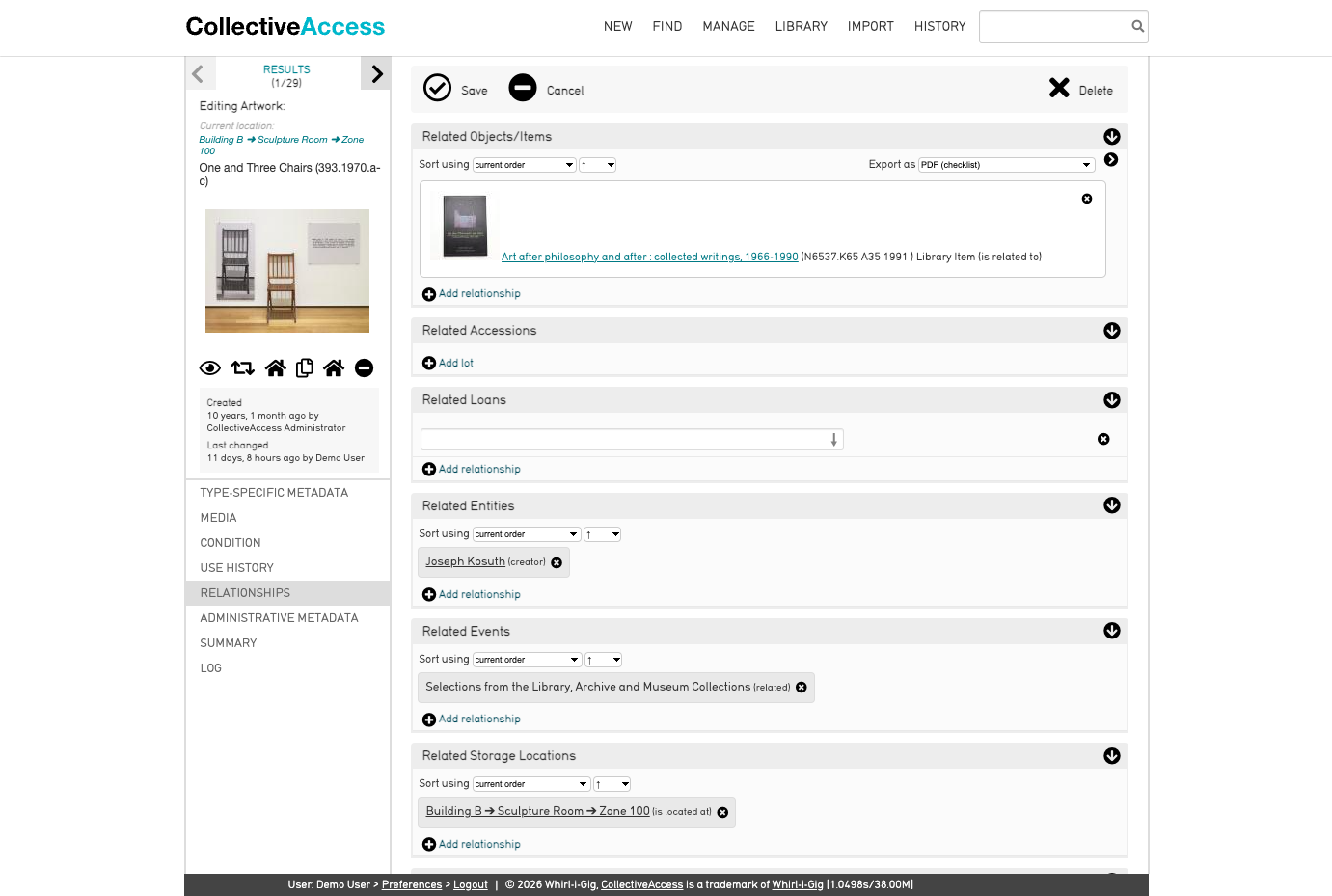
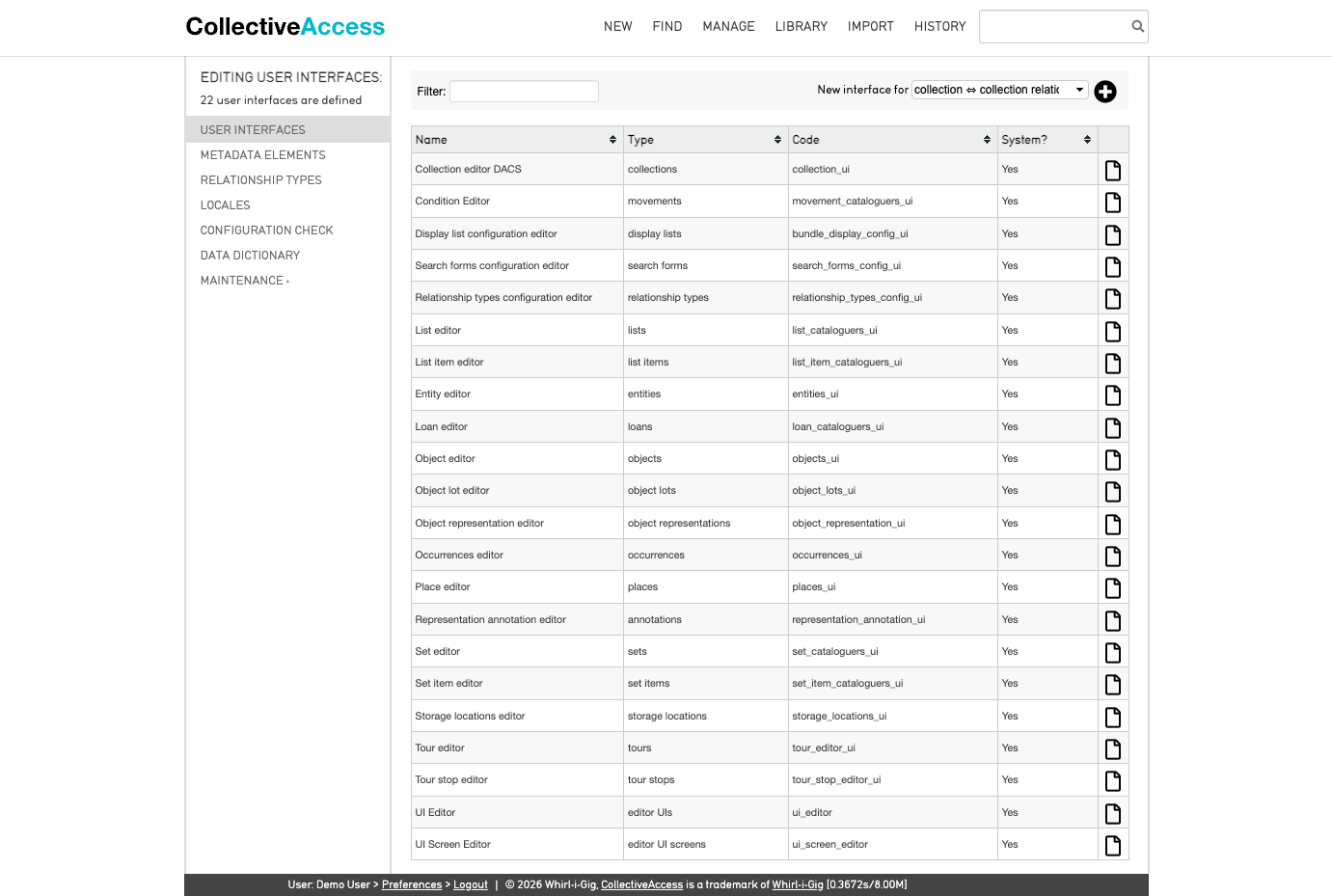
For a museum, archive, or research collection that must describe everything it holds in its own metadata terms, CollectiveAccess Providence offers a web-based catalogue that needs no custom programming. Objects, entities, places, collections, storage locations, and loans link through bi-directional relationships with configurable types such as creator, donor, or subject, and DACS, Dublin Core, and VRA Core come pre-loaded. Fields, entry screens, search displays, and reports are defined in the web interface or an XML installation profile with validation for dates, measurements, and URLs; images, video, audio, PDFs, and 3D scans open in browser viewers with pan and zoom. Mapping files import Excel, CSV, XML, and MARC data in bulk, exports cover OAI-PMH formats such as EAD and Dublin Core plus finding aids and reports, and Getty vocabularies and Library of Congress services supply controlled terms. Staff check items in and out like a library, follow location and provenance history over time, and share sets of records with collaborators. Access can be limited by user or group down to specific fields or record types, logins can use LDAP, and every edit is logged with a user and timestamp. MD5 fixity checks arrive by email, BagIt packages support preservation, an optional GraphQL API handles search, browse, and editing, and a separate companion, Pawtucket2, can publish the catalogue as a public website. Running on a dedicated VPS on RepoCloud with guaranteed CPU, RAM, and SSD, full root SSH access, and a browser serial console. GPL-3.0 licensed.
Benefits
- Model Any Collection Without Coding
- Installation profiles and the web interface define record types, metadata fields, relationships, and entry screens, so each institution describes its holdings in its own terms instead of adapting to fixed fields.
- Archival Standards Ready on Day One
- DACS, Dublin Core, and VRA Core come pre-loaded, Getty vocabularies and Library of Congress services supply controlled terms, and records export through OAI-PMH formats including EAD.
- Records and Media Stay Under Your Control
- Records live in your own MySQL or MariaDB database and media files on your own server, while spreadsheet, PDF, and OAI-PMH exports let you move data out whenever you choose.
- Access Rules Down to the Field
- Permissions can limit specific fields or record types by user or group, published records can carry multi-level restrictions, LDAP login is supported, and the change log timestamps every edit.
Features
- Flexible Data Model
- Objects, entities, places, collections, storage locations, and loans link through bi-directional relationships with configurable types, repeating multilingual metadata elements, and optional metadata on each relationship.
- Batch Import and Export
- Mapping files import Excel, CSV, XML, and MARC data in bulk, while exports cover OAI-PMH formats such as EAD and Dublin Core, finding aids, and PDF or spreadsheet reports.
- Rich Media Handling
- Images, video, audio, PDFs, and 3D scans display in browser viewers, including pan-and-zoom, with derivatives, watermarking, annotation tools, and optional text search inside PDFs.
- History and Check-Out Tracking
- Location history and provenance are tracked over time, library-style check in and check out controls item flow, and sets let collaborators share and edit groups of records.
- Fixity and BagIt Preservation
- MD5 fixity checks are reported by email, access derivatives are created automatically for preservation media, and BagIt packages can be exported to digital preservation systems.
- GraphQL API and Replication
- A GraphQL API supports search, browse, and editing, and a replication framework synchronizes multiple CollectiveAccess systems; service APIs are disabled by default and enabled in app.conf.