37Studio
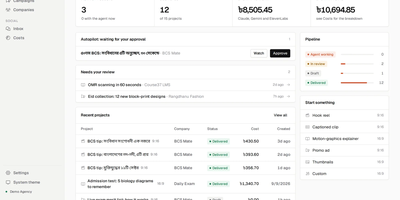
37Studio is a self-hosted AI video studio and social media desk that turns a short brief into on-brand videos, posts them to nine social platforms, and drafts replies to the messages that come back. Paste a company website and it builds a brand library of logos, photos, fonts, and colours, plus a knowledge base every later video and reply draws on. An editor agent builds each video as an animated composition, checks its own rendered frames, and takes revision requests in plain words. The same workflow yields hook reels, captioned clips, explainers, podcast clips, promo ads, and thumbnails, and any finished video can become a template. A two-hour recording becomes a shelf of short clips: transcription runs locally in about 100 languages at no cost, and YouTube or Drive links import directly. Publishing reaches Facebook Pages, Instagram, YouTube, TikTok, LinkedIn, X, Pinterest, Bluesky, and Mastodon in one action, now or scheduled, each with its own caption. Autopilot goes further: state a content plan in one sentence and a fresh video is made before every slot, waiting for one-click approval. Messenger, Instagram, and WhatsApp messages and social comments land in one inbox, with replies drafted in the customer's language under rules each brand sets. Exact AI spend shows on every project, and an MCP server lets your own AI tools run the studio. Running on a dedicated VPS on RepoCloud with guaranteed CPU, RAM, and SSD, full root SSH access, and a browser serial console. MIT licensed.
Playerr
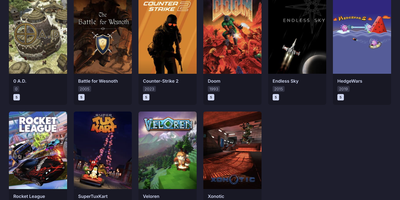
Playerr is a self-hosted library manager that organizes your game collection the way Radarr and Sonarr organize movies and shows, with scanning, metadata, and automated downloads in one web interface. Point it at your game folders and its recognition engine recursively identifies platforms and maps local files to the right titles. Each game is enriched with artwork, descriptions, ratings, and release dates pulled from IGDB and Steam, turning a pile of folders into a browsable collection. Search indexers through Prowlarr and Jackett when you want to grow the library, then hand downloads to qBittorrent, Transmission, SABnzbd, or NZBGet and watch progress from the same screen. Folders are renamed automatically from sanitized IGDB titles while the original release structure stays intact, so the library stays tidy without manual filing. Your Steam library syncs into the same unified view alongside locally stored games. Installation packages are processed automatically, with the primary executable identified to streamline setup. Remote access can be enabled from settings so the collection is reachable from phones, tablets, and laptops on your network. Running on a dedicated VPS on RepoCloud with guaranteed CPU, RAM, and SSD, full root SSH access, and a browser serial console. MIT licensed.
Romarr
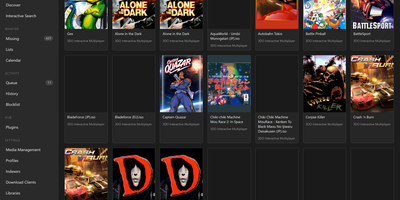
Name a game and Romarr goes and finds a copy you can prove is good. Search every indexer at once, through Prowlarr or directly, and each release comes back scored with the reasons written out: seeders, the right region, a plausible size, points off for hacks, betas, and repacks. The winner goes to whichever client speaks its protocol, from thirteen torrent daemons and eight debrid services to SABnzbd or a plain watched folder, and within a minute of finishing, the ROM itself is picked out of its archive, multi-track discs kept together as a set. Then comes the part no other library manager does: every import is checksummed against your No-Intro and Redump DATs and stamped verified, bad dump, or unknown. A verified dump is byte-for-byte the published one, a bad dump is refused unless you force it, and homebrew or translations import without ceremony as unknown. A verified copy automatically upgrades an unverified one, collections compare against a DAT to show exactly what you are missing, and duplicates are audited before anything moves. Finished games land in RomM, Gaseous, Retrom, or a simple folder, routed per platform, and your library server is told to rescan so the game appears with its art. Running on a dedicated VPS on RepoCloud with guaranteed CPU, RAM, and SSD, full root SSH access, and a browser serial console. MIT licensed.
Muxarr
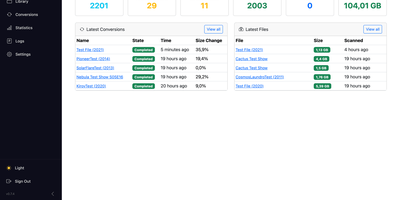
Muxarr cleans up your media library by stripping out the audio and subtitle tracks you will never use, so players stop offering twenty subtitle options and the wrong dub. Tell it which languages you actually watch and read, and it keeps those tracks while dropping commentary, foreign dubs, and redundant subtitles. Nothing is re-encoded: video and audio are copied as they are, so quality is identical and a large film finishes in about a minute instead of hours. Spare audio tracks alone often free ten to thirty percent of a file, which adds up quickly across a big library. Profiles apply different rules per directory, so anime, family films, and western shows can each keep different languages, with priority ordering, per-language limits, and fallback rules like English subtitles only when German ones are missing. Regional variants are understood, distinguishing Quebec French from France French or Latino from Castilian Spanish. When Sonarr or Radarr import something new, a webhook sends it straight to Muxarr, and original language detection makes sure a foreign film keeps its real soundtrack. Track names get cleaned of encoder tags, default and forced flags are fixed, and every output is validated before it replaces the original. Running on a dedicated VPS on RepoCloud with guaranteed CPU, RAM, and SSD, full root SSH access, and a browser serial console. GPL-3.0 licensed.
OpenTranscribe
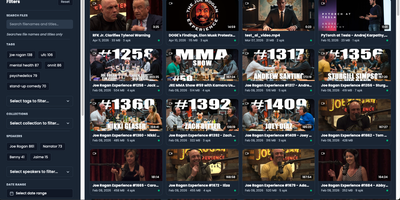
OpenTranscribe is a self-hosted transcription platform that converts your audio and video library into searchable, speaker-labeled transcripts, then lets you summarize and chat with those recordings. Upload files up to 15 GB, record from the browser microphone, or paste a link from YouTube and a thousand other sites, and playlists queue up for batch processing automatically. WhisperX produces word-level timestamps in over 100 languages, while the diarization engine works out who spoke when, corrects turn boundaries, and recognizes the same voice again across different recordings. Speaker profiles accumulate a voice fingerprint, speaking-time analytics, and merged identities, so a regular guest is named correctly in every episode without relabeling. Point it at an LLM and recordings gain structured summaries with action items, suggested tags and collections, and a chat interface that answers questions about your transcripts with citations, grouped into projects that pin their source recordings and standing instructions. Leave the model unconfigured and transcription, diarization, full-text and semantic search, and redaction still run entirely on local models. Watch folders, S3 buckets, and network shares import new media on a schedule with three-layer deduplication and automatic stitching of split recordings, and everything exports as subtitles, Word or PDF documents with citeable numbered lines, or Markdown. Running on a dedicated VPS on RepoCloud with guaranteed CPU, RAM, and SSD, full root SSH access, and a browser serial console. AGPL-3.0 licensed.
OpenQuok
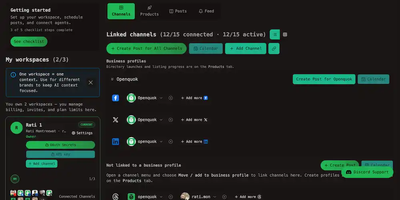
Monday starts with a blank composer and eleven open tabs. OpenQuok replaces those tabs with one open-source Content OS where social scheduling and directory launch share a workspace, a media library, and a review queue. You connect the accounts once: Facebook Page, Threads, Instagram, LinkedIn, X, YouTube, TikTok, Dev.to, Bluesky, Reddit, Skool. Then the week takes shape on a calendar you can drag around. A post begins in Global mode, one caption for everywhere. Unlock a channel and that network gets its own words, its own media, its own settings, with a preview that shows exactly what its audience will see. Drafts wait on the kanban board until a person signs off. Clients comment through preview links, and nothing reaches a live channel before that approval, no matter which tool drafted it. Agents queue drafts through MCP, the CLI, or the public API, and playbooks repeat the campaigns that worked last month. When launch day comes, the other half of the workspace opens. Your product profile already holds the copy, the readiness check names the missing fields, and each directory submission and live URL is tracked beside the posts announcing it. Separate workspaces keep separate brands honest, each with its own teammates, timezone, templates, and tags. Running on a dedicated VPS on RepoCloud with guaranteed CPU, RAM, and SSD, full root SSH access, and a browser serial console. AGPL-3.0 licensed.
Pixelfed
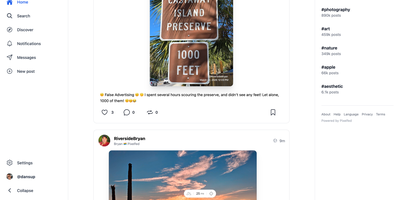
With nearly 7,000 GitHub stars and instances spanning hundreds of federated servers, Pixelfed has become the leading open-source alternative to Instagram — delivering ad-free, algorithm-free photo sharing across the Fediverse. Built on Laravel with a Vue.js frontend, Pixelfed provides a polished, mobile-responsive interface where users upload photos and videos, apply built-in filters, create multi-image posts with alt text, share ephemeral stories, organize content into curated collections, and exchange direct messages — all without tracking, algorithmic manipulation, or targeted advertising. Federation through the ActivityPub protocol means Mastodon, Pleroma, and other Fediverse users can follow Pixelfed accounts, view photo posts in their timelines, and interact through likes, boosts, and replies, while Pixelfed users can discover content through both local and federated timelines. Instance administrators control registration policies, content moderation rules, federation blocklists and allowlists, storage backends including local or S3-compatible options, and server-wide settings. The Mastodon-compatible API enables third-party mobile app support alongside the built-in Progressive Web App experience. Advanced features include blurhash image placeholders for smooth loading, federated groups for community building through FEP-400e and FEP-1b12 extensions, HTTP Signatures with Authorized Fetch for secure federation, and comprehensive data export for full portability. Deployment requires PHP 8.1+, MySQL or PostgreSQL, Redis, and a reverse proxy, with Docker Compose configurations available for streamlined setup. Running on a dedicated VPS on RepoCloud with guaranteed CPU, RAM, and SSD, full root SSH access, and a browser serial console. AGPL-3.0 licensed.
Sora Frame
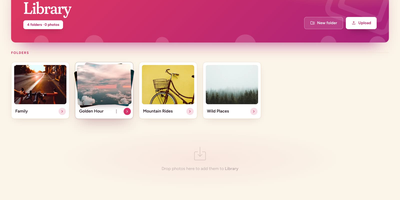
An old tablet on the shelf can show family photos all day once Sora Frame feeds it. The slideshow runs in any browser with soft cross-fades, a large clock, date, and weather widget, and it keeps the screen awake, even on iPads and phones. Install it to the home screen like an app, then pick what plays: every photo or a single folder, nested folders included. The library takes photos by drag and drop or the Upload button, builds folder covers from their own pictures, moves photos with a drag, deletes a multi-selection in one go, and offers an optional Google Photos import. JPEG, PNG, WebP, GIF, and iPhone HEIC files are accepted, and only a resized copy is stored. Notes slip a message like a visit reminder into the rotation, with up to four photos, a date range, an optional event countdown, and a choice of eight memory-book layouts. Each frame or family member gets a PIN limited to chosen folders, and a new frame pairs by scanning a QR code or opening an address that carries the PIN. The interface speaks English, Spanish, French, German, Portuguese, Italian, Dutch, Hindi, Japanese, Chinese, and Arabic, and keyboard shortcuts cover play, next, fullscreen, and photo info. A living room shelf, a grandparent's tablet, or an office desk display makes a fine home for it. Running on a dedicated VPS on RepoCloud with guaranteed CPU, RAM, and SSD, full root SSH access, and a browser serial console. AGPL-3.0 licensed.
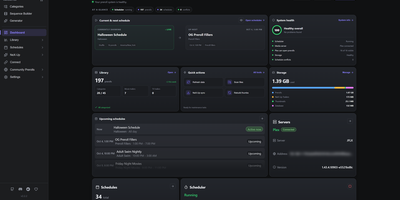
NeXroll
Give movie night a proper cinema preshow: NeXroll plays intros, trailers, and custom welcome screens before the feature on Plex, Jellyfin, and Emby. Build sequences in a list or a visual Flow view, with branches that pick a fallback when no trailer is available and rules for time of day, age rating, genre, or audio format. Schedules rotate the lineup automatically, with holiday themes, special event dates, priorities, and filler between them, all visible in month, week, and day calendars. Import your own videos, preview them, tag them, and sort them into categories, then pull in more from a community collection filtered by creator or platform. NeX-Up fetches upcoming movie and TV trailers through Radarr and Sonarr, and Library Trailers replays trailers for films you already own. Generator Studio makes welcome videos, announcements, QR code screens, and Coming Soon clips from your own text, logo, backdrop, and soundtrack, with a live preview. Connect several media servers to one install, switch among eight themes, back up and restore settings, and automate with the External API. Running on a dedicated VPS on RepoCloud with guaranteed CPU, RAM, and SSD, full root SSH access, and a browser serial console. MIT licensed.