
Family Ledger
Family Ledger gathers every account a household owns into one private picture of net worth, using ten minutes of data entry per month. Bank cards, brokerage accounts, funds, property, loans, crypto, precious metals, and insurance sit together, grouped by family member, with CNY, USD, and HKD support. Each month the app lists the balances to fill in, so two partners can finish the job at different times from a phone or desktop. The dashboard separates what you earned from what your money earned, and it reports true annualized return with XIRR and TWR, plus a net-worth line adjusted for inflation. An asset lens slices holdings by risk, platform, industry, currency, and region through sunburst charts and pivot tables, and fund look-through shows the real stock, bond, and industry exposure behind each fund. Upload a brokerage screenshot and a vision model reads every holding for you to confirm. AI checkups score allocation, risk, liquidity, and returns, then suggest rebalancing steps. Goals for retirement, education, and emergency reserves come with optimistic, neutral, and pessimistic forecasts. Running on a dedicated VPS on RepoCloud with guaranteed CPU, RAM, and SSD, full root SSH access, and a browser serial console. AGPL-3.0 licensed.
Squidex
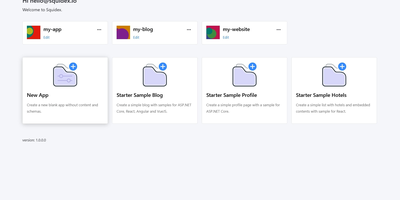
The front end should never dictate how your content is shaped. Squidex is an open-source headless CMS that stores content once and delivers it to any website, app, or service through REST, OData, and GraphQL APIs, so teams design schemas around their domain instead of around a theme. Editors work in a clean management UI: define schemas with validation and localisation, write content with references and components, manage images and files with resizing built in, and move drafts through custom workflows that say who creates, reviews, and publishes. Nothing waits on a developer for routine changes, and nothing ships unreviewed in organisations that need approval chains. Rules react to every content event, pushing fresh posts to syndication partners, notifying search indexes, invalidating caches, or calling your own webhooks; backups, versioning with diff-style history, and role-based permissions keep an auditable operation. Multiple projects live in one installation, clients authenticate API consumers, and content plugs into static-site generators, storefronts, and mobile apps from one hub. Because you run it yourself, the database options span MongoDB and several SQL servers, and the API your applications depend on answers from infrastructure you control with no per-seat tax on editors. Running on a dedicated VPS on RepoCloud with guaranteed CPU, RAM, and SSD, full root SSH access, and a browser serial console. MIT licensed.
NodeDR POS
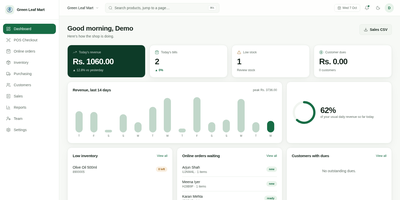
Scan a barcode, press Enter, and the sale is done: that is the whole rhythm of NodeDR POS at a shop counter. A USB scanner works, and so does a phone or tablet camera. Each sale can carry tax breakdowns with GSTIN and HSN codes, percentage or flat discounts, loyalty points, store credit, and customer dues for short payments. Cash, UPI with a payment QR, and card are supported in more than 20 currencies. Receipts print through the browser, download as PDF, or go straight to a USB thermal printer. Inventory takes bulk CSV or Excel imports, generates printable EAN-13 barcode labels, looks up unknown barcodes in free product databases, and flags low stock. Purchasing adds suppliers, purchase orders, and reorder suggestions. Orders from WooCommerce, Shopify, or a custom site flow through a New, Packing, Ready, and Collected board. Phone and laptop sellers can switch on IMEI tracking with warranty lookup. A customer display shows the live cart on a second screen. Reports cover revenue, gross profit, average bill, category mix, and busy hours, with staff roles and A4 tax invoices alongside. Running on a dedicated VPS on RepoCloud with guaranteed CPU, RAM, and SSD, full root SSH access, and a browser serial console. AGPL-3.0 licensed.
BackupX
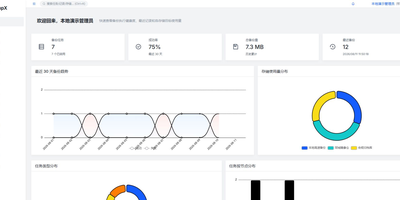
BackupX puts every server backup you are responsible for into one web console, so cron lines scattered across machines become scheduled, visible, and verifiable tasks. Files and directories from multiple sources, MySQL, PostgreSQL, SQLite, SQL Server, and SAP HANA databases all back up on cron schedules you can also build in a visual editor, with automatic retention by days or count cleaning up what expires. More than seventy destinations are reachable through rclone, from S3 and other object stores to Google Drive, WebDAV, FTP, SFTP, Azure Blob, Dropbox, and OneDrive, and storage targets show connection health and live capacity before a job ever fails against a full disk. A master and agent design lets remote servers poll outward only, even through proxies, private certificate authorities, or SSH bastions, so agents run tasks locally with no inbound connectivity to defend. Per-node bandwidth caps and concurrency limits keep a small node polite and a big node busy, each at its own pace. Success and failure notifications arrive by email, webhook, or Telegram, while Prometheus metrics, health probes, an SLA breach gauge, and a full audit log keep the platform observable, and signed audit webhooks forward events to SIEM or WORM storage for compliance records. Running on a dedicated VPS on RepoCloud with guaranteed CPU, RAM, and SSD, full root SSH access, and a browser serial console. Apache-2.0 licensed.
Cachet
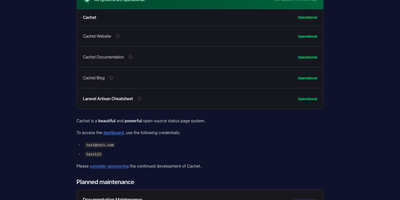
Cachet Core is the open-source engine behind Cachet 3.x status pages, giving your team a self-hosted page where incidents, maintenance windows, component health, and live metrics keep customers informed during downtime. You publish an incident with a name, status, and visibility, then post updates on its timeline as work progresses, and the public page reflects every change immediately. Services become components you can group and mark operational, degraded, partially out, or fully down, so visitors see exactly which part of your platform is affected. Maintenance gets scheduled ahead with its own updates, and subscribers receive notifications when new incidents appear or change. Custom metrics accept data points through the API and render as charts on the page, turning response times or queue depths into public proof of recovery. A JSON API creates and updates incidents from your monitoring stack, and webhooks push incident events to the chat rooms and tools your team already watches. The dashboard handles components, incidents, metrics, subscribers, tags, and user accounts, with status page customization and localization in more than 10 languages. Running on a dedicated VPS on RepoCloud with guaranteed CPU, RAM, and SSD, full root SSH access, and a browser serial console. MIT licensed.
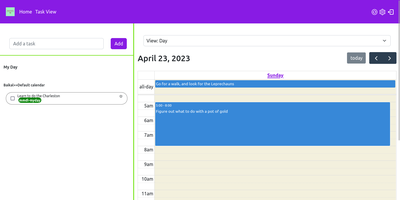
Manage My Damn Life
Manage My Damn Life is a personal productivity platform and CalDAV task manager that gives individuals and teams a full-featured web workspace for coordinating todos, calendar agendas, and project schedules without relying on proprietary productivity software. Users can connect multiple CalDAV server backends including Nextcloud, Radicale, and Baikal to synchronize tasks, events, and subtasks across their self-hosted infrastructure. The interface offers multiple interactive perspectives, letting planners switch between nested task checklists, full monthly calendar grids, and dynamic Gantt chart roadmaps with customizable timeline scales. Keyboard-driven operators can rapidly log action items via intuitive Quick Add syntax that parses due dates, priority tiers, and category labels from inline text triggers. A versatile filter manager allows users to save custom query views matching due dates, completion statuses, parent task hierarchies, and color-coded labels. Team members can establish reusable task templates for recurring administrative workflows, assign multi-level checklist items, and manage individual calendar visibility across shared workspaces. System administrators can configure user authentication through native accounts or integrate enterprise Single Sign-On using OpenID Connect providers like Keycloak, Authentik, and Google. Client-side state caching accelerates navigation while background sync preserves CalDAV compliance. Running on a dedicated VPS on RepoCloud with guaranteed CPU, RAM, and SSD, full root SSH access, and a browser serial console. GPL v3 licensed.
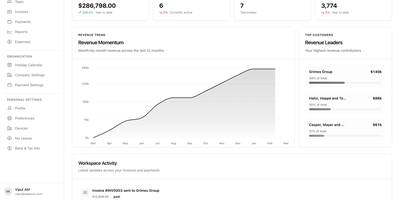
Miru
For agencies that bill by the hour, Miru replaces the stitched-together timer, spreadsheet, invoicing app, and payment tool whose numbers never quite agree. It puts the whole money workflow in one place, from the first tracked minute to the paid invoice. Start a timer or log time against a project, then turn the accumulated billable hours into an invoice without retyping a single line. Log expenses as they happen, attach them to the right client work, and review them before they reach an invoice. Send the invoice and collect through Stripe or PayPal, watching status and amounts from a single cash flow view instead of chasing payment threads. The dashboard keeps revenue, active projects, and team momentum visible at a glance, while reports break down utilization and aging so overdue money gets a follow-up before it gets forgotten. Manage clients, projects, and team members with their roles in the same system that records their hours, and keep employee records and payroll reminders alongside the billing data they support. Running on a dedicated VPS on RepoCloud with guaranteed CPU, RAM, and SSD, full root SSH access, and a browser serial console. MIT licensed.
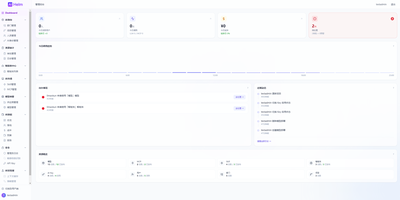
AIHelms
Every employee gets one AI key, and every dollar of model spending gets a name next to it. AIHelms is an admin console and user portal that sits in front of your model providers, so a team can use Claude, DeepSeek, GPT, and local models through one entry point, with IT keeping control. Administrators onboard providers, publish models, and balance traffic across several deployments of the same model, with both OpenAI and Anthropic request formats accepted. Each AI identity carries a model allow-list, quota, rate limits, and an expiry date. Budgets can be set per person, department, project, or model, with soft alerts and hard cut-offs. Internal settlement prices sit beside real provider costs, so departments can be billed with or without a markup. Dashboards show adoption, daily calls, token use, and top users, and weekly or monthly efficiency reports drill down by department. A built-in marketplace registers, approves, and distributes MCP servers and agent Skills, and an AI policy scan flags risky Skills before anyone installs them. Audit logs record every administrator action. Employees see their key, endpoint, models, and monthly spend in the portal. Running on a dedicated VPS on RepoCloud with guaranteed CPU, RAM, and SSD, full root SSH access, and a browser serial console. GPL-3.0 licensed.
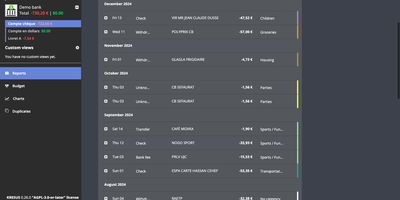
Kresus
Kresus is a self-hosted personal finance manager that fetches your bank transactions overnight and turns them into categorized history, budgets, and charts, with no third-party aggregator holding your bank login. Banks with an open-source Woob connector sync automatically (mostly French ones), and each night Kresus re-reads the previous month so late postings are not missed; everything else works through manual accounts or OFX and JSON imports. Transactions can be renamed, sorted into color-coded categories, and moved to the previous or following budget month, and auto-categorization rules handle repeat merchants. The Budget page compares planned amounts with actual spending per category. Charts plot spending by category, balance over time, and monthly money received, spent, and saved. Recurring transactions like rent appear every month to preview your future balance. The Duplicates page lists suspected double imports for manual merging. Search by period, category, amount, or date, and group same-currency accounts into custom views. Email reports, balance and transaction alerts, and Apprise notifications to Telegram, Slack, or Gotify switch on once your administrator enables them. The interface comes in English, French, Spanish, and Turkish. The whole instance exports as JSON without bank passwords or, when enabled, as a password-encrypted file. Running on a dedicated VPS on RepoCloud with guaranteed CPU, RAM, and SSD, full root SSH access, and a browser serial console. AGPL-3.0-or-later licensed.
Pinakes
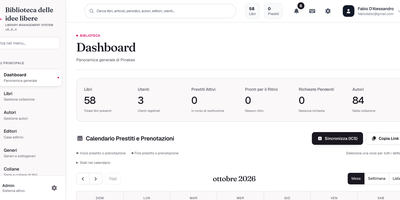
A small library deserves real library software, not a spreadsheet with aspirations: Pinakes runs the whole operation, from the barcode on the spine to the reminder in a reader's inbox. Catalogers add a book by ISBN and watch metadata and covers arrive from Open Library and Google Books, then file it under Dewey categories with barcodes for every physical copy. Circulation handles requests, approvals, pickups, renewals, and returns, with FIFO reservation queues that notify the next reader the moment a copy frees up, and due dates that respect the library's own closure calendar. Patrons browse a public catalog with instant search and filters, reserve from home, renew loans, read ebooks and listen to audiobooks in the browser, and get due-date reminders automatically. The same installation can describe archives to ISAD(G) standards, exchange records through MARC, SRU, Z39.50, and OAI-PMH, and present digitized pages through IIIF viewers. Sixteen bundled plugins, custom staff roles, a homepage editor, and ten themes make it feel like your library, and it installs on ordinary shared hosting with a guided setup. Running on a dedicated VPS on RepoCloud with guaranteed CPU, RAM, and SSD, full root SSH access, and a browser serial console. GPL-3.0 licensed.
Initiative
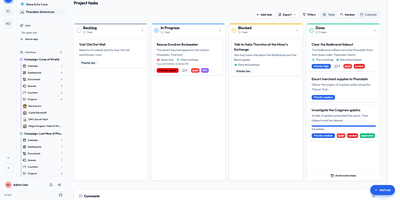
Initiative is a self-hosted, multi-tenant project management platform that organizes projects, tasks, collaborative documents, and schedules into strictly isolated community workspaces without enterprise complexity. Users create distinct communities where data remains strictly partitioned across separate database schemas, allowing agencies, volunteer groups, and gaming guilds to manage multiple client environments from a single deployment. Within each community, initiatives group related projects and documents while interactive drag-and-drop Kanban boards track task progression across custom columns, priorities, and deadlines. Integrated collaborative documents enable team members to co-author notes, project briefs, and meeting minutes in real time with threaded inline discussions and user mentions. Granular role-based permissions let administrators specify exact view and edit privileges down to individual items, while a recoverable trash system prevents accidental deletions from interrupting live operations. Curated marketplace apps supply customizable analytics dashboards, and optional bring-your-own-key artificial intelligence integrations generate task suggestions and summarize lengthy discussion threads. Running on a dedicated VPS on RepoCloud with guaranteed CPU, RAM, and SSD, full root SSH access, and a browser serial console. GNU AGPLv3 licensed.
Admidio
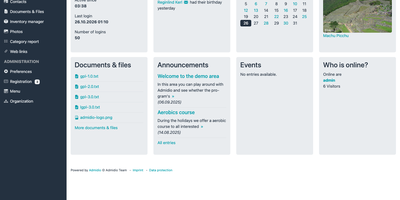
Admidio is membership management software for clubs, associations, and groups, built so that every permission follows from the roles a person holds. Organizers define roles such as board, youth team, or trainers, decide who may email or see each one, and grant module rights like managing events, editing contacts, or uploading photos with simple switches. Contact records use customizable profile fields, record relationships such as parent and child, and can be imported in bulk or exported as vCards. New members register online and administrators review each request. Events carry dates, venues, calendars, and participant lists with sign-up, and the schedule downloads as iCal. Messages go as HTML email to individuals, roles, or groups, and members also find announcements, a categorized forum, document folders with role-based access, and photo albums with e-cards. The inventory manager tracks equipment, who holds it, and its borrowing history. Optional two-factor login protects accounts, a change history can be switched on for every module, and single sign-on lets other applications authenticate against the member database. Twenty-five languages are included, the interface installs as a progressive web app, and sub-organizations can be managed from the same installation. Running on a dedicated VPS on RepoCloud with guaranteed CPU, RAM, and SSD, full root SSH access, and a browser serial console. GPL-2.0 licensed.
JSPWiki
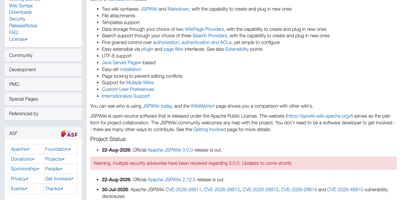
Knowledge scattered across chat threads, tickets, and shared drives gets one permanent, searchable home in JSPWiki, a wiki engine that any team member can edit from the browser. Pages can be written in classic JSPWiki markup or in Markdown, and new syntaxes plug in alongside. Every page carries its own history through the versioning file provider, so edits can be compared and rolled back, and page locking keeps two editors from colliding. Files attach directly to pages, templates restyle the whole wiki, and three interchangeable search providers, including full-text indexing, make old decisions findable again. Access stays precise: authentication and per-page access control lists decide who can view or edit each page, which suits mixed audiences of staff, partners, and the public. Plugins and page filters extend rendering with dynamic content, and one installation can host multiple separate wikis for different teams. Readers get custom preferences and internationalized interfaces. Run it as a WAR on Tomcat or pull the Docker image and open port 8080. Running on a dedicated VPS on RepoCloud with guaranteed CPU, RAM, and SSD, full root SSH access, and a browser serial console. Apache License 2.0 licensed.
AliangBoard
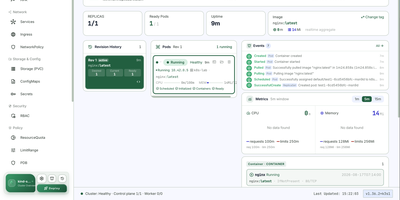
AliangBoard puts every Kubernetes cluster you run behind one web panel, where you manage resources yourself or ask an AI agent to do it with your approval. Connect each cluster with a bearer token or basic auth and the panel persists the connection, so switching clusters, namespaces, and workloads takes one click instead of another kubeconfig. More than thirty resource types stay in sync: create workloads, services, ingress, config, storage, and RBAC through structured forms, edit anything as YAML, apply multi-document manifests at once, and delete optimistically with automatic rollback when the API refuses. Pod work goes deep: a tmux-backed exec terminal survives browser refreshes, port-forwards resolve services to their backend pods, files move up and down with progress, and debug containers inject into running pods without restarting them. Day-two operations are buttons, not flag memorization: scale, rolling restart, rollout undo, manual CronJob triggers, and node cordon or drain. Global search, a layered namespace topology, live event streams, and CPU and memory metrics keep orientation effortless. Then there is the operator: an Agent workbench and MCP server let your LLM read logs, debug containers, and propose changes in natural language, while every write waits for a human click and lands in an audit log that names who did what. Running on a dedicated VPS on RepoCloud with guaranteed CPU, RAM, and SSD, full root SSH access, and a browser serial console. Apache-2.0 licensed.
Documize
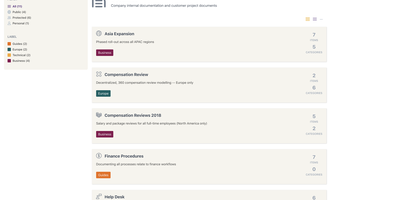
Enterprise documentation discipline without enterprise infrastructure: Documize Community is the Confluence alternative built on exactly that trade. The entire platform - Go backend, Ember.js frontend - compiles to a single executable binary for Linux, Windows, and macOS with zero runtime dependencies: no Elasticsearch, no Redis, no JVM. Point it at PostgreSQL, MySQL, MariaDB, Percona, or Microsoft SQL Server (rare in open source, decisive in Microsoft shops), and schema migrations run on launch with native full-text search on whichever engine you chose. Content organization rejects nested-folder sprawl for Spaces, categories, and labels, and the section-based composable editor mixes rich text, Markdown, code blocks, PDFs, diagrams, and embedded Jira or Trello content in one document, with reusable blocks and templates so teams start from standards rather than blank pages. It deliberately unifies internal team docs and customer-facing documentation in one system with granular space-, document-, and action-level permissions deciding who sees what. Where wikis stop, Documize continues: content approval workflows (draft, review, approve, publish), version management, lifecycle control, feedback capture, PDF export, analytics showing what gets read and ignored, activity streams, and audit logs. Keycloak, LDAP, and SSO integrate for enterprise auth. AGPL-licensed.
DOMjudge
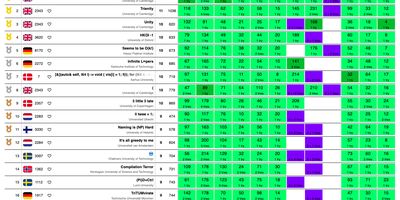
Built for ICPC-style programming contests, DOMjudge takes team submissions, judges them in a restricted sandbox, and posts a live scoreboard. Each team gets its own page. There they read the problem set, submit source code from the browser or a command line client, follow verdicts, and send clarification requests. Judges see every submission, judging run, and output diff. They verify results and rejudge a single submission or everything for a language, problem, team, or judgehost. Administrators schedule activation, start, freeze, end, and unfreeze times, import teams, categories, affiliations, and problems in bulk, and watch a traffic-light status for every team. The public scoreboard freezes for the final stretch and exports as a static HTML page. Judgehosts compile and run each solution with time and memory limits in languages such as C, C++, Java, Python, Kotlin, Go, and Haskell, with custom validators and interactive problems when a task calls for them. Balloon runners get a delivery queue. Clarifications sort into categories. Open contests accept self-registration. The Contest API and event feed connect external scoreboards, and a shadow mode compares results against another system. Running on a dedicated VPS on RepoCloud with guaranteed CPU, RAM, and SSD, full root SSH access, and a browser serial console. GPL-2.0 licensed.
Reloops
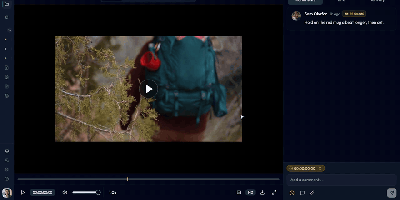
Reloops is a self-hosted creative asset workspace where teams keep every video, design, PDF, audio file, and live website in one library and collect feedback on the files themselves instead of in scattered email threads. Reviewers click anywhere on an image to pin a note to that exact spot, and on video the comments attach to the precise frame, so "fix this bit" always points at the bit in question. Every upload becomes a new version on the same asset, older cuts stay available for side-by-side comparison, and approvals are recorded on the file so nobody ships the wrong export by accident. Clients never need an account: send them a share link or a branded collection and they can watch, comment, and sign off as guests. The library searches the way people remember work, because each asset carries generated descriptions, tags, and metadata filters, so "the approved homepage with the blue button" actually finds something. Day to day, assignments and review queues keep feedback moving, while scoped API keys let agents such as Claude, OpenClaw, Zapier, and n8n upload new versions, post comments, update statuses, and manage share links inside the same workspace. Running on a dedicated VPS on RepoCloud with guaranteed CPU, RAM, and SSD, full root SSH access, and a browser serial console. AGPL-3.0 licensed.
ClassicPress
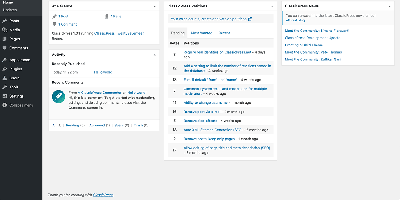
WordPress without Gutenberg: ClassicPress, the community-led fork, keeps the TinyMCE classic editor as the default and strips the block editor and Full Site Editing out of core entirely. The result is roughly half WordPress's size - obsolete libraries like jQueryUI, Thickbox, and Flash support are gone, replaced by native HTML5 elements and modern alternatives like SortableJS - which translates to a measurably faster admin and a leaner attack surface. Forked from WordPress 6.2, it remains compatible with the vast plugin and theme ecosystem targeting that lineage (anything not requiring blocks generally works, helped by a blocks-compatibility mode), and the PHP-first WordPress API developers have used for over a decade works unchanged - no React required to extend your CMS. The fork adds its own improvements: built-in media categories and tags with bulk editing, revision management that lets you prune database bloat, native HTML5 dialogs for accessible touch-friendly menus, and recent releases bring APCu object-cache support, vanilla-JS core widgets, and performant translations. Governance is democratic and community-driven rather than corporate. For content sites, business sites, and blogs where the classic editing workflow is the feature, ClassicPress is stability as a philosophy.