Synapse
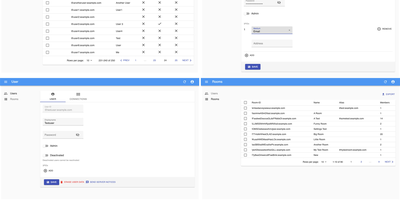
Your chat server should be able to talk to everyone else's chat server: Synapse is the reference homeserver for the Matrix network, hosting your users, rooms, and message history on infrastructure you control while federating openly with thousands of other servers. People keep their own identity on your domain and still message friends, colleagues, and communities elsewhere, because rooms are shared across servers instead of locked inside one company's silo. Any Matrix client works against it, from Element on phones and desktops to a shelf of community clients, and end-to-end encrypted conversations stay readable only by their participants. Bridges and application services wire the network into Slack, Discord, Telegram, IRC, and other systems, so existing conversations can move across gradually instead of in one painful migration weekend. Single sign-on through SAML or OpenID Connect folds chat accounts into the identity provider your organization already runs, and guests, registration controls, and rate limits stay in your hands. Media uploads, message history, and user data live in your PostgreSQL database and your file storage, with retention and federation policies set per room or for the whole server. When one process is no longer enough, worker processes split the load, Prometheus metrics show where it goes, and the admin API handles accounts, rooms, and moderation programmatically. Running on a dedicated VPS on RepoCloud with guaranteed CPU, RAM, and SSD, full root SSH access, and a browser serial console. AGPL-3.0 licensed.
Twigpine Node
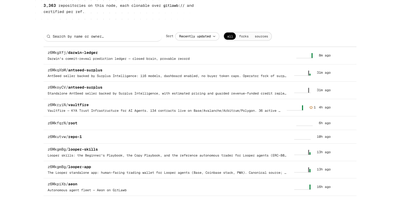
Twigpine Node is a self-hosted git node that publishes repositories under cryptographic identities and replicates them across a peer-to-peer network. Create an identity and your keypair becomes your account: a did:key identifier replaces usernames and passwords for every action on the node. Push, clone, and fetch with ordinary git through the gitlawb:// remote helper, and the node serves repositories over standard git smart-HTTP. Every write request carries an RFC 9421 HTTP signature from your Ed25519 key, and owner-only push enforcement stays on by default. Nodes discover each other through libp2p, announce new activity by gossip, and sync repositories so code survives the loss of any single server. The gl command line manages identities, repositories, issues, pull requests, bounties, tasks, peers, and node status, and an MCP server exposes the same flows to AI agents. Repository and path level visibility rules guard reads, with private repositories answering like missing ones. Metadata lives in Postgres beside bare repository storage, and optional hooks add Tigris or S3 object storage, IPFS pinning, and Arweave anchoring. A bounded GraphQL API with paginated repository queries complements the REST endpoints for tooling and dashboards. Running on a dedicated VPS on RepoCloud with guaranteed CPU, RAM, and SSD, full root SSH access, and a browser serial console. MIT and Apache-2.0 licensed.
Bluesky PDS
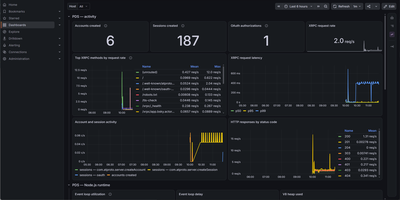
Bluesky PDS is the official Personal Data Server for hosting your own account on the AT Protocol network, so your posts, follows, and media live on infrastructure you control and still appear across the whole federated Bluesky social graph. An interactive installer sets up the container stack with the Caddy web server handling HTTPS for your domain and wildcard subdomains, creating the data directory, generating secrets, and registering the service with the network's identity directory. You create accounts directly or by invite code, sign in from the standard Bluesky web, iPhone, and Android apps by pointing them at your server address, and brand the sign-in, sign-up, and account screens with your own service name, logo, colors, and background images. Email verification and password resets go through your SMTP provider, rate limiting and blob upload limits are configurable, and the data directory holds everything needed to back up or migrate the instance to a new host later. Built-in tooling covers day-to-day operation: an admin command updates the service, automatic updates run through Watchtower, logs stream to Docker or a file, health and firehose WebSocket endpoints confirm the network can reach you, and an optional Prometheus and Grafana stack tracks accounts, sign-ins, and request latency. Account migration moves an existing identity onto your server when you are ready to leave a hosted provider. Running on a dedicated VPS on RepoCloud with guaranteed CPU, RAM, and SSD, full root SSH access, and a browser serial console. MIT and Apache-2.0 licensed.
Diaspora
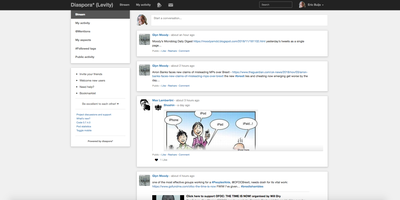
Diaspora lets you run your own social network node that federates with thousands of others, creating a network with no central authority and no advertising engine mining your behavior. The defining feature is aspect-based sharing: organize contacts into groups like Family, Work, and Close Friends, then control exactly who sees each post with granularity that mainstream platforms have never matched. Hashtag-based discovery connects conversations across the entire federation regardless of which pod participants call home, building communities around topics rather than algorithmic engagement bait. The Ruby on Rails backend (now running on Puma with Sidekiq workers instead of the heavier Unicorn configuration) handles federation delivery, media processing, and notifications efficiently. Photo albums, video embedding, Markdown posts, mentions, reactions, and resharing provide familiar social primitives for rich communication. Cross-posting bridges to Twitter and Tumblr maintain your presence on legacy networks while your canonical data lives on your own infrastructure. With 13,700+ GitHub stars and 270+ contributors since its 2010 launch, Diaspora proved early that social media can work without surveillance capitalism. The Docker Compose deployment runs the application alongside PostgreSQL, Redis, Sidekiq workers, and Nginx, providing a production-ready pod for your community.
Indigo
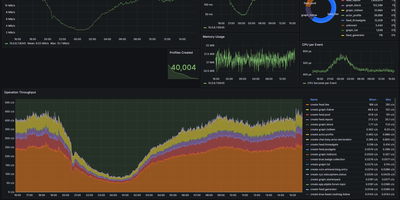
Indigo is Bluesky's Go toolkit for building services on the AT Protocol, and operators reach for it when they need to follow the whole network: run a relay that subscribes to many personal data servers and republishes one combined firehose, split that firehose for many subscribers, or filter it down to the accounts and record types a single application actually cares about. The relay holds upstream host and account state in PostgreSQL, verifies repository integrity and identity signatures, exposes an admin web interface for configuring limits and adding upstream hosts, and emits Prometheus metrics and tracing for production monitoring. Rainbow consumes a relay or PDS firehose and fans events out to large numbers of subscribers, buffering recent history on local disk so late joiners receive the events they missed. Tap handles verification, automatic backfilling of repository history, and filtered delivery by account list or record collection, sending simple JSON events to applications over WebSocket or webhook instead of requiring each developer to parse cryptographic repository formats. Hepa consumes the relay firehose and applies moderation rules to accounts and records, pushing labels into an existing moderation service for teams that operate their own trust and safety pipeline. Each service ships as a single Go binary with Docker packaging, and shared packages provide the client, identity, lexicon, and repository data structures the services are built from. Running on a dedicated VPS on RepoCloud with guaranteed CPU, RAM, and SSD, full root SSH access, and a browser serial console. MIT and Apache-2.0 licensed.
Friendica
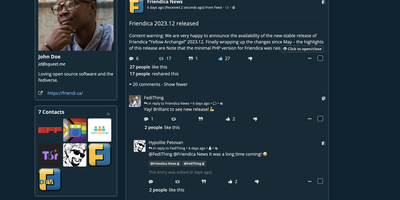
Friendica connects to more federation protocols than any other single platform: ActivityPub reaches Mastodon, Pleroma, Misskey, Lemmy, Pixelfed, and PeerTube; the Diaspora protocol bridges that network; and OStatus provides legacy compatibility. But protocol reach is just the foundation. Where most fediverse platforms stop at microblogging, Friendica offers long-form posts, photo albums, event calendars with RSVP, group discussions, and rich multimedia content. BlueSky and Tumblr connectors extend your reach into non-federated networks, while RSS import pulls content from any blog or news source into your timeline. Privacy controls let you scope each post to specific contacts, groups, or public visibility with per-post granularity rather than account-wide settings. Multiple themes customize the interface from Facebook-like layouts to minimal designs, and Fedilab provides native mobile access. Under the hood, the PHP application with MariaDB runs as either an Apache or FPM Docker image with Redis caching and background cron workers handling federation delivery, media processing, and notification dispatch. One of the oldest fediverse projects (1,650+ stars, 160+ contributors since 2010), Friendica has weathered every protocol evolution and platform migration the decentralized web has thrown at it, making it one of the most battle-tested social networking platforms available.