LibreBooking
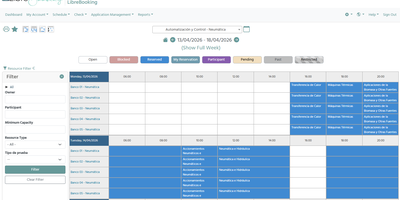
Conference rooms, equipment, boats, and even people can be reserved through LibreBooking, a self-hosted scheduler that keeps double bookings off the calendar. Schedules define bookable time slots with custom layouts and seasonal availability, while each resource carries its own minimum and maximum duration, buffer time, lead time, capacity, and optional approval step. Check-in and check-out can release unclaimed slots automatically, and blackout times close resources for maintenance. Quotas stack limits by hours or reservation count, credits meter peak and off-peak usage, and users can buy credits through Stripe or PayPal. Accessories such as projectors or chairs ride along with a booking under their own quantity limits. Groups carry application, group, resource, and schedule administrator roles, and custom attributes extend reservations, resources, and users with text, dropdown, date, or checkbox fields. Reports can be charted, exported to CSV, printed, or emailed, and public resources publish RSS and iCalendar feeds for Outlook and Thunderbird plus an embeddable calendar snippet. A tablet view beside a door shows live availability for on-the-spot booking, a monitor view fills lobby screens, and a Slack command starts a reservation. Sign-in options include LDAP, Active Directory, OAuth2, and SAML, and the REST JSON API automates bookings. Users can join waitlists, request reminder emails, and accept terms of service before booking, while six color themes restyle the interface. Running on a dedicated VPS on RepoCloud with guaranteed CPU, RAM, and SSD, full root SSH access, and a browser serial console. GPL-3.0 licensed.
Personal Management System
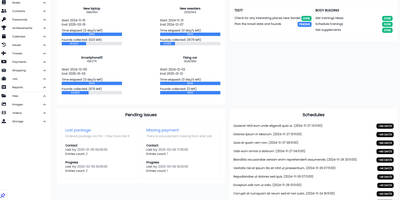
Consolidate daily to-do lists, encrypted passwords, household spending, contacts, and family photo galleries into Personal Management System, a self-hosted private command center for everyday life. Individuals can organize recurring schedules and calendar milestones with proactive notification alerts so important appointments, vehicle servicing dates, and recurring bill renewals are never overlooked. Users can balance household budgets and track expenditure across custom spending categories, calculating monthly cash flow balances while monitoring debts owed to friends or family members. Privacy-conscious users can safeguard account credentials inside an encrypted password vault featuring quick-copy buttons and secondary lock protection for sensitive personal entries. Goal setters can track multi-step personal targets and link financial milestones directly to dedicated savings pools. Home organizers can catalog contacts, log travel destinations with mapped imagery, and maintain categorized notes containing voice memos, bookmarks, and reference materials. Collectors can sort family photos and video recordings into interactive masonry galleries with built-in lightbox previews and file download tools. Running on a dedicated VPS on RepoCloud with guaranteed CPU, RAM, and SSD, full root SSH access, and a browser serial console. MIT licensed.
Urlaubsverwaltung
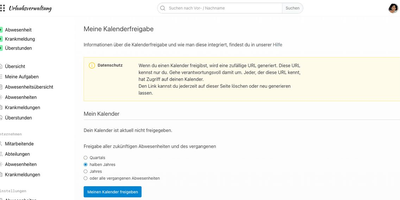
One calendar answers who is away next week: Urlaubsverwaltung is a self-hosted leave and absence manager where employees request vacation, managers approve it, and sick notes and overtime balances live beside the requests. A request moves through waiting, provisionally approved, finally approved, rejected, or cancelled states, so employees and approvers always see where a decision stands. Department heads decide for their own teams, a second stage authority can add the final approval, the boss sees every request company wide, and office staff manage people, settings, and sick notes for others. Administrators configure which absence types exist, from annual and special leave to parental leave, sabbatical, training, and working from home, each with its own color and rules. Sick notes are recorded as full day, morning, or afternoon, including child sick notes, and a note can later be converted into vacation when plans change. Overtime gets the same care: staff log hours and minutes for any period, choose to add or reduce their balance, and attach a comment for the record. Personal, department, and company calendars collect every absence, secret iCal links feed external calendar apps, and optional Google Calendar synchronization pushes new and changed entries. Email notifications for submissions, upcoming absences, substitute duties, and overtime entries can be switched on per person, and a token protected REST API exposes persons, absences, sick notes, and workdays. Running on a dedicated VPS on RepoCloud with guaranteed CPU, RAM, and SSD, full root SSH access, and a browser serial console. Apache-2.0 licensed.
SOGo
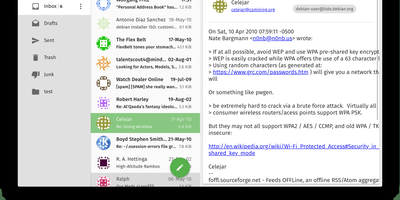
SOGo adds shared calendars, address books, and a modern webmail interface to your existing Dovecot, Postfix, or Cyrus mail setup, turning familiar infrastructure into a full Exchange competitor. Rather than replacing your IMAP and SMTP servers, SOGo layers collaboration on top of them, becoming the missing link between raw mail delivery and what users actually expect from a workplace communication platform. The ActiveSync implementation synchronizes email, contacts, calendars, and tasks natively with iPhones, Android devices, and Windows without requiring users to manually configure CalDAV endpoints. CalDAV and CardDAV compliance ensures Apple Calendar, Thunderbird (via the official SOGo Connector extension), GNOME Evolution, and Android via DAVx5 all connect without plugins or workarounds. The web interface uses AngularJS Material design with responsive layouts, offering folder management, drag-and-drop calendar scheduling, contact groups, resource booking, and delegation. Shared calendars support free-busy lookups, iMIP event invitations, and per-user ACL permissions for fine-grained access across organizational units. Built on Objective-C with the GNUstep foundation, SOGo delivers exceptional performance: hundreds of concurrent ActiveSync connections from mobile devices alongside webmail and calendar traffic with sub-second response times. With 2,095+ stars and 116 releases, the project has proven its stability in production environments supporting thousands of users. The Docker deployment runs alongside PostgreSQL and memcached.
Event Schedule
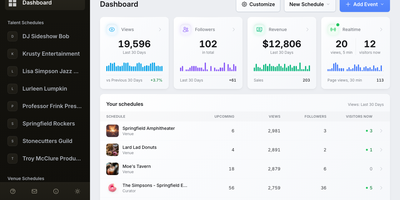
One self-hosted site can publish your event calendar, sell tickets, take bookings, and send the newsletter. Event Schedule gives venues, performers, and curators their own schedule types, and a curator page gathers events from the venues and performers it follows. Recurring patterns cover daily, weekly, monthly-by-weekday, and yearly dates with per-date exceptions, and calendars import from ICS feeds, Google Calendar, or Eventbrite. Tickets come in several types with promo codes, waitlists, gift cards, and a drag-and-drop seating plan, and payments go through Stripe, PayPal, Payfast, Razorpay, or cash straight to your own accounts. Door staff scan QR tickets in a browser and a live dashboard counts arrivals. Appointment pages sync both ways with Google Calendar, Outlook, and CalDAV. The newsletter editor sends segmented, A/B tested campaigns through your own SMTP server, and optional AI features turn pasted text or flyer images into draft events. Analytics, an audit log, TOTP two-factor login, signed webhooks, a REST API, and twelve interface languages cover the admin side. Running on a dedicated VPS on RepoCloud with guaranteed CPU, RAM, and SSD, full root SSH access, and a browser serial console. AAL licensed.
GroupOffice
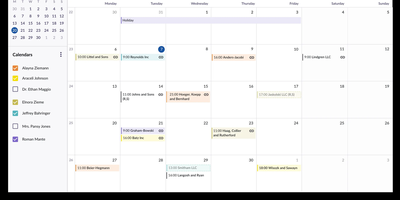
GroupOffice checks your whole company in at one address: mail, meetings, projects, invoices, and files behind a single login on your own server. The built-in mail client saves messages straight onto projects or contacts, signs and encrypts with S/MIME, and shares folders and accounts across the team. Shared calendars offer team views, bookable resources, and video meetings, while address books carry custom fields and comments so customer knowledge survives staff changes. Projects gather their tasks, files, and discussions in one place, track hours as work happens, and turn those hours and costs into invoices and reports. Support tickets arrive from your website or by email and stay organized by team, and newsletters compose campaigns from templates filled with your own data. Files co-edit in the browser through OnlyOffice or Collabora, connect to desktops over WebDAV, and sync to native phone and computer apps over open protocols. Two-factor authentication, encryption, and a module system you can extend with your own tools keep the office private and shaped to how you actually work. Running on a dedicated VPS on RepoCloud with guaranteed CPU, RAM, and SSD, full root SSH access, and a browser serial console. AGPL-3.0 licensed.
Workavera
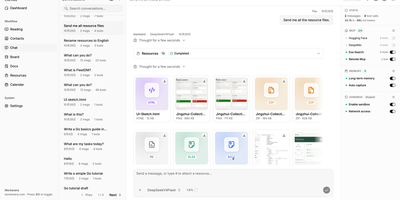
Workavera gives freelancers and small teams one self-hosted workspace for projects, docs, calendar, and files, with an AI assistant that actually does the work. Ask Chat to plan a project and it picks one of ten Kanban templates, creates tasks with states, priorities, and deadlines, and shows every reasoning step and tool call. Boards support custom workflow states, labels, members, and due dates, plus a read-only timeline you can share with clients by public link. Docs offers a rich-text editor with slash commands, version history, Markdown and HTML export, AI editing, and public pages. Calendar merges personal events with Board deadlines, including recurring events and reminders. Resources holds PDFs, Office files, code, images, archives, and SQLite databases that you attach to any chat with + or #, and an optional per-user Linux sandbox lets the assistant run Python or Node scripts to OCR a scanned PDF, clean a spreadsheet, or batch-rename files. Reading saves links with AI summaries, Discover follows sources such as GitHub Trending and Hacker News, and Contacts keeps a searchable team directory. Claude Code, Cursor, and other MCP clients connect with an API key, outside MCP servers plug into Chat, and models come from OpenAI, Anthropic, or Google endpoints or a local LM Studio, Ollama, vLLM, or llama.cpp server. Native Android and iOS apps put the workspace on your phone. Running on a dedicated VPS on RepoCloud with guaranteed CPU, RAM, and SSD, full root SSH access, and a browser serial console. Apache-2.0 licensed.
Calnode
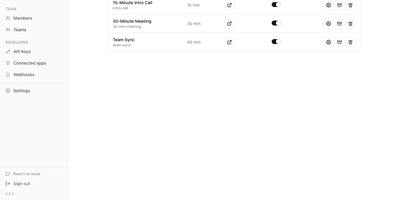
One binary replaces your booking link and your meeting room: Calnode is a complete scheduler you run yourself, small enough to audit and cheap enough to forget. Create event types with durations, custom questions, and locations, set DST-correct availability with date overrides, and share a booking page where guests pick a slot, reschedule, or cancel without an account. Two-way sync with Google Calendar, Microsoft 365, and CalDAV checks real free and busy time across every connected calendar, then mints Meet or Teams links automatically. Teams route bookings round-robin, collectively, or by priority, while paid event types collect through Stripe before the slot confirms. Choose Calnode Rooms and the meeting itself happens in the browser on your LiveKit server, with host controls, consent-aware recording into your own storage, and an AI notetaker that files a transcript and summary on the booking. Agents get first-class access through the REST API, HMAC-signed webhooks, and a native MCP server, and visitors can even book by describing a time in plain language. Everything runs from one static binary and one SQLite file with streaming Litestream backups. Running on a dedicated VPS on RepoCloud with guaranteed CPU, RAM, and SSD, full root SSH access, and a browser serial console. Apache-2.0 licensed.
Kurrier
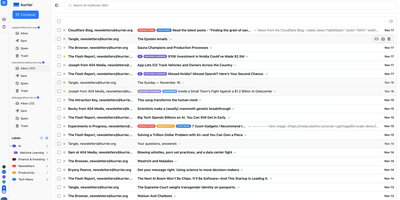
Kurrier unifies email, calendars, contacts, and file storage in a single web interface that connects to any email provider you already use. The Next.js frontend with Nitro API worker deploys via Docker Compose on PostgreSQL and Redis, delivering a cohesive workspace where IMAP/SMTP mailboxes from Gmail, Outlook, or corporate servers sit alongside transactional providers like AWS SES, SendGrid, Mailgun, and Postmark. Automatic inbox building handles threads, attachments, sent items, and deletion sync through persistent background polling. The CalDAV backend enables full two-way calendar synchronization with iOS, macOS, Android via DAVx5, and Thunderbird, supporting event invitations, RSVP processing through the inbox, timezone-aware scheduling, and contact-aware attendee linking. CardDAV contacts sync bidirectionally across all devices with unified name, avatar, and email resolution. Kurrier Drive provides integrated file storage through WebDAV locally or S3-compatible backends for cloud storage. Multiple identities and domains let you manage several email accounts from different providers in one interface, with fast local search indexing subjects, senders, and content without dependency on external APIs. The API-first architecture exposes clean endpoints for automation and custom integrations. Running on a dedicated VPS on RepoCloud with guaranteed CPU, RAM, and SSD, full root SSH access, and a browser serial console. AGPL-3.0 licensed.
Thunderbird Appointment
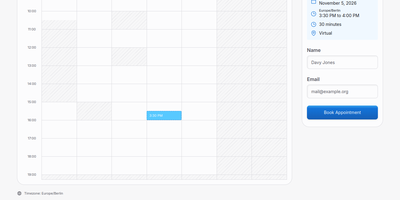
One link replaces the scheduling dance: Thunderbird Appointment publishes your availability as a booking page where visitors choose a slot and the meeting lands on your calendar. You connect the calendars you already keep, Google Calendar or any CalDAV server, and the service reads your busy times and writes new bookings back as real events. Weekly schedules define the days and hours on offer, the length of each slot, and how far ahead or how last-minute a booking may be. Each booking page carries its own title, agenda, and location, from a street address to a Zoom link created for the meeting automatically. Visitors see open times in their own timezone, pick one, and leave their name and email; no account is required on their side. Requests can land as confirmed bookings right away or wait for your approval first, and every booking appears in your bookings list with attendee details. Your own calendar view gathers every connected calendar in one place, so personal and work commitments stop colliding. The interface speaks several languages, honors light and dark themes, and lets each user set the week start and 12 or 24 hour clocks. Self-hosters sign in with a password, and larger deployments can plug in an OIDC provider for single sign-on. Running on a dedicated VPS on RepoCloud with guaranteed CPU, RAM, and SSD, full root SSH access, and a browser serial console. MPL-2.0 licensed.
Tracim
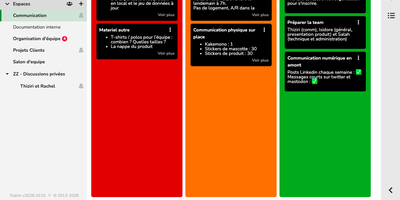
Combining threaded discussions, versioned documents, Kanban boards, and shared calendars in one platform, Tracim keeps every decision and file in a single searchable place. Each space gathers the discussions, notes, files, and tasks of one team or project, and members hold a reader, contributor, content manager, or workspace manager role. Comments, status labels, tags, and an automatic version history travel with every document, and several people can edit the same text at once. Kanban boards track tasks, logbooks record events and decisions, and templates keep recurring documents consistent. Shared calendars cover one-time and recurring events with reminders, and they sync to Thunderbird, Outlook, or any CalDAV client. Files go out as share links, mount through WebDAV, or sync to a desktop folder, and outside partners can join a single space with limited rights. Each space sets its own notification rhythm, from hourly to never, and a reply to a notification email is posted straight into the thread. Administrators plug in LDAP, SAML, or web-server remote authentication for sign-in, recolor the interface to match their brand, and script anything else through the REST API or plugins. The interface is available in Arabic, English, French, German, Portuguese, and Spanish. Running on a dedicated VPS on RepoCloud with guaranteed CPU, RAM, and SSD, full root SSH access, and a browser serial console. MIT, LGPL-3.0, and AGPL-3.0 licensed.
Dobase
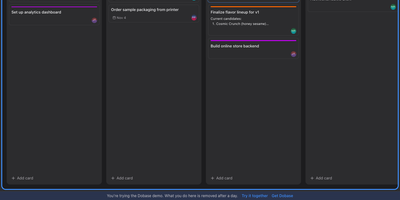
Dobase replaces the scattered pile of team subscriptions with one self-hosted workspace where mail, kanban boards, documents, chat, to-do lists, files, a calendar, and video rooms live side by side. Install only the tools your team needs, and share each one with exactly the collaborators you choose; a board for the whole company and a private todo list can sit in the same window. Several people can type in the same document at once, watching each other's colored cursors while the text merges cleanly, and presence faces in the sidebar show who is inside every tool right now. Open tools arrange themselves as tiles in a wide window, so chat can sit next to the board it discusses and the calendar under the mail you are answering. Pressing Cmd+K searches cards, todos, documents, files, chat, events, and mail in one motion, and nearly everything also works from the keyboard alone. Mail threads conversations and lets you accept calendar invites from the message, files get public links guarded by a password and an expiry, and the calendar syncs with CalDAV services or runs on its own. Video rooms with screen sharing join the same workspace, mentions and notifications follow you, and an email digest catches up anyone who was away. Running on a dedicated VPS on RepoCloud with guaranteed CPU, RAM, and SSD, full root SSH access, and a browser serial console. MIT licensed.
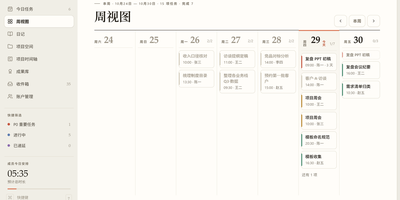
Work-Calendar
Small teams do not need another cloud subscription to know who is doing what this week: Work-Calendar runs your whole plan, do, finish, archive loop on one little server you own. The week view lays out every member's tasks across seven day columns with today highlighted, so standups start from the same picture instead of five private lists. Three kinds of tasks cover real work: project tasks, one-off tasks you can assign to yourself or teammates, and fixed recurring tasks on daily, weekday, monthly, or specific-date schedules. Anything unfinished carries over to the next day automatically, and completion records can be corrected by the assignee or sent back with a reason by the owner. Projects get spaces with folders, files up to 20MB, meetings with AI-generated minutes from pasted or dictated transcripts, timelines, and closing reports that an admin approves. Roles for superadmin, admin, and member, plus per-group rules, decide who may create projects directly, who needs approval, and who can use the built-in AI assistant, which drafts task and project changes as reviewable cards rather than acting silently. Inbox notifications, personal diaries, and daily statistics round out the routine, and keyboard shortcuts drive the whole interface. Running on a dedicated VPS on RepoCloud with guaranteed CPU, RAM, and SSD, full root SSH access, and a browser serial console. MIT licensed.
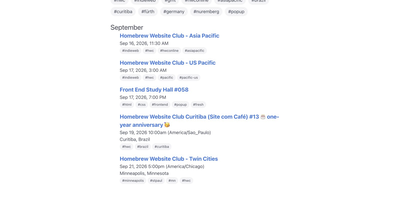
Meetable
From the first announcement to the photos shared afterwards, every meetup, conference, and online session gets its own page on a Meetable events site that you host yourself. The home page lists upcoming events, an archive holds past ones, and a year page draws each month as a calendar with event days highlighted. Each event page carries a cover photo, location, website and ticket links, a Markdown description, and a timezone converter, and events can be marked tentative, postponed, or cancelled. Recurring events are templates that create future dates weekly, biweekly, or monthly, including second-Tuesday patterns. Tags give every topic its own page, iCal feeds cover the whole site, each tag, and each event, and Add to Calendar exports an .ics file or opens Google Calendar. Signed-in visitors RSVP yes, no, maybe, or remote, and proposed events let them vote on candidate dates. Attendees add photos with alt text. Webmention lets them post photos, blog posts, and notes from their own sites into a moderation queue. Zoom meetings can be scheduled automatically, online events get reminders, and a Discord bot posts notifications and syncs the server's event list. AI assistants find events through the built-in MCP server, and other tools add events through the API. Passkeys, GitHub, OpenID Connect, Vouch Proxy, or Discord handle sign-in for one organizer or many. Running on a dedicated VPS on RepoCloud with guaranteed CPU, RAM, and SSD, full root SSH access, and a browser serial console. MIT licensed.
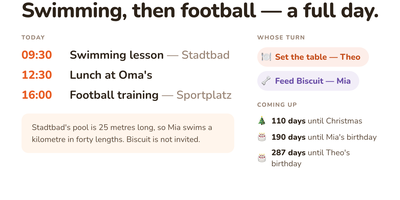
dinkydash
The family calendar nobody opens helps nobody, so DinkyDash puts it on a screen the household walks past. Paste in iCal links from Google, iCloud and Outlook calendars and the board merges them into one agenda in time order, big enough to read from across the kitchen, with tomorrow tucked underneath when the day leaves room. A personal calendar can share only the events marked for a partner and keep work and private appointments to itself. Chores answer the daily argument on their own: whose turn it is moves on with the date, so nobody ticks anything off. Birthdays, holidays and special dates count down in the corner, and once a day the board gets a fresh headline written about your actual day, with a useful note parked under the agenda. Light and dark themes come from the settings page, and that same settings page on your phone edits the configuration file directly, comments preserved. A preview page shows the board at Pi, TV and tablet sizes side by side before you mount anything. There is deliberately no login: it assumes your home network, rewards you with a board you never sign into, and asks to stay behind a VPN or an authenticated proxy if you view it away from home. Running on a dedicated VPS on RepoCloud with guaranteed CPU, RAM, and SSD, full root SSH access, and a browser serial console. MIT licensed.