bewCloud
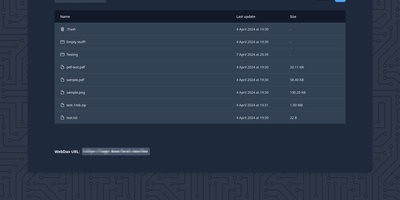
A personal cloud does not need the weight of a small enterprise suite, and bewCloud proves it by keeping files, photos, notes, contacts, and calendars in one compact service a single person can run for a whole household. The Files app stores uploads in a plain folder tree on disk, offers public sharing links, optional whole-folder downloads as zip archives, and a WebDAV endpoint that desktop tools can mount. Photos turns that same storage into a browsable gallery, while Notes keeps quick text within reach of every login. Contacts and Calendar speak CardDAV and CalDAV through a bundled Radicale server, so the calendar and address book on a phone or laptop stay in sync without another account anywhere. News collects feeds to read in the browser, and Expenses tracks spending in a small ledger beside everything else. The header shows only the apps you enable, in the order you choose, and companion desktop and mobile apps connect to the same server for people who prefer native sync. Accounts can be protected with multi-factor authentication using TOTP, passkeys, or email codes, and optional single sign-on lets a household sign in through an existing identity provider. Running on a dedicated VPS on RepoCloud with guaranteed CPU, RAM, and SSD, full root SSH access, and a browser serial console. AGPL-3.0 licensed.
Cal.diy
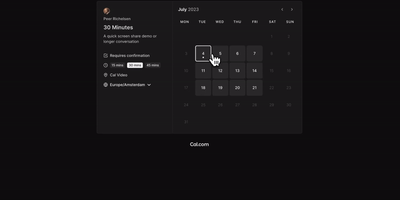
With over 47,000 GitHub stars, Cal.diy is the fully open-source community fork of Cal.com that strips away every proprietary license gate and enterprise paywall to deliver a pure MIT-licensed scheduling platform you completely own. The booking engine supports individual event types including recurring events, seated events with capacity limits, and paid bookings through Stripe and PayPal, all backed by customizable availability schedules with date overrides, buffer times, minimum notice periods, and travel schedule support. Calendar synchronization is bidirectional across nine providers — Google Calendar, Outlook and Office 365, Apple Calendar, CalDAV, Lark, Feishu, Zoho, Exchange, and ICS feeds — so every booking automatically appears on your existing calendar while blocking conflicting slots. Video conferencing links generate automatically for Zoom, Google Meet, Microsoft Teams, Webex, Jitsi, Daily.co, Whereby, and Huddle01, eliminating manual link management. The automation layer connects through webhooks, Zapier, n8n, Make, and Pipedream to CRM platforms like HubSpot, Salesforce, and Close, messaging services including Discord, Telegram, and WhatsApp, and analytics tools such as Google Analytics 4, PostHog, and Fathom. The entire application is built on the T3 stack — Next.js for server-rendered pages, tRPC for end-to-end type-safe APIs, Prisma for PostgreSQL database access, and Tailwind CSS for the responsive interface. Unlike Cal.com's open-core model, Cal.diy requires no license key and includes no gated features. Running on a dedicated VPS on RepoCloud with guaranteed CPU, RAM, and SSD, full root SSH access, and a browser serial console. MIT licensed.
Calcom
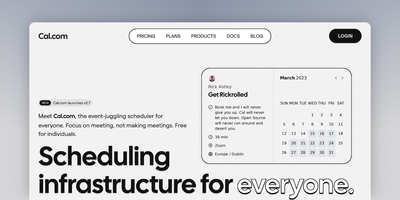
Scheduling infrastructure, not just a booking page - Cal.com is the leading open-source scheduling platform. Share a link, attendees pick a slot, and real-time sync against Google Calendar, Outlook, and CalDAV prevents double-booking. Beyond the basics it covers team workflows: round-robin distribution, collective availability across multiple hosts, recurring meetings, and routing forms that ask bookers questions and send them to the right team member - the feature sales and support teams usually pay enterprise prices for. Paid bookings run through Stripe, video calls through the built-in Cal Video (Daily.co) or Zoom and Google Meet, and an app store connects 100+ tools including HubSpot, Zapier, and n8n. The API-first architecture with webhooks and embeds makes it practical to build scheduling into your own product, white-labeled with your domain and branding. Built on Next.js and Prisma over PostgreSQL, translated into 65+ languages, with the self-hostable community codebase maintained under an open-source license.
Yuvomi
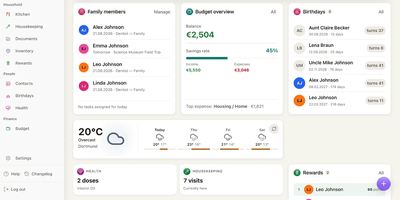
Replace a dozen household subscriptions with one app that keeps your family's tasks, calendars, meals, budget, and shopping in a single private place you control. Nineteen modules cover the daily rhythms of a household: assign chores with deadlines and priorities, plan the week's dinners and push the ingredients to a shared shopping list in one tap, track income and expenses by category with automatic subscription renewal warnings, and log health activities from vitals to medications. Two-way sync connects to Google Calendar via OAuth, iCloud and Nextcloud via CalDAV, and Outlook via Microsoft Graph, so every family member's phone shows the same schedule without switching apps. CardDAV keeps contacts in sync with external address books. The budget module handles accounts, loans, split expenses, and per-category planning with savings goals and month-over-month comparisons. Documents attach to tasks, receipts link to transactions, and a checked-off grocery item books itself back into the pantry inventory with its quantity. A Kanban board, recurring task schedules, and a rewards ledger that pays out points for completed chores keep kids and adults accountable. Wall mode turns a kitchen tablet into a glanceable family dashboard, and the Immich screensaver shows your own photos when the screen goes idle. API tokens and a built-in MCP endpoint let AI agents and third-party tools interact with every module programmatically. Deploy on a dedicated VPS on RepoCloud with guaranteed CPU, RAM, and SSD, full root SSH access, and a browser serial console. MIT licensed.
Radicale
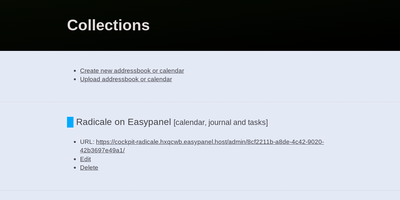
Calendars, to-do lists, journal entries, and contacts, synced over the open CalDAV and CardDAV standards nearly every client already speaks: Radicale is a small pure-Python server that works with Thunderbird, DAVx5 on Android, Apple Calendar and Contacts, GNOME, and many more. Its defining design choice is radical simplicity: there is no database. Events live as plain .ics files and contacts as .vcf files in an ordinary folder structure, which makes backup a copy command, migration a move, and disaster recovery a matter of reading text files. The server works out of the box with no complicated setup, then grows as needed: flexible authentication (htpasswd files among other methods), per-collection authorization rules, TLS-secured connections, and a plugin system for extending storage, auth, and rights handling. Built-in limits on parallel connections, file sizes, and failed authentication attempts harden it for network exposure behind a reverse proxy. A bundled web interface handles creating and managing calendars and address books - useful since many clients cannot create collections themselves. Maintained since 2011 with 140+ contributors, GPLv3-licensed, and light enough to run on the smallest VPS or a Raspberry Pi.
Keeper
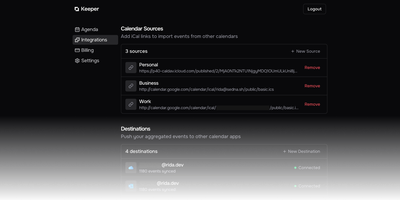
Work, personal, business, and school calendars at different providers double-book because no one system sees your real availability - Keeper solves that multi-calendar collision problem. Its pull-compare-push sync engine aggregates events from Google Calendar, Outlook/Office 365, iCloud, FastMail, any CalDAV server, or read-only iCal/ICS feeds, and pushes blocking events to one or many destination calendars so time slots align everywhere. The design is deliberately content-agnostic - it syncs timeslots, not titles or descriptions, so a personal appointment shows as busy time on your work calendar without leaking details. Sync logic is clean: events Keeper creates carry a traceable UID suffix, deletions propagate, and orphaned entries are purged automatically. A token-authenticated aggregated iCal feed combines selected calendars into one subscribable URL for Apple Calendar or Thunderbird. An optional MCP server gives AI agents read-only calendar access over OAuth 2.1 - list calendars and query events by date range, with no write capability. Built with Next.js and Bun under AGPL-3.0, the standalone Docker image bundles web, API, cron, worker, Redis, and PostgreSQL in one container, and self-hosting unlocks every Pro feature - unlimited calendars and one-minute sync intervals - for free.
Trypost
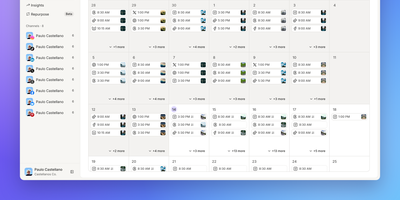
TryPost is an open-source social media scheduler that publishes natively to thirteen networks from one composer, calendar, and queue, whether the author is a person on your team or an AI agent connected over MCP. Write a post once and it adapts per network, with a live preview of each version, character quirks handled, and an AI assistant in the editor to rephrase, shorten, or expand when a caption fights back. Posts land on each channel's own posting times in its queue, the calendar shows the whole month at a glance, and anything can be dragged to a new slot when plans change. Members who need a second opinion send work for approval, and admins approve or reject in one click, which is how agencies keep many brands from becoming many headaches. Workspaces keep every client apart with its own channels, members, and settings, while signatures save the hashtag and call-to-action blocks you refuse to retype and labels color-code the calendar. Insights follow followers and post performance across channels, Repurpose copies videos you posted elsewhere onto your other networks automatically, and webhooks announce every created, published, or failed post to your other tools. Running on a dedicated VPS on RepoCloud with guaranteed CPU, RAM, and SSD, full root SSH access, and a browser serial console. AGPL-3.0 licensed.
Mailflare
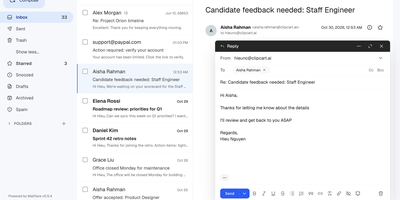
Mailflare is a self-hosted alternative to Google Workspace that gives your own domains email, a calendar, public booking links, file storage, and built-in AI agents in a single app with no per-seat subscription. Add as many domains and aliases as you like, then create mailboxes with threaded conversations, rich formatting, attachments, signatures, snooze, undo send, and follow-up reminders. Routing rules store, forward, reject, or sort incoming mail before it reaches the inbox, and full-text search digs up old messages on demand. The calendar handles repeating events across time zones, emails invitations to attendees, and sends push reminders. Share a booking page and clients pick a free slot in their own time zone and language, which replaces a paid scheduling tool. Drive stores and shares documents and email attachments on local disk or S3-compatible buckets. The AI assistant searches your mail, drafts replies, and manages events, while an MCP connection lets outside AI tools do the same. Send through Cloudflare, Resend, Amazon SES, or any SMTP relay, and migrate existing mail from IMAP, Gmail Takeout, EML, and MBOX files. Admins get user management, API keys, webhooks, audit logs, scheduled backups, and a 34-language interface. Running on a dedicated VPS on RepoCloud with guaranteed CPU, RAM, and SSD, full root SSH access, and a browser serial console. AGPL-3.0 licensed.
calrs
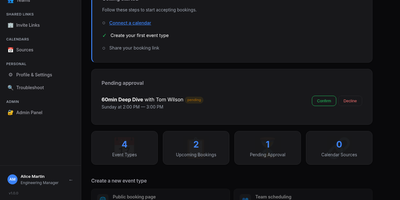
Share a link, and let people book time with you without the email volley that usually decides when a meeting happens. calrs connects to the calendar you already use, whether that is Nextcloud, Fastmail, BlueMind, iCloud, or any other CalDAV server, computes your real free and busy times from synced events and your availability rules, and shows guests only the slots that genuinely work. Create event types for intro calls, support sessions, or coaching, each with its own duration, buffers, minimum notice, booking limits, and confirmation mode, then publish them on your public profile or keep them private behind single-use invite links. Teams get round-robin scheduling that picks the least busy member, collective meetings that require everyone free, and dynamic group links that intersect several calendars on the fly for a one-off call. Guests pick a slot in their own timezone, receive HTML email with calendar invites attached, and can cancel or reschedule themselves from the confirmation email, while you approve pending bookings from the dashboard or straight from your inbox. When a slot looks wrong, the availability troubleshooter draws a timeline showing exactly which event or rule blocked it. Reminders go out before meetings, credentials are encrypted at rest, and the whole interface speaks ten languages with seven themes. Running on a dedicated VPS on RepoCloud with guaranteed CPU, RAM, and SSD, full root SSH access, and a browser serial console. AGPL-3.0 licensed.
Bulwark Webmail
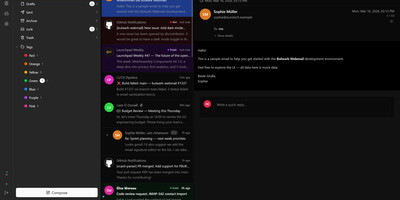
Transforming your Stalwart Mail Server into an all-in-one private communication hub, Bulwark Webmail delivers fast web-based email, collaborative calendars, shared contacts, and cloud files in a single unified interface. Users can manage multiple email accounts from an integrated inbox with conversational message threading, nested organizational tags, scheduled delivery, and instant full-text search across thousands of archived messages. The rich text composer provides markdown shortcuts, inline image embedding, reusable canned response templates, and automated draft synchronization. Team members can coordinate schedules across day, week, month, and agenda calendar views with drag-to-reschedule adjustments, interactive iMIP meeting invitations, and external CalDAV calendar subscriptions. The integrated address book organizes individual contacts into custom groups with full vCard import and export support, while the files module lets users browse server storage, preview incoming attachments, and upload documents directly through the browser. Built-in security safeguards enforce multi-factor authentication, cryptographic S/MIME signatures, client-side encryption at rest, and automated HTML luminance remapping to keep dark emails legible. Running on a dedicated VPS on RepoCloud with guaranteed CPU, RAM, and SSD, full root SSH access, and a browser serial console. AGPL v3 licensed.
SilentSuite
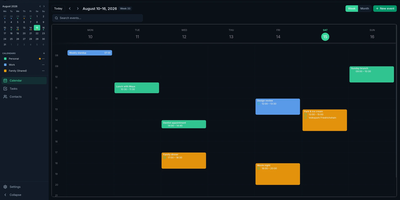
SilentSuite is an end-to-end encrypted sync service for your calendar, contacts, and tasks, where the server stores only ciphertext and cannot read a single event, name, or plan. Encryption happens on your devices with keys derived locally, so record contents are sealed before upload and opened only on another trusted device of yours. Manage everything in the web app, sync a phone through the Android adapter's system calendar, contacts, and task providers, or connect desktop apps like Thunderbird and GNOME Calendar through the local Bridge. The Bridge speaks CalDAV and CardDAV only on localhost, then forwards encrypted records upstream, so standard desktop clients work without ever exposing plaintext to the server. Import and export keep exit paths open, and because sync rides the open Etebase protocol, your data model stays inspectable rather than locked into a proprietary format. Self-hosting unlocks every feature at no cost: one Compose file starts the sync server and PostgreSQL, with open registration you can close after your own account exists, nightly backup tooling, and Umbrel packaging. Signing up hosted users is not required at all; the same web app, Android adapter, and Bridge run against your own server with your domain. Running on a dedicated VPS on RepoCloud with guaranteed CPU, RAM, and SSD, full root SSH access, and a browser serial console. AGPL-3.0 licensed.
Timeful
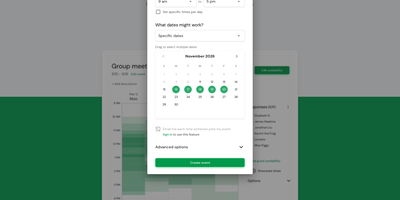
Picking a meeting time for six people usually takes forty messages, and Timeful replaces them with one link. Create an event, choose a date range or days of the week, and share the URL; guests do not need an account. Each person drags across a time grid to mark what works, and the combined heatmap reveals the overlap at a glance. Times can be marked as available or only if needed, and a best-times toggle highlights the slots that suit the most people. Calendar autofill pulls busy blocks from Google, Apple, Outlook, or an ICS feed so nobody retypes their week. Time zones convert automatically for distributed teams. Event owners can hide responses from other guests, duplicate polls for recurring meetings, export availability as a CSV, and schedule the final slot straight into a Google Calendar event. Availability groups keep a team's live calendar overlap on a single page, and reminder emails go out to attendees on the day of the event. A plugin API lets browser extensions read and write availability. The interface is a calm green grid with no clutter. Running on a dedicated VPS on RepoCloud with guaranteed CPU, RAM, and SSD, full root SSH access, and a browser serial console. AGPL-3.0 licensed.
Plain Week
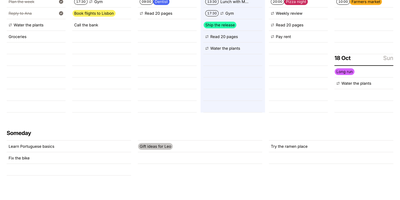
Seven days and a Someday list fit on one screen in Plain Week, a minimal weekly planner and to-do list. Click an empty row, type, press Enter, and keep typing. Writing "17:30 Gym" sets the time for you. Each task opens into a dialog with eight colors, plain-text notes, and a checklist of subtasks. Repeats run every few days, weekly on chosen weekdays, or monthly on a set date, with optional end dates and edits for one occurrence or the whole series. Drag tasks between days, into Someday, or past the screen edge to another week, by mouse, touch, or keyboard. Right-click to color, duplicate, delete, or push a task to tomorrow or next week, with undo. Arrow keys change weeks and T returns to today. The planner works offline, installs as an app, and keeps data in the browser until you add an account to sync. Export every task to JSON, import it into another instance, and pick light or dark themes or right-to-left layouts. Running on a dedicated VPS on RepoCloud with guaranteed CPU, RAM, and SSD, full root SSH access, and a browser serial console. MIT licensed.
Gofer
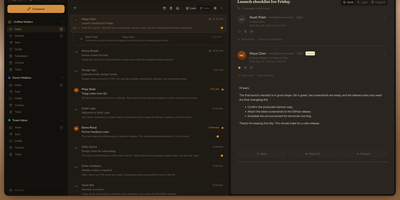
Five mailboxes, five tabs, five passwords: Gofer folds Gmail, Outlook, iCloud, and plain IMAP accounts into one browser tab where every inbox reads as a single, searchable whole. Threads, labels, and drag and drop keep triage fast, and search still finds the receipt from three years ago. Signatures and custom senders shape outgoing mail, scheduled sends wait for Monday morning, and a thread in another language translates in place. The calendar keeps pace with your mail: Google, Outlook, and CalDAV events sync both ways, invitations land in the inbox, and an RSVP or a Meet or Teams link attaches without leaving the message. Contacts follow the same rule through Google, Outlook, and CardDAV sync, so the address book you fix once is right everywhere. One install can serve a household or a small office, with separate users, encrypted credentials, blocked remote images, and passkey or authenticator sign-in for anyone who wants it. Classic, Minimal, and retro Express themes, flexible layouts, and push notifications make the daily inbox feel personal rather than administered. Leaving stays easy too: mailboxes export as mbox, mail moves between accounts, and a whole setup imports into another Gofer. Running on a dedicated VPS on RepoCloud with guaranteed CPU, RAM, and SSD, full root SSH access, and a browser serial console. MIT licensed.
Baikal
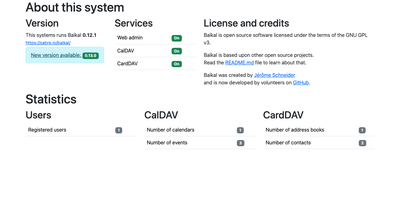
Your calendars and contacts do not need a cloud account, and Baikal is the small PHP server that keeps them on hardware you control while still syncing to every phone and laptop you own. The web admin panel is where you add users, create their calendars and address books, and reset passwords, no database editing or config files required. Each person signs in with their own username and password, so an iPhone, an Android phone running DAVx5, and a Thunderbird desktop can all stay in sync without sharing one master credential. Standard well-known redirects mean most clients configure themselves when you type the server address, and the combined dav.php endpoint serves calendars and contacts from a single URL. Events carry the full CalDAV feature set your clients expect (recurring appointments, reminders, attendees, and free-busy lookups), while CardDAV address books keep names, phone numbers, and photos in one place. Because storage is a plain database file or table set, backups are a copy you can make in seconds, and moving to a bigger host is a file transfer rather than a migration project. The same server happily runs for one person tracking a family calendar or for a small office sharing team schedules and a company address book. Running on a dedicated VPS on RepoCloud with guaranteed CPU, RAM, and SSD, full root SSH access, and a browser serial console. GPL-3.0 licensed.
Tymeslot
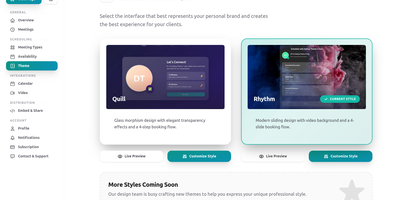
Built on Elixir's fault-tolerant OTP runtime, Tymeslot delivers the complete scheduling toolkit that Calendly charges for and Cal.com relicensed away from open source in 2026. Share one booking link and let clients pick available slots — your calendar stays synchronized and double-bookings disappear automatically through real-time availability checking against Google Calendar, Microsoft Outlook, and any CalDAV server including Nextcloud. Meeting types support configurable durations, buffer times, and availability windows that clients can book without email back-and-forth. Phoenix LiveView powers the real-time UI with WebSocket connections that update instantly as bookings arrive, without client-side JavaScript framework overhead. The platform attaches Zoom video rooms to confirmed bookings through your own Marketplace app credentials, sends confirmation and reminder emails via SMTP, Postmark, SendGrid, Mailgun, or AhaSend, and supports custom booking page themes with embed options for integration into existing websites. Circuit breakers, connection pooling, and graceful degradation maintain availability during provider outages. Authentication supports local accounts, GitHub OAuth, and reCAPTCHA protection on public booking forms. Self-hosting deploys as a single container with PostgreSQL embedded — no separate database container required. Two named volumes persist uploads and database state, while the same image powers the managed cloud at tymeslot.app so self-hosted users get identical features without a crippled community edition. Deploy via Docker, Cloudron with automatic updates, or Railway from a community template. Running on a dedicated VPS on RepoCloud with guaranteed CPU, RAM, and SSD, full root SSH access, and a browser serial console. AGPL-3.0 licensed.
EasyAppointments
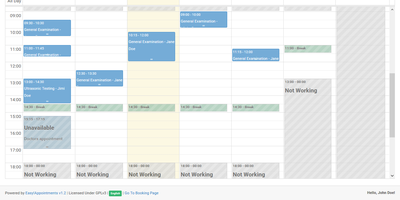
Service businesses get a booking page without per-booking commissions or monthly SaaS fees from Easy!Appointments, the self-hosted appointment scheduler. Customers pick a service, provider, and open time slot from a clean web form; the system enforces working plans, breaks, and booking rules you define per provider, then confirms by email to both sides. The structure fits real service organizations: multiple providers with individual schedules, multiple service types with their own durations and prices, and admin/secretary roles for front-desk management. Two-way Google Calendar synchronization keeps each provider's external calendar authoritative - book in Easy!Appointments and it appears in Google Calendar, block time in Google and the slot disappears from the booking form. Version 1.6 adds SMS notifications and payment support, and a REST API opens the scheduling data to custom integrations. Built on PHP (CodeIgniter) with MySQL, it installs in a single folder and can share a database with your existing site; a WordPress plugin embeds the booking form directly in pages or posts. The interface ships in dozens of languages with time-zone handling throughout. GPL-3.0 licensed and free for commercial use - a helpdesk, clinic, salon, or consultancy runs its whole booking workflow on its own server.
Manage My Damn Life
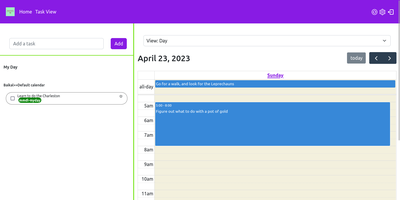
Manage My Damn Life is a personal productivity platform and CalDAV task manager that gives individuals and teams a full-featured web workspace for coordinating todos, calendar agendas, and project schedules without relying on proprietary productivity software. Users can connect multiple CalDAV server backends including Nextcloud, Radicale, and Baikal to synchronize tasks, events, and subtasks across their self-hosted infrastructure. The interface offers multiple interactive perspectives, letting planners switch between nested task checklists, full monthly calendar grids, and dynamic Gantt chart roadmaps with customizable timeline scales. Keyboard-driven operators can rapidly log action items via intuitive Quick Add syntax that parses due dates, priority tiers, and category labels from inline text triggers. A versatile filter manager allows users to save custom query views matching due dates, completion statuses, parent task hierarchies, and color-coded labels. Team members can establish reusable task templates for recurring administrative workflows, assign multi-level checklist items, and manage individual calendar visibility across shared workspaces. System administrators can configure user authentication through native accounts or integrate enterprise Single Sign-On using OpenID Connect providers like Keycloak, Authentik, and Google. Client-side state caching accelerates navigation while background sync preserves CalDAV compliance. Running on a dedicated VPS on RepoCloud with guaranteed CPU, RAM, and SSD, full root SSH access, and a browser serial console. GPL v3 licensed.