Pithagoras
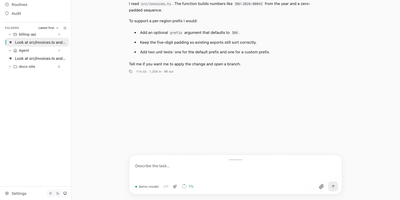
Hand a coding task to an AI agent, close the browser, and come back to find it finished. Pithagoras keeps every run on the server and records each event in a log, so a tab that reconnects days later replays everything it missed and then follows the live output. Chats work in the agent's Home folder or in projects with their own AGENTS.md instructions, and the sidebar groups sessions by folder with a status dot for running, idle, error, or interrupted. Beside the conversation you get panels for browsing and editing files, reviewing Git changes and branches, running a terminal, and watching background jobs. Add model providers from a setup assistant, including local llama.cpp or Ollama servers, OpenRouter, and Anthropic, then adjust tools, skills, MCP servers, and extensions per chat. Reach the same agent from Telegram, Slack, Discord, Signal, or a webhook, with roles, approvals, and an audit log. Scheduled routines report their results to a channel, and voice mode adds local speech in both directions. The portal installs as an app, supports light and dark themes, and speaks English and German. Running on a dedicated VPS on RepoCloud with guaranteed CPU, RAM, and SSD, full root SSH access, and a browser serial console. Apache-2.0 licensed.
LogForge
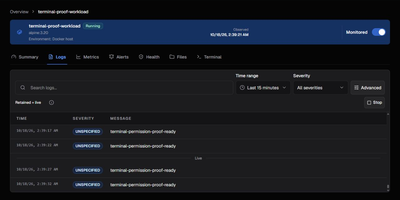
LogForge puts container logs, metrics, events, alerts, and guarded fixes behind one self-hosted web UI for Docker. The overview gathers container health, status, logs, metrics, Docker events, and file access for its host, so a sick container gets inspected without juggling docker commands across terminals. Logs stream in real time, interactive terminals open into running containers, and collected logs, metrics, and events are stored for later review and trend checks. Alert rules watch logs, metrics, and container events, and one-click templates cover stability, performance, log, and security signals. Fired rules notify through Email, Slack, Teams, Discord, Telegram, Gotify, or webhooks, and alert history records acknowledgements plus delivery attempts. A rule can also act: restart, stop, start, kill, or run a script, throttled by cooldowns, rate limits, backoff, and verification delays so automation cannot thrash a host. Other Docker hosts join through mTLS-protected agent enrollment, letting one console watch a small fleet. Running on a dedicated VPS on RepoCloud with guaranteed CPU, RAM, and SSD, full root SSH access, and a browser serial console. Apache-2.0 licensed.
The0
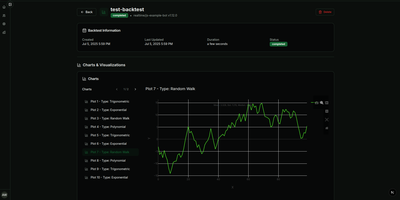
A trading strategy that works on your laptop still has to survive restarts, remember its positions, and tell you what it is doing at 3 a.m.; the0 is the self-hosted runtime that handles that last mile for algorithmic trading bots. Write your bot in Python, TypeScript, Rust, C++, C#, Scala, or Haskell with the matching SDK, package it as a reusable custom bot, and instantiate it as many times as you like with different symbols and parameters. Every instance runs in its own isolated container, either continuously for realtime strategies or on a cron schedule for periodic ones, with key-value state that survives between runs and restarts. Structured logs and metrics stream into the dashboard in real time, and you can ship a custom React frontend with your bot so its prices, signals, and positions render exactly the way you want. Deploy from the CLI in one command, drive everything from the REST API, or let an AI assistant list, deploy, and debug bots through the built-in MCP server. Scale from a single Docker Compose host to Kubernetes with the Helm chart, where bots become pods and CronJobs, and keep backtesting and market data in your own research stack, because the0 deliberately runs production strategies rather than simulating them. Running on a dedicated VPS on RepoCloud with guaranteed CPU, RAM, and SSD, full root SSH access, and a browser serial console. Apache-2.0 licensed.
JobSpy API
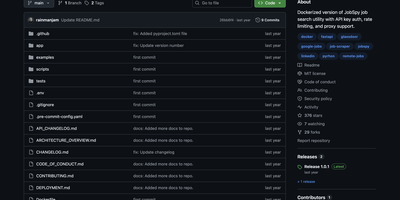
JobSpy API turns seven major job boards into a single REST endpoint, aggregating listings from LinkedIn, Indeed, Glassdoor, Google Jobs, ZipRecruiter, Bayt, and Naukri through one GET request. Built on FastAPI with the Python JobSpy scraping library, the API returns structured JSON or downloadable CSV containing job titles, companies, locations, salaries, descriptions, posting dates, and direct application URLs. Filters cover search terms, location, distance radius, job type (full-time, part-time, contract, internship), remote status, hours since posting, country, and salary range. Interactive Swagger UI and ReDoc interfaces provide try-it-now functionality for testing queries directly in the browser. Security includes x-api-key header authentication with configurable rotation, per-endpoint rate limiting with adjustable thresholds, and response caching with configurable TTL to reduce redundant scraping. Global proxy support routes outbound requests through HTTP/HTTPS proxies to avoid IP-based rate limiting from job boards. Environment variables control everything from default search parameters and logging levels to CORS origins and documentation paths. Health check and ping endpoints integrate with uptime monitoring services. Docker Compose exposes the API on a configurable port. MIT licensed.
QBitWebUI
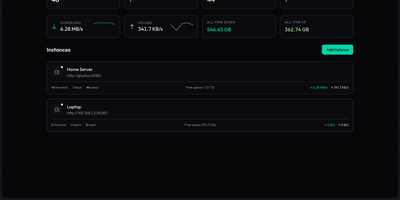
QBitWebUI is a single self-hosted dashboard that manages every qBittorrent instance you run, whether that is one seedbox or five, from one place. Instance cards show each client's status, live speeds, and torrent counts, with aggregate statistics across all of them and quick switching between instances. The torrent list brings sortable, resizable columns you can reorder and hide, filters for status, category, tag, and tracker, multi-select bulk actions with a context menu, and a details panel covering trackers, peers, files, and web seeds. Search your Prowlarr indexers from inside the UI and send results straight to the right instance, then let RSS feeds with regex auto-download rules keep recurring releases flowing in unattended. Browse the downloads directory and pull finished files or whole folders as tar archives, run an automatic cross-seed pass to match torrents across trackers, and check the connection with the network agent's speedtest, IP check, and DNS diagnostics. Edit qBittorrent preferences directly from the settings tabs, pick a color theme, and keep working from your phone with the installable PWA and mobile view. Running on a dedicated VPS on RepoCloud with guaranteed CPU, RAM, and SSD, full root SSH access, and a browser serial console. MIT licensed.
LightPost
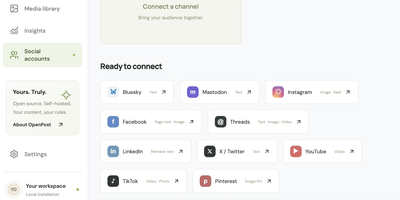
Write a post once in LightPost and it goes out to Bluesky, Mastodon, X, Instagram, Threads, Discord, LinkedIn, Telegram, and Facebook Pages on your schedule, with YouTube video uploads handled in the same workspace, from a dashboard running on your own server. The composer fans one message out to every connected account, including several accounts on the same platform, and each destination can receive text, images, or both within that network's limits. Drafts can be saved, edited, and duplicated, and scheduled times follow your browser's timezone so a week of announcements can be queued in one sitting. Images come in from public JPEG links or a saved library, with alt text and a preview before anything ships. Every delivery is tracked per account with links to the published posts, and when one network fails you retry just that destination instead of blasting the successful ones twice. The queue persists across restarts and overdue posts resume on their own, so an overnight reboot never eats a scheduled campaign. Built-in setup guides walk you through eligibility, credentials, and permissions for each platform, account connections can be verified or reconnected from the same panel, and your credentials stay encrypted on your disk with optional password protection and exportable post history. Running on a dedicated VPS on RepoCloud with guaranteed CPU, RAM, and SSD, full root SSH access, and a browser serial console. MIT licensed.
Evonic
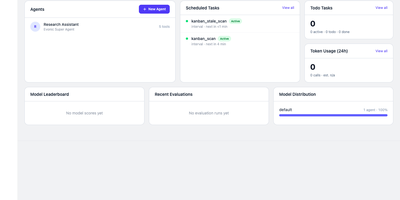
AI agents that delegate to each other, remember past conversations, and stay inside your safety rules all live in one self-hosted platform called Evonic. Every agent in Evonic has its own identity, model, tools, knowledge base, channels, and skills, and a guided first-run wizard creates the first one in minutes against OpenRouter, Together AI, Ollama, DeepSeek, llama.cpp, or any custom OpenAI-compatible endpoint. Agents message and delegate to each other, run commands in a Docker, Podman, or bubblewrap sandbox, and execute on a local folder, an SSH server, or a tunnel device that needs no public IP. A built-in Kanban board hands tasks to agents, a scheduler fires cron jobs and reminders, and Telegram, WhatsApp, and Discord channels put agents where users already chat. Markdown knowledge bases with wiki-links form an interactive graph, a memory engine recalls facts across sessions, and an organizer sub-agent extracts entities and merges duplicates. Safety layers inspect actions for mass deletion or remote code execution and escalate to a human, and an injection guard blocks prompt manipulation. Evaluation dashboards score models across domains, a token monitor tracks usage per agent and model, and bundled skills, 12 plugins, backup and restore, and themed light and dark modes round it out. Running on a dedicated VPS on RepoCloud with guaranteed CPU, RAM, and SSD, full root SSH access, and a browser serial console. AGPL-3.0 licensed.
Shep
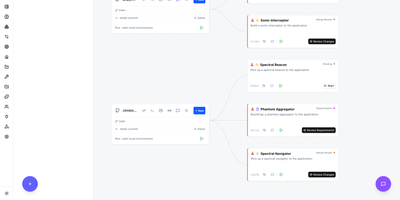
Type one sentence about a feature, and Shep spins up an AI coding agent on its own branch and worktree, then carries the work through commit, push, CI, and a draft pull request. Run three features, five, or ten at once, with Claude Code, Codex, Copilot, Cursor, Gemini, Kimi Code, Cline, or local models picked per feature. A control center draws every repository and feature as a live graph with a fleet bar that counts what is cruising, queued, waiting on you, or failed. When an agent is unsure it asks a blocking question with a recommended answer and a deadline, and you reply from the web, the CLI, chat, or the terminal console. Optional spec-driven mode writes requirements, research, and a plan as YAML for you to approve before any code exists. CI watch reads failing logs and pushes fixes, a checkpoint follows every agent step so you can diff or restore it, and nothing merges without your approval. Tool pages, skills, plugins, webhooks, project memory, and per-feature chat round out the workspace, and an app starter plans a brand new project from a prompt. State stays in a local SQLite database, and usage metrics can be switched off. Running on a dedicated VPS on RepoCloud with guaranteed CPU, RAM, and SSD, full root SSH access, and a browser serial console. MIT licensed.
DispatchSEO
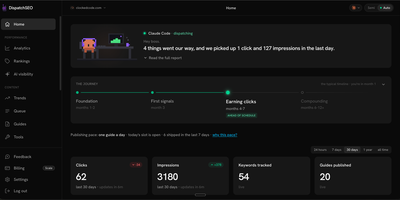
DispatchSEO runs an SEO program through your own AI agent: it researches keywords, queues ideas for your approval, and publishes a guide every morning. Connect Claude Code, Codex, Cursor, or the Claude app over MCP and the agent mines keywords from Search Console data and Google Autocomplete, then drops each idea into a queue showing volume, difficulty, and the reasoning behind it. Approve, reject, or drag to reorder, or switch on auto mode and skip the queue. Each morning the oldest approved idea becomes a real guide, delivered as a GitHub pull request or posted straight to a self-hosted WordPress site, checked against the live search results before it ships. Home greets you with a plain-language daily briefing, a journey tracker, publishing pace, and click and impression counters. Rankings charts daily positions with thirty-day sparklines, Search Traffic plots Search Console history, and an AI visibility page shows how often Claude cites your domain. A backlink playbook lists free and paid submissions with copy ready to paste. One deployment manages many sites, each with its own MCP token. Running on a dedicated VPS on RepoCloud with guaranteed CPU, RAM, and SSD, full root SSH access, and a browser serial console. AGPL-3.0 licensed.
Hivekeep
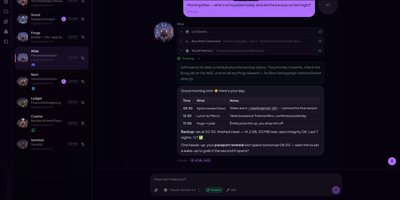
Most AI chats forget you by tomorrow; Hivekeep keeps a team of agents on your own server that remember everything, work together, and answer wherever you already talk. Each agent has a name, a role, and one continuous conversation that never resets, backed by long-term memory it can search. Agents hand tasks to one another, spawn helpers, and run scheduled jobs. Queenie, the built-in setup agent, connects providers and creates your first teammates through plain chat. They reach you on Telegram, Slack, Discord, WhatsApp, Signal, Matrix, or the installable web app, and a channel can move from one agent to another mid-conversation. Agents write custom tools, build mini-apps that open beside the chat, edit files in a workspace with a code editor, and add plugins from a marketplace. Credentials go straight into an AES-256-GCM vault that the model never reads. A context viewer and a token-usage dashboard show what each prompt contains and what each agent, model, and day costs. Running on a dedicated VPS on RepoCloud with guaranteed CPU, RAM, and SSD, full root SSH access, and a browser serial console. MIT licensed.
Eidon
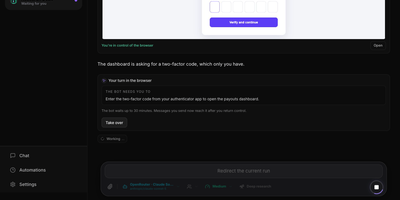
Beyond a plain chat for quick questions, Eidon gives you a team of AI agents, each with its own browser, workspace, and memory, and a Chief of Staff that routes your requests. Ask for anything and it answers, hands the job to a specialist, or creates a new agent for it, and agents message each other and report back. Open an agent's live browser view and watch it work. At a sign-in, a two-factor code, a CAPTCHA, or a payment it stops and waits for you, and you hand control back with a note. Passwords come from an encrypted vault and are typed into the page, never passed to the model. Shell commands and MCP tools run only after you allow them once, always, or never, and emails and Slack messages arrive as drafts to edit. Chat lets you rewind, branch, edit, or regenerate any message, queue follow-ups while a reply streams, and share a read-only link. Deep research drafts an editable plan of up to twelve steps and returns a cited report. Memories wait for your approval. Automations run on an interval, daily, weekly, or once, and alert you through ntfy, Pushover, webhooks, or web push. Connect OpenAI-compatible or Anthropic providers, MCP servers, web search, image generation, and voice dictation, with a private account for each person. Running on a dedicated VPS on RepoCloud with guaranteed CPU, RAM, and SSD, full root SSH access, and a browser serial console. AGPL-3.0 licensed.
Aizen
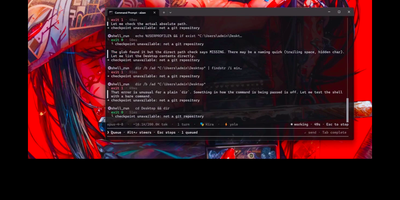
Aizen is a coding agent that actually lives on your server: one small binary you can message from your phone, which fixes code, runs the tests, and reports back before you are anywhere near a keyboard. Leave it running on the box and drive it from Telegram or Discord, approving risky edits with a tap while it works behind NAT with no inbound port to expose. In the terminal it is a single chat and agent loop with a live heads-up display of model, tokens, and context, reading files in parallel, editing symbolically through the language server, and running your shell under an approval layer with a hard floor that refuses catastrophic commands even on auto-approve. It does not get to claim done early: a verify gate runs your typecheck and test suite and sends it back to fix what it broke, git-backed checkpoints let you rewind a bad turn, and seven capability-scoped sub-agents can fan out across finding, planning, building, reviewing, testing, research, and recall when a job wants a team. Point it at any OpenAI-compatible endpoint, from hosted models to your own local server, extend it with MCP servers and slash-command macros, and let the sandbox keep every child process away from your API keys with the network denied by default. Running on a dedicated VPS on RepoCloud with guaranteed CPU, RAM, and SSD, full root SSH access, and a browser serial console. Apache-2.0 licensed.
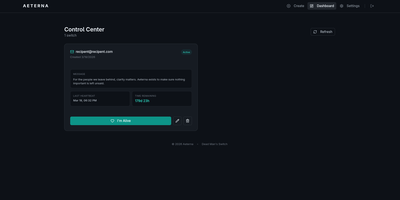
Aeterna
Some messages should only arrive if you cannot send them yourself, and Aeterna is a self-hosted dead man's switch that makes sure they do. You write the messages, attach the files that matter, name the people who should receive them, and check in on a rhythm you choose. Keep checking in and nothing happens. Stop, and Aeterna delivers what you left behind. Each switch pairs your words with documents, photos, or instructions for specific recipients, and switches can address multiple recipients so one message can reach a partner, a sibling, and a lawyer at the same time. File attachments are stored encrypted and are automatically deleted from the server right after delivery, so sensitive material does not linger once it has done its job. Check-ins take seconds through the web interface or a quick link in your email, which keeps the heartbeat habit painless. When a switch fires it can also call webhooks, triggering home automation or custom scripts alongside the emails. Your SMTP settings live in the settings screen with live testing, and reverse proxy templates for Nginx, Traefik, and Caddy help you put the service behind your own domain with proper certificates. Running on a dedicated VPS on RepoCloud with guaranteed CPU, RAM, and SSD, full root SSH access, and a browser serial console. GPL-3.0 licensed.
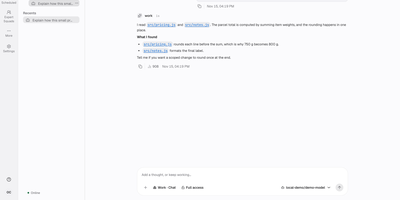
OpenCorvus
Long agent tasks tend to stall, lose context, or return something nobody can verify, and OpenCorvus is built to prevent all three. OpenCorvus organizes long, complex tasks into Missions worked by Expert Squads, where research, implementation, and independent review each have a named owner and hand off written artifacts. Task state and context are retained, so a stopped run can be recovered rather than restarted, and tool calls, results, and review evidence stay in a record you can inspect. Pick a squad from the bundled catalog of more than a hundred, or let the Dynamic squad compose task-specific experts for you. Connect any of roughly ninety model providers, add MCP servers and skills, schedule recurring work like a weekday brief, and receive tasks from chat channels like Slack, Telegram, Discord, and WhatsApp. A persistent project memory keeps notes the agents reuse across conversations. Start the headless server in a repository, open the workbench in your browser, or create Tasks through the HTTP API and follow their events as they stream. Running on a dedicated VPS on RepoCloud with guaranteed CPU, RAM, and SSD, full root SSH access, and a browser serial console. MIT licensed.
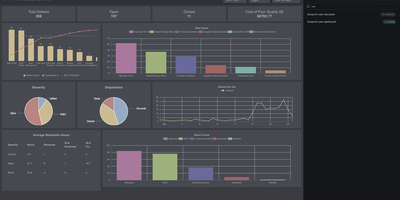
FlowFuse
FlowFuse turns Node-RED from a single-editor tool into a team platform that hosts instances, snapshots flows, and promotes tested changes from development to production and out to remote devices. Applications group related instances, and Owner, Member, Viewer, and Dashboard Only roles decide who can edit flows, create snapshots, or simply open a dashboard. Creating an instance takes a few clicks: pick a Node-RED version, optionally choose a blueprint such as the ANDON Operator Terminal, and the platform preinstalls its nodes and flows. Snapshots capture flows, credentials, and runtime settings so a bad deployment can be rolled back, while DevOps pipelines move a chosen snapshot through development and production stages with one click. Remote instances run on your own hardware through a device agent installed with a one-line command, and developer mode opens the editor for that device from the platform. A shared team library keeps reusable flows and functions in one place, environment variables are set per instance, and project link nodes pass messages between instances and devices. Audit logs record editor logins, flow updates, installed nodes, and snapshots, and the FlowFuse Expert plugin offers AI guidance for writing functions, building flows, and debugging. On self-hosted installs the Community Edition is free, while pipelines, blueprints, the shared library, developer mode, application-level roles, and Expert need an Enterprise license. Running on a dedicated VPS on RepoCloud with guaranteed CPU, RAM, and SSD, full root SSH access, and a browser serial console. Apache-2.0 licensed.
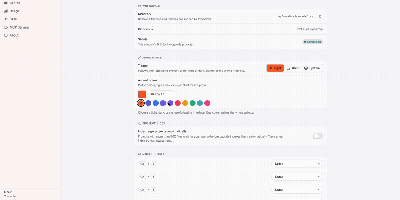
Ogcode
Ogcode puts a full AI coding agent in a browser tab pointed at your own server, where it maps your codebase semantically before reading it, plans changes across files, runs your builds and test suites, and answers with diagrams and documents alongside the shipped code. Before reading files it maps the project with a semantic index, outlines what matters with exact line ranges, and reads only the parts that count, so unfamiliar code becomes navigable in one session. Ask it to implement a feature or chase a failing test and it plans the work, edits across files, runs your builds and test suites, and investigates failures instead of retrying blindly. You stay in control through per-session permission modes: Ask approves each step, Auto gates by risk, and Yolo lets it run, with every decision remembered when you want it to be. Past decisions are recalled instead of replaying whole transcripts, so long sessions stay focused and affordable, and the agent can research as it goes with built-in web search, reusable SKILL.md workflows, and external MCP servers. Answers come back richer than text when the work calls for it, with diagrams, rendered documents, charts, and downloadable artifacts in the same session. Connect Anthropic, OpenAI, OpenRouter, or a local Ollama endpoint and start working. Running on a dedicated VPS on RepoCloud with guaranteed CPU, RAM, and SSD, full root SSH access, and a browser serial console. AGPL-3.0 licensed.

RelayTV
Your couch becomes the control room with RelayTV, a self-hosted media hub that runs on the Linux box plugged into your TV. Connect Plex, Jellyfin, or Emby once, then search films, open a series, pick an episode, resume where you stopped, or drop the pick into the shared queue. Paste a web video link to play it on the big screen, or queue an entire YouTube playlist of up to a thousand videos in order without pausing tonight's movie. The TV idles on a dashboard with a QR code, and anyone in the room scans it to join the same remote, browse, and add picks to the queue. Add M3U playlists to build a My Channels lineup, pin favorites to the top, rewind inside the buffered window when you miss a line, and jump straight back to live. Playback, queue advancement, history, and overlays all run on the box itself, so the TV keeps playing after your phone leaves the page. Every screen appears in Home Assistant as a media player, and the local HTTP API takes play, queue, overlay, and snapshot calls from scripts and dashboards. A second RelayTV in the bedroom can receive the active queue from the living room, and the optional API token locks control down on shared networks. Running on a dedicated VPS on RepoCloud with guaranteed CPU, RAM, and SSD, full root SSH access, and a browser serial console. GPL-3.0 licensed.
killBottleneck
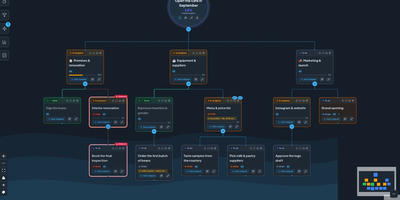
Somewhere in every project one step holds up all the others, and killBottleneck draws your goals as a map that flags that step as a bottleneck. A goal is flagged when it is overdue or stalled while other steps wait on it, and each goal carries an owner, deadline, status, progress, notes, and attachments. The same map switches to a Process style whose recurring steps (every weekday, every Friday, monthly) renew themselves, and an organization map holds positions, functions, and deputies. My day lists what is overdue, due today, or due within a week, beside a team calendar with shared calendars for the company, the meeting room, and time off. Automation rules (WHEN, IF, DO) hand over goals, set deadlines, notify people, offer the assistant, or run an agent, and signed webhooks start n8n workflows or your own agents. An AI assistant in a side panel plans mornings and evenings, sorts notes from a photo, PDF, or voice note, and drafts whole projects, and every change is a card you confirm; it runs on OpenAI, OpenRouter, Groq, Mistral, vLLM, llama.cpp, or a local Ollama model. A REST API and a 20-tool MCP server let Claude Desktop, Claude Code, or the claude.ai connector build maps by conversation. Twelve skins, a simplified phone view, Asana and Trello import, and encrypted backups round it out. Running on a dedicated VPS on RepoCloud with guaranteed CPU, RAM, and SSD, full root SSH access, and a browser serial console. MIT licensed.