SuperPlane
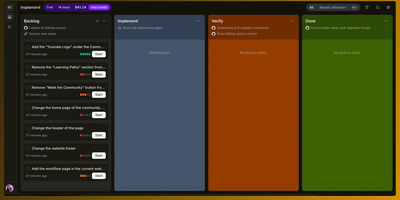
SuperPlane is an open-source engineering automation platform that turns routine backlog tickets into verified, review-ready pull requests while orchestrating complex multi-system workflows across your developer tools. Engineers use the visual infinite canvas to assemble event-driven pipelines with trigger nodes, conditional routing, loops, and human-in-the-loop approval gates. You can delegate pull request code reviews, automated QA testing, documentation generation, and release management to coding agents operating within strictly defined policy boundaries. Custom operational consoles let teams build live monitoring dashboards displaying key delivery metrics, active incident states, and execution histories from connected tools. Integrations connect natively with GitHub, GitLab, Datadog, PagerDuty, Slack, AWS, and leading AI models through webhook events and bi-directional actions. Every automation run maintains durable state persistence across process restarts, ensuring failed steps resume with full input payloads and debugging context intact. Developers can define reusable work orders, configure canvas memory for long-term state retention, and execute fleet commands over SSH or containerized runners. Running on a dedicated VPS on RepoCloud with guaranteed CPU, RAM, and SSD, full root SSH access, and a browser serial console. Apache 2.0 licensed.
Edict
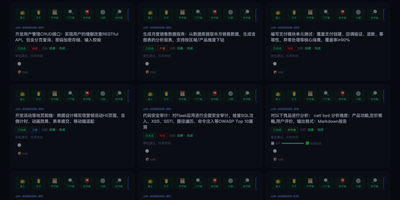
Edict is a multi-agent orchestrator that runs every AI request through a court-style chain: a crown prince agent triages it, a planning department drafts the work, a review department can veto the plan, and specialist ministries execute what survives. Casual chat gets a direct reply, while real commands become kanban tickets whose titles are scrubbed of file paths and metadata. A vetoed plan returns for rework; an approved one is dispatched in parallel to ministries for finance, documentation, engineering, compliance, infrastructure, and HR. Commands arrive through Feishu, Telegram, or Signal channels configured in OpenClaw. The dashboard shows cards by state with heartbeat badges and stop, cancel, and resume controls, plus a department monitor and a memorial archive that turns finished work into five-phase timelines you can copy as Markdown. Nine edict templates add parameter forms and cost estimates, an officials panel ranks agents by merit score while tracking token spend, and per-agent model switching restarts the gateway in about five seconds. Agent thinking, tool calls, and results stream live. A permission matrix limits who may message whom, illegal state jumps are rejected, and every transition lands in an audit log. Worked examples cover competitive analysis, code review, and weekly reports. Dashboard login protects the console, and a systemd unit keeps it running across reboots. Running on a dedicated VPS on RepoCloud with guaranteed CPU, RAM, and SSD, full root SSH access, and a browser serial console. MIT licensed.
Lightpanda
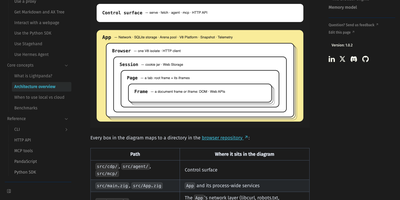
Lightpanda is a headless browser built for AI agents and automation that loads and runs web pages without ever drawing them, so crawling, scraping, and agent browsing finish far faster and lighter than in Chrome. You drive it with the tooling you already have: Puppeteer, Playwright, and Chromedp connect over the Chrome DevTools Protocol, Selenium works over WebDriver BiDi, and existing Chrome automation scripts keep running against the new endpoint. Scripts can execute JavaScript on real pages, wait for network activity, read and mutate the DOM, submit forms, and pull structured data out of dynamic sites that plain HTTP clients cannot see. An MCP server mode hands the browser to AI applications as a callable tool, so a model can open pages, follow links, and read content in the middle of an agent workflow. The built-in agent accepts plain-language browsing tasks and can export what it did as PandaScript, a replayable JavaScript file that runs later with no model call at runtime. A fetch command loads one or more URLs and prints the result as HTML or Markdown, which turns page extraction into a single shell step inside data pipelines. In the project's published crawl benchmark it processed pages roughly nine times faster than headless Chrome at a fraction of the memory, so one server can hold many more concurrent browsing sessions. Running on a dedicated VPS on RepoCloud with guaranteed CPU, RAM, and SSD, full root SSH access, and a browser serial console. AGPL-3.0 licensed.
Agentic Resource Registry
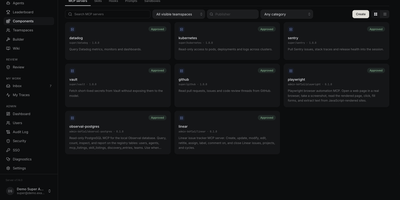
Every team building with coding agents has the same drawer problem: the best Skill, MCP server, or agent file lives in one person's repo, undocumented, while three colleagues rebuild it from scratch. Agentic Resource Registry is the internal catalog that ends the duplication, a self-hosted registry where your organization publishes Skills, MCP servers, hooks, prompts, agent files, and sandboxes in one searchable place. Browse by teamspace, publisher, category, or harness and see at a glance what each resource supports and how often it has been pulled. Authors build agent files in a four-step builder with a live summary and draft readiness checks, then submit them into a review queue where admins inspect the full prompt and version diffs before approving. Forking an approved release creates your own draft with pinned components, and reviewers can compare it against upstream line by line. The companion CLI installs any approved resource into Claude Code, Cursor, Codex, Kiro, Copilot, OpenCode, Pi, and more, generating the correct config for each harness automatically. Approved resources are also discoverable over the open ARD standard, so a running agent can hand part of its task to another approved agent or a remote A2A service. Running on a dedicated VPS on RepoCloud with guaranteed CPU, RAM, and SSD, full root SSH access, and a browser serial console. Apache-2.0 licensed.
Codeman
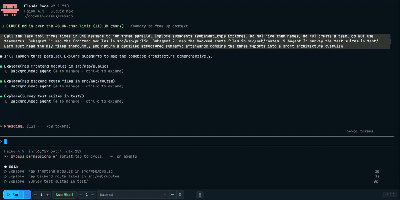
Codeman is a self-hosted mission control for AI coding agents that runs Claude Code, Codex, OpenCode, Gemini, Copilot, and five more agent CLIs in persistent sessions you can watch and steer from any browser, phone included. Sessions live in tmux, so agents survive server restarts, network drops, and laptop sleep, with full scrollback replay when you return. Run up to twenty sessions as tabs or in a six-up tile grid, each streaming its real terminal with token and cost tracking, and tabs that blink when an agent goes idle or needs an answer. Idle detection re-prompts stalled agents, and when a subscription usage limit hits, Codeman parses the reset time, waits it out, and resumes the run unattended. Subagents appear as floating live windows tethered to their parent session, with real-time transcripts, token counts, and status badges. Agents can drive Codeman too, through a bundled skill, CLI verbs, and an MCP server that let one agent start, prompt, and collect answers from workers in other CLIs. Run a project in an isolated Docker container or on another machine over SSH, preview agent-created files in the browser, and reach everything from your phone with QR login and push notifications, or over Tailscale with a real certificate. Running on a dedicated VPS on RepoCloud with guaranteed CPU, RAM, and SSD, full root SSH access, and a browser serial console. MIT licensed.
Opik
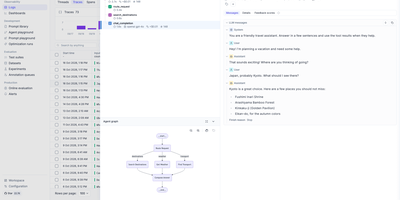
When an AI agent goes wrong at step seven of twelve, Opik, an open-source LLM observability platform, shows the exact trace, tool call, and prompt behind it, then scores your fix against test datasets. Full trace trees capture every LLM call, retrieval step, and tool execution, and you can annotate traces and spans with feedback scores in the UI or through the SDK. Native integrations for OpenAI, Anthropic, LangChain, LlamaIndex, CrewAI, Google ADK, and DSPy, plus OpenTelemetry for any language with an OpenTelemetry SDK, feed traces in, or add the @track decorator to your own functions. Datasets and experiments compare prompt and model versions, scored by LLM-as-a-judge metrics for hallucination, moderation, and RAG relevance, with a PyTest integration to run evaluations in CI. A Prompt Playground tests prompts across models, and the Agent Optimizer SDK helps improve prompts and agents. Production dashboards track feedback scores, trace counts, and token usage, online evaluation rules score live traces, and optional guardrails add safety checks. An MCP server lets Claude Code, Cursor, VS Code Copilot, Codex, or opencode read traces and run evaluations from chat. Run it yourself with the ./opik.sh script on Docker Compose, or a Helm chart on Kubernetes, so trace data stays in your infrastructure. Running on a dedicated VPS on RepoCloud with guaranteed CPU, RAM, and SSD, full root SSH access, and a browser serial console. Apache-2.0 licensed.
Nakama
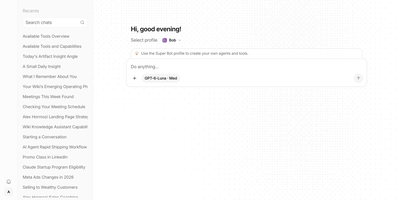
Nakama gives your whole team a shared home for AI agents, where each agent has its own identity, memory, tools, and permissions and meets people where they already talk. The dashboard feels like a familiar chat app: pick an agent from the rail, start a conversation, and watch it use tools, recall memory, and reply inside Telegram, WhatsApp, Discord, or Slack when the work lives there. Every agent is configured as a small personality you can read and edit, with prompt files for its soul, style, instructions, and memory, plus tabs for its channels, tools, MCP servers, and skills. One server hosts many organizations with invites and roles, and agents stay isolated from each other so the support agent never wanders into the finance agent's toolbox. The control center manages workspace settings, model providers, plugins, and integrations, and a connector layer opens the door to more than a thousand external apps. Daily encrypted backups and an in-app update button keep operations boring, and the entire platform idles in about two hundred megabytes inside a single container. Running on a dedicated VPS on RepoCloud with guaranteed CPU, RAM, and SSD, full root SSH access, and a browser serial console. MIT licensed.
Auto Company
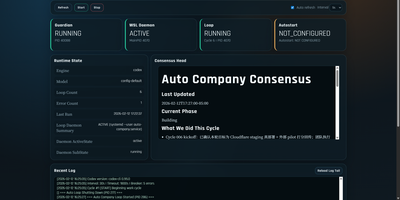
With over 2,700 GitHub stars, Auto Company is the first open-source framework that runs a fully autonomous AI company 24/7 — 14 specialized agents modeled after Jeff Bezos (CEO strategy), Werner Vogels (CTO architecture), Charlie Munger (critical analysis), DHH (full-stack engineering), Kelsey Hightower (DevOps), Seth Godin (marketing), and eight more domain experts collaborate through dynamic squad formation to ideate products, write code, deploy infrastructure, and execute marketing campaigns without human intervention. The five-layer architecture separates execution, orchestration, cognition, workflow routing, and observability, while the consensus memory pattern uses a single markdown file as a relay baton between cycles — no vector databases, no Redis, no embeddings required. A bash loop invokes Claude Code or OpenAI Codex CLI every 30 seconds, each cycle selecting 2-5 agents from the 14-person pool based on task context. Over 30 reusable skills handle specialized tasks from frontend design to competitive analysis and deployment automation. Circuit breakers trigger cooldown after consecutive errors, rate-limit detection auto-sleeps on API throttling, and sandbox rollback protects against destructive changes. The Python-powered web dashboard displays real-time cycle status, cost tracking per cycle averaging under $2, and agent activity visualization, with CLI control via make start, stop, monitor, pause, and resume. Supports macOS via launchd, Windows via WSL with systemd, and native Linux deployment. The npx create-auto-co command scaffolds a new AI company in seconds. Running on a dedicated VPS on RepoCloud with guaranteed CPU, RAM, and SSD, full root SSH access, and a browser serial console. MIT licensed.
Magic Cloud
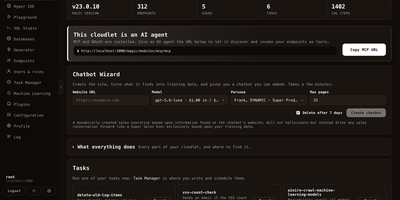
Magic Cloud turns a plain-English app description into a working backend, secured API, and frontend that run on your own server. Point the endpoint generator at a database and it writes CRUD endpoints with roles and validation; paste an OpenAPI or Swagger URL and it wraps any third-party API as documented endpoints. A dashboard shows endpoint counts, users, scheduled tasks, and logs. A built-in MCP URL gives Claude, Cursor, or Codex a way to discover and call every endpoint as a tool. The Chatbot Wizard crawls a website and hands back an embeddable chatbot grounded in that content. Hyper IDE edits any file on the server with an ask-the-AI prompt bar underneath, and Rewind steps through a recorded execution line by line. A visual Web Designer assembles pages from blocks, a Task Manager schedules background jobs, and Chat Ops answers questions about what the cloudlet can do and then does it. Role-based access guards each endpoint, and a SQL Studio handles direct queries. Running on a dedicated VPS on RepoCloud with guaranteed CPU, RAM, and SSD, full root SSH access, and a browser serial console. MIT licensed.
DopplerTask
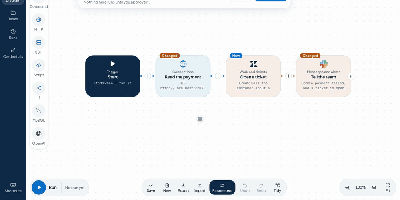
DopplerTask is the control layer where AI agents build your automations and you decide what goes live. You describe the outcome in plain language, and your agent assembles a task from a library of eighty-one ready-made steps spanning messaging, ticketing, sales, operations, documents, databases, queues, and AI models. The proposal lands in a visual editor that people and agents share, with new and changed steps marked and the old value of each field beside the new one. Nothing goes live until you approve it, and the previously approved version keeps running untouched in the meantime. Once a task is live it can start from a webhook, a schedule, a message queue, a manual click, or the agent itself, and every run is recorded with the output of each step, the person who started it, and the person who approved the version. Failed runs resume from the step that failed, with retries and continue-on-failure where you want them. Agents reference your credentials by name only; the values stay encrypted on your server, beyond the agent's reach, and separate tokens for people and agents plus single sign-on keep access tidy. Running on a dedicated VPS on RepoCloud with guaranteed CPU, RAM, and SSD, full root SSH access, and a browser serial console. MIT licensed.
SkillHub
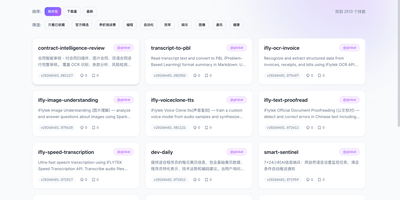
SkillHub gives teams a private, npm-style registry for AI agent skills, so a useful skill package is published once, reviewed, versioned, and installed into a compatible agent from the command line. Upload a package from the web console, the CLI, or the REST API, pick PUBLIC, NAMESPACE_ONLY, or PRIVATE visibility, and track releases with semantic versions plus tags such as beta and stable. Team namespaces keep their own members with Owner, Admin, and Member roles and publishing policies, while full-text search filters by namespace, downloads, ratings, and recency and hides whatever a user may not see. Every submission enters a review queue: namespace admins approve or reject team skills, platform admins decide promotions to the global scope, and each governance action lands in the audit log. A built-in Skill Scanner inspects published packages and shows its report on the skill page, with optional behavioral, LLM, VirusTotal, and Cisco AI Defense engines. Members can star and rate skills, follow download counts, receive notifications, and report problem packages. Skill suites bundle several skills into one versioned collection with an entry skill, scoped API tokens serve the CLI and scripts, and the interface speaks English, Simplified Chinese, Russian, and Korean. Packages live on local disk or S3-compatible storage such as MinIO. Running on a dedicated VPS on RepoCloud with guaranteed CPU, RAM, and SSD, full root SSH access, and a browser serial console. Apache-2.0 licensed.
Vibe-Trading
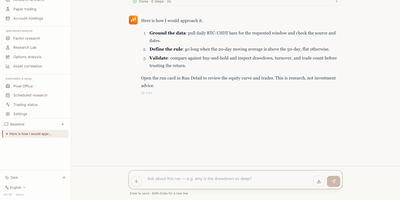
Ask for a backtest of a 20/50 moving-average crossover on BTC-USDT for 2024, and Vibe-Trading plans the run, fetches the bars, writes the strategy, and returns a run card with drawdown, trades, and a buy-and-hold comparison. The web chat keeps every session, accepts uploaded filings and spreadsheets, and links each answer to a Run Detail page with the equity curve and the data source used. Eleven backtest engines cover A-shares, global equities, crypto, futures, forex, options portfolios, and cross-market composites, and the alpha zoo benchmarks factor libraries like GTJA191 across a chosen universe. Swarm teams (investment committee, quant desk, risk review) split a question among macro, quant, and catalyst workers and merge the result into one report. Paper trading tracks cash, fills, and NAV between sessions, the portfolio view proposes allocation changes, the options page draws multi-leg payoffs and Greeks, and scheduled playbooks repeat a brief on a timetable. The Shadow Account reads broker trade journals, extracts implicit rules, and replays your trades against a rule-based alternative. Model providers include OpenRouter, OpenAI, Anthropic, DeepSeek, and local Ollama, and any broker execution is opt-in within limits you set and can halt. Running on a dedicated VPS on RepoCloud with guaranteed CPU, RAM, and SSD, full root SSH access, and a browser serial console. MIT licensed.
Tingly Box
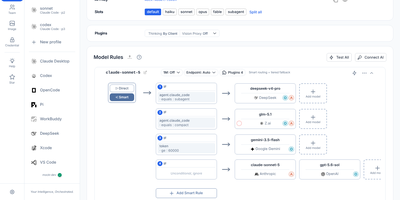
Give every agent your team runs the same front door, and the model chaos behind it becomes manageable. Tingly Box is a self-hosted gateway with a web console where providers, keys, routing rules, and team usage live in one place. Claude Code, OpenCode, Codex, Xcode, and other clients simply call the endpoint. A request arrives. The gateway reads your rules, weighs cost against speed against the policy you wrote, picks a model and a token, translates the protocol if the two ends disagree, and streams the answer back. Existing subscription quotas are spendable here, connected by OAuth beside ordinary API keys, and per-scenario profiles let quick edits and deep refactors land on different models by default. Team mode shares that endpoint properly. Model rules are managed centrally, each member receives a dedicated key, data stays isolated per user, and the usage dashboard shows exactly who consumed what. The gateway also speaks images, generating and editing through the same address with a playground for testing prompts before clients depend on them. Agents remain reachable after you leave the desk, driven through Telegram, DingTalk, Feishu, Lark, Weixin, or WeCom, with guardrails and an MCP gateway available as power-ups. Virtual models give new rules a safe target for testing and benchmarking before real traffic moves over. Running on a dedicated VPS on RepoCloud with guaranteed CPU, RAM, and SSD, full root SSH access, and a browser serial console. MPL-2.0 licensed.
Coder
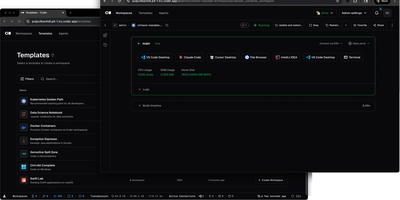
With over 14,000 GitHub stars and enterprise adoption by security-conscious organizations, Coder transforms how development teams provision, manage, and secure their coding environments. Every workspace is defined as a Terraform template, meaning infrastructure engineers can standardize development environments across EC2 instances, Kubernetes pods, Docker containers, or any combination, while developers get self-service provisioning that launches in seconds rather than days of manual setup. The WireGuard-based networking layer establishes encrypted tunnels between developer machines and remote workspaces, providing low-latency access without exposing ports or configuring VPN concentrators. Automatic idle detection shuts down unused workspaces after configurable periods, directly reducing cloud compute costs for organizations running hundreds of developer environments. The Coder Agents feature introduces native AI coding capabilities where the agent loop executes entirely within the control plane on self-hosted infrastructure, keeping LLM API credentials out of individual workspaces and eliminating credential exfiltration risks. Centralized model governance allows platform teams to approve specific AI providers and models, set per-user spend limits, and maintain complete audit logs of all prompts, tool calls, and agent activity. IDE integration supports VS Code through a dedicated extension, JetBrains IDEs via Gateway and Toolbox plugins, and browser-based code-server for web access. The template registry provides pre-built configurations for common development stacks. DevContainer support builds environments from standard devcontainer.json specifications. Deploy on a dedicated VPS on RepoCloud with guaranteed CPU, RAM, and SSD, full root SSH access, and a browser serial console. AGPL-3.0 licensed.
OpenMAIC
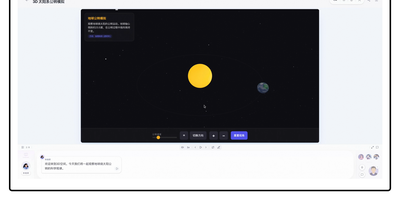
Developed by Tsinghua University researchers and validated across more than 700 students, OpenMAIC converts raw prompts, PDFs, Office documents, audio, and video into complete, multi-agent virtual learning environments. The platform leverages Next.js, LangGraph state machines, and a pluggable `@openmaic/storage` layer to orchestrate autonomous AI professors and student avatars that lecture, debate at roundtables, answer inquiries, and illustrate complex equations on a real-time SVG whiteboard. Its Pro Agent Workbench features durable PostgreSQL-backed sessions, twenty specialized curriculum-building skills, and granular JSON Patch slide editing with full `.pptx` import fidelity. OpenMAIC supports rich scene modalities including automated quiz grading, Project-Based Learning milestones, and Deep Interactive Mode offering in-browser code execution, interactive mind maps, and Three.js 3D physics simulations. Built-in audio pipelines connect with VoxCPM2 for zero-shot voice cloning, Azure STT, and FunASR for speech recognition, alongside a dedicated Chromium-FFmpeg rendering microservice for one-click MP4 video exports. Flexible model routing interfaces seamlessly with OpenAI, Anthropic Claude, Google Gemini, Amazon Bedrock, DeepSeek, and local Ollama or Lemonade instances, while OpenClaw integration enables direct classroom generation from Slack, Discord, Feishu, and Telegram. Running on a dedicated VPS on RepoCloud with guaranteed CPU, RAM, and SSD, full root SSH access, and a browser serial console. MIT licensed.
OnGrid
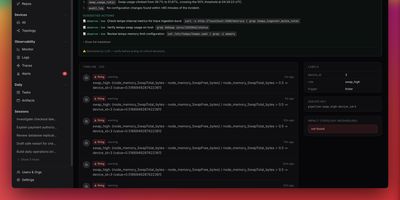
When an alert fires, OnGrid investigates it for you: an AI operations agent that correlates metrics, logs, traces, and topology, then names the root cause in plain language. A coordinator agent hands each question to specialist SRE, network, or database sub-agents, and the incident investigator walks the service graph for blast radius, queries Prometheus, Loki, and Tempo, and pins the cause to a line of source code before posting its report back to chat. Lightweight edge agents on every host dial out over a single tunnel, so no inbound ports are opened, and operators can reach any machine through an audited browser shell. The agent works through more than 26 read-only inspection tools in a sandbox, while anything that changes production waits behind an approval gate. Ask questions or receive reports in Slack, Telegram, Larksuite, DingTalk, or WeCom, and run it on Anthropic, OpenAI, GLM, DeepSeek, Gemini, Kimi, or any OpenAI-compatible endpoint. A workflow builder turns triggers, agents, tools, and notifications into repeatable automations, and a knowledge vault indexes runbooks, incident history, and repositories for search. Enroll Kubernetes clusters to inspect workloads and manage upgrades, or discover network neighbors, verify them over SNMP, and map them into the topology. Role-based access separates admins, users, and viewers. Running on a dedicated VPS on RepoCloud with guaranteed CPU, RAM, and SSD, full root SSH access, and a browser serial console. AGPL-3.0 licensed.
Yep Anywhere
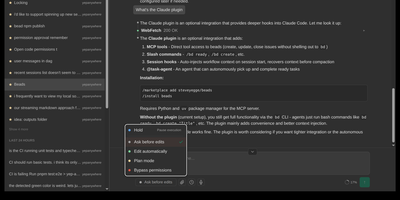
Designed for developers on the go, Yep Anywhere turns any smartphone browser into a full-featured control center for supervising, steering, and reviewing autonomous AI coding agents. Operators can monitor live execution across multiple active projects simultaneously without sitting at a desktop terminal. Real-time reasoning feeds. Instant push alerts for permission prompts. One-tap tool approvals. Developers can unblock pending tasks mid-turn, redirect active workflows, or queue sequential follow-up prompts for automatic delivery at the next safe milestone. An integrated source control viewer displays syntax-highlighted working-tree and commit diffs, allowing reviewers to attach line-level comment bundles directly back into the agent context. Mobile voice transcription lets users dictate instructions straight into running sessions, while photo library integration makes uploading bug screenshots effortless. All agent credentials, CLI configurations, and repository data remain private on the host server without requiring third-party cloud database accounts or proprietary device pairing. Running on a dedicated VPS on RepoCloud with guaranteed CPU, RAM, and SSD, full root SSH access, and a browser serial console. MIT licensed.
Kwant
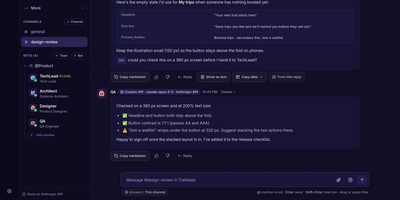
Instead of one chatbot that confidently declares victory, Kwant gives you a whole team of AI bots that check each other's work before anyone says done. Create spaces for work, a side project, and home, each with its own bots, teams, channels, routines, and accounts, then watch messages route automatically to the bot whose skills fit, with a line under every reply explaining why that bot answered. Bots hand tasks to each other with a mention, and every hand-off becomes a card on the Mission board showing verified results this week, their cost, and what still needs you. A card turns Verified only when Kwant runs the check itself, such as a test or a file check, and keeps the receipt, because files a bot attaches are evidence, never proof. Connect several Claude, Codex, or Grok logins plus Anthropic, OpenAI, or xAI keys, set a priority order, and a turn moves to the next account when one runs out of usage. Schedule routines that run while you are away, collect waiting, finished, and failed work in one Inbox, and approve risky steps like pushes or payments from a card that shows the exact command first. Running on a dedicated VPS on RepoCloud with guaranteed CPU, RAM, and SSD, full root SSH access, and a browser serial console. AGPL-3.0 licensed.