
SnapOtter
Fifty-plus image processing tools in a single Docker container, with no Redis, no Postgres, and no external dependencies: SnapOtter is a self-hosted image toolkit. The everyday operations are all here: resize, crop, compress, watermark, vectorize, meme generation, GIF creation, and format conversion spanning 55+ input formats (including 23 camera RAW formats) to 14 output formats. What sets it apart is the local AI layer: background removal, photo upscaling and restoration, object erasing, face blurring, OCR, and canvas expansion all run on locally hosted models, so no image ever leaves your server - a hard guarantee that cloud tools like remove.bg or Canva can't make. Optional NVIDIA GPU support accelerates those AI tasks substantially when hardware is available, but everything works on CPU. A built-in layer-based editor handles composition work directly in the browser, and screenshot beautification turns plain captures into polished visuals with backgrounds, shadows, and padding - useful for docs and marketing alike. Batch operations process unlimited images simultaneously, and the full REST API with OpenAPI documentation exposes every tool for pipelines and automations: thumbnail generation on upload, bulk RAW conversion, automated watermarking. For teams processing sensitive imagery or anyone tired of per-image SaaS pricing, SnapOtter replaces a stack of subscriptions with one private container.
SurfSense
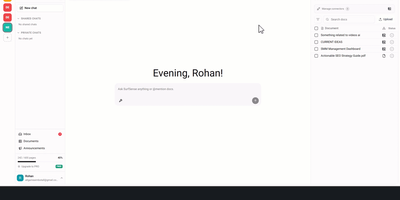
Positioned as the open-source NotebookLM alternative for AI agents, SurfSense delivers a live web research platform where your agents access structured data from Reddit, YouTube, Instagram, TikTok, Amazon, Walmart, Google Maps, Google Search, Indeed, and any page on the open web through one REST API or MCP server. Scheduled and event-triggered agents transform findings into briefs, alerts, podcasts, and presentations, while a built-in knowledge base keeps every discovery searchable with Perplexity-style cited answers using hybrid semantic and full-text search powered by PostgreSQL with pgvector. Upload PDFs, Office documents, images, and audio files, or sync Google Drive, OneDrive, and Dropbox — 50+ file formats supported with AI file sorting that auto-organizes documents by source, date, and topic. The MCP server exposes scrapers, knowledge base, and workspaces as native tools for Claude, Cursor, and any MCP-compatible agent. Cross-country proxy rotation handles Reddit, TikTok, and Google Search scraping with geo-aware sticky sessions and captcha-aware anti-bot handling. The platform features collaborative chats, multi-format document export, git-native knowledge base with Open Knowledge Format export, and a desktop quick-ask panel with global shortcut. Docker Compose deployment manages nine services including Caddy proxy, PostgreSQL, Redis, FastAPI backend, Celery workers, zero-cache real-time sync, and Next.js frontend with automatic Watchtower updates. Running on a dedicated VPS on RepoCloud with guaranteed CPU, RAM, and SSD, full root SSH access, and a browser serial console. AGPL-3.0 licensed.
FounderOS
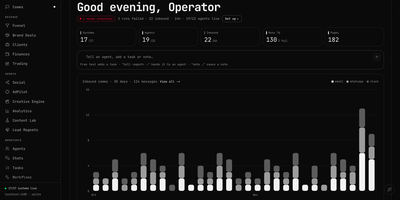
For a solo founder, FounderOS is one live dashboard where AI-assisted departments take care of the busywork of running a company. Home shows system health, agent counts, and inbound message volume, plus a free-text bar that turns a sentence into a task, a note, or an instruction for a named agent. Comms merges email, Slack, WhatsApp, and meeting threads into one inbox with unread counts, needs-reply flags, snooze, mark done, and reply starters that include a drafted answer. Funnel tracks touches, new leads, conversions, and revenue by source, with a pipeline from first touch to converted client. Agents shows a roster of AI seats and a conductor that delegates work, with runs by seat, open task lanes, and the items waiting on you. Tasks adds in-progress, overdue, and runtime stats beside a schedule. The Knowledge Visualizer maps notes, skills, agents, and accounts into a network with matrix, timeline, ranking, and findings views. Clients, Brand Deals, Finances, Social, and Content Lab sit in the same sidebar, and every integration stays optional until you connect it. A bundled demo company makes exploring easy. Creators, small agencies, and one-person businesses get a daily operating view in a single tab. Running on a dedicated VPS on RepoCloud with guaranteed CPU, RAM, and SSD, full root SSH access, and a browser serial console. MIT licensed.
CLIProxyAPI Dashboard
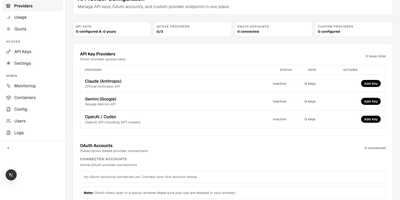
CLIProxyAPI Dashboard puts a web console in front of CLIProxyAPI so you manage AI providers, keys, quotas, and containers through forms instead of YAML files. Connect Claude Code, Codex, xAI, Antigravity, Kimi, and Devin accounts with OAuth, then add Gemini CLI, GitHub Copilot, Kiro, and Cursor through plugins you install and configure from the settings store. Any OpenAI-compatible endpoint can join as a custom provider with model mappings, and admins can mark a provider as shared so the whole team uses it. You create, revoke, and track API keys with per-user ownership, manage dashboard users and admin rights, and stream live logs beside container health. Quota views track rate limits per provider and per model, and Telegram alerts fire when remaining quota drops below your threshold. Usage analytics break down request counts, provider share, model statistics, error rates, and estimated cost. Configuration syncs to OpenCode automatically, model configurations travel as share codes, and backups can be created, scheduled, previewed, and restored from settings. One-click updates refresh the dashboard and proxy images, containers start and stop from the panel, and automatic TLS keeps the console reachable under your domain. Running on a dedicated VPS on RepoCloud with guaranteed CPU, RAM, and SSD, full root SSH access, and a browser serial console. MIT licensed.
Flowcat
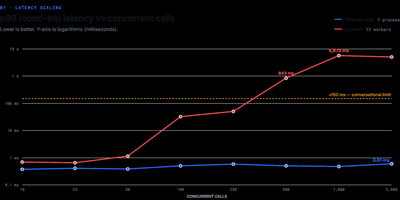
Real-time voice agents get a native Rust runtime in Flowcat: it carries a phone or WebRTC call through a composable media pipeline on your own infrastructure, so latency-sensitive audio never queues behind a managed platform. Audio flows from transport into voice activity detection and turn-taking, then through speech-to-text, an LLM, and text-to-speech, or a single speech-to-speech model, and back out to the caller, with in-process SIP and RTP for telephony. Pair it with local Whisper transcription, Kokoro, Piper, or XTTS for speech, and Ollama for reasoning, and a call's audio and transcript never leave your network; cloud providers plug in by name when you prefer them. Describe one agent in a YAML or JSON node-and-edge graph and the single flowcat-server binary serves it over HTTP, opening a browser page with microphone and live transcript, or bridging a Plivo number into the same agent. The runtime stays flat as call volume grows: benchmarked against a multiprocess Python baseline, one process holds p99 round-trip overhead at or below 0.61 milliseconds from 10 to 2,000 concurrent calls, at roughly 19.6 KB of RAM per idle session. Deploy it inside your VPC or an air-gapped environment where call recordings are sensitive. Running on a dedicated VPS on RepoCloud with guaranteed CPU, RAM, and SSD, full root SSH access, and a browser serial console. Apache-2.0 licensed.
Coder
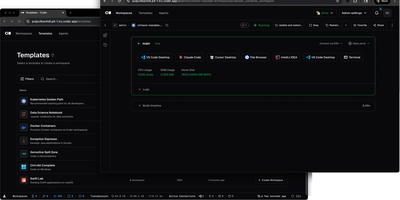
With over 14,000 GitHub stars and enterprise adoption by security-conscious organizations, Coder transforms how development teams provision, manage, and secure their coding environments. Every workspace is defined as a Terraform template, meaning infrastructure engineers can standardize development environments across EC2 instances, Kubernetes pods, Docker containers, or any combination, while developers get self-service provisioning that launches in seconds rather than days of manual setup. The WireGuard-based networking layer establishes encrypted tunnels between developer machines and remote workspaces, providing low-latency access without exposing ports or configuring VPN concentrators. Automatic idle detection shuts down unused workspaces after configurable periods, directly reducing cloud compute costs for organizations running hundreds of developer environments. The Coder Agents feature introduces native AI coding capabilities where the agent loop executes entirely within the control plane on self-hosted infrastructure, keeping LLM API credentials out of individual workspaces and eliminating credential exfiltration risks. Centralized model governance allows platform teams to approve specific AI providers and models, set per-user spend limits, and maintain complete audit logs of all prompts, tool calls, and agent activity. IDE integration supports VS Code through a dedicated extension, JetBrains IDEs via Gateway and Toolbox plugins, and browser-based code-server for web access. The template registry provides pre-built configurations for common development stacks. DevContainer support builds environments from standard devcontainer.json specifications. Deploy on a dedicated VPS on RepoCloud with guaranteed CPU, RAM, and SSD, full root SSH access, and a browser serial console. AGPL-3.0 licensed.
OpenAgent
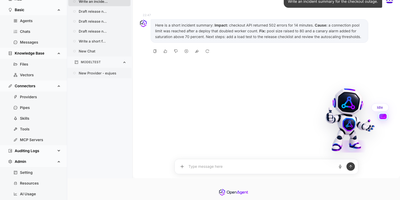
Chat, research, and everyday chores all run through OpenAgent, a private AI assistant hosted on a server you control. Pick from more than thirty model providers, including OpenAI, Anthropic, Gemini, DeepSeek, and local Ollama models, and switch models inside a conversation. Agents can drive a real browser, search the web, run shell commands, read and write Word, Excel, and PowerPoint files, and call any MCP server. Every tool call shows its arguments and result. Upload PDFs and spreadsheets to build isolated knowledge bases with semantic search, then attach them to a chat. A drag and drop workflow builder chains steps with branches, parallel tasks, and schedules. The admin console tracks token use and cost per user and model with charts and a message heatmap, lists every tool, records audit logs, and shows live CPU, memory, and API latency. Single sign-on through OIDC, OAuth2, LDAP, or SAML and separate workspaces keep teams apart, and a REST API with Swagger docs exposes every feature. Running on a dedicated VPS on RepoCloud with guaranteed CPU, RAM, and SSD, full root SSH access, and a browser serial console. Apache-2.0 licensed.
Hollama
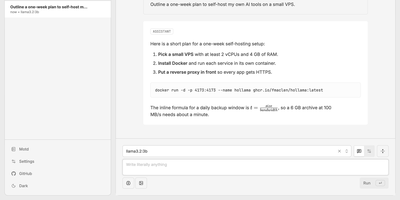
A tidy, account-free chat client for every language model server you run. Ollama, the OpenAI API, and OpenAI-compatible servers like llama.cpp plug in side by side, and each of their models appears in one picker. Prompts accept images for vision models, and answers render Markdown, highlighted code, and KaTeX formulas. Reasoning models keep their thinking in a separate panel from the final answer. Messages can be edited, retried, or copied, and the session panel holds a system prompt plus Ollama options for temperature, Top K, Top P, and seed. Knowledge notes, written in a built-in code editor, attach to a session as reusable context. The Settings page pulls new Ollama models by tag, labels each connection, and filters model names by prefix. Tabs stay in sync, themes switch between light and dark, and the interface is translated into many languages. Servers, preferences, sessions, and knowledge export and import as files. Nothing sits in a cloud database, because history lives in the browser of whoever opens it. A single Docker container on port 4173 serves a whole team. Running on a dedicated VPS on RepoCloud with guaranteed CPU, RAM, and SSD, full root SSH access, and a browser serial console. MIT licensed.
Hivemill
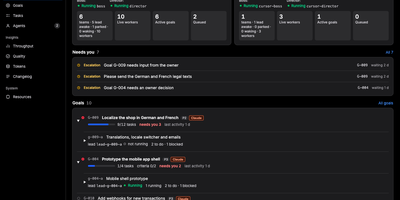
When you hand Hivemill a goal, AI coding agents build it, separate agents review and test it, and a judge decides the merge, all on a Linux server you control. You describe the outcome to a boss agent, a director staffs a lead, and the lead splits it into tasks, each with its own git worktree and branch. A coder opens a pull request and stops, because it cannot review, test, or merge its own work. The reviewer reads the diff, QA runs real tests against your acceptance criteria, and by default the judge merges only when both verdicts pass; anything else returns to the coder with findings. Pull requests, CI checks, and merges run through the GitHub CLI. Claude Code is the default runtime, a Cursor Agent org can run beside it, and hooks enforce each role's prompt and permissions. A spawn gate queues new agents until memory, load, and your Claude usage windows allow, so one modest machine stays responsive. Scheduled jobs mail the director recurring chores with a token cap per run, and a daily retro agent studies rejected work. Typical first jobs are bounded changes such as a filtered CSV export, a mobile navigation fix, or a duplicate-order check before import. A read-only web dashboard tracks goals, tasks, live agents, throughput, quality, and estimated cost per task. Running on a dedicated VPS on RepoCloud with guaranteed CPU, RAM, and SSD, full root SSH access, and a browser serial console. MIT licensed.
Vibe-Trading
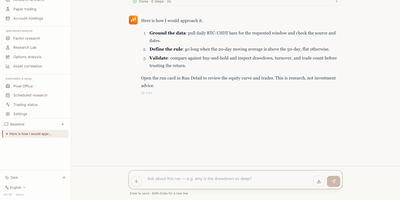
Ask for a backtest of a 20/50 moving-average crossover on BTC-USDT for 2024, and Vibe-Trading plans the run, fetches the bars, writes the strategy, and returns a run card with drawdown, trades, and a buy-and-hold comparison. The web chat keeps every session, accepts uploaded filings and spreadsheets, and links each answer to a Run Detail page with the equity curve and the data source used. Eleven backtest engines cover A-shares, global equities, crypto, futures, forex, options portfolios, and cross-market composites, and the alpha zoo benchmarks factor libraries like GTJA191 across a chosen universe. Swarm teams (investment committee, quant desk, risk review) split a question among macro, quant, and catalyst workers and merge the result into one report. Paper trading tracks cash, fills, and NAV between sessions, the portfolio view proposes allocation changes, the options page draws multi-leg payoffs and Greeks, and scheduled playbooks repeat a brief on a timetable. The Shadow Account reads broker trade journals, extracts implicit rules, and replays your trades against a rule-based alternative. Model providers include OpenRouter, OpenAI, Anthropic, DeepSeek, and local Ollama, and any broker execution is opt-in within limits you set and can halt. Running on a dedicated VPS on RepoCloud with guaranteed CPU, RAM, and SSD, full root SSH access, and a browser serial console. MIT licensed.
big-AGI
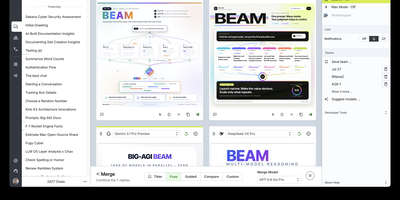
big-AGI is an open-source generative AI workspace that provides a unified, local-first interface for orchestrating multi-model reasoning, automated code execution, and custom persona workflows across private infrastructure. Users query multiple large language models simultaneously through the Beam scatter-gather engine, which prompts independent AI systems in parallel, compares candidate completions side by side, and merges optimal passages into a single refined response. Knowledge workers assemble tailored AI personas equipped with specialized system instructions, custom temperature settings, and predefined document context to handle domain-specific tasks ranging from architectural design reviews to legal contract analysis. The application renders rich multimedia outputs including interactive Mermaid sequence diagrams, LaTeX mathematical formulas, syntax-highlighted code blocks with live execution previews, and AI-generated image generation canvases. Teams integrate local inference servers like Ollama and LocalAI alongside commercial API endpoints to route confidential datasets strictly through internal networks while monitoring per-prompt token usage and operational latency. Users attach complex PDF documents, spreadsheets, and source code repositories for automatic parsing and semantic retrieval, while local-first storage engines ensure private chat transcripts and custom presets remain encrypted on host drives. Running on a dedicated VPS on RepoCloud with guaranteed CPU, RAM, and SSD, full root SSH access, and a browser serial console. MIT licensed.
Paperclip
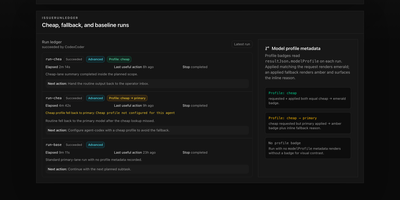
With over 77,000 GitHub stars accumulated in under five months since its March 2026 launch, Paperclip has become the default control plane for teams running multiple AI agents in production. Rather than juggling dozens of terminal tabs with Claude Code sessions, Codex instances, and Gemini CLI workers, Paperclip organizes all agents into a company structure with org charts, reporting lines, role-based permissions, and per-agent monthly budgets that trigger hard-stops when exceeded. The platform supports any runtime through its adapter system — Process adapters manage local CLI agents like Claude Code, Codex, Cursor, Pi, and OpenCode as child processes, while HTTP adapters trigger remote agents via webhooks to OpenClaw, serverless platforms, or custom endpoints. Heartbeat-based execution wakes agents on configurable schedules, injecting goal context, budget state, and workspace paths directly into the invocation payload. The Work and Task System provides atomic checkout with execution locks, first-class blocker dependencies, and structured work products to eliminate duplicate effort. Governance features include approval workflows, decision tracking, emergency stops, and full audit trails tracing every mutation to an actor. Deployment runs as a single Node.js process with embedded PostgreSQL locally or scales to external Postgres for production, installable in one command via npx paperclipai onboard. Running on a dedicated VPS on RepoCloud with guaranteed CPU, RAM, and SSD, full root SSH access, and a browser serial console. MIT licensed.
Tabby
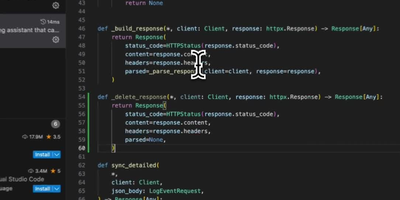
With over 33,000 GitHub stars and a codebase written in 92.9% Rust for maximum performance and memory safety, Tabby is the most widely adopted self-hosted alternative to GitHub Copilot — delivering real-time code completions entirely on your own infrastructure with zero code leaving your network. Deploy a single Docker container on any NVIDIA CUDA, Apple Silicon Metal, AMD ROCm, or CPU-only server and connect VS Code, JetBrains IDEs (IntelliJ, PyCharm, WebStorm, GoLand), Vim, Neovim, and Emacs through native extensions. The completion engine supports a curated registry of models including StarCoder2 (1B to 15B parameters), DeepSeek-Coder, CodeLlama, CodeGemma, Qwen2.5-Coder, and Mistral Code — swappable at runtime through the admin dashboard without redeployment. Repository indexing parses your Git repositories and feeds project-specific types, function signatures, and patterns into completion context via RAG, producing suggestions that understand your codebase rather than generic boilerplate. The Answer Engine provides instant responses to code queries within the IDE, while inline chat enables contextual code editing and explanation without switching windows. The admin dashboard manages per-developer API tokens, usage analytics, and model configuration. Enterprise features include SSO via LDAP, OAuth, and SAML, role-based access control, and audit logging for compliance environments. A single RTX 4090 workstation serves a team of 10-15 developers with sub-500ms completion latency. Running on a dedicated VPS on RepoCloud with guaranteed CPU, RAM, and SSD, full root SSH access, and a browser serial console. Apache 2.0 licensed.
Clawboo
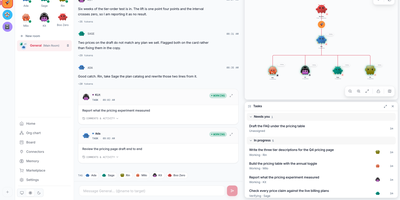
Describe the outcome once, in plain language, and a small crew of AI agents divides the work between them and reports back in the same chat. You type the request in the team chat; Boo Zero, the team lead, splits it into jobs on a shared board and hands each card to the teammate best placed to do it. Teammates run on Claude Code, Codex, Hermes, OpenClaw, or Clawboo's built-in runtime, and one team can mix them freely, so the researcher, the writer, and the coder can each work on their strongest tool. You follow every card live on the board and in the chat, watch the team graph to see who is doing what, and add a reviewer agent when a second pair of eyes matters. Finished work returns to Boo Zero, which pulls the pieces together and answers you in the chat. Ready-made teams from the marketplace cover marketing squads, dev teams, and research crews, and you can bring an API key from Anthropic, OpenAI, OpenRouter and more, a free local model through Ollama, or your ChatGPT subscription through the Codex CLI. Spend is tracked per team with budget warnings before costs surprise you. Running on a dedicated VPS on RepoCloud with guaranteed CPU, RAM, and SSD, full root SSH access, and a browser serial console. MIT licensed.
Kong
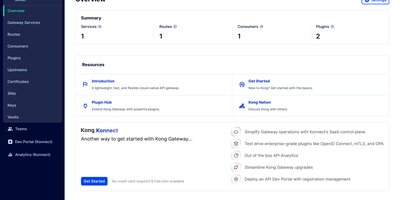
With over 43,000 GitHub stars and adoption by companies including Nasdaq, Samsung, and Expedia, Kong Gateway is the world's most deployed open-source API gateway, processing billions of API requests daily across hybrid-cloud and multi-cloud architectures. Built on the battle-tested NGINX engine with OpenResty's LuaJIT runtime, Kong delivers sub-millisecond proxy latency while supporting REST, gRPC, GraphQL, WebSocket, SOAP, and Kafka protocols. The plugin architecture includes authentication via JWT, Basic Auth, HMAC, key authentication, OAuth 2.0, and LDAP, alongside rate limiting with configurable windows per consumer, IP address, or API key. The AI Proxy plugin provides a universal LLM API that routes across OpenAI, Anthropic, Google Gemini, AWS Bedrock, Azure AI, Databricks, Mistral, and Hugging Face through a single standardized interface, while MCP proxy capabilities convert REST APIs into MCP tools and provide traffic governance for AI agents. Kong supports declarative configuration via YAML for GitOps workflows, a RESTful Admin API for dynamic configuration, and decK CLI for version-controlled infrastructure-as-code management. Upstream health checking with active and passive probes enables automatic failover, and the ring balancer distributes traffic across upstream targets with consistent hashing, round-robin, or least-connections algorithms. The Kong Plugin Hub hosts over 100 community and official plugins covering logging, monitoring, transformation, security, and traffic control. Running on a dedicated VPS on RepoCloud with guaranteed CPU, RAM, and SSD, full root SSH access, and a browser serial console. Apache 2.0 licensed.
ClickHouse Loom
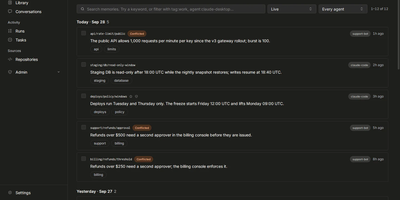
Give every AI agent you use the same memory, so what Claude Code learns on Monday is waiting for Codex or Cursor on Tuesday. Loom is a self-hosted server that stores memories, documents, conversations, and a code index, then serves them to agents over MCP, HTTP, and Python or TypeScript SDKs. Each fact is saved under a key with history and provenance, near-duplicates merge, and contradictions land in a review queue where a person keeps one side, drops one, or allows both. Search can abstain instead of guessing, and the Ask AI panel answers with numbered citations back to the memory or document behind each claim. A library indexes PDF, docx, and pptx files, and the repository explorer finds symbols, callers, and change impact with the commit it answers from. Namespaces, roles, and tokens let teams share memory safely, an audit log records every save, delete, and grant, and erasure requests are verified. Task inboxes pass work between agents with leases and retries. One installer script starts Loom and ClickHouse, and plugins connect Claude Code and Codex. Running on a dedicated VPS on RepoCloud with guaranteed CPU, RAM, and SSD, full root SSH access, and a browser serial console. Apache-2.0 licensed.
Chat UI
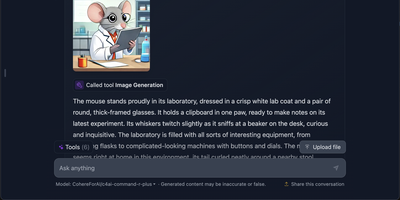
Self-hosting a language model is only half the job; people still need somewhere pleasant to talk to it, and Chat UI is that window, the same interface that powers HuggingChat. Point it at any OpenAI-compatible endpoint, your own Ollama or llama.cpp server, the Hugging Face router, or a hosted gateway like OpenRouter, and the models it serves appear in the picker automatically, with no per-model configuration. Conversations are saved to your database and stay browsable in the sidebar, so a thread from last week can be reopened, continued, and compared against a fresh answer from another model. Multimodal models accept image uploads right in the composer, and models that support it can call MCP tools mid-conversation to fetch data or run actions. For a shared team deployment, OpenID Connect sign-in keeps individual histories and settings separate, and per-user defaults travel with each account. Everything a consumer chatbot would keep on someone else's servers, prompts, uploaded files, and usage history, stays in the MongoDB you control on the same machine. Running on a dedicated VPS on RepoCloud with guaranteed CPU, RAM, and SSD, full root SSH access, and a browser serial console. Apache-2.0 licensed.
AI Video Transcriber
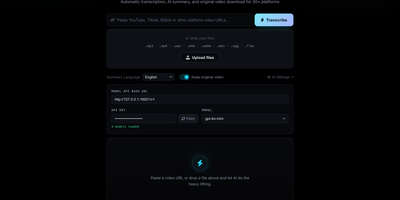
A two-hour podcast becomes a page of takeaways with AI Video Transcriber, a self-hosted web app that turns links and uploads into clean transcripts and short summaries. Paste a URL from YouTube, TikTok, Bilibili, Apple Podcasts, SoundCloud, or any of 30+ other platforms, or drag in an mp3, mp4, wav, or plain text file. When a video already carries subtitles, the transcript arrives in seconds with no audio download at all, and Whisper takes over only when captions are missing. A badge shows which path each job took, and live progress streams to the page as the job runs. Summaries come out in 11 languages, and a Translation tab appears whenever the transcript language differs from the one you picked. The original video or audio stays beside the results with an inline player and a one-click download, and every tab has its own download icon. Models are your choice: enter any OpenAI-compatible base URL and key in the interface, press Fetch to list what is available, and pick one. Agents get a command line tool, an MCP server, a Claude Code skill, and a Codex plugin. Running on a dedicated VPS on RepoCloud with guaranteed CPU, RAM, and SSD, full root SSH access, and a browser serial console. Apache-2.0 licensed.