UnoPim
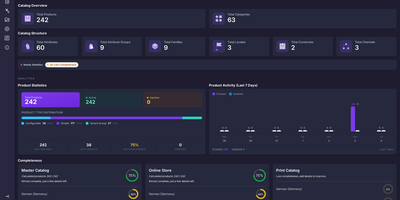
If product data is scattered across spreadsheets, supplier PDFs, and storefront admin screens, UnoPim collects it in one open-source PIM catalog and lets an AI agent do the cleanup. Ask the floating chat panel to find every product missing a description, and the agent searches, bulk edits, categorizes, exports, and drafts copy, sending risky changes to an approval queue and honoring each user's permissions. Magic AI wands generate descriptions, translations, and images through providers such as OpenAI, Anthropic, Gemini, Groq, Ollama, and Mistral, plus any service that follows the OpenAI API format. Attribute families decide which fields each product type needs, variant structures pass shared values from a parent to color and size children, and association types link related items, up-sells, cross-sells, and spare parts. Completeness scores show what each channel and locale still lacks, saved filters turn recurring searches into one-click views, and measurement families convert inches to centimeters on export. CSV, XLSX, and ZIP jobs run on a queue with a live tracker, signed webhooks alert storefronts and ERPs to changes, and API keys unlock the REST API. Digital Product Passport templates publish QR-linked pages per product and language. Admins get role-based permissions, Microsoft Entra sign-in, 33 languages, and a dark theme. Running on a dedicated VPS on RepoCloud with guaranteed CPU, RAM, and SSD, full root SSH access, and a browser serial console. MIT licensed.
AtroPIM
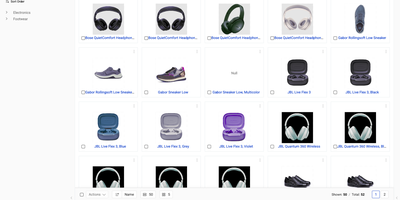
Manufacturers and distributors can model messy product data exactly as it is in AtroPIM, an open-source product information management system configured through its interface instead of code. Configurable attributes come in twenty-plus data types and are grouped by classifications that give each product class a consistent field set, with automatic unit conversion and per-language values. Variants nest across several levels and inherit values from their parents until overridden; multiple category trees and bidirectional associations such as upsell, cross-sell, and accessories organize the catalog per market. Channel-specific values let one record feed several shops, marketplaces, and catalogs, and product listings gather curated collections for a given purpose. A digital asset library with folders and thumbnail types keeps images and documents attached to the products they describe. Import and export feeds exchange data through files or HTTP requests on a schedule, background workers run the jobs, and dashboard widgets surface failed runs. Roles and teams control who edits what, action history records every change, product statuses such as Draft, Reviewed, and Ready track readiness, and configurable actions run from buttons or on a schedule. Every entity, including custom ones, gets its own REST API for shops, ERP systems, and partner portals. Running on a dedicated VPS on RepoCloud with guaranteed CPU, RAM, and SSD, full root SSH access, and a browser serial console. GPL-3.0 licensed.