DreamFactory
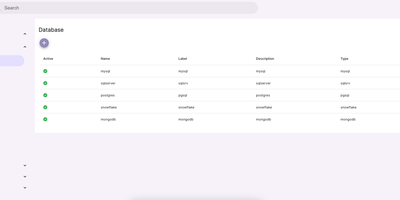
Point DreamFactory at a database you already own and minutes later it answers as a documented REST API, no hand-written backend required. The platform introspects your schema and generates full CRUD endpoints with relationships, stored procedure calls, filtering, sorting, and pagination, then writes the OpenAPI documentation for every route. Security is the product, not an afterthought: role-based permissions decide exactly which tables, endpoints, and verbs each application may touch, API keys are issued and revoked per app, and every call lands in an audit log. Server-side scripts in PHP, Python, or Node.js reshape requests and responses at any endpoint, fire webhooks on data changes, and register custom services beside the generated ones. The connector library reaches MySQL, PostgreSQL, SQL Server, Oracle, MongoDB, Cassandra, Snowflake, S3, Azure Blob, SFTP, email, and even SOAP services restated as REST. A built-in MCP server gives ChatGPT, Claude, and local models governed access to the same data through structured calls instead of improvised SQL. Running on a dedicated VPS on RepoCloud with guaranteed CPU, RAM, and SSD, full root SSH access, and a browser serial console. Apache-2.0 licensed.
Bknd
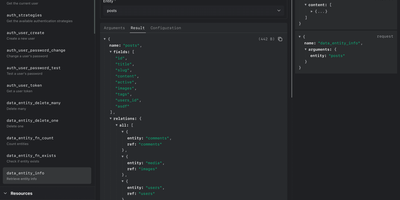
For developers who want a complete visual backend without stitching together separate database, auth, and storage services, Bknd delivers an all-in-one self-hosted Backend-as-a-Service platform with a built-in administrative dashboard. Data schemas evolve visually. Authentication strategies plug in cleanly. Media uploads route straight to object storage. Inside the interactive Admin UI, you can create relational entities, define field validation rules, inspect records, and test generated REST and OpenAPI endpoints on the fly. User management comes ready out of the box with configurable password and OAuth authentication flows, role-based access permissions, and row-level security policies for multi-tenant SaaS products. A unified media manager connects local filesystems, S3 buckets, Cloudflare R2, MinIO, or Cloudinary so applications can handle user avatars, document attachments, and galleries without custom upload pipelines. Visual workflow automation lets you chain triggers, HTTP tasks, and data mutations into repeatable backend flows, while an integrated Model Context Protocol server allows AI agents to query and manage application state directly. You can operate entirely through the visual dashboard, lock down production schemas in code-only or hybrid modes, and connect frontend interfaces using pre-configured login and upload elements. Running on a dedicated VPS on RepoCloud with guaranteed CPU, RAM, and SSD, full root SSH access, and a browser serial console. Apache-2.0 licensed.
Para
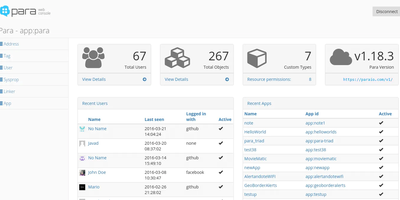
The name means steam in Bulgarian, and the job matches: Para is the boiler room that powers your application's backend so you never build one from scratch. You store plain JSON objects through a REST API and get them back persisted, indexed for full-text search, and cached on every write, without designing schemas or gluing three systems together yourself. One server hosts many applications at once, each with its own table, search index, and cache, so a client project, a side app, and an internal tool can share a single deployment without sharing data. Users sign in with social accounts, LDAP, or SAML and receive JSON Web Tokens, while resource permissions decide exactly which objects each client may touch. Queries go beyond key lookups: field, wildcard, geo point, and more-like-this searches all run against the same stored objects. Signed webhooks notify your own endpoints when data changes, and an MCP server lets AI assistants manage configuration, data, and search against the same backend. The admin Web Console handles users, objects, backups, and permissions from the browser, and client libraries cover JavaScript, PHP, Java, C#, Android, and iOS. Running on a dedicated VPS on RepoCloud with guaranteed CPU, RAM, and SSD, full root SSH access, and a browser serial console. Apache-2.0 licensed.