Swagger UI
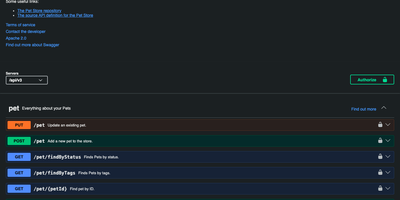
An OpenAPI file is precise but unfriendly to anyone who did not write it, and Swagger UI turns that file into a browsable page where every endpoint is documented and can be called on the spot. Operations are grouped by tag and color coded by HTTP method, and each one lists its parameters, request bodies, example payloads, response codes, and the schemas behind its models. Pressing Try it out unlocks the parameter fields and an Execute button that sends a real request from the browser and shows the response, so front-end developers, testers, and partners can explore an API before writing any client code. The Authorize dialog accepts API keys, HTTP basic credentials, bearer tokens, and OAuth2 flows including PKCE, an optional filter box narrows the page by tag name or path, deep links open a specific tag or operation, and a dropdown switches between several definitions. OpenAPI 2.0, 3.0, 3.1, and 3.2 files are all understood, including 3.1 webhooks, and the page follows the browser's light or dark color scheme with a toggle in the top bar. The Docker image loads a definition from a mounted file or a remote URL, serves it under a custom base path, and exposes most display options as environment variables, which suits an internal developer portal, a public API reference, or a staging sandbox for partners. Running on a dedicated VPS on RepoCloud with guaranteed CPU, RAM, and SSD, full root SSH access, and a browser serial console. Apache-2.0 licensed.
Deploy