Seerr
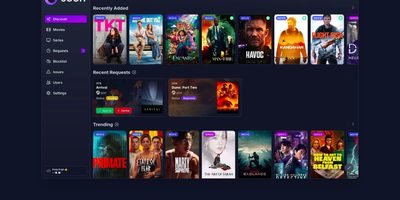
Seerr runs the front desk for your media server: friends and family discover movies and shows, request what is missing, and you approve or decline without a group chat full of titles. It unifies the Overseerr and Jellyseerr projects into one application that works with Jellyfin, Plex, and Emby alike. The discovery home page surfaces trending, popular, and upcoming titles with rich artwork, cast information, and trailers, so browsing feels like a streaming service rather than a file list. Requests can cover a whole series or individual seasons, with separate handling for 4K content when your library keeps two quality tiers. Approved requests hand off to Sonarr and Radarr automatically, and requesters watch the status move from pending to processing to available. Users sign in with their media server accounts, and administrators import those users, set per-user request quotas and permissions, and review everything from a request management screen designed for quick approvals. Watchlists and blocklists sync with your server, notification agents announce new requests and approvals through Discord, Telegram, email, and push services, and the mobile-friendly interface keeps approvals possible from the couch. Running on a dedicated VPS on RepoCloud with guaranteed CPU, RAM, and SSD, full root SSH access, and a browser serial console. MIT licensed.
Denpa
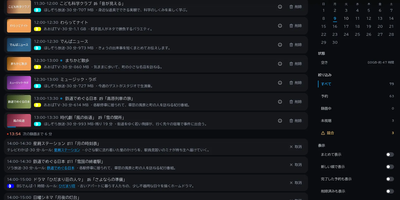
Denpa is a home TV recording server that turns a Linux machine and a TV tuner into a private recorder for Japanese terrestrial and satellite broadcasts, with reservations and browser playback. There are no configuration files: plug in a supported tuner and card reader, press scan, and the tuner type, channels, and program guide set themselves up. Reserve from the guide, or save a search as a rule and matching broadcasts record automatically; a repeated episode is ignored after its first airing is captured. Recordings encode to AV1 or H.264 MKV files (H.265 when a GPU is present) with captions exactly as broadcast, and detected commercials become chapters that playback skips entirely. Playback resumes where you stopped, runs at up to double speed, and clips save on the server with captions intact; programs also download to devices for offline viewing. Live viewing runs about a second behind the broadcast: pausing starts chase playback, alternate audio stays selectable, and BML data broadcasting works in the browser. The companion denpa-tv app reaches Android TV and Fire TV through QR pairing, and an API exposes channels, recordings, and audio-only feeds to Home Assistant and scripts. EPGStation and EDCB users can import rules, reservations, and recordings, and the interface stays closed until you open it to trusted networks or protect it with OIDC login. Running on a dedicated VPS on RepoCloud with guaranteed CPU, RAM, and SSD, full root SSH access, and a browser serial console. AGPL-3.0 licensed.
Issued
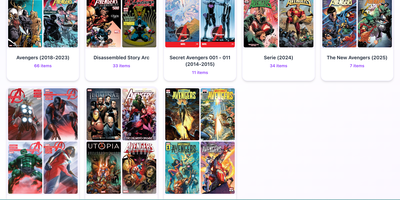
Issued is a self-hosted comic library server: point it at the folder of CBZ, CBR, CB7, and PDF comics already sitting on your server and the whole collection becomes browsable and readable from any device. Point it at your existing folders and it keeps your folder structure exactly as it is, scanning automatically when new issues appear and generating cover thumbnails so you can see what a file is before opening it. Read in the browser with the built-in web reader on desktop or mobile, with light and dark themes, or connect reader apps such as Panels, Chunky, KyBook, and Moon+ Reader through the standard OPDS catalog at /opds/. OPDS-PSE 1.2 page streaming lets compatible apps read individual pages as JPEGs without downloading whole archives, and OpenSearch discovery lets clients find library search automatically. Edit metadata in place using ComicInfo.xml data, mark series as ongoing to spot new issues, totals, and possible gaps, and use Continue Reading and Last Added views to resume the latest issue in progress or start the next unread one. An optional reader password protects browser access, and one Docker command on port 8181, with unrar included for CBR files, gets the whole library online. Running on a dedicated VPS on RepoCloud with guaranteed CPU, RAM, and SSD, full root SSH access, and a browser serial console. MIT licensed.

MuckScraper
Reading the news should not mean opening twelve tabs about the same event, so MuckScraper folds every outlet's version into one story and shows you how the coverage differs. A scheduler fetches RSS feeds several times a day, with optional NewsAPI and GNews keys adding more sources, and each article is embedded and matched against recent stories so wire copies and follow-ups land together instead of flooding your feed. Every story carries a bias balance: how many left, center, and right outlets covered it, with each outlet rated from AllSides data or scored by the model where no rating exists. Local language models write the story summary and a deeper report comparing how each side frames the event, what is contested, and what nobody is mentioning, while guardrails reject cut-off summaries and figures that never appeared in the sources. Opinion columns stay in their own lane, linked to the stories they argue about and rounded up separately, never counted as news coverage. Twice a day the system publishes a balanced edition of twenty stories, and every past edition stays readable alongside full-text search across your whole archive. Reader, scraper, and admin roles decide who can simply read, who can trigger fetches, and who manages feeds, prompts, and users. Running on a dedicated VPS on RepoCloud with guaranteed CPU, RAM, and SSD, full root SSH access, and a browser serial console. MIT licensed.
Sonarr
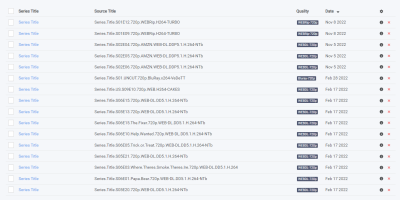
Add a series once, set a quality profile, and everything downstream is automated: Sonarr is the smart PVR for Usenet and BitTorrent users. It monitors RSS feeds from your indexers, detects new episodes the moment they release, sends matching grabs to SABnzbd, NZBGet, qBittorrent, Deluge, or another download client, then renames files with fully configurable templates, sorts them into consistent folder structures, and notifies Plex, Kodi, or Jellyfin to update the library. Quality profiles define what's acceptable (HDTV, WEB-DL, Blu-ray, up to 4K) and an upgrade cutoff - when a better release appears, Sonarr replaces the existing file automatically, stepping from HDTV to WEB-DL to Blu-ray until the cutoff is met. Custom formats add weighted scoring for finer-grained release selection, with community-maintained TRaSH Guides presets as the widely accepted defaults. Failed downloads are handled without intervention: Sonarr retries with another release, and manual search shows every candidate with the reasons any was rejected. It scans existing libraries for missing episodes, fully supports specials, multi-episode files, and daily and anime series types, and a calendar view shows upcoming episodes across every tracked show. Runs on Linux, Windows, macOS, and Raspberry Pi, and pairs naturally with Prowlarr for centralized indexer management.
Shortlist
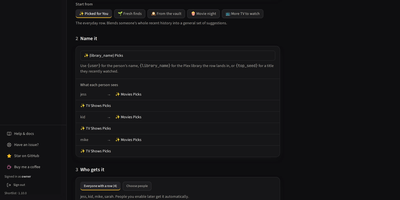
Everyone on your Plex server gets their own private recommendation rows with Shortlist, built from what each person actually watched and visible to nobody else. For each viewer it reads their Plex watch history, picks unwatched titles from your library, and explains every pick with the reason it earned its place. Rows land on Plex Home labelled, hidden from every other account by share filters, and only then promoted, so a row is never visible to the wrong person, not even briefly. Six row kinds, from Picked for You to seasonal picks and personal requests, start from eleven templates instead of a blank form. A seasonal row follows the calendar through Halloween, Christmas, and twenty more ready-made occasions, then hides itself between seasons. Rebuilds run nightly, weekly, or monthly on your cadence, and the dashboard shows what was delivered against what people started and actually finished, per user and per row. Missing a strong pick, Shortlist asks Radarr, Sonarr, or Overseerr for it: the boldest few auto-send nightly, the rest wait for one click in the Requests inbox. No AI key is required; add one and Describe a row turns slow-burn heist films into a themed row filled nightly for each person. Running on a dedicated VPS on RepoCloud with guaranteed CPU, RAM, and SSD, full root SSH access, and a browser serial console. MIT licensed.
Thingport
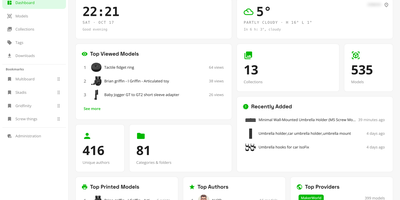
Authors delete listings, and the 3D models go with them, so Thingport stores its own copy of every printable file you import, in a self-hosted library you control. Ten sites feed the library, including MakerWorld, Printables, Thingiverse, and MyMiniFactory: paste a link or use the browser extension, and a model arrives with its files, photos, description, tags, author, and source link. Synced collections add newly bookmarked models as often as every hour. Files you already own come in as STL, 3MF, STEP, OBJ, or LightBurn uploads, ZIPs, folder trees, or drops into a watched consume folder. Each model gets an interactive 3D viewer with a thumbnail for every plate of a multi-plate 3MF. On first open, a check flags surface holes, non-manifold edges, flipped faces, and loose fragments before you slice. Sort with nested categories, collections, and tags, mark favourites, and find anything with full-text search. Optional AI sorts imports into your categories and tidies descriptions, using a local Ollama model or a cloud API. Open any file in Bambu Studio, OrcaSlicer, PrusaSlicer, Cura, or Creality Print, or download a model, tag, or collection as one ZIP. Every user gets a separate library, with invite-only registration, email verification, and single sign-on. A dashboard shows library statistics, profiles show a year-long activity heatmap, and MCP lets an AI assistant work with the collection. Running on a dedicated VPS on RepoCloud with guaranteed CPU, RAM, and SSD, full root SSH access, and a browser serial console. AGPL-3.0 licensed.
Folivox
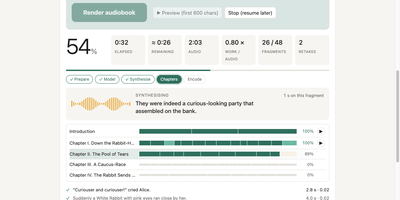
Folivox turns an ebook sitting on your server into a finished audiobook read aloud in a voice you choose, cloned from a short sample, or performed by a whole cast of characters. Drop in an FB2, EPUB, DOCX, PDF, or TXT file and the studio detects the book language, restores chapters, poems, and epigraphs, cleans page furniture away, and spells numbers, dates, money, and abbreviations out in full for nine fully supported languages. Narration runs locally through CosyVoice 3 or the multi-speaker Fish Audio Drama 3, which can give each character their own voice like a radio play, or through ElevenLabs, OpenAI, Gemini, or Cartesia with your own key after a cost estimate you approve. A markup editor finds the dialogue, assigns lines to speakers, and lets you fix mistakes and listen before committing to a ten-hour render. Every fragment is listened back to with Whisper and re-read until the best take survives, while a crash-safe journal means a stopped render resumes where it left off and edited chapters redo only what changed. The finished book arrives as one chaptered M4B with cover and metadata, or one MP3 per chapter, loudness-normalised and ready for any player. Running on a dedicated VPS on RepoCloud with guaranteed CPU, RAM, and SSD, full root SSH access, and a browser serial console. Apache-2.0 licensed.
Mydia
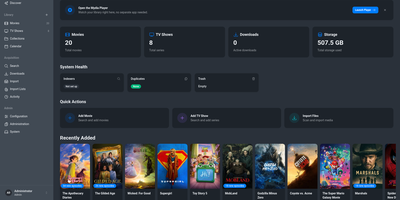
Mydia turns a folder full of movies and TV shows into a polished library that finds, ranks, and upgrades releases on its own. Poster grids, series pages with season and episode lists, and a release calendar keep every title organized with metadata from TMDB and TVDB. Monitored searches send requests to Prowlarr, Jackett, or the built-in indexer engine, then pass the best release to qBittorrent, Transmission, SABnzbd, NZBGet, or a debrid provider. A transparent ranking system explains why one release beat another, and quality profiles with custom formats decide when a better file should replace the old one. Guests can request titles through an approval workflow, and sign-in works with local accounts or OpenID Connect. Import lists pull from TMDB watchlists, popular, and trending charts, and a dashboard shows library size, downloads, duplicates, and storage at a glance. The built-in player streams the library from a browser at the /player path, with apps for desktop and phones that connect through an encrypted peer-to-peer link. Light, dark, and several color themes fit any screen. Running on a dedicated VPS on RepoCloud with guaranteed CPU, RAM, and SSD, full root SSH access, and a browser serial console. AGPL-3.0 licensed.
nodecast-tv
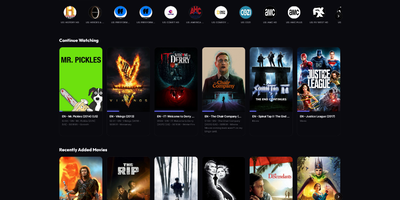
Bring your own IPTV provider and nodecast-tv gives it a fast browser interface for live channels, a program guide, movies, and series. Add an Xtream Codes or M3U provider in Settings, then zap through channels with category grouping and search; playlists of thousands of channels scroll smoothly. The 24-hour TV guide is interactive, and movie and series pages show posters, ratings, metadata, and seasonal episode lists. Favorites sync across channels, movies, and series, and the home page keeps a Continue Watching shelf and recently added titles within reach. Transcoding steps in only when a stream needs it, using hardware encoders and surround-to-stereo downmix presets like Night Mode and Cinematic. Admin and viewer roles control who can change settings, and OIDC single sign-on works with Authentik, Keycloak, and similar providers. Hidden categories, volume memory, and auto-play fine-tune playback. Running on a dedicated VPS on RepoCloud with guaranteed CPU, RAM, and SSD, full root SSH access, and a browser serial console. GPL-3.0 licensed.
Mixpost
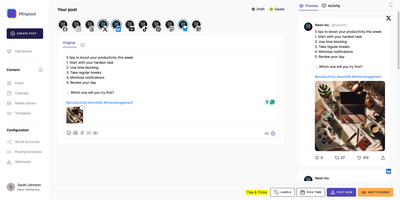
Mixpost puts Facebook, Instagram, X, LinkedIn, YouTube, TikTok, Pinterest, Threads, Bluesky, Mastodon, Pixelfed, and Google Business under a single scheduling dashboard — plan content visually on a drag-and-drop calendar, queue posts for optimal engagement windows, and track audience growth per platform without juggling twelve separate apps or paying per-seat SaaS fees. Built on Laravel with a Vue.js 3 and Inertia.js frontend styled with Tailwind CSS, the Lite edition provides unified content management where each post supports platform-specific customization with individual captions, media attachments, hashtag groups, and first-comment scheduling. Posting queues automate publishing at configurable time slots throughout the day. The media library provides a centralized asset manager with drag-and-drop uploads, stock photo integration via Unsplash, and Tenor GIF search. AI-powered content assistance generates and optimizes post copy. Per-platform analytics dashboards display audience growth, engagement metrics, reach, and impressions with exportable reports. Team workspaces support role-based permissions for collaborative content management across departments. External integrations connect through the REST API, webhooks, n8n, Zapier, and RSS feeds, plus an MCP server for AI assistant publishing. Deploy via Docker Compose with MySQL and Redis. Running on a dedicated VPS on RepoCloud with guaranteed CPU, RAM, and SSD, full root SSH access, and a browser serial console. MIT licensed.

Kaloscope
Kaloscope manages your media library the way a flowchart thinks: search, download, scrape, rename, shelve, and play, each step a node you can see and rearrange. Drag HTTP requests, Python scripts, conditions, and loops onto the canvas to build the exact pipeline your sources need, then import community templates from GitHub when someone has already solved your problem. Global search aggregates multiple indexers at once, and finished finds flow straight into aria2, qBittorrent, Transmission, or OpenList for cloud downloading, with keyword rules and schedules automating the recurring hunts. Libraries for movies, series, and other media watch folders in real time, scrape rich metadata with custom naming rules, and read or write NFO files alongside the media. Press play in the same interface: FLV, HLS, and MP4 stream with on-demand transcoding, hardware acceleration, danmaku comments, and resume points that follow you between sessions. An AI assistant can draft workflows from plain language, inspect logs, and manage downloads, and external AI clients connect over MCP with token permissions you control. Per-library permissions, themes, and an installable PWA round out a server the whole household can use. Running on a dedicated VPS on RepoCloud with guaranteed CPU, RAM, and SSD, full root SSH access, and a browser serial console. GPL-3.0 licensed.
AzuraCast
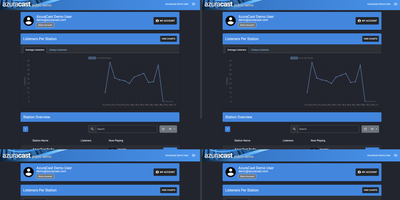
AzuraCast is a solution for running internet radio stations, packaging the entire broadcast stack into a single Docker installation that gets you on air in minutes. Built on PHP with a Vue.js frontend, it uses Liquidsoap as the AutoDJ engine to compile media from playlists, live DJ inputs, and scheduled programming into composited output streams, then broadcasts via Icecast-KH, SHOUTcast 2 DNAS, or Rocket Streaming Audio Server to thousands of concurrent listeners. The media library supports drag-and-drop uploads with automatic metadata extraction, while playlist management handles sequential, random, weighted, and time-scheduled rotations. Live DJ accounts let remote broadcasters connect via BUTT, Mixxx, or any Icecast-compatible software, with automatic crossfade transitions between AutoDJ and live input. The built-in Web DJ tool enables broadcasting directly from the browser without additional software. Each station includes public-facing player pages with now-playing metadata, album art, song history, and embeddable widgets for external websites. The listener request system lets audiences queue songs through the public interface. Multi-station administration hosts unlimited stations on a single server with individual user accounts and granular role-based permissions. Comprehensive analytics track listener counts, geographic distribution, unique listeners, and listening duration with exportable reports. HLS streaming delivers adaptive bitrate broadcasts for mobile compatibility. LADSPA audio plugins enable professional equalization and processing in the stream pipeline. Running on a dedicated VPS on RepoCloud with guaranteed CPU, RAM, and SSD, full root SSH access, and a browser serial console. AGPL-3.0 licensed.
Myriad
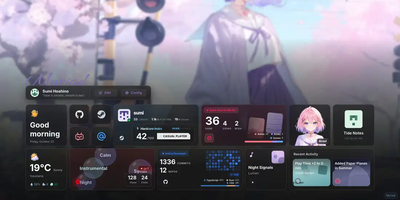
Myriad gathers your games, music, anime, and social posts from eleven platforms into one self-hosted homepage that has a resident character of its own. Connect GitHub, Steam, Bilibili, NetEase Cloud Music, and seven more platforms, and every account lands in one database that the report cards and library read. Report cards, a music player, weather, friend links, and recent activity fill a homepage you arrange on a grid or a free sticker canvas. The library shelves the collections as games, anime, films, books, and music, and clicking a report card plays a three-act portrait: your persona there, your taste, and your highlights. Her layered 2.5D portrait blinks, mouths each reply, and shifts expression in the browser, and a long press opens her panel anywhere on the site. In Chat she stays in character; in Help she plans, asks you to confirm, then acts inside the permissions you granted. The studio turns notes into a static Hugo blog, and the built-in reader follows your RSS, Notion, and RSSHub subscriptions. Tapps run sandboxed as pages or homepage widgets, and the Playground previews one from a single typed sentence before you install or export it. Follow other sites over ActivityPub, pair QQ, Telegram, or Discord bots that answer mentions in group chats, and keep registration and module visibility under your own switches. Running on a dedicated VPS on RepoCloud with guaranteed CPU, RAM, and SSD, full root SSH access, and a browser serial console. AGPL-3.0 licensed.
Peach
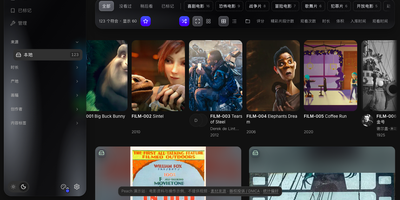
Peach is a self-hosted video library manager that scrapes rich metadata for your own collection and serves it through a polished web player you can open on any device. Point it at local drives, SMB shares, mounted cloud storage, or a PikPak library and it scans everything into one browsable catalog without moving or modifying your files. The scraper recognizes video codes, reads existing NFO files, and fills in titles, performers, studios, and cover art from multiple sources while always preserving corrections you make by hand. Playback happens right in the browser with subtitle support, variable speed, rotation, resume points, and timeline previews you can scrub through before committing to a scene. A follow system tracks performers and creators so new releases surface automatically, and the discovery views plus a want list help you decide what to add next. When something is missing, search by video code or drop in a magnet link and completed downloads are filed into the library on their own. Tagging, duplicate detection, and multi-version grouping keep large collections tidy, while the task center lets you pause, resume, or cancel scans and downloads and watch their resource use as they run. Running on a dedicated VPS on RepoCloud with guaranteed CPU, RAM, and SSD, full root SSH access, and a browser serial console. AGPL-3.0-or-later licensed.
FreeFrame
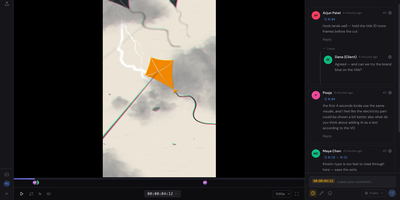
Client feedback that arrives as "the bit near the middle feels off" becomes frame-accurate when FreeFrame hosts your media review on your own server. Reviewers drop timecoded comments on the exact frame, sketch drawing annotations over the picture, and thread replies with mentions, reactions, and attachments until each note is resolved. Video streams adaptively while audio assets get waveform review, and approval workflows track every reviewer's status so a project never waits on a mystery sign-off. When a new cut lands, version compare puts any two revisions side by side or under a draggable wipe slider, playing in sync with per-side audio and offset trim while each version keeps its own comment thread. Finished notes travel back into the edit as timeline markers for DaVinci Resolve, Final Cut Pro, and Premiere Pro, or as a plain CSV, landing on the exact frames they describe. Clients never need accounts: password-protected share links with expiry dates and watermarking let them browse and comment, while you control downloads and permissions per link. Studios can white-label the whole experience with their own name, logos, favicon, and accent color across the app, share pages, and outgoing email. Running on a dedicated VPS on RepoCloud with guaranteed CPU, RAM, and SSD, full root SSH access, and a browser serial console. MIT licensed.
Kapowarr
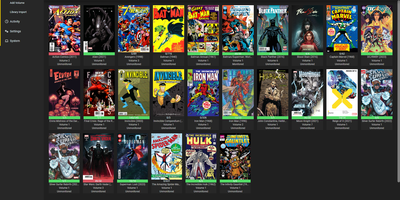
Kapowarr tracks the comic series you collect, hunts down missing issues, and files every download into a tidy, consistently named library on its own. Add a volume and Kapowarr pulls cover art, publisher details, and issue lists from ComicVine, then maps the series to a folder in your library. Run Search Monitored to grab a whole run in one click, or open Manual Search and pick exactly which release of an issue lands on disk. Downloads arrive through GetComics direct links on hosts including Mega, MediaFire, and Pixeldrain, and a configured torrent client covers releases that only circulate as torrents. The moment a download finishes, the issue is renamed to the format you defined and moved into the correct volume folder. Point Kapowarr at an existing collection and the import workflow matches folders against ComicVine, shows every match for your review, and only then starts renaming or moving files. Convert issues between archive formats, rename or move entire volumes in bulk, and clean up a messy library from the same screens. A link blocklist remembers dead download pages and blocks sources that stop working, so repeat searches skip the junk and go straight to links that deliver. Running on a dedicated VPS on RepoCloud with guaranteed CPU, RAM, and SSD, full root SSH access, and a browser serial console. GPL-3.0 licensed.
imgpush
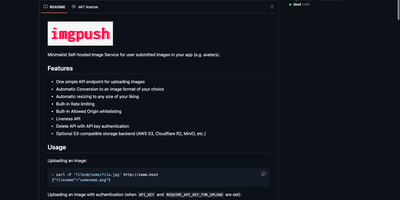
Your app needs avatars, attachments and user photos, and imgpush is the tiny service that takes them off your hands. Send one upload request with a file or a URL and you get back a filename; ask for that file with a width and height in the address and you receive exactly that crop, converted to the format you configured. Originals live on local disk or in any S3-compatible bucket (AWS S3, Cloudflare R2, MinIO or Backblaze B2), with resized variants cached locally for fast serving. Abuse controls come built in: per-IP upload quotas per minute, hour and day, an allowed-origins whitelist, and an optional nudity filter that can also sample video frames before an upload is accepted. An API key can be required for uploads, deletes remove the original together with every cached size, and a liveness endpoint keeps Docker and Kubernetes health checks honest. One Docker container on port 5000, a page of environment variables, and your application never writes image code again. Running on a dedicated VPS on RepoCloud with guaranteed CPU, RAM, and SSD, full root SSH access, and a browser serial console. MIT licensed.