Kinto
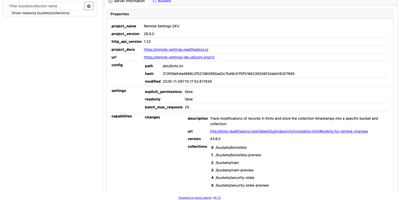
Web and mobile applications get a ready-made backend from Kinto: create buckets and collections through a REST API, save records as plain JSON, and every signed-in device reads the same data without any custom server code. Permissions attach to individual buckets, collections, and records, so you can keep a shared dataset public, limit a collection to a signed-in group, or hand a teammate write access to exactly one collection. Groups bundle people and carry permissions as a unit, which keeps multi-user applications tidy as rosters change. Synchronisation is the headline act: each object carries an incrementing revision number, clients poll for changes since a revision they already hold, and the JavaScript client stores data in IndexedDB so applications keep working offline and publish updates when the connection returns. Collections can declare a JSON schema, and the server rejects records that do not match, which stops malformed writes at the door. The history plugin records every change with its author, an audit trail you can query or roll back from. Records can carry file attachments, and the Kinto Admin web console renders buckets, collections, and records in a browser so you can inspect data, edit entries, and repair permissions without curl. Mozilla runs this model to deliver Firefox configuration and blocklists, and your VPS instance speaks the identical API. Running on a dedicated VPS on RepoCloud with guaranteed CPU, RAM, and SSD, full root SSH access, and a browser serial console. Apache-2.0 licensed.
Deploy