MyCompany
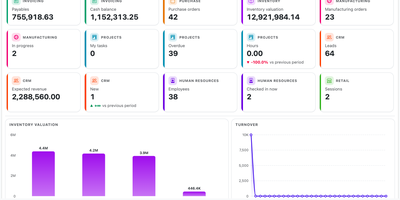
MyCompany runs the whole back office of a small business, sales, stock, production, invoices, projects, payroll, and the shop till, as one application sharing one database. A lead arrives and moves across a kanban board with calls and emails logged on its card, then becomes a sales order and an invoice without retyping a single field. Purchasing raises supplier orders, receives goods into the right warehouse, and watches stock move between locations with full movement history, reservations, lots, and serial numbers. Manufacturing plans production orders from bills of materials with operations and work centers, tracking the materials actually consumed and what each finished batch cost. Projects track tasks and time with supervisor timesheets, HR keeps employee records, hourly rates, and payslips, and the retail point of sale handles barcodes, payments, register sessions, and discounts. Because every module reads and writes the same records, the invoice knows what the warehouse shipped and the project knows what the customer was billed. When your business outgrows a standard screen, customizations live in separate extension modules, so vendor updates never collide with the workflows you adapted. Running on a dedicated VPS on RepoCloud with guaranteed CPU, RAM, and SSD, full root SSH access, and a browser serial console. Apache-2.0 licensed.
EverShelf
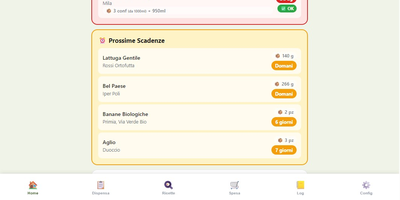
That yogurt hiding behind the ketchup expired three weeks ago, and the flour you bought "just in case" has been sitting in the pantry since last winter. EverShelf replaces mental guesswork with a structured inventory system that tracks every item across pantry, fridge, freezer, and custom locations with precise quantities, expiry dates, and consumption patterns. Scan barcodes with your phone camera to add products instantly, or let the Gemini AI identify items from a photo and estimate shelf life based on storage location. The dashboard surfaces expired items and upcoming expirations with color-coded urgency badges, while anomaly detection flags suspicious quantities and consumption predictions that deviate from your history. Opened products get reduced shelf-life calculations; vacuum-sealed items get extended dates automatically. The recipe engine generates context-aware meal suggestions from your current inventory, prioritizing ingredients approaching expiry so nothing goes to waste; each recipe includes step-by-step cooking mode with text-to-speech narration and timer integration. A smart shopping list auto-populates when stock hits zero and syncs bidirectionally with the Bring! app, with AI-estimated prices per item and consumption forecasts showing when you will need to restock. For Home Assistant users, a native HACS integration provides 22 sensors, expiry calendars, bidirectional todo-list sync, and voice assistant support for adding items hands-free. A dedicated Kiosk mode optimizes the interface for wall-mounted tablets with BLE scale integration. Running on a dedicated VPS on RepoCloud with guaranteed CPU, RAM, and SSD, full root SSH access, and a browser serial console. MIT licensed.
Lakasir
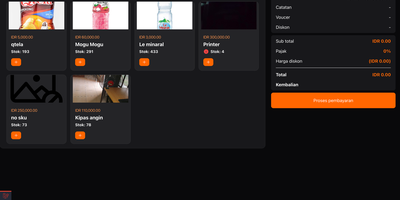
A corner shop, a small cafe, or a minimarket can run its till on Lakasir, a point-of-sale system that keeps sales, stock, and the money owed in one tidy web panel. Cashiers process sales from the cashier menu, apply a discount to a single item or to the whole bill, and print receipts on a USB thermal printer straight from the browser. Products can carry a different price for each basic unit, so a carton, a pack, and a single piece of the same goods all ring up correctly. Purchasing records orders to suppliers, and barcode scanning speeds up receiving, stock counts, and checkout alike. Stock opname sessions walk the shelves with a scanner and reconcile counted quantities against the system, exposing shrinkage before it grows. Receivables track what customers owe the shop and what the shop owes others, with due amounts visible instead of buried in a notebook. Vouchers can be created, handed out, and tracked through redemption, and payment methods are defined by the owner rather than hard-coded. The real-time dashboard watches sales and performance as the day unfolds, and simple accounting rolls income, expenses, and profit into the same picture. Roles and permissions decide who may open the register, edit prices, or see the books. A companion mobile application puts the shop data in a pocket for checks away from the counter. Running on a dedicated VPS on RepoCloud with guaranteed CPU, RAM, and SSD, full root SSH access, and a browser serial console. GPL-3.0 licensed.
Ralph
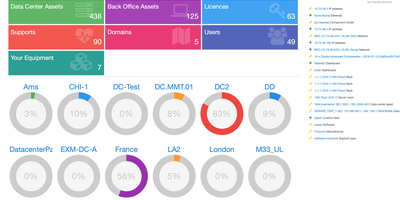
Ralph tracks thousands of assets across data centers and back offices through a unified CMDB, DCIM, and asset management platform, providing the same capabilities as ServiceNow, Device42, and Sunbird dcTrack without per-asset licensing fees. Used by Allegro in production and backed by over 2,500 GitHub stars, it is built on Python 3 with Django and Django REST Framework. Interactive data center floor plans support drag-and-drop rack placement, front and rear rack views showing U-level asset positioning, power consumption tracking per PDU, and ethernet and fiber connection mapping. The back office module manages laptops, desktops, printers, mobile phones, and accessories with user assignment tracking, warehouse inventory, stock-taking audits, and automated loan workflows. IP address management handles network environments with DHCP and DNS integration alongside network topology visualization. Software license tracking monitors per-user and per-core allocations with usage calculations, compliance reporting, and expiration alerts, while vendor support contracts track SLA agreements and warranty renewal dates. The transitions system automates asset lifecycle processes through configurable workflows that trigger HTTP webhooks, custom Python scripts, email notifications, and Puppet and Ansible configuration management integration. Custom fields extend the data model with text, numbers, dates, choices, and URLs per asset type, accessible via the REST API. Multi-tenant architecture organizes assets by regions, data centers, service environments, and business units. Deploy via Docker with the allegro/ralph image alongside MySQL and Redis. Running on a dedicated VPS on RepoCloud with guaranteed CPU, RAM, and SSD, full root SSH access, and a browser serial console. Apache 2.0 licensed.
NexoPOS
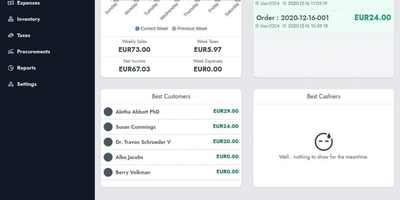
NexoPOS is a point-of-sale platform that runs a whole shop from the browser, covering the till, the stockroom, the customer book, and the day-end numbers in one place. Cashiers ring up sales on a touch-friendly register screen, take cash or card payments, print receipts, and process refunds without leaving the same view. Every sale draws down inventory automatically, and procurement flows record what arrived, from which supplier, and at what cost. Low-stock warnings and a full stock history help owners reorder before shelves go empty. Products carry categories, units, and tax rules, and barcode plus scale barcode support keeps weighed goods moving at the checkout. Regulars earn rewards, join customer groups, and redeem coupons at the till. Managers open and close registers, assign roles and permissions to staff, and review an activity trail for every sensitive action. Reports break down sales, costs, and stock value per period, giving a small shop the numbers usually reserved for chain headquarters. Owners extend the core with installable modules for restaurants, multiple stores, rentals, and bookings, added from inside the dashboard instead of by editing code. The same installation serves a single boutique today and a growing chain tomorrow, since registers, stores, and staff all live in one database. Running on a dedicated VPS on RepoCloud with guaranteed CPU, RAM, and SSD, full root SSH access, and a browser serial console. GPL-3.0 licensed.
Fab-manager
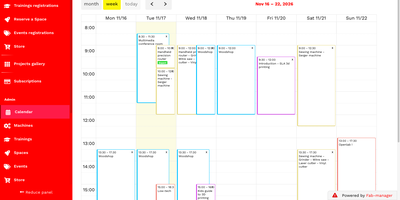
Fab-manager runs the booking desk, cash register, and bookkeeping of a FabLab or makerspace from a single web application. Pick a machine. Pick a slot. Book it. Time slots are opened, moved, or closed by administrators, and cancellation settings decide when a booking may still change. Validating attendance at a training opens its associated machines. Pay by card through Stripe or PayZen. Or on a payment schedule. Or on site by cheque or cash. Pricing bends to the lab: subscription plans per user group, prepaid hour packs, discounts, promo codes, and an electronic wallet. A numbered PDF invoice follows every sale. Refunds become credit notes. Accounting periods can be closed. Exports feed an external ERP. An online store sells consumables, with categories, stock alerts, and separate internal and public inventory. A personal space holds each member's bookings and invoices, projects with steps and collaborators appear in a public gallery, and children can be registered for kids' sessions. Members can be imported from CSV, tagged, grouped, and asked for supporting documents. Statistics track bookings and revenue. Sign-in works through OAuth2, OpenID Connect, or SAML. A token-based OpenAPI exposes bookings, events, and invoices to other tools. Plugins, CSS themes, and translations adapt the platform to each lab. Running on a dedicated VPS on RepoCloud with guaranteed CPU, RAM, and SSD, full root SSH access, and a browser serial console. AGPL-3.0 licensed.
NodeDR POS
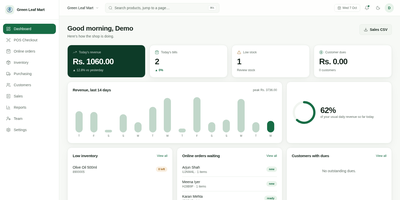
Scan a barcode, press Enter, and the sale is done: that is the whole rhythm of NodeDR POS at a shop counter. A USB scanner works, and so does a phone or tablet camera. Each sale can carry tax breakdowns with GSTIN and HSN codes, percentage or flat discounts, loyalty points, store credit, and customer dues for short payments. Cash, UPI with a payment QR, and card are supported in more than 20 currencies. Receipts print through the browser, download as PDF, or go straight to a USB thermal printer. Inventory takes bulk CSV or Excel imports, generates printable EAN-13 barcode labels, looks up unknown barcodes in free product databases, and flags low stock. Purchasing adds suppliers, purchase orders, and reorder suggestions. Orders from WooCommerce, Shopify, or a custom site flow through a New, Packing, Ready, and Collected board. Phone and laptop sellers can switch on IMEI tracking with warranty lookup. A customer display shows the live cart on a second screen. Reports cover revenue, gross profit, average bill, category mix, and busy hours, with staff roles and A4 tax invoices alongside. Running on a dedicated VPS on RepoCloud with guaranteed CPU, RAM, and SSD, full root SSH access, and a browser serial console. AGPL-3.0 licensed.
Admidio
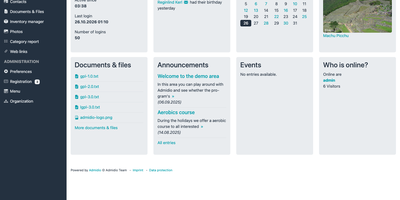
Admidio is membership management software for clubs, associations, and groups, built so that every permission follows from the roles a person holds. Organizers define roles such as board, youth team, or trainers, decide who may email or see each one, and grant module rights like managing events, editing contacts, or uploading photos with simple switches. Contact records use customizable profile fields, record relationships such as parent and child, and can be imported in bulk or exported as vCards. New members register online and administrators review each request. Events carry dates, venues, calendars, and participant lists with sign-up, and the schedule downloads as iCal. Messages go as HTML email to individuals, roles, or groups, and members also find announcements, a categorized forum, document folders with role-based access, and photo albums with e-cards. The inventory manager tracks equipment, who holds it, and its borrowing history. Optional two-factor login protects accounts, a change history can be switched on for every module, and single sign-on lets other applications authenticate against the member database. Twenty-five languages are included, the interface installs as a progressive web app, and sub-organizations can be managed from the same installation. Running on a dedicated VPS on RepoCloud with guaranteed CPU, RAM, and SSD, full root SSH access, and a browser serial console. GPL-2.0 licensed.